EN/
EN/ Romana
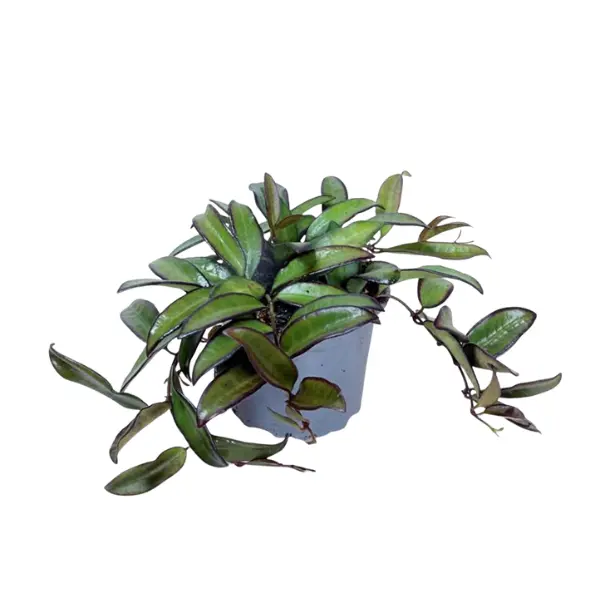
Hoya Serpens D12
![Hoya serpens — Miniature Round-Leaf Hoya from the Himalayas [0]](https://gomagcdn.ro/domains2/eufloria.ro/files/product/medium/hoya-serpens-d6-944961.webp "Hoya serpens — Miniature Round-Leaf Hoya from the Himalayas [0]")
![Hoya serpens — Miniature Round-Leaf Hoya from the Himalayas [1]](https://gomagcdn.ro/domains2/eufloria.ro/files/product/medium/hoya-serpens-366832.webp "Hoya serpens — Miniature Round-Leaf Hoya from the Himalayas [1]")
![Hoya serpens — Miniature Round-Leaf Hoya from the Himalayas [2]](https://gomagcdn.ro/domains2/eufloria.ro/files/product/medium/hoya-serpens-d6-293265.webp "Hoya serpens — Miniature Round-Leaf Hoya from the Himalayas [2]")
![Hoya serpens — Miniature Round-Leaf Hoya from the Himalayas [1]](https://gomagcdn.ro/domains2/eufloria.ro/files/product/original/hoya-serpens-d6-944961.webp "Hoya serpens — Miniature Round-Leaf Hoya from the Himalayas [1]")
![Hoya serpens — Miniature Round-Leaf Hoya from the Himalayas [2]](https://gomagcdn.ro/domains2/eufloria.ro/files/product/original/hoya-serpens-366832.webp "Hoya serpens — Miniature Round-Leaf Hoya from the Himalayas [2]")
![Hoya serpens — Miniature Round-Leaf Hoya from the Himalayas [3]](https://gomagcdn.ro/domains2/eufloria.ro/files/product/original/hoya-serpens-d6-293265.webp "Hoya serpens — Miniature Round-Leaf Hoya from the Himalayas [3]")
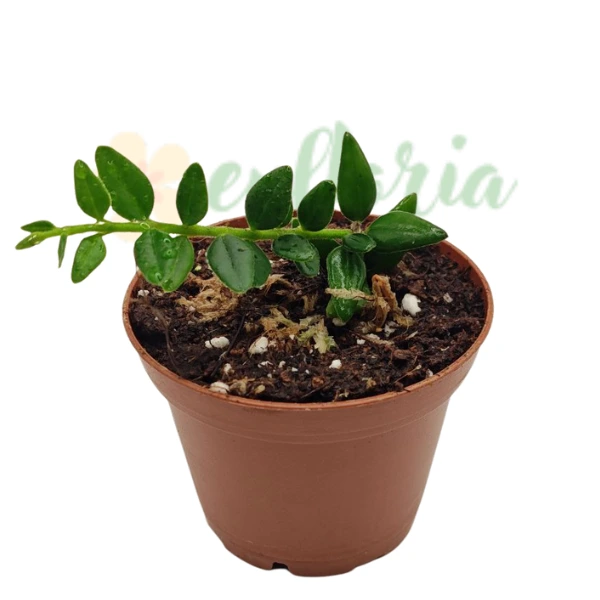
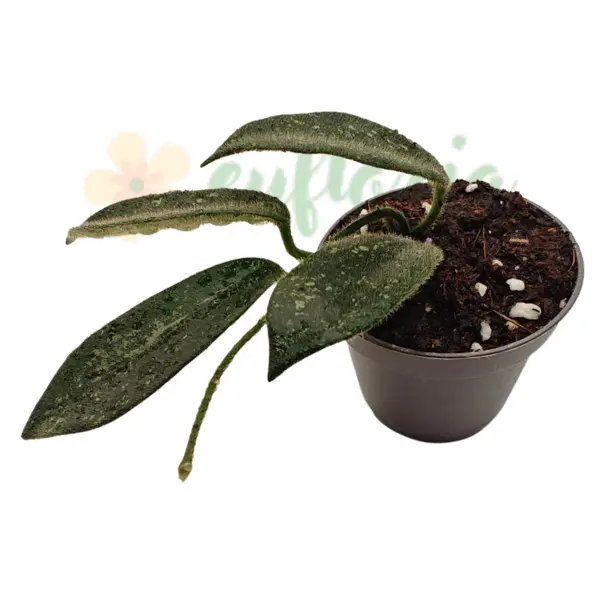
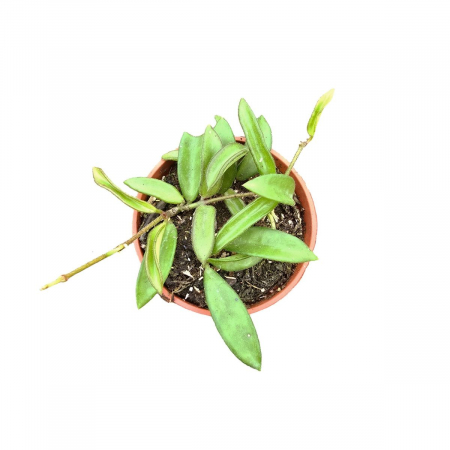
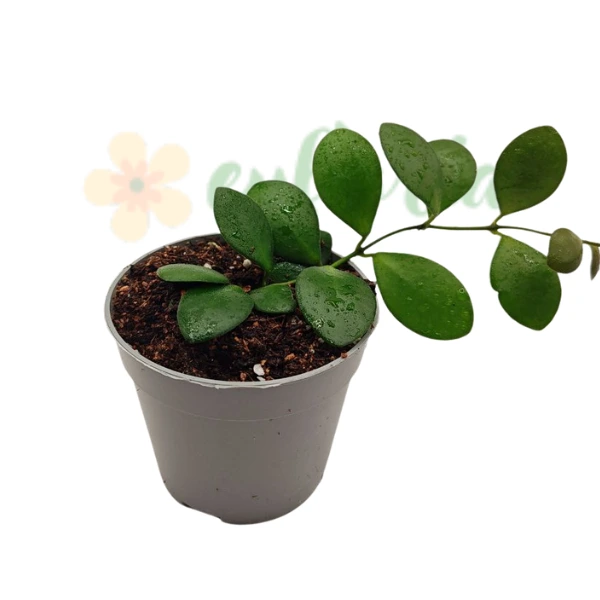
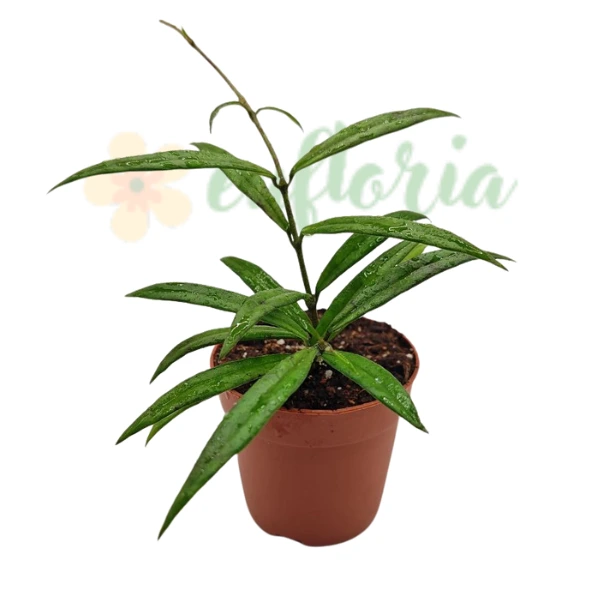
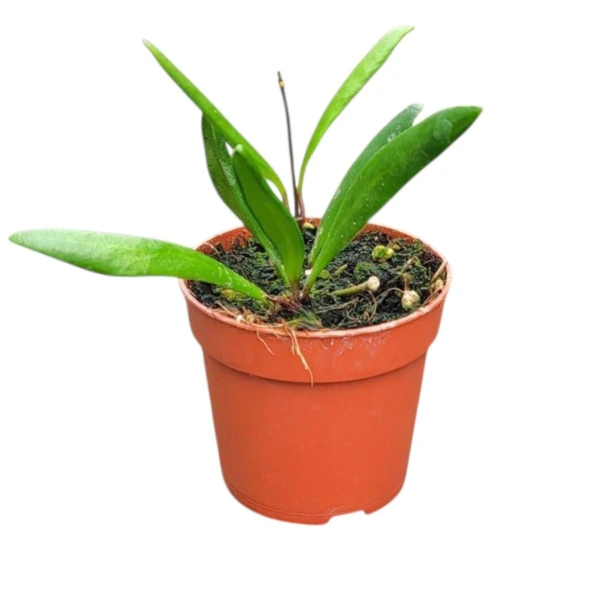
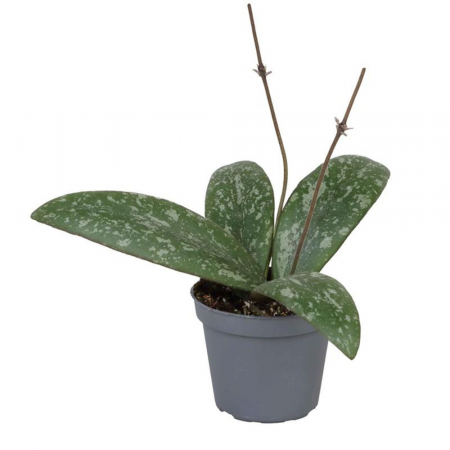
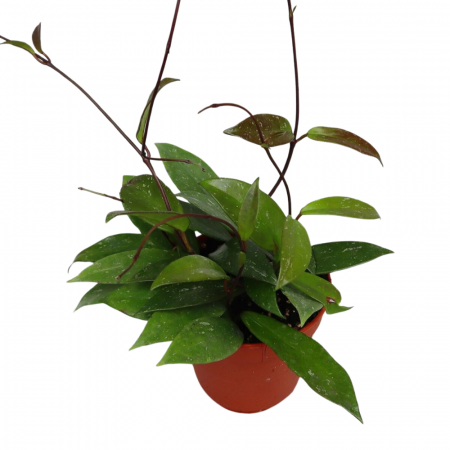
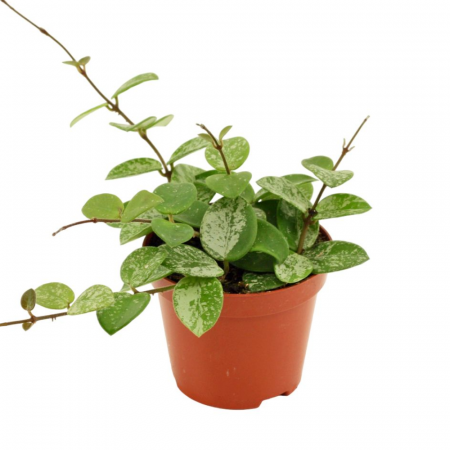
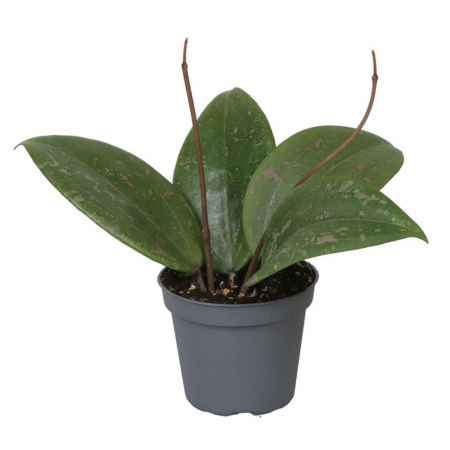
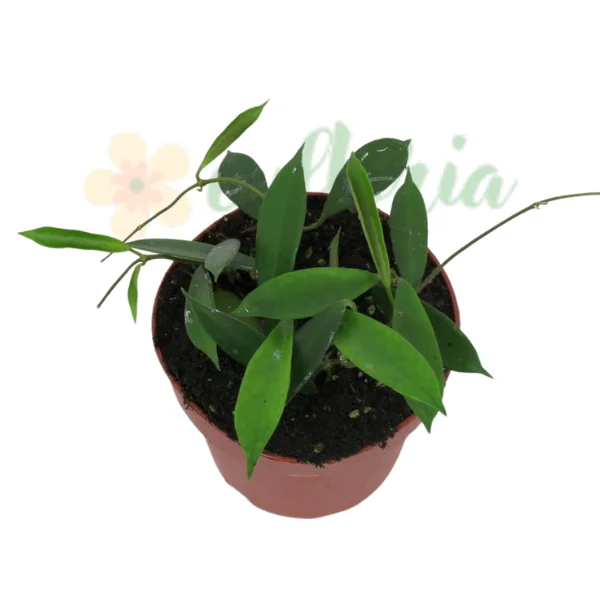
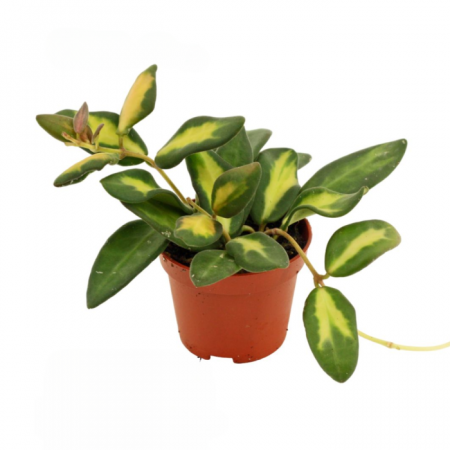
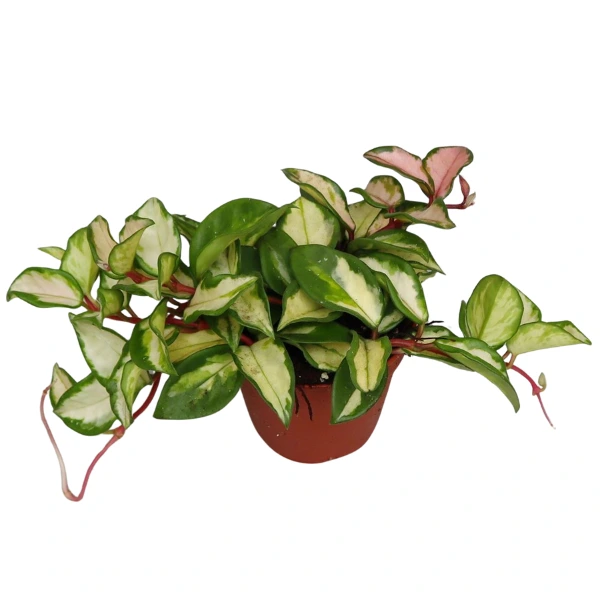
Hoya serpens — The tiny Himalayan jewel! Miniature trailing vine with almost perfectly round, fuzzy leaves (1.5-2 cm) dotted with silver spots. Produces spectacular fuzzy, mint-green flowers with pink-centred white coronas — oversized blooms on the tiniest leaves. From the cool forests of Nepal, Bhutan, and India. Thrives in high humidity. A collector's challenge and reward. Non-toxic to pets!
Approx height (including pot): 10 cm
Flowering state: No flowers
Country of origin: Netherlands
- Description
- Characteristics
- Reviews (0)
🏔️ The Tiny Himalayan Jewel
Hoya serpens is one of the most charming miniature Hoyas in cultivation — a delicate trailing vine from the high-altitude forests of the Himalayas, bearing tiny, almost perfectly round leaves covered in soft fuzz and scattered with silver spots. The species name serpens comes from Latin meaning "creeping" or "crawling," describing the plant's serpentine growth habit as it winds its way through the forest canopy. But it is the flowers that make collectors truly fall in love: fuzzy, pale green stars with white coronas touched with pink at the centre, appearing in clusters that seem almost impossibly large compared to the miniature leaves. Vermont Hoyas describes the contrast as "spectacular especially when you compare the size of the blossom to the small size of the leaves." This is a Hoya for those who appreciate small-scale beauty — a true jewel for the collector who understands that the most precious things often come in the tiniest packages.
🌏 Origins & Botanical History
Hoya serpens was first discovered and described by Sir Joseph Dalton Hooker in 1883, published in Flora of British India (Vol. 4, p. 55). Hooker was one of the most celebrated botanists of the Victorian era — director of the Royal Botanic Gardens at Kew and close friend of Charles Darwin. His expeditions to the Himalayas in the mid-19th century documented hundreds of new species, including this delicate trailing vine. According to Kew's Plants of the World Online, the native range is Central and Eastern Himalaya and the Andaman Islands. The plant is found in high-altitude tropical and subtropical forests of Nepal, Bhutan, Sikkim, Darjeeling (India), and has been naturalised in Queensland, Australia. Like its Himalayan cousin Hoya linearis, this species grows in environments where temperatures are cooler than typical tropical habitats, humidity is consistently high (especially during monsoon season), and light is filtered through the forest canopy. Understanding this origin is key to understanding why Hoya serpens has a reputation as a challenging but rewarding species to cultivate.
🍃 Foliage — Tiny, Round & Fuzzy
The leaves are the plant's most immediately endearing feature: small, almost perfectly round (some describe them as "turtle shell" shaped), measuring approximately 1.5-2 cm long and 1-1.5 cm wide. They are dark green on top, lighter underneath, and covered with fine pubescence (soft hairs) that gives them a velvety texture. Many specimens display silver or grey spots scattered intermittently across the leaf surface — though this silver marking varies between individual plants. Myhoyas.com notes the leaves are "darker green on top than underneath" and have "some silver spots." The Midwestern Jungle describes them as "small, pubescent leaves on dainty vines" with "raised veining that, to me, look reminiscent of little turtle shells." The leaves grow densely along the trailing vines, creating a cascading effect that is particularly beautiful in hanging baskets. This is a plant whose foliage alone is worth growing for, even before the spectacular flowers appear.
🌸 Flowers — Fuzzy Mint-Green Stars
The flowers are extraordinary — especially in relation to the tiny leaves from which they emerge. They are fuzzy (pubescent), flat, star-shaped, and approximately 1.5 cm across. Wikipedia describes them as having "a light green corolla and a white corona with a bit of pink towards the center of the flower, with finally a yellow center." The Midwestern Jungle describes them as having "a minty green corolla that contrasts beautifully with the darker leaves." Flowers appear in umbels of up to 15 blooms, and these umbels tend to hang downward — Gardening Collective recommends trailing the plant "from some height so that flowers cascade down to eye level for everyone to see." Individual flowers last approximately one week. Unlike many Hoyas, this species produces very little nectar despite the fuzzy appearance. The fragrance is sweet but subtle when few flowers are open; Myhoyas.com notes "the fragrance isn't vague when lots of flowers are open at the same time." Some sources describe a spicy-floral aroma that intensifies in the evening. Note: flowering requires patience and optimal conditions — Gardening Collective cautions that plants "only bloom when fully mature," which "can take up to 7 years."
🌿 Growth Habit & Development
Growth habit is trailing or creeping (hence the species name serpens). Vines are slender and delicate, trailing rather than aggressively climbing. Under ideal conditions, plants can reach 2.4-3 metres (8-10 feet) in length, though indoor specimens are typically more compact. Growth rate is described as "fairly vigorous" or "relatively rapid" by several sources — but this is contingent on providing the right conditions, particularly high humidity. The Midwestern Jungle observes that "in my experience, Hoya serpens is more of a trailer than a climber." This makes it ideal for hanging baskets where the delicate vines can cascade freely. Vermont Hoyas notes a key challenge: "I can give it humidity and high temperatures, which will produce lots of new growth, but it will not flower. I can give it cooler temps with low humidity; the leaves yellow and fall off under this scenario." The secret is cooler temperatures (high 60s to low 70s°F / 18-23°C) combined with high humidity — conditions that can be challenging to achieve in typical homes but are often successfully recreated in greenhouse cabinets or terrariums.
Care Requirements:
- Light: Bright, indirect, filtered light is essential. In its native Himalayan habitat, this species grows in the forest understory where light is diffused through the canopy. Avoid direct sunlight, which can scorch the delicate leaves. The Midwestern Jungle found that light is "the key, or at least one of the critical keys" to blooming — she uses a grow light approximately 7.5-10 cm above the plant. Most sources recommend 4-6 hours of bright indirect light daily. Southwest or east-facing windows work well indoors.
- Water: Keep the soil evenly moist but not waterlogged. Unlike many drought-tolerant Hoyas, this Himalayan species does not like drying out completely — it comes from monsoon regions where moisture is consistent. Allow the top 2-3 cm of soil to dry between waterings, then water thoroughly. Reduce watering in winter but never let the plant go bone dry. Overwatering causes root rot; underwatering causes leaves to drop and vines to desiccate.
- Soil: Fast-draining, aerated substrate is essential. Use a chunky mix of orchid bark, perlite, and coco chips (or peat). Plantophiles recommends "an equal share of peat, perlite, and orchid mix (fir bark, charcoal, and perlite)." Pure coco chips also work well. Good drainage is critical — the roots need air. pH should be slightly acidic to neutral (6.0-7.0).
- Temperature: Cooler than typical tropical Hoyas! Vermont Hoyas specifies: "ideally temperatures in the high 60's to low 70's" (18-23°C) with high humidity "will grow this plant like a champ." The species tolerates temperatures from 13-30°C (55-86°F) but optimal growth and flowering occur at the cooler end of this range. Avoid temperatures below 10°C (50°F) for extended periods. This Himalayan origin makes it more cold-tolerant than most Hoyas but also means it may struggle in hot, dry conditions.
- Humidity: This is critical — and the main reason this species has a reputation for being challenging. High humidity (60-90%) is essential. Gardening Collective states that "humidity levels below 60% trigger the plant to stop growing." Many successful growers use greenhouse cabinets, terrariums, or cloches to maintain consistent humidity. Unsolicited Plant Talks notes: "Many collectors have found that Hoya serpens thrives in enclosed spaces like greenhouse cabinets or cloches, which help keep humidity stable." A humidifier is recommended for open room cultivation. Good air circulation helps prevent fungal issues in humid conditions.
- Feeding: Apply a balanced fertilizer at half-strength every 2-4 weeks during the growing season. Switch to a phosphorus-heavy fertilizer when the plant is mature to encourage flowering. Less is more — over-fertilising can cause salt buildup. Reduce or stop fertilising in fall and winter.
Botanical Info: Family: Apocynaceae (subfamily Asclepiadoideae) | Genus: Hoya | Species: Hoya serpens Hook.f. (1883) | Common Names: Wax Flower Plant, Porcelain Flower | Type: Trailing Epiphytic Vine | Native Range: Central & Eastern Himalaya (Nepal, Bhutan, Sikkim, Darjeeling), Andaman Islands | Zone: USDA 10-12 (indoor cultivation in temperate climates) | Flowering: Pale green/mint green corolla, white corona with pink centre, yellow centre, fuzzy/pubescent, up to 15 per umbel, subtle sweet/spicy fragrance, approximately one week per bloom | Growth Rate: Moderate to Fast (when conditions are optimal)
Lungime: 10 cm
Greutate (kg): 0.1 Kg
Denumire: Hoya
Diametru: 6 cm
Cerințe lumină: Partial umbra
Tip plantă: Decorative
Utilizare: Interior
Tip suport: Ghiveci
Material Suport: Plastic
Recommendations