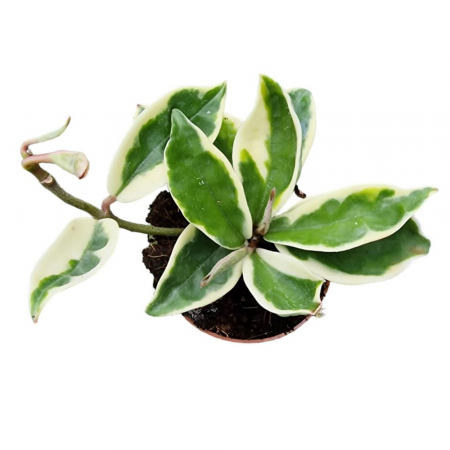
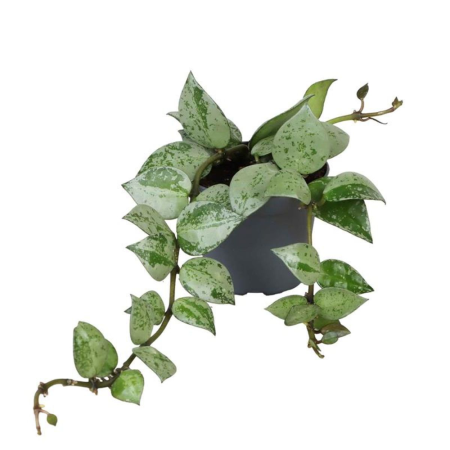
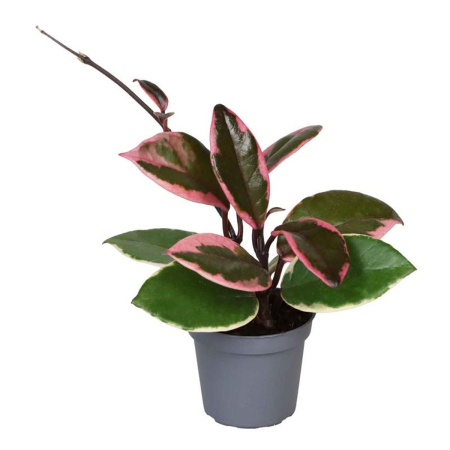
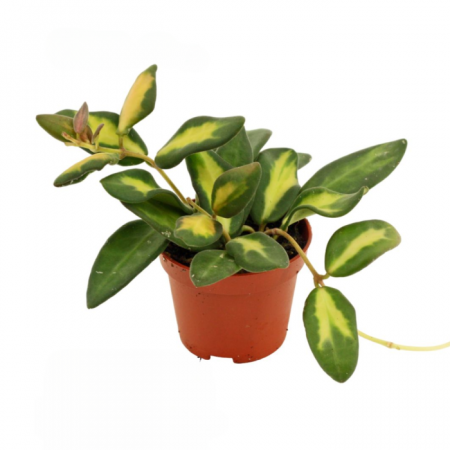
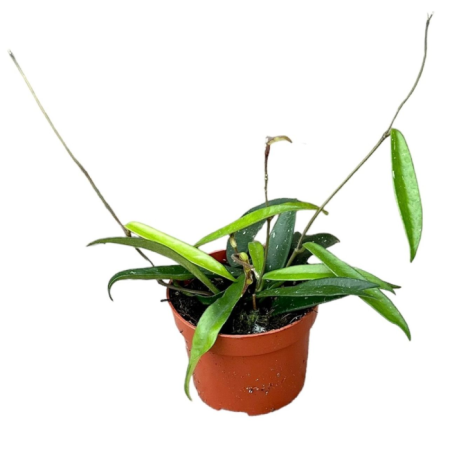
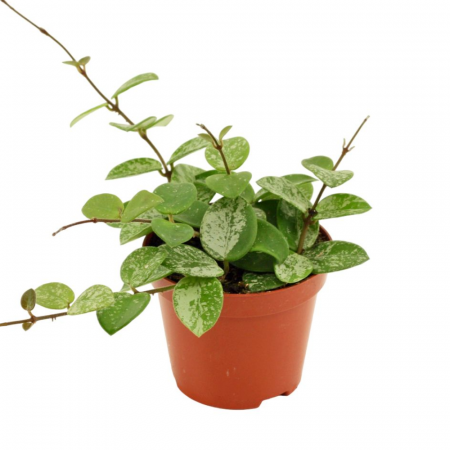
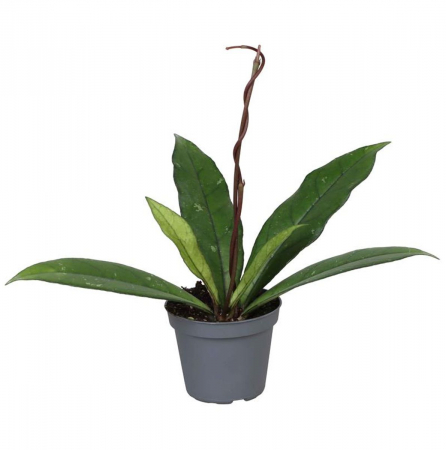
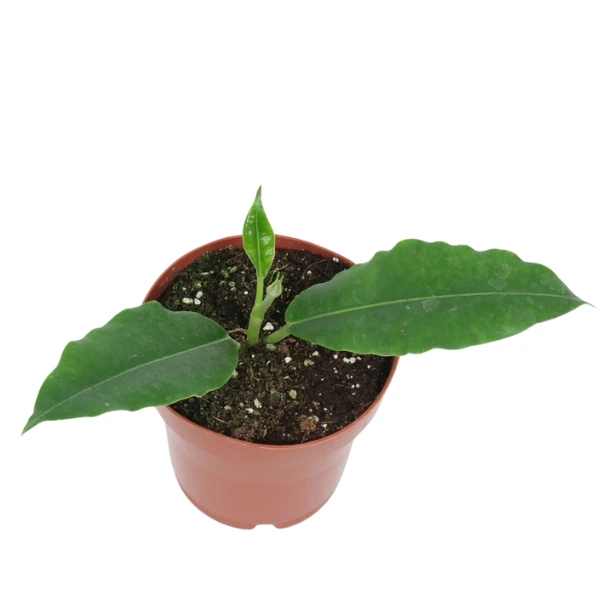
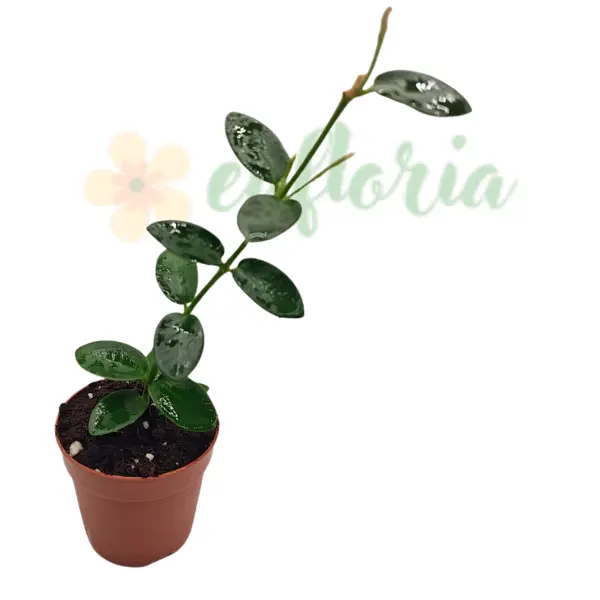
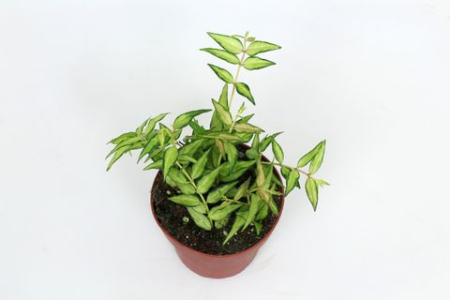
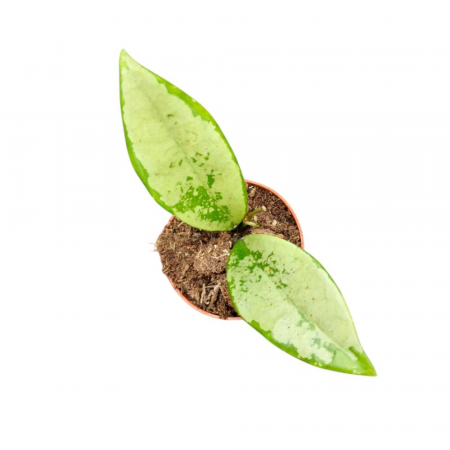
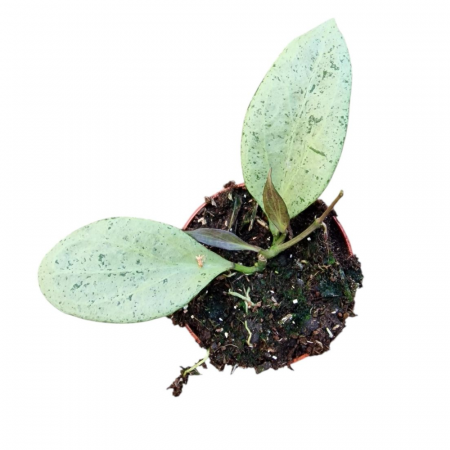
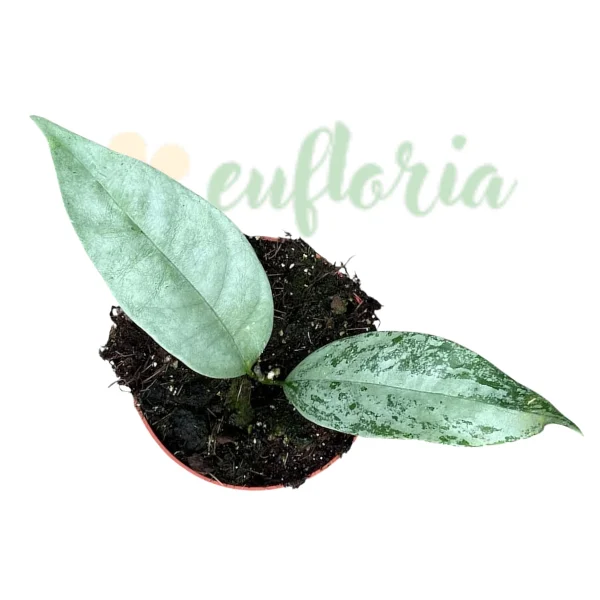
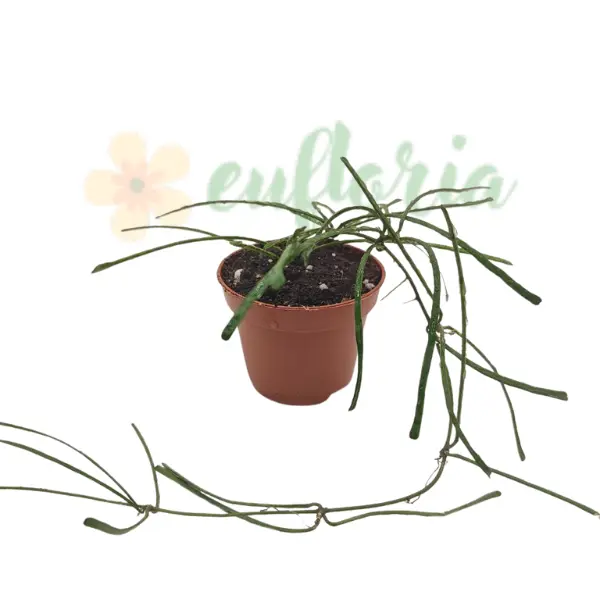
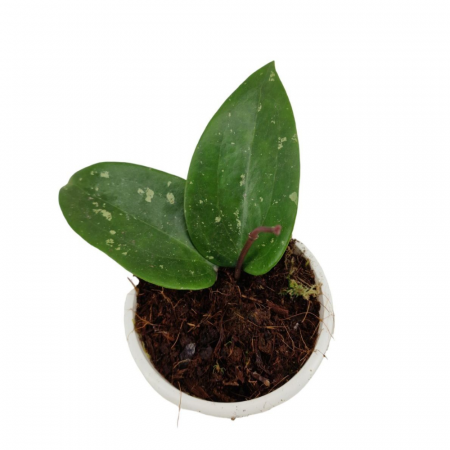
Hoya quinquenervia — a remarkable Southeast Asian species with 5 prominent palmate nerves on large (8–15cm), glossy, deep green leaves. Blooms in spherical umbels of 15–30 fuzzy cream flowers with yellow coronas and sweet honey fragrance. Climbing epiphyte, moderately easy care: bright indirect light, 60–80% humidity, very well-draining substrate. Non-toxic to pets (ASPCA). Ideal for collectors seeking distinctive foliage. Fast delivery across the EU.
Approx height (including pot): 15 cm
Flowering state: No flowers
Country of origin: Netherlands
Hoya quinquenervia is a remarkable Hoya species native to Southeast Asia, easily recognised by the five prominent nerves that run the entire length of its leaves — a trait reflected in its Latin name "quinquenervia" (five nerves). This epiphytic plant combines distinctive, ornamental foliage with delicate, fuzzy flowers, making it a special choice for collectors who appreciate both unusual leaf textures and the spectacle of blooming.
The leaves are thick, glossy, and deep green, with five parallel nerves that start at the base and curve elegantly to the tip. These nerves are slightly sunken on the upper surface and more prominent underneath, creating an almost sculptural texture that catches the light at fascinating angles. The leaf shape is elliptic to ovate, measuring 8–15 centimetres in length and 4–7 centimetres in width, making them among the largest in the Hoya genus. Young leaves may have a bronze or reddish tint that turns deep green as they mature.
Hoya quinquenervia is a robust epiphyte that grows naturally on tree trunks in humid tropical forests. The stems are semi-woody, hardy, and can develop impressive lengths of 100–200 centimetres in cultivation with adequate support. The plant produces aerial roots from its nodes, which help it anchor to supports in its natural habitat. Growth is moderate to rapid compared to other rare Hoyas, making it relatively accessible for cultivation even by mid-level collectors.
The flowering of Hoya quinquenervia is a special spectacle. Flowers form in spherical umbels of 15–30 blooms, each flower measuring approximately 1.5–2 centimetres in diameter. The petals are fuzzy cream-white, covered with fine dense hairs that give them a velvety appearance and an almost fur-like texture. The central corona is cream-yellow with cherry-red accents in the centre, creating a gentle but pleasant contrast. The fragrance is sweet and discreet, with floral notes reminiscent of warm honey, more pronounced in the evening and at night. A mature plant can bloom several times a year under optimal conditions.
The species Hoya quinquenervia is native to the tropical regions of Southeast Asia, with a range that includes Sumatra, Borneo (Sabah, Sarawak, Kalimantan), the Malay Peninsula, southern Thailand, and the Philippine islands. It grows naturally in humid tropical forests from lowland areas up to medium altitudes, where temperatures remain warm year-round and humidity is consistently high. In these habitats, the plant attaches itself to tree trunks and branches, benefiting from filtered light through the forest canopy and the humidity of tropical air.
The species was scientifically described by the renowned Danish botanist Joannes Theodor Traill in 1830, in his works on tropical Asian flora. The name "quinquenervia" was chosen to highlight the species' most distinctive feature — the five prominent leaf nerves, a rare trait in the Hoya genus where most species have ordinary pinnate or non-prominent venation. This early description makes Hoya quinquenervia one of the first Southeast Asian Hoya species systematically studied by European botanists.
The genus Hoya was named in honour of English botanist Thomas Hoy (1750–1822), gardener to the Duke of Northumberland, who cultivated numerous tropical plants imported to Europe at the end of the 18th century. The genus today contains over 500 described species, of which Hoya quinquenervia is one of the most distinctive through its unique venation. It belongs to the Apocynaceae family, the same that includes oleander, frangipani, and Stephanotis floribunda.
In European cultivation, Hoya quinquenervia was introduced in the 19th century as part of the botanical collections of major European gardens, but only in recent decades has it become more accessible to private collectors. The growing interest in rare Hoyas in recent years has brought this species to the attention of modern collectors, who particularly appreciate the combination of spectacular leaf venation and the delicate beauty of its fuzzy flowers.
What makes Hoya quinquenervia truly unmistakable is the venation of its leaves. The five main nerves start at the base of the leaf, curve slightly outward, and converge at the tip, creating an almost symmetrical pattern reminiscent of an open hand or a miniature palm leaf. This palmate venation is extremely rare in the Hoya genus and is the main diagnostic character that differentiates the species from other Hoyas with similar leaves. The nerves are lighter in colour than the rest of the leaf, creating a subtle but elegant contrast against the deep green background.
The leaves are impressively sized for the Hoya genus, measuring 8–15 centimetres in length and 4–7 centimetres in width, with a broadly elliptic to ovate shape. The considerable thickness of the leaves gives them a semi-succulent appearance and allows them to retain water for drier periods. The surface is smooth and slightly glossy, with a thick cuticle that protects the plant from excessive moisture loss. The leaf tip is tapered to pointed, and the base is rounded or slightly heart-shaped.
The dominant colour is a deep, rich green that becomes even more vibrant in optimal light conditions. Young leaves are often bronzed or reddish at first, gaining their characteristic green colour in the following weeks. Under strong direct light (properly filtered), the leaves can develop a slight reddish tint at the edges, an effect called "sun-stress" that is considered attractive by many collectors and a sign of a healthy plant.
The stems are semi-woody, with a diameter of 3–5 mm in mature plants, and are dark green-brown in colour. Nodes appear at intervals of 5–10 centimetres, each producing a pair of opposite leaves and aerial roots in natural habitats. In cultivation, these aerial roots can be encouraged by maintaining high humidity. Growth is moderate to vigorous, and the plant can develop stems of 2–3 metres in length under optimal conditions over several years.
Hoya quinquenervia is a moderately easy species to care for, suitable for collectors with basic experience in cultivating Hoyas. It does not have highly specialised requirements but benefits from conditions that mimic its natural tropical habitat. The key to success is providing it with bright indirect light, constant high humidity, stable warm temperatures, and a very well-draining substrate that mimics the epiphytic environment in which it grows naturally.
Light is the most important factor for healthy development and flowering. Hoya quinquenervia requires bright indirect light, ideally 6–8 hours daily. An east-facing window is perfect, offering the gentle direct morning light without the stress of intense afternoon rays. West-facing windows work well with partial filtering, and south-facing windows mandatorily require filtering through a sheer curtain. Insufficient light causes the plant to grow elongated and never bloom.
To stimulate flowering, provide the plant with sufficient bright light and a support (moss pole or trellis) for it to climb naturally. Hoya quinquenervia blooms on permanent peduncles called "spurs" that emerge from mature nodes — never cut these peduncles after flowering, as the plant will bloom repeatedly from the same points in subsequent years. In the cold season, reduce watering but maintain high air humidity so the plant does not enter excessive stress.
Hoya quinquenervia is the ideal choice for collectors who appreciate distinctive and unusual foliage. The unique palmate venation of the leaves makes this plant an instant conversation starter — any plant enthusiast will notice it immediately and ask about it. It is one of those species that offers significant decorative value through its foliage alone, and when it blooms, the spectacle of fuzzy cream flowers with yellow coronas adds an extra dimension of beauty.
An important advantage is that all Hoya species, including quinquenervia, are considered non-toxic to pets according to the ASPCA database. This makes it a safe choice for homes with cats, dogs, or curious small children. You can place it anywhere without worrying that it will be dangerous to your four-legged family members — a significant advantage over many other exotic ornamental plants.
Compared to other rare Hoyas, Hoya quinquenervia is relatively accessible and easier to care for, making it an excellent entry point into the world of collecting rare Hoyas. Its large leaves make it ideal for display in bright spaces — apartments, offices, winter gardens — where it will captivate attention through its generous size and distinctive venation. Its climbing form makes it suitable for moss poles, trellises, or high shelves.
From Eufloria, you receive a healthy, well-rooted specimen, carefully selected for its decorative qualities and for the well-developed leaf venation. Each plant is inspected before delivery and carefully packaged to arrive at you in perfect condition. With a little attention and adequate conditions, Hoya quinquenervia will reward your effort with years of unique beauty, increasingly large and impressive leaves, and the delicate spectacle of its fuzzy flowers with their sweet fragrance.
Lungime: 15 cm
Greutate (kg): 0.5 Kg
Denumire: Hoya
Diametru: 10.5 cm
Cerințe lumină: Partial umbra
Tip plantă: Decorative
Utilizare: Interior
Tip suport: Ghiveci
Material Suport: Plastic
Water when the top 2–3 cm of substrate feels dry, typically every 7–10 days in summer and every 14–21 days in winter. Ensure good drainage to prevent root rot.
No, Hoya quinquenervia is classified as non-toxic to cats and dogs according to the ASPCA. It is a safe choice for households with pets.
Use a well-draining mix: 40% perlite, 30% orchid bark, 20% peat-free compost, and 10% horticultural charcoal. The substrate should be airy and not retain excess water.
Hoya quinquenervia blooms on mature specimens (2+ years) from spring through autumn. The flowers are pale pink, waxy, and highly fragrant, arranged in umbels of 15–25 blooms.
Hoya quinquenervia is distinguished by five prominent longitudinal veins visible on each leaf, a rare trait in the Hoya genus. Its flowers are among the most fragrant in the genus.