
 EN/
EN/ Romana
Hoya carnosa tricolor 'Flamingo Dream' Ø6cm
![Hoya 'Tricolor Flamingo Dream' — waxy tricolor leaves with flamingo pink, Eufloria [0]](https://gomagcdn.ro/domains2/eufloria.ro/files/product/medium/hoya-carnosa-tricolor-flamingo-dream-286819.jpg "Hoya 'Tricolor Flamingo Dream' — waxy tricolor leaves with flamingo pink, Eufloria [0]")
![Hoya 'Tricolor Flamingo Dream' — waxy tricolor leaves with flamingo pink, Eufloria [1]](https://gomagcdn.ro/domains2/eufloria.ro/files/product/medium/hoya-carnosa-tricolor-flamingo-dream-115595.png "Hoya 'Tricolor Flamingo Dream' — waxy tricolor leaves with flamingo pink, Eufloria [1]")
![Hoya 'Tricolor Flamingo Dream' — waxy tricolor leaves with flamingo pink, Eufloria [2]](https://gomagcdn.ro/domains2/eufloria.ro/files/product/medium/hoya-carnosa-tricolor-flamingo-dream-547260.png "Hoya 'Tricolor Flamingo Dream' — waxy tricolor leaves with flamingo pink, Eufloria [2]")
![Hoya 'Tricolor Flamingo Dream' — waxy tricolor leaves with flamingo pink, Eufloria [1]](https://gomagcdn.ro/domains2/eufloria.ro/files/product/original/hoya-carnosa-tricolor-flamingo-dream-286819.jpg "Hoya 'Tricolor Flamingo Dream' — waxy tricolor leaves with flamingo pink, Eufloria [1]")
![Hoya 'Tricolor Flamingo Dream' — waxy tricolor leaves with flamingo pink, Eufloria [2]](https://gomagcdn.ro/domains2/eufloria.ro/files/product/original/hoya-carnosa-tricolor-flamingo-dream-115595.png "Hoya 'Tricolor Flamingo Dream' — waxy tricolor leaves with flamingo pink, Eufloria [2]")
![Hoya 'Tricolor Flamingo Dream' — waxy tricolor leaves with flamingo pink, Eufloria [3]](https://gomagcdn.ro/domains2/eufloria.ro/files/product/original/hoya-carnosa-tricolor-flamingo-dream-547260.png "Hoya 'Tricolor Flamingo Dream' — waxy tricolor leaves with flamingo pink, Eufloria [3]")
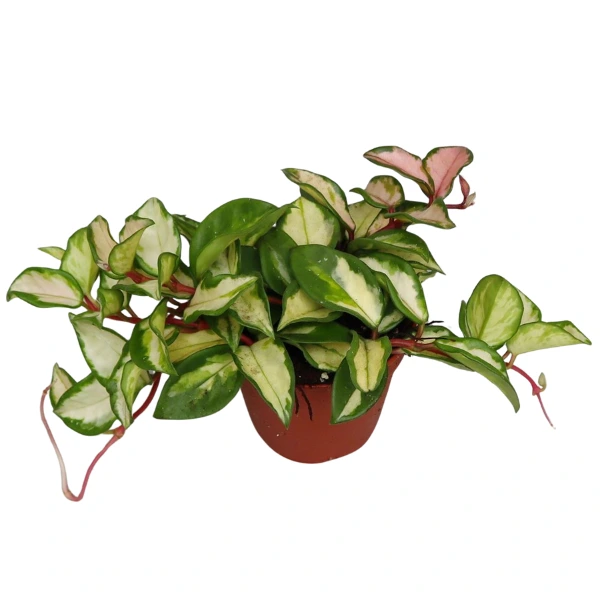
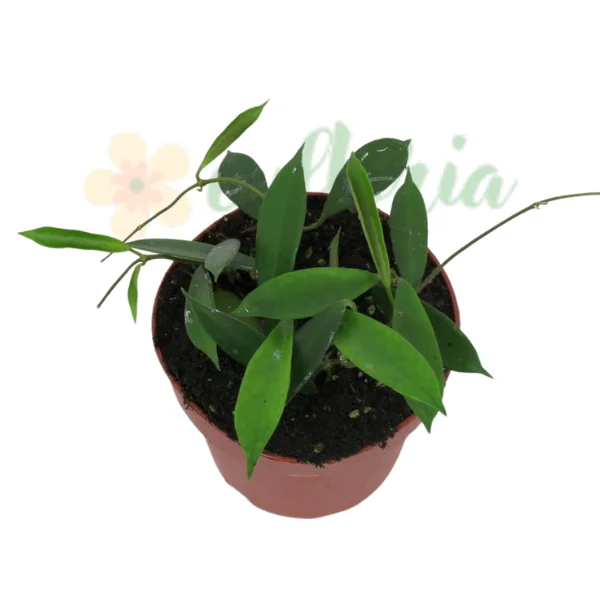
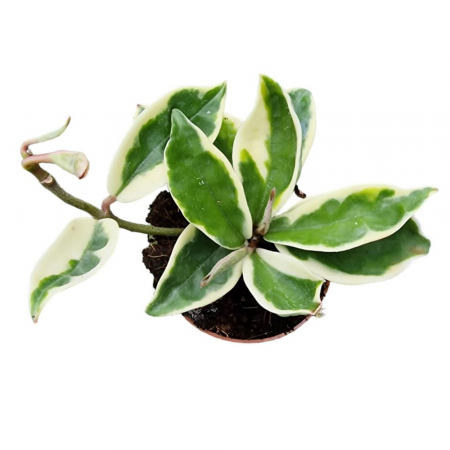
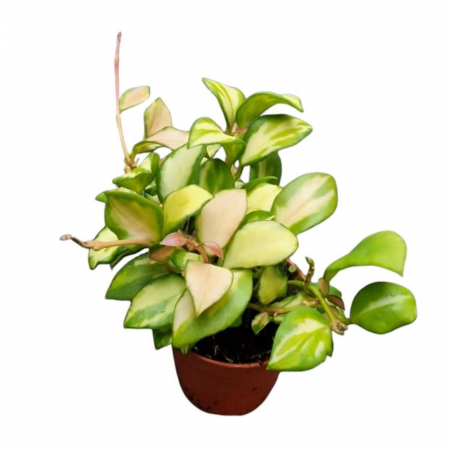
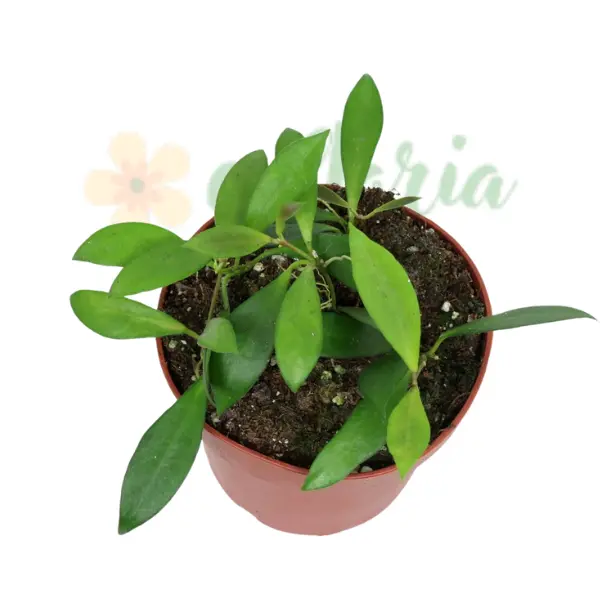
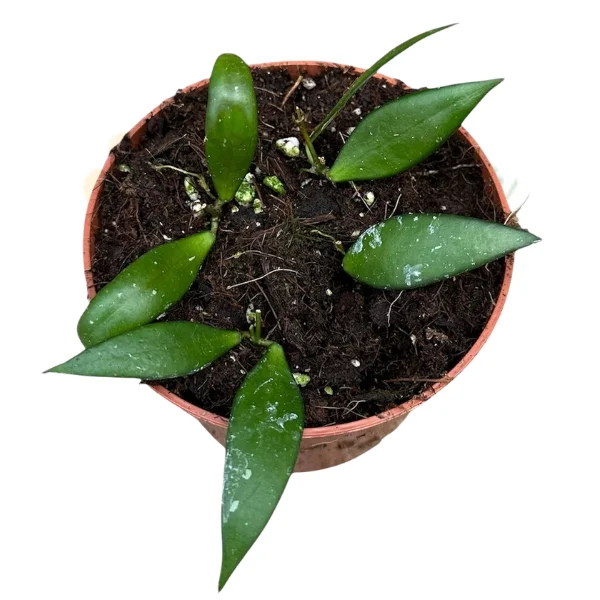
Rare variegated Hoya carnosa cultivar with tricolour leaves — green, white-cream and intense flamingo pink on new leaves. Hardy vining plant accessible for beginners. Fragrant flowers in globular umbels.
Note: Product images are for guidance only. Due to different batches of imported products, there may be differences between the images on the website and the actual appearance of the products.
Approx height (including pot): 15 cm
Flowering state: No flowers
Country of origin: Denmark
- Description
- Characteristics
- Reviews (0)
- FAQ
Characteristics of Hoya carnosa 'Tricolor Flamingo Dream'
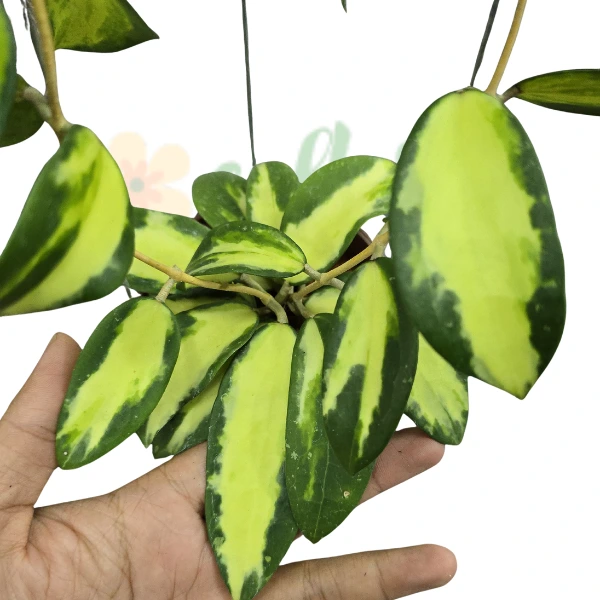
Hoya carnosa 'Tricolor Flamingo Dream' is a rare variegated cultivar of the classic Hoya carnosa, prized for the unique chromatic spectacle of its tricolour foliage. New leaves emerge in an intense flamingo-pink tint, some almost entirely pink, then pass through a cream-yellow phase before maturing to green with variegated white-cream edges or zones. The result is a plant with a constantly changing colour palette, where each stem simultaneously carries leaves in all stages of maturation.
The plant retains the classic characteristics of the Hoya carnosa species — it is robust, resistant, with stems that gradually elongate up to 2-3 metres in cultivation, bearing thick waxy leaves of 5-8 cm. The 'Tricolor Flamingo Dream' variety is valued by collectors both for its unique ornamental appearance and for its relative ease of cultivation — it inherits the tolerance for neglect and adaptability of the standard Hoya carnosa, being one of the most accessible variegated hoyas for beginning growers.
Origin of Hoya carnosa 'Tricolor Flamingo Dream'
Hoya carnosa, the mother species, is one of the oldest cultivated hoyas, native to Southeast Asia — Thailand, southern China, Vietnam, Philippines and the Malay Archipelago. It was brought to Europe in the eighteenth century and quickly became a classic houseplant, popularly known as the 'porcelain plant' or 'wax flower' due to its glossy waxy-looking flowers. The species grows epiphytically on tree trunks in humid tropical forests at low and medium altitudes.
The 'Tricolor Flamingo Dream' cultivar was developed through selection of variegated mutations stabilised through vegetative propagation. The tricolour variegation with flamingo-pink phases is a spectacular juvenile characteristic, due to chlorophyll deficiency in partial zones of the leaves. Plants are propagated exclusively through cuttings to preserve the variegated pattern, because seeds produce standard green plants. Plants offered by Eufloria come exclusively from legal vegetative propagation.
Foliage of Hoya carnosa 'Tricolor Flamingo Dream'
The leaves are the defining feature of this cultivar — elongated ovoid in shape, with lengths of 5-8 cm and widths of 3-5 cm, with a thick and waxy texture typical of Hoya carnosa. The 'tricolour' feature manifests through three shades that coexist on the same plant: dark green for zones with complete chlorophyll, white-cream for fully variegated zones and intense flamingo pink for young leaves in which anthocyanins dominate before chlorophyll development.
The intensity of the pink colour depends on light exposure — under strong indirect light conditions, new leaves can be entirely cereal pink, while in low light only slightly pink on the edges appear. As the leaf matures, the pink pigment dilutes and chlorophyll develops in non-variegated zones, leaving a permanent pattern of green and white-cream. Variegation remains stable for life, and some plants develop entirely white or pink leaves which, although spectacular, cannot sustain the plant long-term.
Flowers of Hoya carnosa 'Tricolor Flamingo Dream'
Hoya carnosa 'Tricolor Flamingo Dream' blooms in globular umbels of 15-30 small flowers, each flower measuring 1-1.5 cm in diameter. The colours are characteristic of the species — pale pink or white outer tepals, with the inner corona (gymnostegium) in bright pink or red. The flowers have an apparently waxy texture that gave the species the popular name 'wax flower'. The fragrance is sweet-vanilla, intense in the evening, specific to pollination by night moths.
Flowering can occur 2-4 years from purchase, once the plant reaches vegetative maturity. Flowers last 7-10 days, being replaced cyclically by new umbels on the same peduncles that can rebloom for several years — this is why peduncles are never cut. The plant typically flowers in spring and summer, sometimes also in autumn under good conditions. The flowering cycle can be stimulated by mild stress (short periods of dryness) and day-night temperature differences.
Growth pattern of Hoya carnosa 'Tricolor Flamingo Dream'
Hoya carnosa 'Tricolor Flamingo Dream' prefers bright indirect light to develop variegation and to produce new leaves with a pronounced pink tint. An east or south-east facing window with a sheer curtain is ideal. It tolerates 2-3 hours of direct morning sun, but strong midday rays can burn the white zones of variegated leaves. Preferred temperatures range between 18 and 28°C, and the plant tolerates minimums of 12-15°C without problems. Ideal humidity is 50-70 per cent, tolerating drier conditions than many other hoyas.
The ideal substrate is highly aerated and drained — medium pine bark, perlite and a little sphagnum, simulating natural epiphytic conditions. Watering is done when the substrate is almost completely dry, avoiding excess which can lead to root rot. Fertilisation is applied diluted (a quarter of normal dose), once every 2-3 weeks during the active growing season, with balanced or hoya-specific fertiliser. Propagation is done through stem cuttings with 2-3 nodes, rooting done in moist sphagnum or water in 3-6 weeks. Cuttings with balanced variegation must be selected to preserve the cultivar characteristics.
Lungime: 6 cm
Greutate (kg): 0.15 Kg
Denumire: Hoya
Diametru: 6 cm
Cerințe lumină: Strong, indirect light
Tip plantă: Decorative
Utilizare: Interior
Tip suport: Ghiveci
Material Suport: Plastic
Are there multiple stems/plants in the pot?
There is one plant in the 6 cm pot.
What should I do if the plant arrives damaged?
It is very rare for couriers to mishandle parcels, even though we label them as "FRAGILE". In the unfortunate event that one or more plants, or the package, arrive damaged, please contact us and we will solve the situation together. We assure you of our full cooperation.
Can I choose the exact plant I order?
You can contact us via WhatsApp or by phone to receive photos of the available specimens before shipping.
Does it have flowers?
Most of the Hoya plants we sell are not in bloom when shipped. However, they can bloom under the right light, temperature, and humidity conditions. The flowers are waxy, star-shaped, and very fragrant, especially in the evening. Check the "Flowering stage" for each product to see whether the plant is: - Without flowers - With formed peduncles - With flowers Hoya carnosa 'Tricolor Flamingo Dream' flowers typically last between 5 and 7 days after opening, sometimes up to ten days if the environment is stable (no drafts and consistent temperature). After the flowers fade, do not cut the peduncles, as they can produce new inflorescences in subsequent seasons. Blooming period - Under ideal light and temperature conditions, Hoya carnosa 'Tricolor Flamingo Dream' can bloom multiple times a year, more frequently in late spring and summer (May–August). - In indoor environments with adequate artificial light, flowering can even occur outside the natural season, for example in winter, if exposed to more than 12 hours of light per day. Flower description - The flowers are small, star-shaped, pale pink to white with a darker pink center, grouped in umbels. - They form on permanent peduncles, so do not remove them after blooming. Fragrance of the flowers - The scent is medium to strong, more intense in the evening and at night. - The aroma is sweet-floral, with notes of honey and vanilla, typical of Hoya carnosa varieties.
How can I intensify the pink coloration in the leaves?
The pink coloration in 'Tricolor Flamingo Dream' is light-dependent. To maximize the pink hues:
1. Provide bright indirect light – at least 6-8 hours daily
2. Allow gentle morning sun (1-2 hours) for "sun stress" coloration
3. Avoid overwatering – slightly drier conditions promote better color
4. Maintain good air circulation 5. Be patient – new growth often shows the most intense pink coloration.
To encourage reblooming of Hoya carnosa 'Tricolor Flamingo Dream', follow these essential tips:
1. Do not cut the flower peduncles – they are permanent and can produce new flowers multiple times. Even if partially dried, keep them.
2. Provide strong and consistent light – at least 10–12 hours per day. Ideally, place the plant near an east- or southeast-facing window. In the cold season, you can use a LED grow light.
3. Avoid moving the plant – after peduncles appear, changing its position or light angle can stop flower development.
4. Use appropriate fertilizer – apply a balanced indoor plant fertilizer (e.g., NPK 10-10-10) during growth, and switch to a phosphorus-rich one (e.g., 10-30-20) when buds form.
5. Maintain temperatures between 22–28°C by day and above 18°C by night – sudden changes can stop bud formation.
6. Water moderately – let the substrate dry partially between waterings. Overwatering can inhibit flowering.
7. Ensure ambient humidity of 60–70% – if the air is too dry, buds may drop before opening.
8. Allow a mild rest period in winter – reduce watering and avoid overfertilizing; this pause helps the plant store energy for the next flowering cycle.
Is it toxic for pets or children?
Hoya carnosa 'Tricolor Flamingo Dream' is an ornamental plant not intended for consumption. It contains a milky latex (whitish sap) that appears when leaves or stems are damaged. This latex contains irritating compounds (mainly alkaloids and saponins) which can cause:
- For humans: skin or eye irritation, especially in sensitive individuals; if ingested, it may cause nausea, vomiting, or digestive discomfort.
- For pets (cats, dogs, rabbits, etc.): excessive salivation, oral irritation, mild vomiting, or temporary loss of appetite – symptoms are usually mild but unpleasant.
Although Hoya carnosa 'Tricolor Flamingo Dream' is not considered "highly toxic", it belongs to the category of ornamental plants with irritating latex. It is recommended to:
- avoid handling with bare hands if you are sensitive to the sap,
- keep the plant away from children and pets,
- wash your hands immediately after cutting or repotting.
Where should I place it indoors for best coloration and blooming?
Ideally near an east- or southeast-facing window, with bright indirect light. For enhanced pink coloration, allow 1-2 hours of gentle morning sun. Avoid sudden position changes after peduncles appear, as this can cause bud drop.
How to preserve the flamingo pink?
For persistent intense pink: provide bright indirect light (no direct sun), constant temperatures 18-28°C, humidity 50-70%, and moderate fertilization with phosphorus-rich fertilizer. Weak light reduces pink intensity.
How to make cutting from Hoya?
Cut a stem portion with 2-3 nodes and a few leaves, let scab 1-2 hours, then root in water or moist hoya substrate (bark + perlite). Roots in 4-8 weeks. Cuttings with variegated leaves produce new variegated plants.
Is Hoya toxic?
Hoyas are considered non-toxic or only mildly irritating. Milky sap may cause mild skin irritation in sensitive individuals. They are not on the ASPCA list of toxic plants for pets.
How does Hoya 'Tricolor Flamingo Dream' bloom?
Produces compact umbels of 20-30 waxy pink-white star-shaped flowers with red-pink center. The fragrance is sweet, intense in the evening, with notes of honey and vanilla. Flowering is spring-summer on mature plants. DO NOT cut flower peduncles — they are perennial.
How to water correctly?
Moderate. Allow substrate to dry almost completely between waterings. Every 7-10 days in summer, every 2-3 weeks in winter. Hoyas are adapted to epiphytism and tolerate short drought better than overwatering.
Ai nevoie și de un ghiveci decorativ?







