EN/
EN/ Romana
Hoya latifolia 'Silver Splash' Ø7cm
![Hoya latifolia 'Silver Splash' – Dinner Plate Hoya [1]](https://gomagcdn.ro/domains2/eufloria.ro/files/product/original/hoya-latifolia-silver-splash-d7-009798.webp "Hoya latifolia 'Silver Splash' – Dinner Plate Hoya [1]")
Hoya latifolia 'Silver Splash' is the perfect choice for collectors who want a statement plant with impressive leaf size and pattern. Commonly known as the "Dinner Plate Hoya," this species produces some of the largest leaves in the entire genus – up to 16 cm long and 14 cm wide. The 'Silver Splash' variety adds silver patches and flecks that shimmer in the light, making each leaf unique.
Approx height (including pot): 10 cm
Flowering state: No flowers
Pot diameter: 7 cm
- Description
- Characteristics
- Reviews (0)
- FAQ
The Dinner Plate Hoya
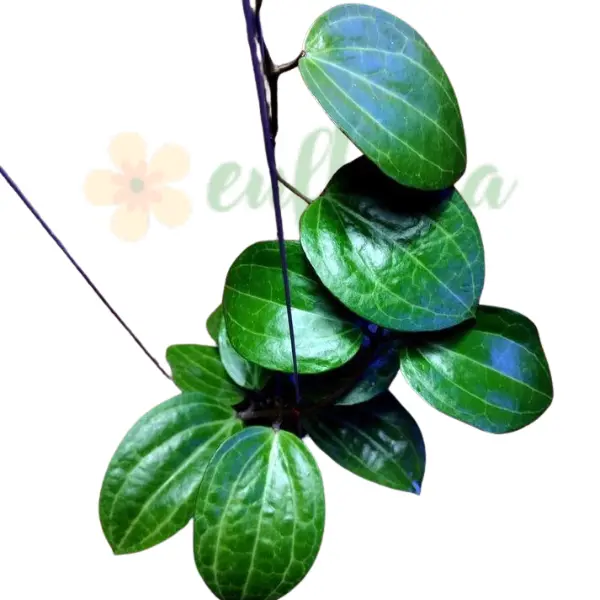
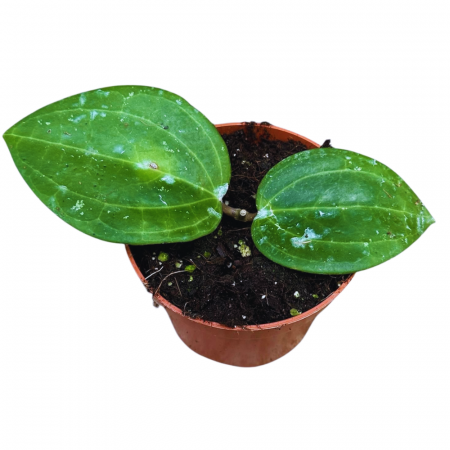
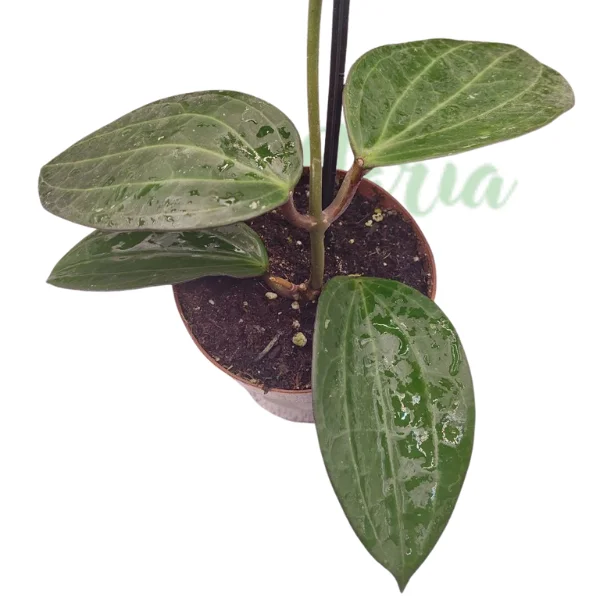
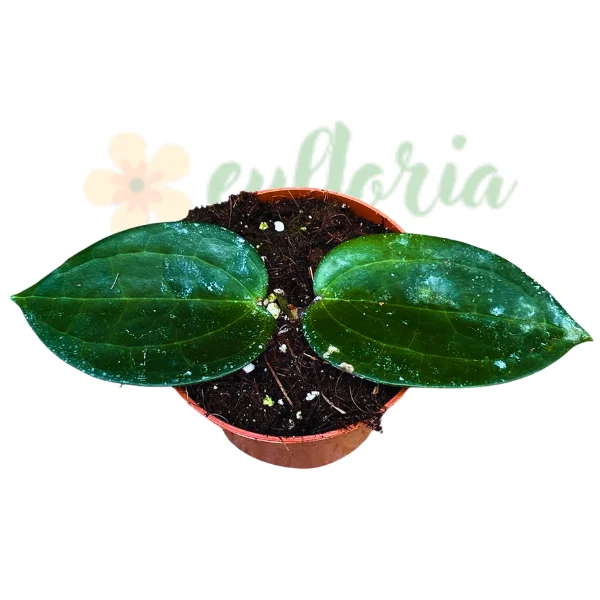
Hoya latifolia 'Silver Splash' is the collector's choice for those who want scale and shimmer in a single plant. The species is often called the "Dinner Plate Hoya" for good reason – mature leaves can reach up to 16 × 14 cm (and some sources report even larger), making these some of the most substantial leaves in the entire genus. The 'Silver Splash' cultivar takes this architectural foliage and scatters it with irregular silver flecks that catch light from every angle, giving each leaf a frosted, almost metallic quality. No two leaves look the same.
Botanical Background
Hoya latifolia G.Don was first published in General History (1837). According to Kew's Plants of the World Online (POWO), the native range extends from Myanmar through Western Malesia – including Borneo, Java, Sumatra, Malaysia, and Thailand. The species grows as a climbing epiphyte or lithophyte in wet tropical biomes, typically found clinging to trees in lowland and foothill rainforests. The species name comes from Latin: latus (broad) and folium (leaf) – a direct reference to the plant's oversized foliage. The synonym Hoya macrophylla (meaning "large-leaved") also refers to the same characteristic. Other synonyms that have been folded into H. latifolia include H. polystachya, H. tjadasmalangensis, and H. clandestina. The 'Silver Splash' designation is a trade name for plants selected for their prominent silver variegation pattern – not a formally registered cultivar, but a stable genetic trait that persists across generations.
The Foliage
This is where H. latifolia 'Silver Splash' makes its statement. The leaves are thick, stiff, and leathery – almost succulent in texture. Tropics@Home records leaf dimensions of 16 × 14 cm, while Foliage Factory notes that 'Silver Splash' forms can produce leaves reaching 15 cm or more in length with deep, prominent venation. The base colour is deep glossy green, and the veins are conspicuously raised, creating an almost sculptural surface. The 'Silver Splash' selection adds irregular silver patches and speckles scattered generously across the leaf surface. Under bright indirect light, these silver markings take on a shimmering, almost translucent quality. Unsolicited Plant Talks notes that in brighter conditions the leaves tend to be smaller and thicker – a water-retention adaptation – while lower light produces larger, darker leaves. Some forms can sun-stress to develop reddish-purple edges or even deeper maroon tones under high light exposure.
Growth Habit
H. latifolia is a vigorous climbing epiphyte with long, twining stems. Vermont Hoyas notes it can grow quite rapidly in summer under ideal conditions, but like many Hoyas will enter a dormant phase in winter without supplemental lighting and humidity. Mature vines can reach 4–6 feet (1.2–1.8 m) in a hanging basket, potentially longer when trained on a trellis. The stems become woody with age and develop aerial roots that help the plant anchor to supports. This species is an excellent choice for both hanging baskets (where the substantial foliage creates impressive cascades) and trellises (where the large leaves create a lush vertical display). Due to the weight of the foliage, sturdy supports are recommended for climbing specimens.
The Flowers
When H. latifolia blooms, it does so with spectacular abundance. Vermont Hoyas documented a single peduncle bearing an astonishing 260 flowers – a record-breaking number that the grower counted by grouping spent flowers into piles of ten. The flowers themselves are star-shaped, approximately 1 cm in diameter, with a reflexed (curving backwards) corolla. Flower colour ranges from creamy white to pale pink, sometimes with yellow or greenish tones. Tropics@Home describes them as crème corolla with white corona. Unsolicited Plant Talks notes that the flowers can be a unique yellow-green colour – a hue not commonly seen in other Hoyas. The umbels are large and ball-shaped when fully open, creating a genuinely impressive display. Fragrance is typically described as sweet and mild – Room 4 Plants describes the outer-variegated form as having a "mild, very sweet" scent with hints of dill. The fragrance intensifies at night, following the pattern of many Hoyas that evolved to attract nocturnal pollinators. Vermont Hoyas reports that the plant flowered at 2½ years of age and has since produced thousands of flowers. Like all Hoyas, never remove the peduncles (flower stalks) – the same stalks produce new blooms year after year.
Sooty Mould – Not a Problem
One characteristic that sometimes concerns new H. latifolia owners is the appearance of black powdery substance (sooty mould) on the peduncles after flowering. Unsolicited Plant Talks specifically addresses this: in H. latifolia, the soot is a byproduct of the nectar itself and a specific fungus that feeds on it. While it might not be aesthetically pleasing, it doesn't hinder the plant's growth or health. An occasional gentle clean can help, but this is a natural phenomenon for the species – not a sign of disease or pest infestation.
Care Requirements
- Light: Bright indirect light produces the best growth, most compact form, and strongest silver splash expression. The species tolerates some direct morning or late afternoon sun but avoid harsh midday rays. In lower light, leaves grow larger and darker but the plant becomes leggy and less likely to flower. Under very bright light, expect smaller, thicker leaves and potential sun-stress colouration (reddish-purple edges).
- Water: Allow the top 2–3 cm of substrate to dry completely between waterings. The thick succulent-like leaves store moisture efficiently, making the plant more tolerant of drought than overwatering. Root rot is the most common cause of problems in H. latifolia – when in doubt, wait another day or two before watering. Reduce watering significantly in winter.
- Soil: Well-draining epiphytic mix is essential. Tropics@Home specifically notes: "Hoya hates clogged soil." A mix of orchid bark, perlite, and coco coir in roughly equal parts works well. The roots need excellent aeration. Keep the pot slightly snug – Hoyas bloom more readily when somewhat rootbound.
- Temperature: 18–30°C (65–86°F) is the comfortable range. Avoid temperatures below 10°C. The species is cold-sensitive and should be grown indoors in most European climates. Maintain consistent temperatures and avoid cold drafts from windows or doors.
- Humidity: Above 60% promotes healthier growth and flowering, though the plant tolerates average household humidity reasonably well. Misting, pebble trays, or grouping with other plants can help increase local humidity.
- Feeding: Balanced liquid fertilizer at half strength monthly during the growing season (spring through summer). Avoid over-fertilisation, which can cause salt buildup and root damage. Stop or reduce feeding in winter.
Why Collectors Want It
Hoya latifolia 'Silver Splash' offers the rare combination of dramatic scale and distinctive patterning. The leaves are genuinely large – conversation-starting large – and the silver splash variegation makes each leaf unique. Unlike many statement plants, it's remarkably forgiving: Unsolicited Plant Talks describes H. latifolia as "a forgiving plant, tolerating periods of drought and thriving in both bright and hot environments." When mature plants bloom, the flower clusters can contain over 200 individual blooms on a single peduncle – a spectacle few other houseplants can match. The species is recommended even for beginners who want something visually impressive without excessive difficulty.
Why Choose Hoya latifolia 'Silver Splash' from Eufloria.ro
Hoya latifolia 'Silver Splash' is the perfect choice for collectors who want a statement plant with impressive leaf size and pattern. Commonly known as the "Dinner Plate Hoya," this species produces some of the largest leaves in the entire genus – up to 16 cm long and 14 cm wide. The 'Silver Splash' variety adds silver patches and flecks that shimmer in the light, making each leaf unique.
At Eufloria.ro you'll find healthy plants acclimatised to Romanian conditions. Hoya latifolia is a surprisingly tolerant plant – it handles periods of drought and thrives in bright, warm environments. When it blooms, it can produce over 200 flowers on a single peduncle – a spectacle rarely seen in houseplants.
Safe Delivery Throughout Romania
Order Hoya latifolia 'Silver Splash' online from Eufloria.ro with fast delivery to Bucharest, Cluj-Napoca, Timișoara, Iași, Constanța, Brașov, and all cities across the country. Each plant is carefully packaged to arrive in perfect condition.
Botanical Summary
Hoya latifolia G.Don, Gen. Hist. 4: 127 (1837). Family Apocynaceae. Native range: Myanmar to Western Malesia (Borneo, Java, Malaya, Sumatera, Thailand). Climbing epiphyte or lithophyte in wet tropical biome. Synonyms include Hoya macrophylla Wight (nom. illeg.), H. clandestina Blume, H. polystachya Blume, H. tjadasmalangensis Bakh.f., and H. latifolia subsp. kinabaluensis C.M.Burton. Species name from Latin latus (broad) + folium (leaf). Leaves thick, leathery, to 16 × 14 cm with prominent venation. 'Silver Splash' is a trade selection with irregular silver variegation – stable genetic trait. Flowers star-shaped, ~1 cm, creamy white to pale pink or yellow-green, in large umbels up to 260 flowers per peduncle. Fragrance sweet, mild, nocturnal intensification. Sooty mould on peduncles post-flowering is natural for species – byproduct of nectar and symbiotic fungus. Non-toxic to pets and humans.
Lungime: 10 cm
Greutate (kg): 0.25 Kg
Denumire: Hoya
Diametru: 7 cm
Cerințe lumină: Partial umbra
Tip plantă: Decorative
Utilizare: Interior
Tip suport: Ghiveci
Material Suport: Plastic
What's the difference between this, Hoya macrophylla, and Hoya latifolia 'Snow Queen'?
Hoya macrophylla is no longer a valid name – it is a synonym of Hoya latifolia according to Kew POWO. Plants sold as "macrophylla" are actually forms of H. latifolia. The confusion persists in trade, but taxonomically they are the same species. Hoya latifolia 'Albomarginata' (sometimes sold as 'Snow Queen' or 'Variegata') has variegation on the LEAF MARGINS – white or cream stripes at the edges with a green centre. In contrast, 'Silver Splash' has patches and flecks DISTRIBUTED ACROSS THE ENTIRE leaf surface, not just on the margins. It's a difference in pattern: marginal vs. dispersed. Both are cultivars of the same species (H. latifolia), but with different expressions of variegation. 'Silver Splash' offers a more "frosty" and shimmering effect, while 'Albomarginata' has a more dramatic contrast between centre and edges.
How large does this plant grow?
Hoya latifolia is a vigorous climber. Stems can reach 1.2–1.8 m in hanging baskets and potentially longer when trained on supports. But the real attraction is the foliage: leaves can grow up to 16 × 14 cm (some sources report even larger under ideal conditions), making them among the largest in the entire Hoya genus. Hence the popular name "Dinner Plate Hoya." Due to the weight of the foliage, plants on supports need sturdy structures. Growth is rapid in summer under optimal conditions but slows significantly in winter without supplemental lighting and humidity.
What is the black dust that appears on the flower stalks?
This is sooty mould – a natural and harmless phenomenon specific to Hoya latifolia. Unsolicited Plant Talks explains: the black powder is a byproduct of nectar and a specific fungus that feeds on it. It does not affect the plant's growth or health and is not a sign of disease or pests. You can gently clean the peduncles periodically for aesthetic purposes, but it's not necessary for plant health. Don't confuse this with pest infestation – in the case of H. latifolia, this phenomenon is completely normal.
What makes the 'Silver Splash' variety different from regular Hoya latifolia?
The 'Silver Splash' variety is selected for the silver patches and flecks distributed across the leaf surface. While the standard species has uniformly dark green leaves with prominent venation, 'Silver Splash' adds a shimmering, almost metallic pattern that catches the light. Each leaf is unique – the silver patches are irregularly distributed. This variegation is a stable genetic trait, not dependent on environmental factors. Under strong indirect light, the silver effect is most pronounced and can appear almost translucent.
How often should I water this Hoya?
Hoya latifolia has thick, succulent-like leaves that store water efficiently – meaning it tolerates drought better than overwatering. Allow the top 2–3 cm of substrate to dry completely between waterings, then water thoroughly. Root rot is the most common cause of problems. During the cold season, reduce watering frequency significantly. When in doubt, wait another day or two – this plant prefers to be slightly dry rather than too wet.
How many flowers can it produce?
Hoya latifolia is one of the most prolific bloomers in the genus. A grower at Vermont Hoyas documented 260 flowers on a single peduncle – a record-breaking number that was counted by grouping spent flowers into piles of ten. The flowers are star-shaped, approximately 1 cm in diameter, with a waxy texture and colours ranging from creamy white to pale pink or yellow-green. Complete umbels form large, impressive balls. The fragrance is sweet and mild, intensifying at night. Mature plants can produce thousands of flowers throughout a single growing season. Never cut the peduncles (flower stalks) – the same stalks produce new flowers year after year.
Is Hoya latifolia toxic to pets?
No, Hoya latifolia is non-toxic to cats, dogs, and humans. The Hoya genus is generally considered safe for households with pets. The only precaution: the plant produces a milky white latex when cut, which can cause minor skin irritation in sensitive individuals. The large, thick leaves are not appealing for chewing, and the plant can be displayed in hanging baskets for added safety.
How to care?
Bright indirect light, moderate watering, drained substrate. 18-27°C.
Bloom?
Yes, waxy flowers. Don't cut peduncles.
Watering?
Fully dry soil. Weekly summer, 2-3 weeks winter.
Toxic?
No, non-toxic.
Propagation?
Cuttings 2-3 nodes water/sphagnum. 2-6 weeks.
Recommendations
Ai nevoie și de un ghiveci decorativ?