EN/
EN/ Romana
Hoya curtisii Albo Variegated
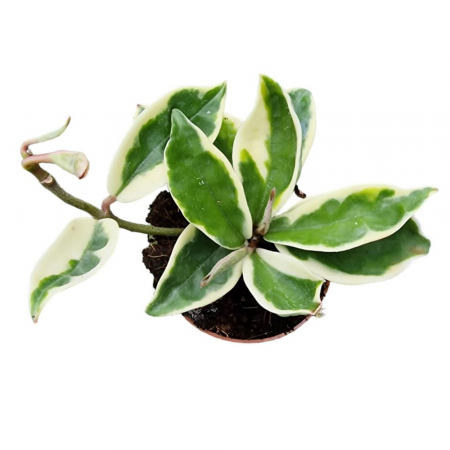
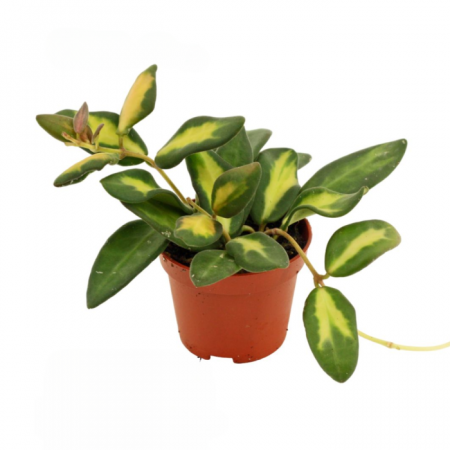
![Hoya curtisii Albo Variegated indoor plant with variegated leaves [1]](https://gomagcdn.ro/domains2/eufloria.ro/files/product/original/hoya-curtisii-albo-variegated-785132.png "Hoya curtisii Albo Variegated indoor plant with variegated leaves [1]")
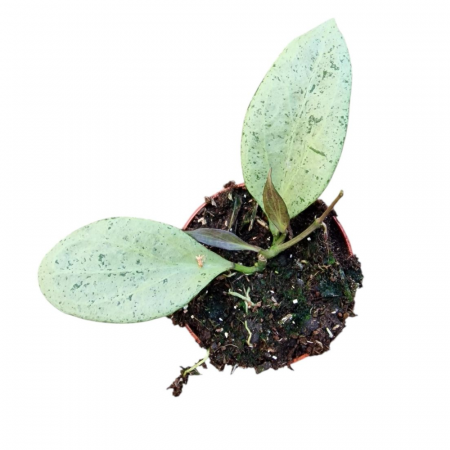
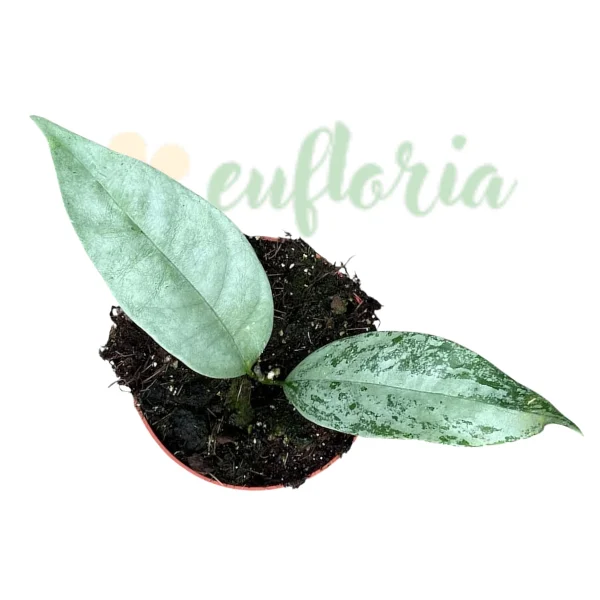
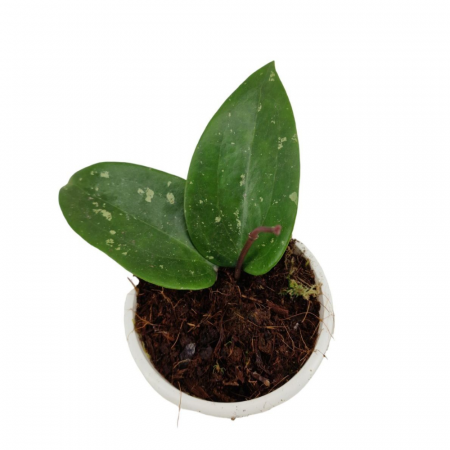
Hoya curtisii Albo Variegated is a rare variant of Hoya curtisii, prized for its small, heart-shaped leaves with golden-yellow sectors that create a fascinating contrast against the green leaf background with characteristic silver spots. A collector plant with a compact, trailing habit, perfect for enthusiasts seeking rare Hoya varieties.
- Description
- Reviews (0)
- FAQ
🌿 Golden yellow on green — the magic of variegation in a perfect botanical miniature
Hoya curtisii is, on its own, a species that inspires admiration through the elegance of miniature. Its small, heart-shaped leaves, covered in a silvery veil that seems painted with a fine brush, have made it one of the most beloved species in the Hoya genus. But when nature adds yet another layer of rarity — golden-yellow variegation — the result transcends ordinary beauty and enters the territory of living botanical art. Hoya curtisii Albo Variegated is precisely this masterpiece: each leaf bears sectors of golden yellow, where carotenoid pigments become visible that join the silver-green background in a unique and unrepeatable composition.
Albo-type variegation (from the Latin album — white) manifests through the complete absence of chlorophyll in certain leaf areas. Unlike inner variegation (where the shades are subtle, cream or light green), albo is dramatic: entire leaf sectors are golden yellow, almost translucent when viewed against the light. This contrast between striking golden and the silver-green of normal areas creates a hypnotic visual effect, similar to a miniature abstract painting. And because each leaf develops its pattern randomly, based on the distribution of cells with or without chlorophyll in the growth meristem, no two leaves are perfectly alike.
At Eufloria, we carefully select each specimen, ensuring the variegation is stable and balanced — sufficiently golden to be spectacular, yet with enough green to sustain the plant through photosynthesis. This balance is the key to an albo specimen's longevity: too much yellow and the plant cannot produce enough energy; too little yellow and it loses the charm of variegation. The specimens we offer represent the ideal equilibrium — a healthy plant, stable variegation, assured growth potential.
If you are a Hoya collector or passionate about variegated plants, Hoya curtisii Albo Variegated is one of those pieces you search for over years. Availability is always limited — variegated mutations are rare, propagation is slow, and not all cuttings maintain the pattern. Every specimen that reaches our catalogue is the result of rigorous selection and patient cultivation.
🌍 Origin and botanical history — from the cliffs of Malaysia to world collections
Hoya curtisii was first described by the British botanist Henry Nicholas Ridley in 1908 in his work "Materials for a Flora of the Malayan Peninsula." Ridley dedicated the species to Charles Curtis, a renowned plant collector who worked at the Penang Botanic Gardens in Malaysia and who collected the original specimens from the montane forests of the Malay peninsula. The full species name, Hoya curtisii King & Gamble, reflects the contribution of botanists George King and James Sykes Gamble to the formal classification.
In its natural state, Hoya curtisii grows as an epiphyte or lithophyte (on rocky surfaces) in the humid tropical forests of Malaysia, Thailand, the Philippines, and several Indonesian islands. It prefers low to medium altitudes (0—800 metres), in zones with constant high humidity, stable temperatures of 22—30°C, and light filtered through the dense canopy. It is often found on moss-covered rocks and decomposed natural matter, where its fine roots anchor to the porous surface texture.
Taxonomically, Hoya curtisii belongs to the family Apocynaceae (subfamily Asclepiadoideae), alongside over 500 congeneric species. Within the Hoya genus, curtisii belongs to the section that includes small-leaved, compact species, alongside Hoya serpens, Hoya engleriana, and Hoya bilobata — all prized by collectors for their reduced dimensions and miniature charm.
The Albo Variegated variant emerged as a spontaneous somatic mutation — a rare event in which meristematic cells of a branch lose the ability to produce chlorophyll. This mutation was observed and stabilised by Asian cultivators (primarily in Thailand and Indonesia), who propagated it vegetatively to maintain the pattern. Stabilisation is challenging: cuttings may revert to the green form, produce completely golden leaves (which cannot survive), or maintain an unstable mosaic. Only specimens with balanced sectoral variegation are viable long-term, which explains this variant's rarity and price on the international collector market.
🌱 The foliage — green hearts with silver spots and golden accents
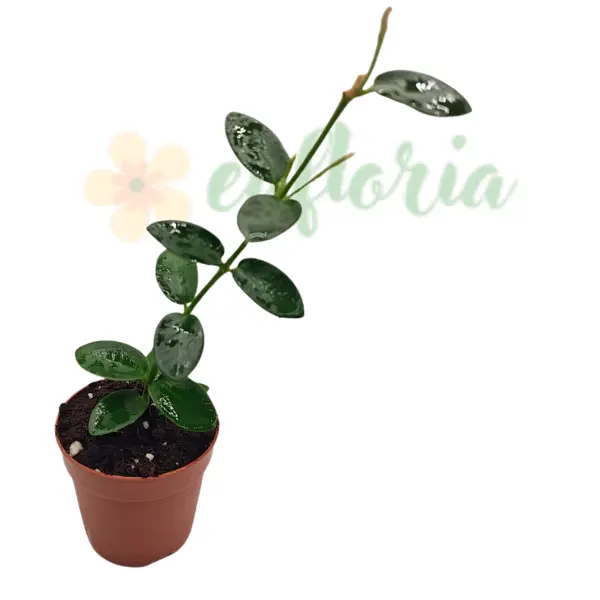
Hoya curtisii leaves are among the most recognisable in the entire genus — small, in a broad heart or spade shape (2—3 cm length, 1.5—2.5 cm width), remarkably thick and succulent. Their surface is covered in a silver pattern that gives them an almost metallic appearance: small silver spots or streaks are dispersed on a medium-green background, creating the impression of leaves sprinkled with stardust. The texture is waxy and firm, with a slight concavity that makes each leaf resemble a small cup or shell.
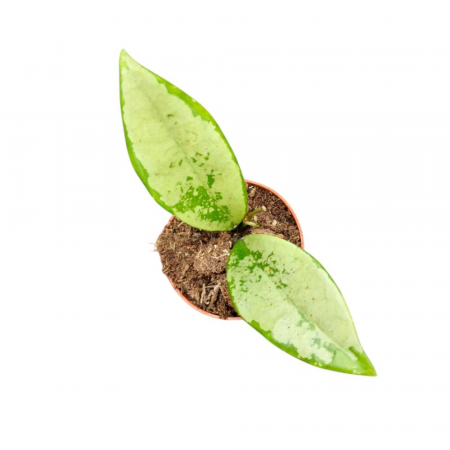
In the Albo Variegated variant, this already spectacular background receives an additional element: sectors of golden yellow where chlorophyll is completely absent. These golden zones can occupy from 10% to 70% of the leaf surface, in random patterns that vary from leaf to leaf. Some leaves have one golden half and one silver-green half ("half moon"), others have a golden centre with green margins, and still others present a complex mosaic of small golden and green sectors. The golden areas are slightly thinner than the green ones and, viewed against the light, become almost translucent — a fascinating visual effect that transforms each leaf into a miniature natural stained-glass window.
Compared to other small-leaved Hoya species, curtisii Albo distinguishes itself through its unique combination of silver pattern and golden-yellow variegation. Hoya mathilde Inner Variegated has central variegation but round leaves without a silver pattern. Hoya krohniana Splash has similar-sized leaves but with a splash pattern (evenly distributed spots) rather than sectoral variegation. No other combination in the Hoya genus offers exactly this double effect of silver plus golden on such a small leaf.
The leaf venation is fine, visible mainly on the undersurface, forming a delicate reticulate pattern. On variegated zones, the veins stand out more due to the contrast with the white background. The petiole is short (3—5 mm) and robust, connecting the leaf tightly to the twining stem. Leaves are arranged oppositely on the stem at regular intervals of 1—2 cm, creating a decorative "chain" effect perfect for hanging baskets or living botanical garlands.
🌸 The flowers — porcelain-pink stars on a carpet of silver leaves
Hoya curtisii produces some of the most delicate flowers in the Hoya genus. The umbels are small and compact, formed of 10—15 individual flowers each approximately 6—8 mm in diameter. Each flower has five petals in pale pink to salmon-pink, with a matte waxy texture that gives them the appearance of finely modelled porcelain. The central crown (corona) is darker, deep pink or reddish, creating a small contrast at the centre of each bloom. Arranged in a circle, the flowers form a small hemisphere resembling a bouquet of miniature botanical jewels.
The flower fragrance is subtle but distinct — a combination of sweet, slightly caramelised notes with a vanilla undertone that intensifies in the evening. It is not a strong or invasive scent, but a discreet presence that pleasantly surprises you when passing by the plant. A single umbel perfumes an area of roughly one square metre, and a mature plant can produce 3—5 simultaneous umbels during the warm season.
To encourage flowering, Hoya curtisii Albo Variegated needs: strong indirect light (minimum 6—8 hours daily), maturity of at least 2—3 years, a winter rest period with temperatures of 15—18°C and reduced watering, and — crucially — the pot must not be moved nor old peduncles cut. Flowers appear on persistent peduncles ("spurs"), the same ones year after year. Cutting them eliminates flowering potential for the following months.
Worth noting: albo variegation significantly slows the flowering process compared to the standard form. The plant produces less photosynthetic energy due to golden sectors lacking chlorophyll, allocating a larger proportion of available energy to maintaining life rather than reproduction. With patience and optimal conditions, flowering will come — and when it does, the contrast between pink flowers and golden-silver leaves is a spectacle few plants can offer.
🌱 Growth habit and development — the slow elegance of a living jewel
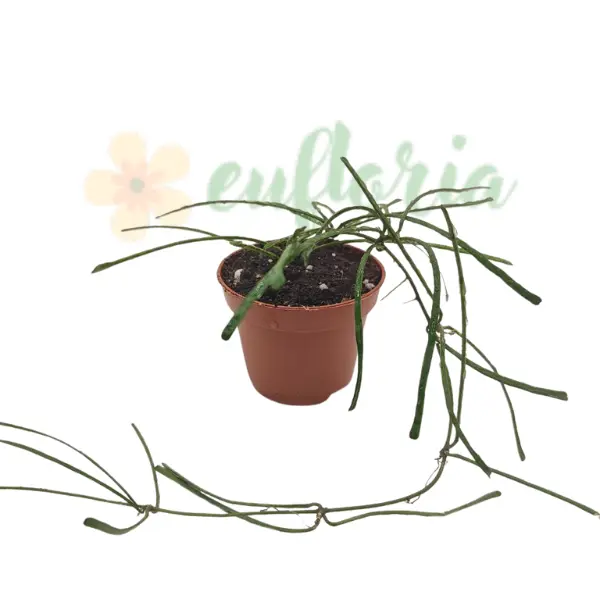
Hoya curtisii has a trailing and creeping habit, with thin, filiform stems that grow continuously from the tip, producing pairs of small leaves at regular intervals. Growth is slow even in the standard green form — curtisii is not a vigorous species like Hoya carnosa or Hoya wayetii, but one that takes its time, investing in each individual leaf. In the Albo variant, growth is even slower: leaves with large golden sectors have less available chlorophyll, reducing the rate of photosynthesis and, consequently, the rate of new tissue production.
This slowdown is not a flaw but part of the species' charm. Each new leaf is an event, a small revelation unveiling a unique variegated pattern. Experienced collectors appreciate precisely this rhythm: not the rush of biomass accumulation, but the profound satisfaction of observing every detail. A branch of Hoya curtisii Albo with 20 leaves represents months of careful growth — and each leaf bears the imprint of the light, humidity, and temperature conditions at the time of its formation.
The plant develops most beautifully in a hanging basket or on a high shelf, allowing branches to cascade naturally. Alternatively, it can be guided onto a cork bark slab or small trellis, where aerial roots will anchor to the surface and stimulate slightly larger leaf production. Another cultivation method favoured by collectors is in open terrariums or display cabinets with controlled humidity, where stable conditions allow the variegation to express itself at maximum.
Care requirements are similar to other miniature Hoyas, with a few specific nuances for the albo variant:
- Light: Strong indirect light — CRITICAL for maintaining variegation and plant health. Leaves with much white need more light to compensate for the lack of chlorophyll. A spot near an east or west window, or under grow lights 10—12 hours daily, is ideal. Direct summer sunlight quickly burns golden zones (protective pigments are absent). Insufficient light leads to reversion — increasingly green new leaves.
- Temperature: 18—28°C optimal range. Not below 12°C. Curtisii originates from tropical lowlands and does not tolerate cold as well as montane species. Avoid cold draughts and sudden fluctuations.
- Watering: Allow the substrate to dry almost completely between waterings. Rather too little than too much — fine roots are vulnerable to excess moisture. Summer: every 7—10 days. Winter: every 14—21 days. Use room-temperature, decalcified water if possible.
- Humidity: 60—80% ideal. Curtisii comes from areas with constant high humidity and appreciates it in cultivation. A humidifier or pebble tray with moist gravel beneath the pot helps enormously. Avoid direct misting on leaves — standing water on golden zones can cause brown spots.
- Substrate: Extremely well-draining. Recommendation: 50% pine bark (fine), 25% perlite, 15% sphagnum, 10% activated charcoal. A special Hoya substrate works excellently. Use a small pot with generous drainage — curtisii prefers slightly smaller pots than expected, as roots are fine and do not explore a large substrate volume.
- Fertilising: Balanced liquid fertiliser diluted to 1/4 normal concentration, every 2 weeks during the active season. Albo plants are more sensitive to excess fertiliser — the reduced concentration prevents burns on the fine roots.
- Propagation: Through stem cuttings with 2—3 nodes, placed on moist sphagnum or in fine perlite mix. Rooting is slow (4—8 weeks). Select ONLY stems with balanced variegation — completely golden cuttings will not survive (lacking photosynthetic mechanisms), and completely green ones will produce plants without variegation.
How do I maintain the white variegation on Hoya curtisii Albo?
What pot and substrate should I use for curtisii Albo?
How fast does Hoya curtisii Albo Variegated grow?
Is Hoya curtisii Albo toxic to cats and dogs?
Why do some leaves have more white than others?
Ai nevoie și de un ghiveci decorativ?