EN/
EN/ Romana
Hoya coriacea SILVER D10.5
![Hoya coriacea Silver – Silver Foliage & Massive Golden Flower Clusters [0]](https://gomagcdn.ro/domains2/eufloria.ro/files/product/medium/hoya-coriacea-silver-d7-962102.webp "Hoya coriacea Silver – Silver Foliage & Massive Golden Flower Clusters [0]")
![Hoya coriacea Silver – Silver Foliage & Massive Golden Flower Clusters [1]](https://gomagcdn.ro/domains2/eufloria.ro/files/product/medium/hoya-coriacea-silver-d10-5-907856.webp "Hoya coriacea Silver – Silver Foliage & Massive Golden Flower Clusters [1]")
![Hoya coriacea Silver – Silver Foliage & Massive Golden Flower Clusters [2]](https://gomagcdn.ro/domains2/eufloria.ro/files/product/medium/hoya-coriacea-silver-d10-5-140916.webp "Hoya coriacea Silver – Silver Foliage & Massive Golden Flower Clusters [2]")
![Hoya coriacea Silver – Silver Foliage & Massive Golden Flower Clusters [1]](https://gomagcdn.ro/domains2/eufloria.ro/files/product/original/hoya-coriacea-silver-d7-962102.webp "Hoya coriacea Silver – Silver Foliage & Massive Golden Flower Clusters [1]")
![Hoya coriacea Silver – Silver Foliage & Massive Golden Flower Clusters [2]](https://gomagcdn.ro/domains2/eufloria.ro/files/product/original/hoya-coriacea-silver-d10-5-907856.webp "Hoya coriacea Silver – Silver Foliage & Massive Golden Flower Clusters [2]")
![Hoya coriacea Silver – Silver Foliage & Massive Golden Flower Clusters [3]](https://gomagcdn.ro/domains2/eufloria.ro/files/product/original/hoya-coriacea-silver-d10-5-140916.webp "Hoya coriacea Silver – Silver Foliage & Massive Golden Flower Clusters [3]")
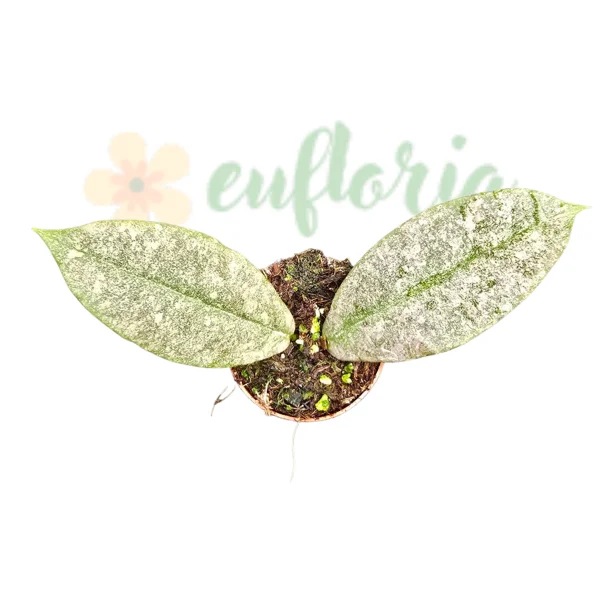
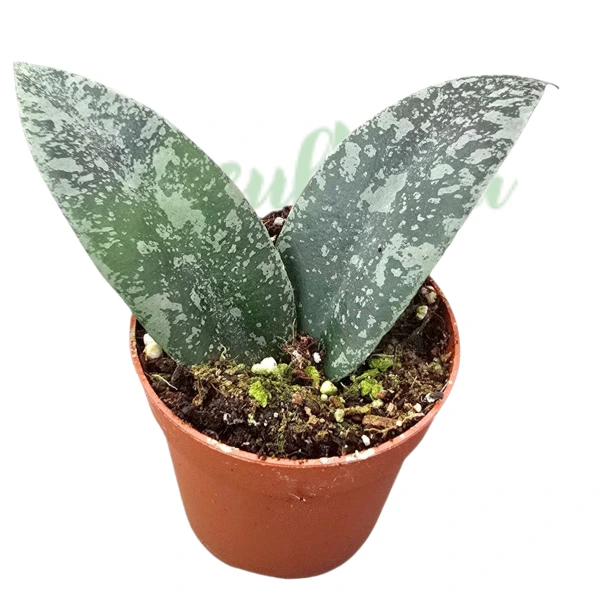
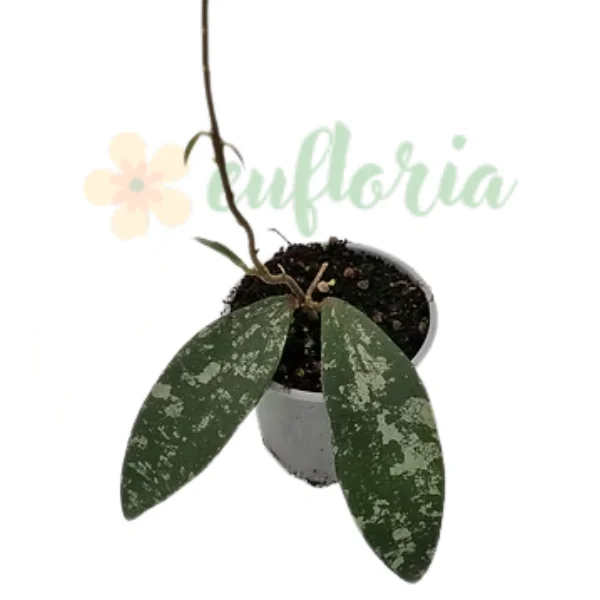
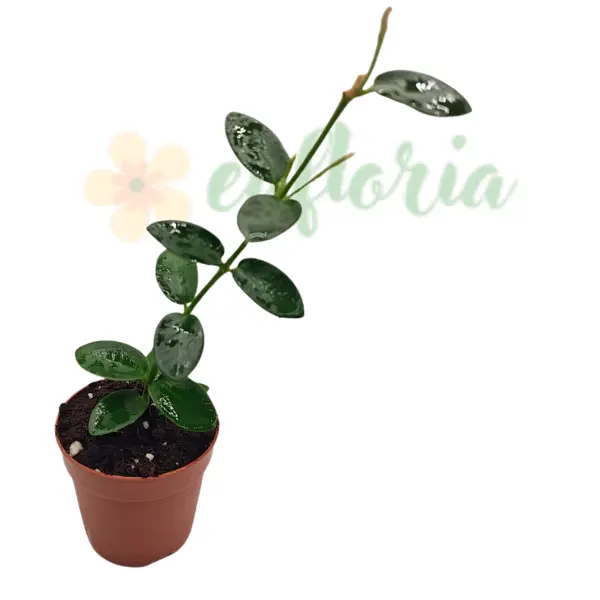
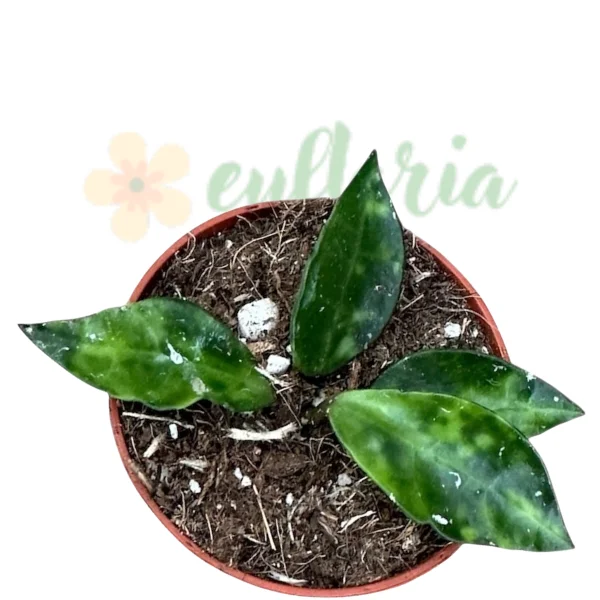
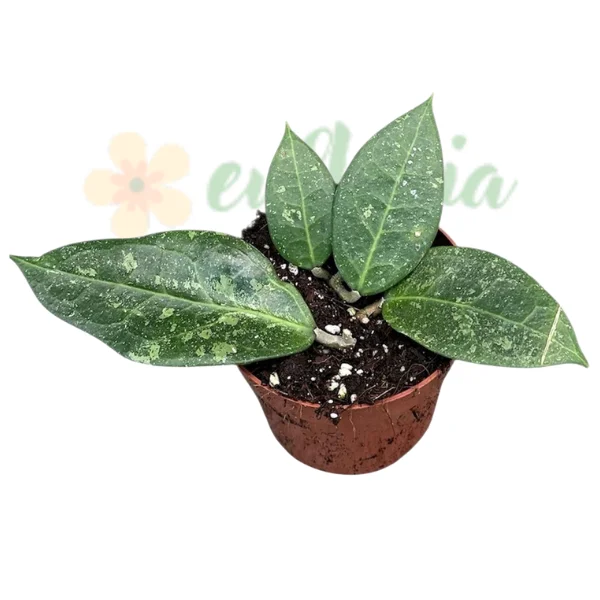
Hoya coriacea Silver – A vigorous, silver-leaved form of the Hoya famous for its extraordinary flowers. Thin, glossy leaves (15 × 7 cm) generously dusted with silver. Produces massive globe-shaped umbels of 35-75 golden-yellow, fuzzy, star-shaped flowers with a vivid citrus-spice fragrance. Fast-growing, easy care, blooms from 2 years. Recommended for beginners and experienced collectors alike. Non-toxic to pets!
Approx height (including pot): 25 cm
Flowering state: No flowers
Country of origin: Netherlands
Pot diameter: 10.5 cm
- Description
- Characteristics
- Reviews (0)
- FAQ
Hoya coriacea Silver is the silver-leaved form of a species famous for producing some of the most spectacular inflorescences in the entire Hoya genus. Where most Hoyas offer dainty clusters of a dozen or so flowers, Hoya coriacea produces massive, globe-shaped umbels containing 35-75 individual blooms – each one golden-yellow, fuzzy, and sweetly fragrant. The Silver form adds an extra dimension: its foliage is generously dusted with silver, transforming the already impressive leaves into something truly luminous. This is a Hoya that delivers on every front – extraordinary flowers, striking foliage, vigorous growth, and beginner-friendly care.
The species Hoya coriacea was first described by the Dutch-German botanist Carl Ludwig Blume in 1826-1827 in his landmark work Bijdragen tot de flora van Nederlandsch Indië. It is native to the tropical forests of Southeast Asia – Indonesia, Malaysia, Thailand, and the Philippines – where it grows as an epiphyte on trees, absorbing moisture from the air and decomposing organic matter. The species name "coriacea" is Latin for "leathery," a nod to the thick, tough texture of the leaves. Taxonomically, it belongs to Hoya section Physostemma. The Silver form is not known from wild populations and appears to be a stable horticultural selection, likely originating through foliar mutation in cultivation.
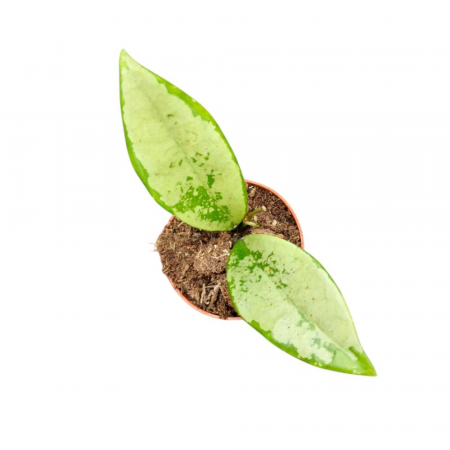
The leaves of the Silver form are elegantly proportioned – measuring approximately 15 cm long and 7 cm wide at maturity – and distinctly thinner and more glossy than the thick, succulent foliage of many other Hoya species. Despite their relatively slim profile, they have a firm, leathery quality that gives them durability. The base colour is a clean mid-green, but the defining characteristic is the generous silver dusting and speckling that covers much of the leaf surface, giving each leaf a shimmering, almost metallic appearance. The venation is visible but subtle, complementing rather than dominating the silver patterning. Unlike many Hoyas, this form does not change colour significantly under bright light – the silver remains stable and consistent regardless of light exposure. The growth habit is vigorous and vining, with slender stems that trail, climb, or twine readily. Vermont Hoyas describes the growth as "rampant," noting that it will "quickly strangle anything around it" – a testament to how vigorously this species grows under good conditions. Vines can reach up to 3 metres.
The flowers are the showpiece. This species has been documented producing as many as 70 flowers in a single inflorescence, with individual umbels measuring over 30 cm in breadth – the size of a large softball or cricket ball. The Hoya Store Australia specifies the Silver form as producing 35-75 flowers per umbel. Each individual flower is star-shaped, approximately 20 mm in diameter, with reflexed (backward-bending) petals covered in a fine pubescent (hairy) texture. The corolla is golden-yellow to butter-yellow, and the corona is white to buff-coloured with a plum to violet-red centre. The fragrance is vivid and complex – described as a blend of citrus and spice by Hoya Store Australia, and variously noted as spicy, heady, and intensifying significantly when multiple blooms open simultaneously. Flowers last approximately 5-7 days per cluster. Vermont Hoyas states that the blossoms "look like they were cast in wax" and that photographs do not do them justice. Blooming occurs from spring through summer, and sometimes multiple times per year on established plants. Tropics@Home confirms that the species flowers frequently, all year round under ideal conditions.
This is an easy, fast-growing Hoya recommended for beginners. Vermont Hoyas calls it "a must have" and notes it first bloomed at just 2 years of age. However, one honest warning from the same grower: when this Hoya decides to decline – typically from watering mishaps, especially after repotting – the decline can be rapid and difficult to reverse. Respect its watering needs, particularly around repotting, and it will reward you with years of spectacular performance.
Care Requirements:
- Light: Bright, indirect light – plenty of it. This species needs good light to grow vigorously and bloom prolifically. At least 6 hours of bright indirect light daily is ideal. Tolerates some direct morning or late afternoon sun, but protect from harsh midday rays. Insufficient light causes stunted growth and may prevent flowering entirely. During overcast northern European winters, supplementary grow lights help maintain growth momentum.
- Water: This is an important distinction: being thin-leaved, Hoya coriacea Silver prefers slightly more moisture than thick-leaved Hoya species. The Hoya Store Australia specifically notes this preference. Allow the top 2-3 cm of substrate to dry between waterings, then water thoroughly and allow excess to drain. Do not let the plant sit in standing water. Reduce watering in winter when growth slows, but do not let the root zone dry out completely for extended periods. Be especially cautious with watering after repotting – Vermont Hoyas documents how a watering mistake after transplanting led to rapid decline that was nearly impossible to reverse.
- Soil: Well-draining, airy, porous substrate. A mix of orchid bark, perlite, and coco coir provides the right balance of drainage and moisture retention for this thin-leaved species. Alternatively, 1 part potting soil + 1 part peat moss + 2 parts perlite. The substrate must drain freely – waterlogged soil causes rapid root rot. Mildly acidic to neutral pH (6.1-7.5).
- Temperature: 15-35°C (intermediate Hoya). The ideal range for active growth is 18-28°C. Does not tolerate temperatures below 10°C. Protect from cold drafts and sudden temperature fluctuations. Unsolicited Plant Talks notes this form does not require high heat but does not tolerate cold as well as some other varieties.
- Humidity: 40-60% minimum for healthy growth, with higher levels (60-70%+) producing the best results. Despite being relatively adaptable, this species appreciates good humidity – the thin leaves lose moisture more readily than succulent-leaved Hoyas. A humidifier or pebble tray helps in dry indoor environments, especially during winter. Good air circulation prevents fungal issues. Do not mist excessively – standing water on thin leaves can promote fungal problems.
- Feeding: Half-strength balanced liquid fertilizer (10-10-10 NPK) every 2-4 weeks during spring and summer. This species is a vigorous grower that responds well to regular feeding. Switch to a phosphorus-rich formula when encouraging blooming. Reduce or stop feeding in autumn and winter. Low maintenance overall.
Botanical Info: Family: Apocynaceae | Genus: Hoya | Section: Physostemma | Species: Hoya coriacea Blume (1826-1827) | Form: Silver (horticultural selection with silver-dusted foliage) | Common Names: Silver Wax Plant, Leathery Hoya | Type: Epiphytic Climbing Vine | Origin: Indonesia, Malaysia, Thailand, Philippines | Zone: USDA 10-12 (indoor cultivation in temperate climates) | Flowering: Reflexed, pubescent, golden-yellow corolla, white/buff corona with plum-violet centre, 35-75 per umbel, citrus-spice fragrance, spring-summer | Growth Rate: Fast to vigorous
Lungime: 20 cm
Greutate (kg): 0.25 Kg
Denumire: Hoya
Diametru: 10.5 cm
Cerințe lumină: Partial umbra
Tip plantă: Decorative
Utilizare: Interior
Tip suport: Ghiveci
Material Suport: Plastic
How often does Hoya coriacea Silver bloom?
Under ideal conditions, this species can bloom frequently – Tropics@Home states it flowers all year round with good care. Vermont Hoyas documents blooming in both spring and summer, with first flowers appearing at approximately 2 years of age from cutting. Foliage Factory notes the Silver form typically blooms once a year under standard indoor conditions, but more frequent flowering depends on age, humidity, consistent bright light, and overall plant health. To encourage blooming: provide plenty of bright indirect light (the most critical factor), keep the plant slightly root-bound, maintain warm temperatures and good humidity, feed with a phosphorus-rich fertilizer during the growing season, and never remove old peduncles. Established plants become increasingly prolific bloomers with each year.
Is Hoya coriacea Silver easy to grow?
Yes – this is one of the easiest and most vigorous Hoyas in cultivation. Tropics@Home specifically recommends it for beginners. Vermont Hoyas calls it "a must have" and notes it tolerates less-than-ideal conditions. Growth is described as "rampant" under good care, and first blooms can appear at just 2 years of age. The main care points are: bright indirect light (at least 6 hours daily), well-draining substrate, and slightly more water than typical thick-leaved Hoyas – the thin, glossy leaves of this species lose moisture more readily. One honest warning from Vermont Hoyas: when this Hoya decides to decline – typically from a watering mistake, especially after repotting – the decline can be rapid and hard to reverse. The solution is simple: be cautious with watering changes, especially immediately after repotting, and the plant will reward you with vigorous growth and extraordinary flowers.
How big do Hoya coriacea Silver flowers get?
This is one of the most impressive flowering displays in the Hoya genus. Individual flowers are star-shaped and approximately 20 mm (2 cm) in diameter, with reflexed petals covered in a fine fuzzy texture. But the real spectacle is the size of the entire cluster (umbel): the Silver form typically produces 35-75 flowers per umbel, according to the Hoya Store Australia. The species has been documented producing as many as 70 flowers in a single inflorescence, with umbels spanning over 30 cm in breadth – roughly the size of a large softball. The corolla is golden-yellow to butter-yellow, with a white to buff corona centred in plum-violet. The fragrance is a vivid citrus-spice blend. Individual flower clusters last approximately 5-7 days, and the same peduncle will produce new clusters in subsequent seasons – never remove old flower stalks.
What is the difference between Hoya coriacea Silver and regular Hoya coriacea?
The primary difference is the foliage. Standard Hoya coriacea has plain mid-green leaves with subtle venation. The Silver form has the same leaf shape and dimensions (approximately 15 × 7 cm) but the surface is generously dusted and speckled with silver, giving each leaf a shimmering, metallic quality. This silver patterning is stable – it does not change or fade with light exposure. The Silver form is considered a horticultural selection (not a wild variant) that likely originated through foliar mutation in cultivation. Both forms share the same care requirements, growth rate, and flower characteristics. The flowers in both forms are golden-yellow, pubescent, formed in massive umbels of 35-75 blooms, with the same vivid citrus-spice fragrance. If you want the famous Hoya coriacea flowers with an additional foliage feature, the Silver form provides both.
Is Hoya coriacea Silver toxic to cats and dogs?
No. Hoya coriacea, including the Silver form, is classified as non-toxic to cats, dogs, and other household pets. The Hoya genus is generally considered safe for animals and humans. While ingesting large quantities of any plant material can cause mild gastrointestinal discomfort, this species poses no serious toxic risk. The milky latex sap released when stems are cut can cause minor skin irritation – use gloves when pruning. One practical consideration: this is a very vigorously growing plant with long, trailing stems that can quickly reach the floor or wrap around nearby objects. Curious pets may be attracted to the dangling vines, so training the plant on a dedicated support or hanging it from a ceiling hook keeps both the pet and the plant's delicate thin leaves safe from accidental damage.
Recommendations
Ai nevoie și de un ghiveci decorativ?