EN/
EN/ Romana
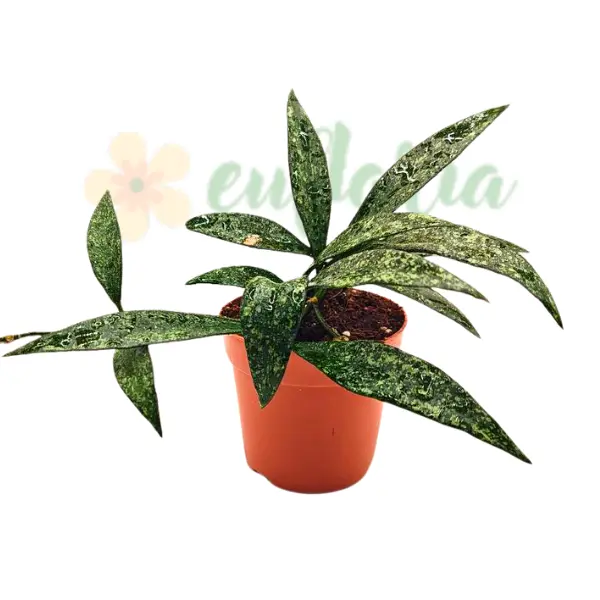
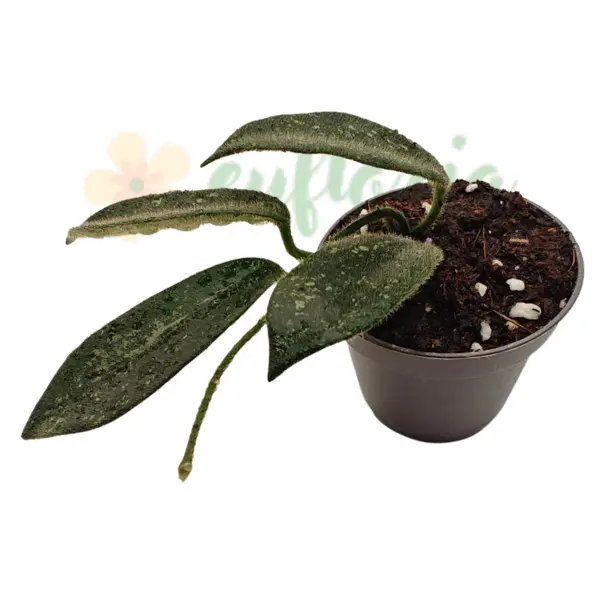
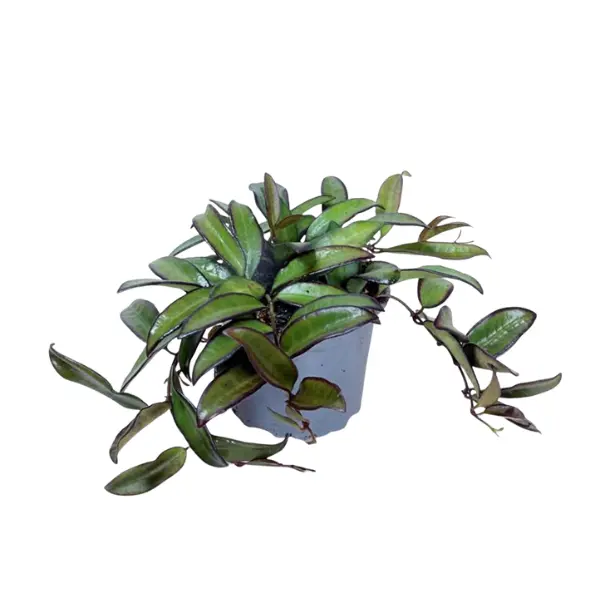
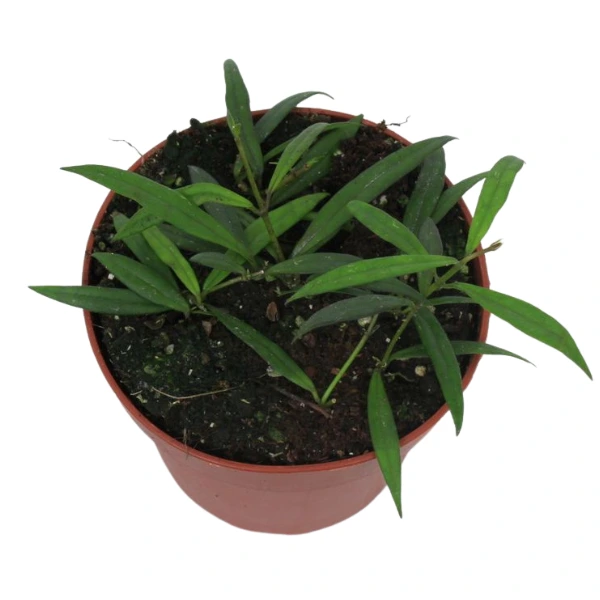
Hoya manipurensis Ø7cm
![Hoya manipurensis [0]](https://gomagcdn.ro/domains2/eufloria.ro/files/product/medium/hoya-manipurensis-568213.webp "Hoya manipurensis [0]")
![Hoya manipurensis [1]](https://gomagcdn.ro/domains2/eufloria.ro/files/product/medium/hoya-manipurensis-500097.webp "Hoya manipurensis [1]")
![Hoya manipurensis [1]](https://gomagcdn.ro/domains2/eufloria.ro/files/product/original/hoya-manipurensis-568213.webp "Hoya manipurensis [1]")
![Hoya manipurensis [2]](https://gomagcdn.ro/domains2/eufloria.ro/files/product/original/hoya-manipurensis-500097.webp "Hoya manipurensis [2]")
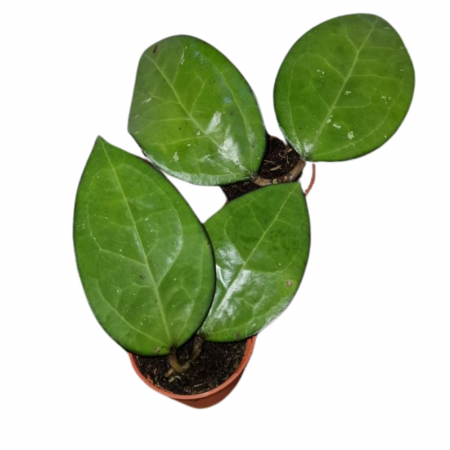
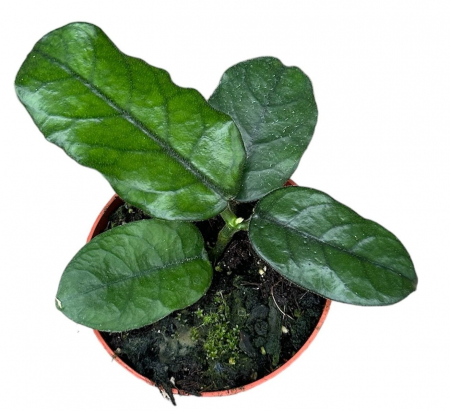
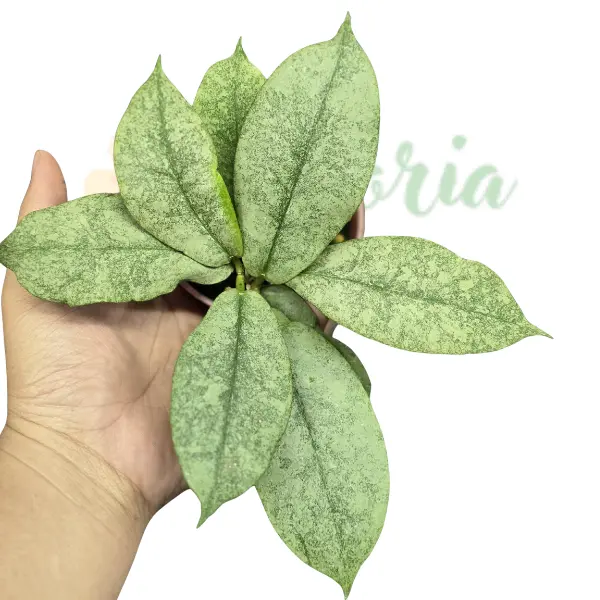
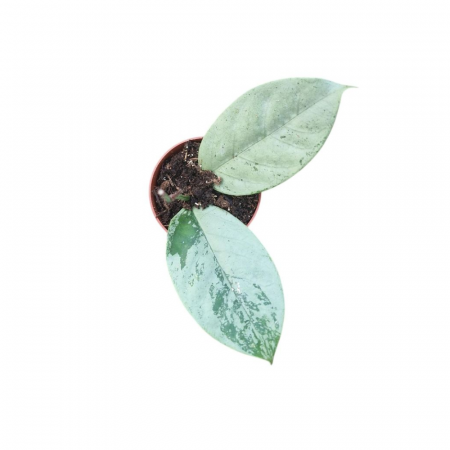
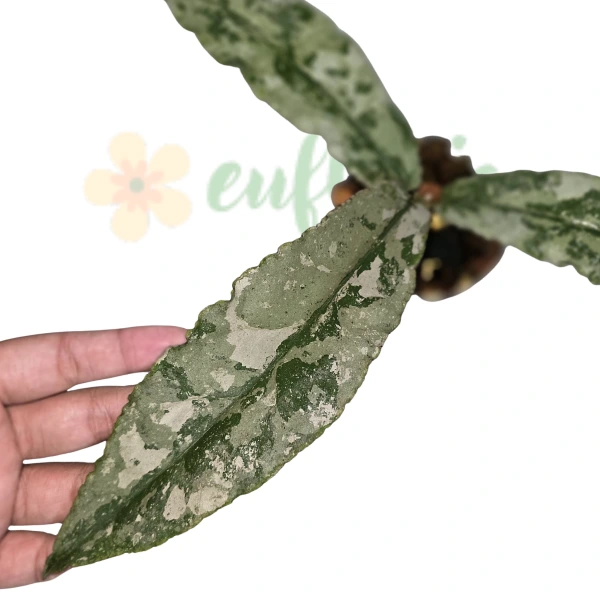
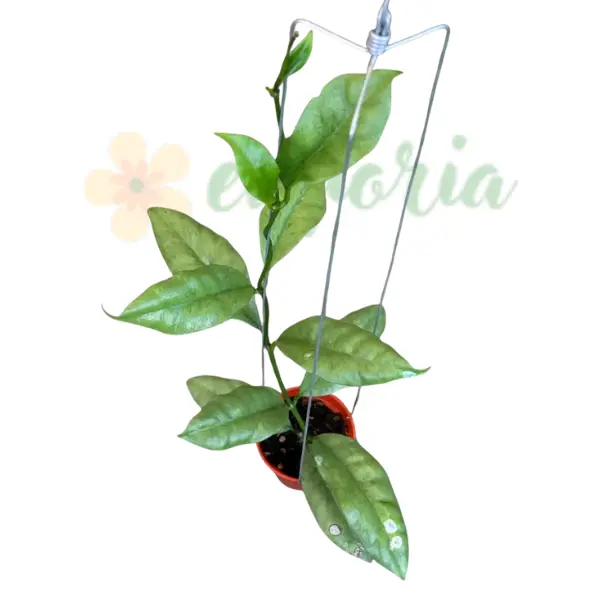
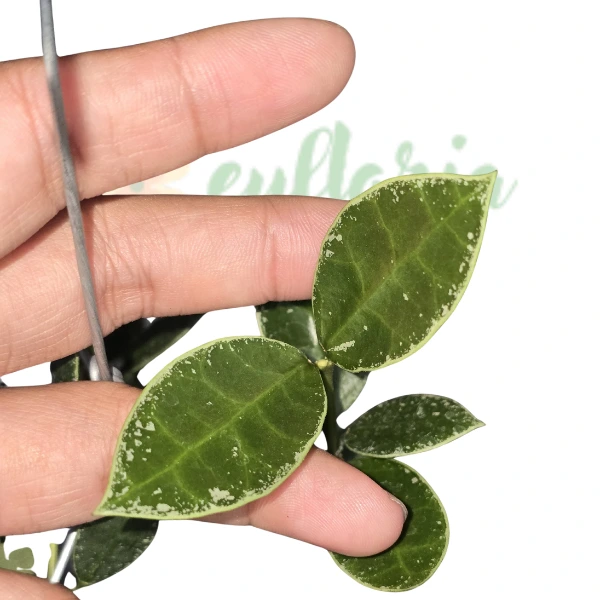
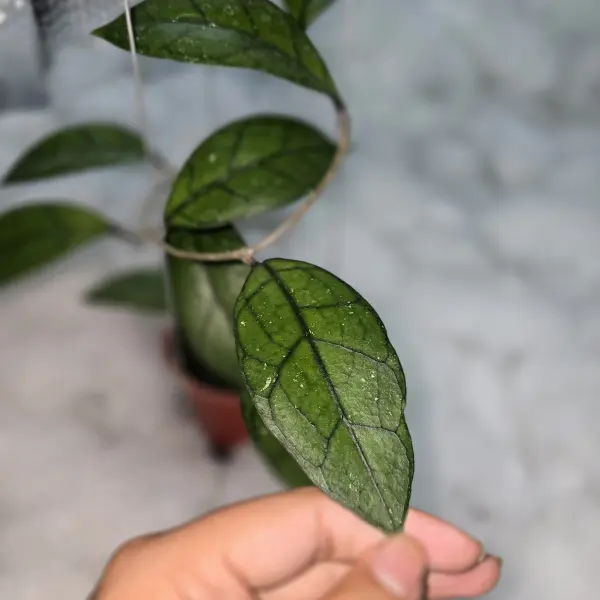
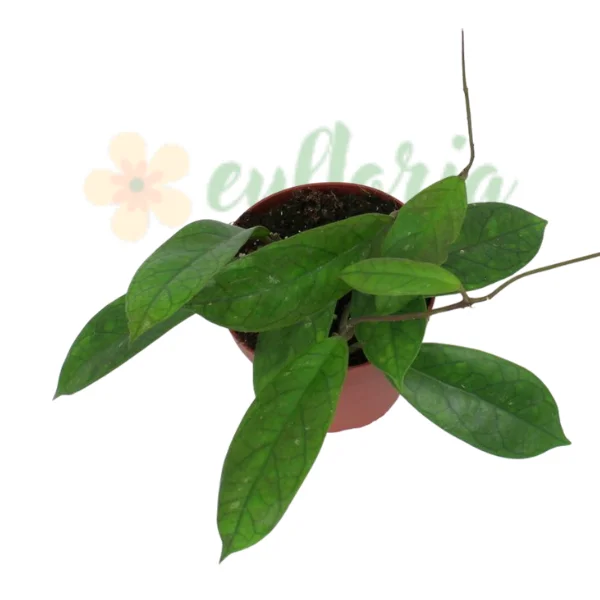
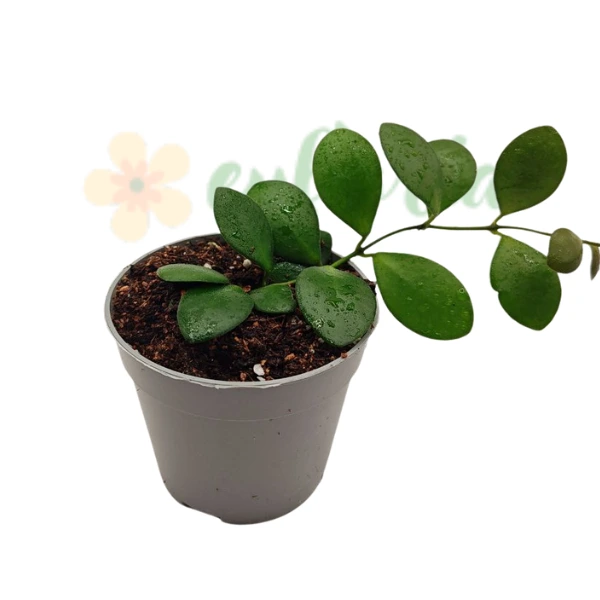
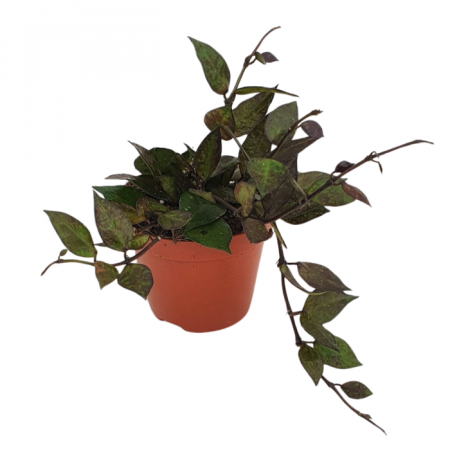
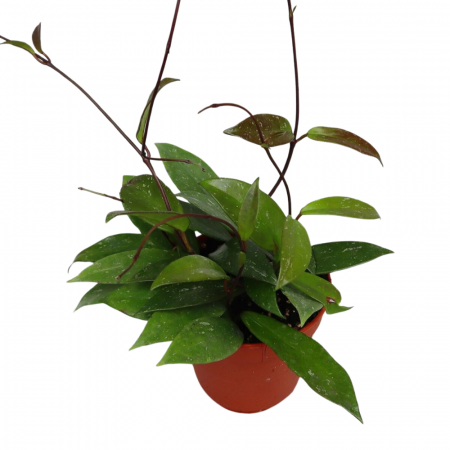
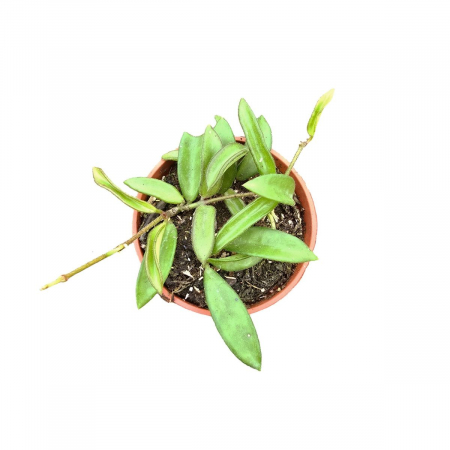
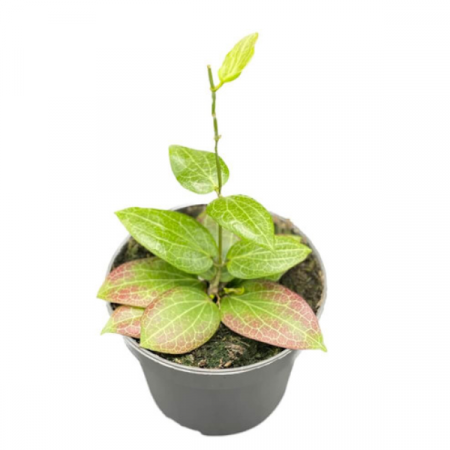
Hoya manipurensis has small, heart-shaped leaves and fragrant yellow tubular flowers. It is a compact tropical epiphyte species, ideal for lovers of fragrant plants with personality.
Approx height (including pot): 15 cm
Flowering state: No flowers
Country of origin: Netherlands
- Description
- Characteristics
- Reviews (0)
- FAQ
🌿 Hoya manipurensis – small cordate leaves and fragrant yellow tubular flowers
🌱 General descriptionă
Hoya manipurensis is a species native to the Manipur region (India, South Asia), known for its small heart-shaped leaves (cordate), about 1 cm, with a glossy appearance and slightly succulent texture. The plant grows as a creeper, but sometimes can have an erect habit, with compact stems. The flowers appear in clusters, tubular, light yellow, similar to those of the genus Dischidia, sometimes fragrant and lasting up to three weeks.
✨ What makes it special?
- Small, heart-shaped leaves, compact and delicate.
- Tubular, creamy yellow inflorescences, lasting, with a discreet floral fragrance, appreciated in the evening or at night.
- Robust species, adapted to filtered light and moderate to high humidity.
- A taxonomically interesting hybrid: it was previously classified as Micholitzia obcordata or Dischidia obcordata before being confirmed as Hoya.
📌 Synonyms and associated codes
- Hoya manipurensis Hook.f. – recognized botanical name.
- Previously identified as Micholitzia obcordata or Dischidia obcordata until upon confirmation of the current taxon.
- There are no documented IML codes in accessible sources.
💧 Hoya manipurensis care
- Light: prefers bright, indirect, filtered light (ideally near a bright window, without strong direct sunlight).
- Watering: moderate; the substrate should dry out partially before the next watering. Too much water can cause root rot.
- Substrate: light, aerated and drained – epiphytic mix with bark, perlite and peat.
- Temperature – humidity: ideal – between 16–28 °C, with humidity 50–70 % – feels good in slightly humid environments.
- Fertilization: moderate fertilization During the growing season, preferably products that are low in nitrogen and rich in phosphorus and potassium.
🌟 Who is it suitable for?
An excellent choice for lovers of rare and elegant plants, especially those who appreciate small foliage and fragrant flowers. It is well suited for those who want to create humid mini-greenhouses, hanging pot decorations or bright vertical supports.
Lungime: 20 cm
Greutate (kg): 0.25 Kg
Denumire: Hoya
Diametru: 7 cm
Cerințe lumină: Partial umbra
Tip plantă: Decorative
Utilizare: Interior
Tip suport: Ghiveci
Material Suport: Plastic
Why is Hoya manipurensis called "Bat Leaf Hoya" and what do its distinctive leaves look like?
Hoya manipurensis is known by the nickname "Bat Leaf Hoya" because of the unique shape of its mature leaves, which resemble bat wings. The leaves have a distinctive obcordate (inverted heart-shaped) or obtriangular shape—basically triangular with the tip down and the wider part up. This shape is absolutely unique in the Hoya genus and makes the plant instantly recognizable. The leaves are small (about 2-4 cm long), fleshy, thick, with a slightly fuzzy or slightly rough texture to the touch. The color is medium to dark glossy green, and in bright light they can develop spectacular reddish or purple hues through the phenomenon of "sun stress." Important to know: young leaves do not immediately have the characteristic triangular shape - this develops as the leaf matures, so don't worry if new leaves appear more round or oval.
Is Hoya manipurensis really a Hoya or is it more of a Dischidia?
This is a legitimate question and reflects a real taxonomic debate that has lasted for decades! Hoya manipurensis has a complex and controversial taxonomic history. It was originally described as Dischidia obcordata (1909), then transferred to the genus Micholitzia as Micholitzia obcordata, and finally classified as Hoya manipurensis (1955). Many characteristics of the plant—the small urn-shaped flowers, small fleshy leaves, growth habit—do indeed resemble Dischidia more than most typical Hoyas. However, recent DNA analysis studies have confirmed that the plant genetically belongs to the genus Hoya, despite appearances. This is a very atypical Hoya, almost the "black sheep" of the genus, which makes it even more fascinating to collectors. In cultivation, it behaves like a Hoya in terms of care requirements (well-drained substrate, moderate watering, persistent peduncles), confirming its current classification.
How difficult is it to grow Hoya manipurensis and why do many growers report challenges?
Hoya manipurensis has a well-deserved reputation for being one of the most challenging Hoyas to grow, even for experienced growers. The main challenges include: extreme sensitivity to overwatering—the roots rot very quickly in overly moist soil; extremely slow growth—it may produce only 3-5 leaves per year even under optimal conditions; difficulty in rooting from cuttings - the process can fail repeatedly, requires consistently warmer temperatures (not below 20°C) - suffers severely in the cold, and requires consistently high humidity (60-80%) but with excellent ventilation to prevent fungal problems. Many growers report losing the plant multiple times before finding the winning formula. The key to success is to treat it more like a Dischidia than a typical Hoya: very well-drained and aerated substrate (50% orchid bark + perlite works great), extremely moderate watering (allow to dry out completely between waterings), consistent warm temperatures, high humidity with good ventilation, and extraordinary patience. This is not a plant for beginners—the difficulty level is advanced.
What do Hoya manipurensis flowers look and smell like?
Hoya manipurensis flowers are absolutely unique and completely different from typical star-shaped Hoya flowers! The flowers are very small (about 0.5-1 cm), urn-shaped or tubular, resembling Dischidia flowers rather than Hoya. There is variability between clones: some have yellow or yellow-green flowers with orange interiors, others have purple or violet-purple flowers. The flowers are arranged in umbels of 5-8 flowers that emerge from very short, almost invisible peduncles. The nectar produced is dark orange—a very distinctive feature! The scent is sweet, subtle, pleasant, often compared to jasmine or a sweet floral scent, more intense at night. The flowers have a remarkably long life for Hoya - they can last up to 3 weeks! This partially compensates for the difficulty of bringing the plant to bloom. To bloom, the plant needs to be mature (3-5 years old), receive constant bright light, and be kept slightly root-bound. As with all Hoyas, never cut the flower stalks after blooming—they will rebloom from the same spots!
What substrate works best for Hoya manipurensis and why does universal soil fail?
Hoya manipurensis is extremely sensitive to substrate type and standard universal soil is a guaranteed recipe for failure as it retains too much water and strangles the delicate roots. As a plant that naturally grows as an epiphyte or in rock/tree crevices, it requires an extremely well-drained, chunky substrate with excellent aeration. The ideal mix should be similar to that for orchids or Dischidia: 50% pine bark or orchid bark (medium-coarse grit), 25% perlite or pumice, 15% coconut fiber or quality sphagnum peat, 10% horticultural charcoal. Alternatively, many successful growers grow this plant simply in 100% orchid bark or a bark + perlite combination. The substrate should drain instantly when you water - the water should flow straight through it without stagnating. Test the substrate: if it stays wet for more than 2-3 days after watering, it is too dense. Replant in something more aerated. Also, use a small pot - the plant prefers to be tight in the pot and the roots do not take up much space. A terracotta pot is ideal for additional aeration.
What is the difference between the different clones of Hoya manipurensis circulating in the trade?
There are at least two distinct clones of Hoya manipurensis in cultivation that differ visibly in the appearance of the leaves and flowers. Clone 1 (more widespread): smaller leaves, more pronounced triangular shape "bat wing", larger flowers (up to 1 cm) of greenish-yellow or yellow with orange interior, extremely slow growth, more compact appearance. Clone 2: larger leaves, less pronounced triangular (more obcordate/inverted heart-shaped), smaller flowers of purple or violet color, slightly more vigorous growth, more spreading appearance. Both clones are genuine Hoya manipurensis - variability is natural in this species with a wide geographical distribution (from Nepal to China). Unfortunately, suppliers rarely specify the clone, so it is a lottery what you will receive. Both clones have the same difficult care requirements and are both challenging to grow. The differences are more aesthetic than care. Some dedicated collectors try to obtain both clones for comparison, but given the difficulty of keeping even one alive, most are happy with whichever clone they manage to stabilize!
Why do Hoya manipurensis leaves develop reddish or purple hues?
The development of reddish, purple or burgundy hues on the leaves of Hoya manipurensis is a natural and desirable phenomenon called "sun stress" or solar stress, which occurs when the plant receives adequate bright light. This is a natural protective mechanism - the plant produces anthocyanin pigments to protect its tissues from the intensity of the light. This is completely normal, healthy and actually enhances the decorative appearance of the plant! The leaves can develop shades from pale pink to deep purple-red or even burgundy to almost black, depending on the intensity of the light. The entire leaf may change color or just the edges and veins. To encourage this spectacular coloration: provide very bright indirect light or a few hours of gentle direct sun in the morning, maintain slightly warmer temperatures (24-28°C), and make sure the plant is well hydrated and fed to cope with the light stress. If the leaves remain completely green, it is a sign that the plant is not receiving enough light for optimal performance and will probably not bloom. Caution: increase light exposure gradually to avoid burns - acclimatize the plant gradually to more intense light over 2-3 weeks.
How long does it take for Hoya manipurensis to flower and how can I encourage flowering?
Hoya manipurensis requires extraordinary patience to flower - usually 3-5 years from a young plant or cutting. Even mature plants can be reluctant to flower if conditions are not perfectly optimised. To encourage flowering: provide constant bright light - this is the most important requirement, the plant must receive a minimum of 6-8 hours of very bright light daily to initiate flower buds. Maintain constant warm temperatures 22-28°C - cooler temperatures below 20°C inhibit flowering. Leave the plant slightly root-bound (tightly packed in the pot) - frequent repotting in large pots delays flowering. Fertilise regularly during the growing season with a fertiliser high in phosphorus and potassium (NPK 10-15-10 or similar) to support bud formation. Provide constant high humidity (65-80%) - dry air stresses the plant and prevents flowering. Do not move or stress the plant once it is established - frequent changes of location reset the flowering cycle. And most importantly: be patient! Some specimens can take 6-8 years for their first flowering. Once it blooms for the first time, it will tend to bloom more regularly, and the flowers that last 3 weeks are worth the wait!
Is Hoya manipurensis suitable for beginners or does it require advanced experience?
Hoya manipurensis is definitely NOT suitable for beginners and is firmly in the advanced-expert level of difficulty. This plant has a well-deserved reputation as one of the most difficult Hoyas to keep alive, even for growers with years of Hoya experience. Challenges that make it unsuitable for beginners: extreme sensitivity to overwatering (root rot is almost guaranteed on the first mistake), extremely slow growth requiring years of patience (3-5 leaves per year is normal), difficult rooting and frequent failure to propagate, requires constant warm temperatures (dies in cold), requires constant high humidity with perfect aeration (difficult balance), very specific substrate required (standard mixes fail), infrequent and difficult to obtain blooms (3-5+ years), and high price due to rarity (big investment to lose if you fail). Who it's for: advanced-expert growers with successful experience with several difficult Hoyas, those who can provide constant warm temperatures (minimum 20°C all year round), those with high humidity equipment (humidifier, greenhouse, plant display case), those with extraordinary patience for slow growth, and those prepared for potential repeated failures until they find the right formula. For beginners: we strongly recommend avoiding this plant until you gain solid experience with more tolerant Hoyas such as carnosa, publicalyx, australis, kerrii, or compacta. Invest in skills before investing in difficult and expensive plants!
Recommendations