EN/
EN/ Romana
Hoya ranauensis Ø10.5cm
![Hoya ranauensis — rare plant from Sabah Borneo, emerald-green veined leaves, Ø10.5cm pot | Eufloria [0]](https://gomagcdn.ro/domains2/eufloria.ro/files/product/medium/hoya-ranauensis-d10-5-736541.jpg "Hoya ranauensis — rare plant from Sabah Borneo, emerald-green veined leaves, Ø10.5cm pot | Eufloria [0]")
![Hoya ranauensis — rare plant from Sabah Borneo, emerald-green veined leaves, Ø10.5cm pot | Eufloria [1]](https://gomagcdn.ro/domains2/eufloria.ro/files/product/medium/hoya-ranauensis-d10-5cm-918524.png "Hoya ranauensis — rare plant from Sabah Borneo, emerald-green veined leaves, Ø10.5cm pot | Eufloria [1]")
![Hoya ranauensis — rare plant from Sabah Borneo, emerald-green veined leaves, Ø10.5cm pot | Eufloria [2]](https://gomagcdn.ro/domains2/eufloria.ro/files/product/medium/hoya-ranauensis-d10-5cm-789969.png "Hoya ranauensis — rare plant from Sabah Borneo, emerald-green veined leaves, Ø10.5cm pot | Eufloria [2]")
![Hoya ranauensis — rare plant from Sabah Borneo, emerald-green veined leaves, Ø10.5cm pot | Eufloria [1]](https://gomagcdn.ro/domains2/eufloria.ro/files/product/original/hoya-ranauensis-d10-5-736541.jpg "Hoya ranauensis — rare plant from Sabah Borneo, emerald-green veined leaves, Ø10.5cm pot | Eufloria [1]")
![Hoya ranauensis — rare plant from Sabah Borneo, emerald-green veined leaves, Ø10.5cm pot | Eufloria [2]](https://gomagcdn.ro/domains2/eufloria.ro/files/product/original/hoya-ranauensis-d10-5cm-918524.png "Hoya ranauensis — rare plant from Sabah Borneo, emerald-green veined leaves, Ø10.5cm pot | Eufloria [2]")
![Hoya ranauensis — rare plant from Sabah Borneo, emerald-green veined leaves, Ø10.5cm pot | Eufloria [3]](https://gomagcdn.ro/domains2/eufloria.ro/files/product/original/hoya-ranauensis-d10-5cm-789969.png "Hoya ranauensis — rare plant from Sabah Borneo, emerald-green veined leaves, Ø10.5cm pot | Eufloria [3]")
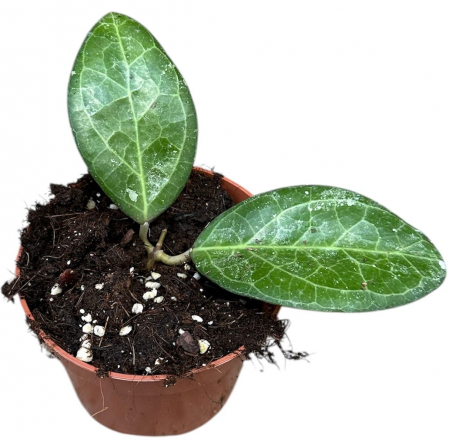
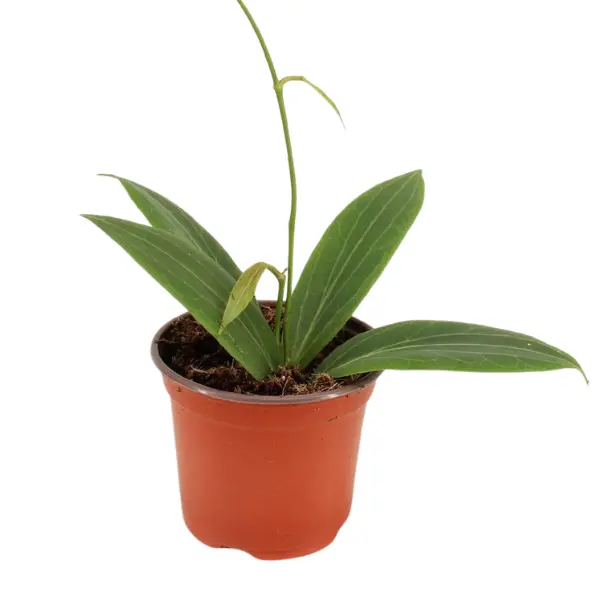
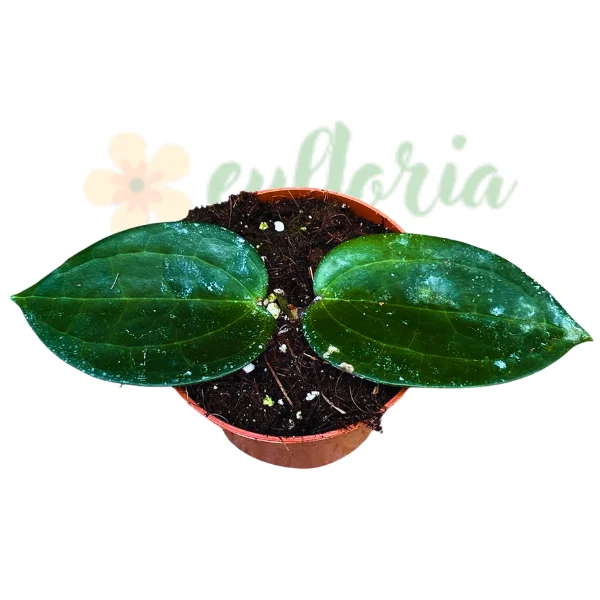
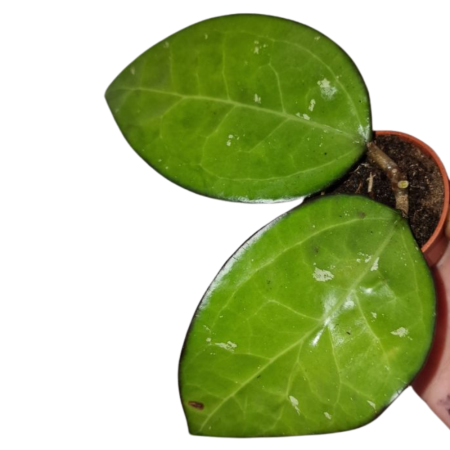
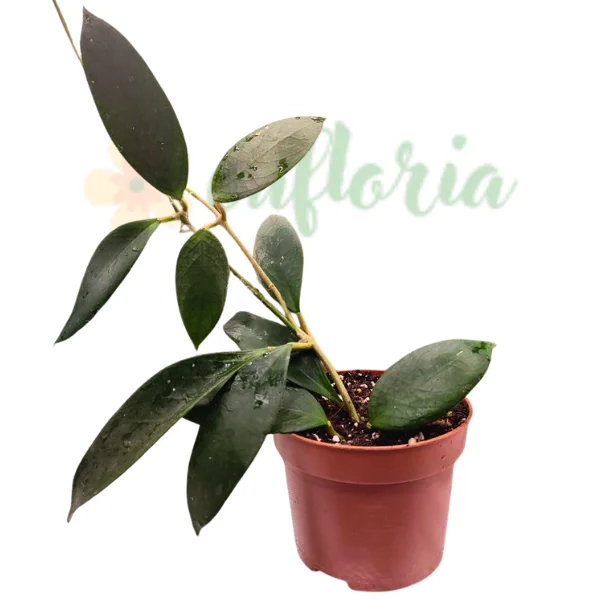
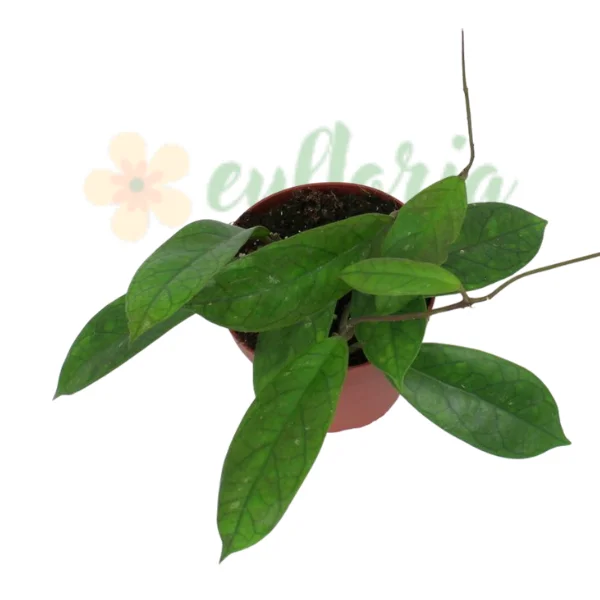
Hoya ranauensis — epiphytic semi-succulent vine from the Ranau district, Sabah, Borneo. Firm oblong-elliptical leaves (up to 15 cm) with dark venation on emerald green. Pale yellow-cream flowers with white corona, citrus scent. Ø10.5cm pot.
Approx height (including pot): 15 cm
Flowering state: No flowers
Country of origin: Netherlands
Pot diameter: 10.5 cm
- Description
- Characteristics
- Reviews (0)
- FAQ
🌿 Hoya ranauensis — botanical treasure from Sabah, Borneo
Hoya ranauensis T.Green & Kloppenb. is an epiphytic climbing vine of the Apocynaceae family, endemic to the Ranau district in eastern Sabah state (Borneo, Malaysia). It was formally described only in 2014, after nearly two decades of cultivation in international collections under the provisional name Hoya sp. "Poring Hot Springs" (after the Poring hot springs in the Ranau area). It is part of our Hoya collection and is one of the most elegant species with strongly veined foliage from the "finlaysonii-type" group.
Our specimen comes in a Ø10.5cm nursery pot, perfect to be moved into a decorative ceramic pot of the same size, without transplant stress. A serious acquisition for collectors who appreciate Bornean species with clear botanical identity and accessible cultivation requirements.
🌍 Origin and Botanical History
Hoya ranauensis was collected from humid tropical hill forests in the Ranau district, eastern Sabah, at mid altitudes (~800-1000 m). The specific epithet honours the Ranau district, located near Mount Kinabalu (4095 m), the highest peak in Southeast Asia. The microclimate with constant humidity and moderate temperatures allowed the evolution of an exceptionally rich endemic flora.
The species was officially described in 2014 by Ted Green and Dale Kloppenburg in the journal Hoya New, although it was already present in the international collector trade since the 1990s under the name Hoya sp. "Poring Hot Springs". The taxonomic authority accepted by Kew Gardens (POWO) is the monograph A Guide to Hoyas of Borneo published by Lamb & Rodda in 2016. Unlike Hoya carnosa 'Krimson Queen', which has uniform leaves without prominent venation, ranauensis is immediately recognized by the pattern of darker veins outlined on the emerald-green lamina.
🌱 Foliage — the species' signature
The leaves of Hoya ranauensis are oblong-elliptical to elliptical-lanceolate, firm, semi-succulent, reaching up to ~15 cm long at maturity. The base colour is a deep emerald green, and the main diagnostic feature is the venation: the main veins are visibly darker than the lamina, clearly outlined at the surface, forming an almost painted pattern on the mature leaf. This places the species in the "finlaysonii-type" group, alongside Hoya finlaysonii, Hoya cinnamomifolia, and other species with strongly veined foliage.
The stems are thin, voluble, with adventitious roots that allow it to climb trunks and branches in the canopy. In cultivation, the plant adopts a typical epiphytic vine habit — it is ideal for moss poles, trellises, or hanging pots. It should not be confused with Hoya callistophylla, which has much larger leaves (up to 25 × 10 cm) and a lighter lime-yellow background, or with Hoya finlaysonii, with much smaller flowers.
🌸 Inflorescences — pale yellow corolla, citrus scent
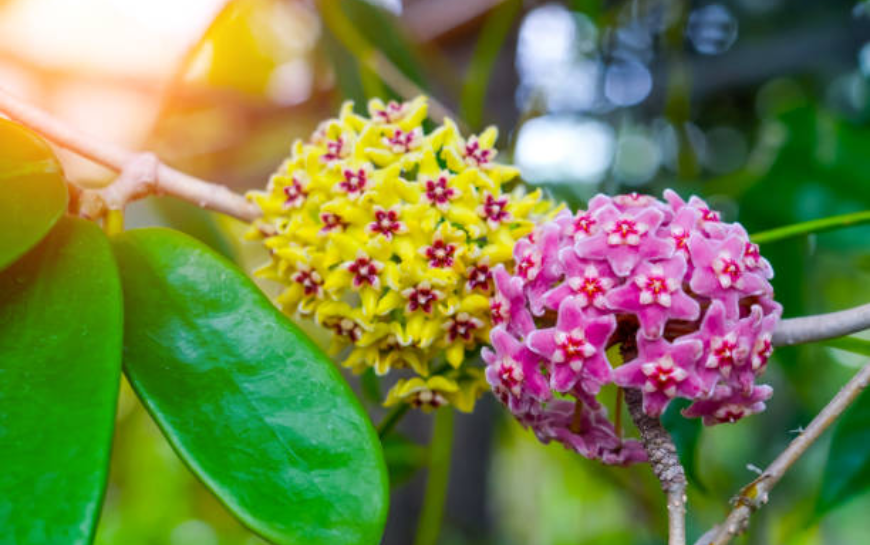
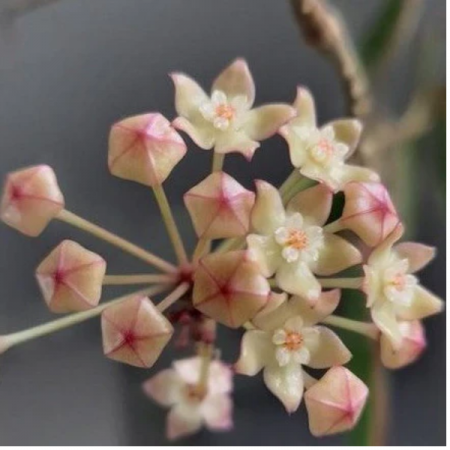
One of the most appreciated traits of this species is the distinctively scented inflorescence: the corolla is pale yellow-cream, with reflexed lobes curving backwards, and the central corona is pure white. The flowers are waxy, star-shaped, grouped in pendulous spherical umbels. The scent is lemon-citrus, sweet and slightly spicy, stronger in the evening — a remarkable trait for a species in the Hoya genus, where most species have a sweet-floral or mild coconut scent.
The flowering cycle takes place in the warm season (spring-summer) and repeats year after year on the same perennial peduncles ("spurs"). Never break off dried inflorescences — they will rebloom. Hoya ranauensis is featured among our flowering indoor plants, offering a recurring botanical show with a distinct olfactory dimension.
🌞 Care Requirements — Complete Guide
- Light: bright indirect, filtered — it comes from the canopy of hill forests. 1-1.5 m from an east/west window or behind a curtain on a south-facing window. A few hours of mild morning sun stimulate flowering; avoid direct midday sun in summer.
- Temperature: optimal 18-28°C. It tolerates short drops to 12-15°C in winter, which can stimulate floral induction. A mid-altitude species, it withstands moderate temperature variations.
- Watering: moderate, let the substrate dry almost completely between waterings. Summer every 7-10 days, winter every 14-20 days. Firm leaves retain water — better slightly dry than over-watered.
- Humidity: 60-80% ideal; it tolerates drops to 50% in dry apartments in winter, especially if the substrate is well-drained.
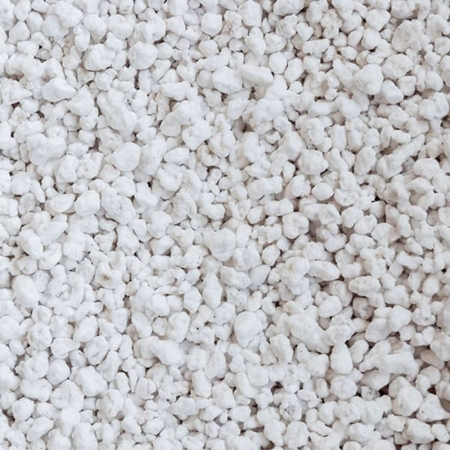
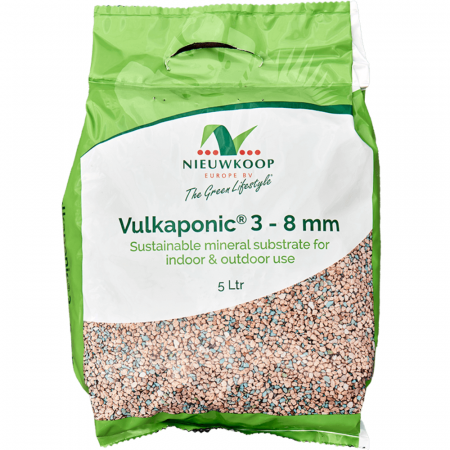
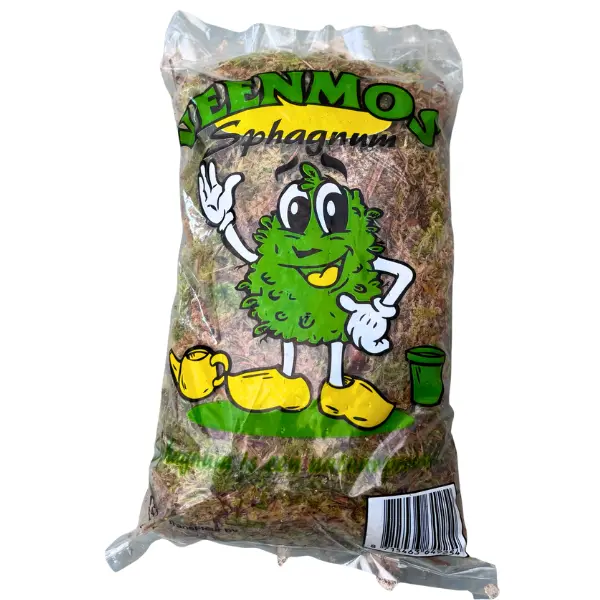
- Substrate: airy and well-drained — a mix of medium pine bark (50%), natural sphagnum (20%), perlite (20%), and a drainage layer of Vulkaponic at the pot base (10%). Avoid compact universal substrate — it suffocates epiphytic roots.
- Fertilising: monthly spring-summer with a mild formula for flowering plants (NPK 6-10-8). Pause in winter.
- Propagation: stem cuttings with 1-2 nodes in moist sphagnum or filtered water; roots in 4-6 weeks. The success rate is very high — an ideal species for exchanges between collectors.
🐾 Toxicity and Home Safety
The Hoya genus is considered non-toxic according to the ASPCA database, being safe for dogs, cats, and children. The milky sap, common in the Apocynaceae family, may cause minor skin irritation in very sensitive individuals — a pair of gloves is enough at repotting. Hoya ranauensis is thus featured among our child- and pet-friendly plants.
🎓 Why Choose Hoya ranauensis
It is an acquisition rarely encountered officially under this name — formally described only in 2014 — with clear botanical identity, unmistakable venation pattern, and distinctive citrus-scented inflorescence. Unlike the more demanding species in the finlaysonii-type group, ranauensis is considered by experienced cultivators (e.g. Vermont Hoyas) a suitable "first finlaysonii-type species" — accessible to intermediate enthusiasts as well, without extreme humidity or substrate requirements. It integrates beautifully alongside other rare collector Hoya species and is a solid option for office plants with indirect light, due to its hardiness and consistent ornamental appearance.
📚 Related blog articles

Lungime: 15 cm
Greutate (kg): 0.5 Kg
Denumire: Hoya
Diametru: 10.5 cm
Cerințe lumină: Partial umbra
Tip plantă: Decorative
Utilizare: Interior
Tip suport: Ghiveci
Material Suport: Plastic
What colour are the flowers of Hoya ranauensis and what scent do they have?
How do I tell Hoya ranauensis apart from Hoya callistophylla?
How often should I water Hoya ranauensis?
Is Hoya ranauensis safe for cats and dogs?
Is Hoya ranauensis suitable for beginners?
Recommendations


Ai nevoie și de un ghiveci decorativ?