EN/
EN/ Romana
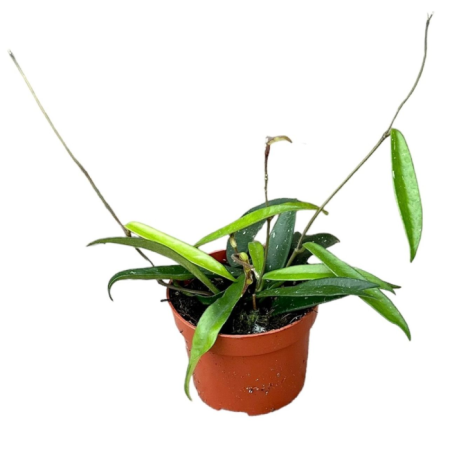
Hoya macrophylla Borneo Ø10.5cm
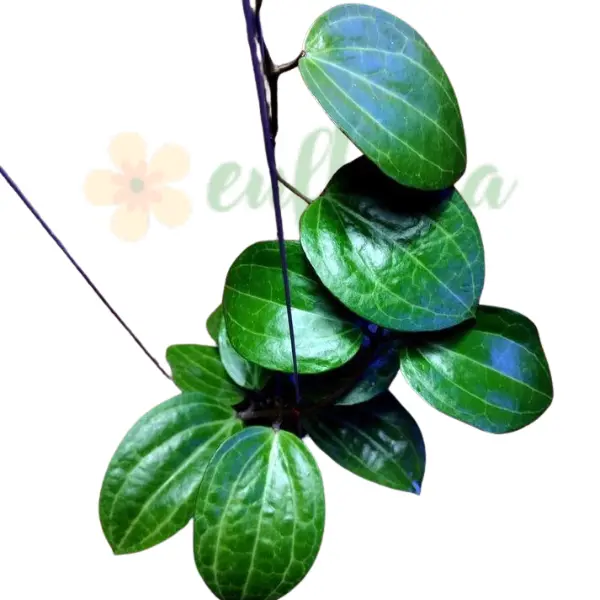
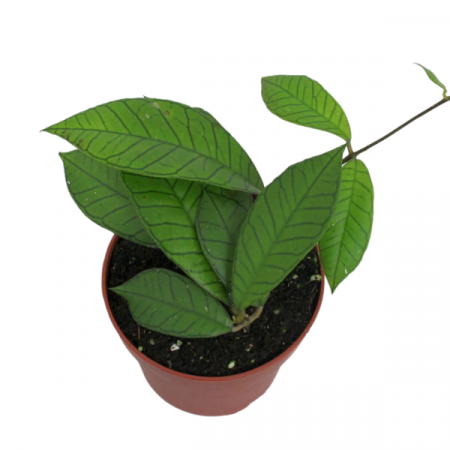
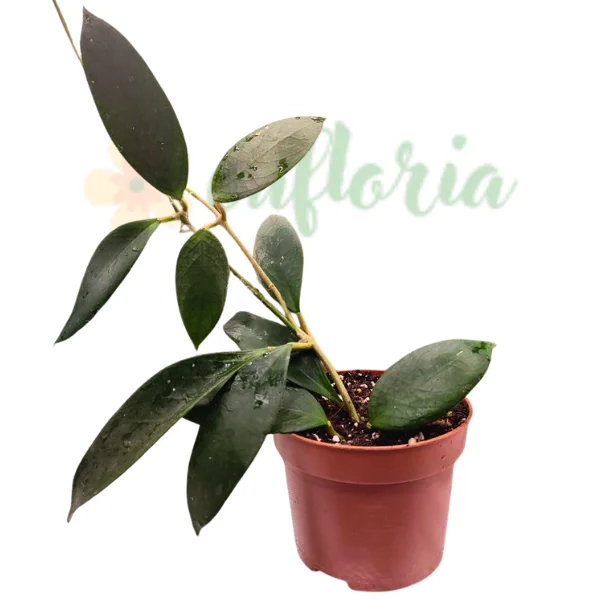
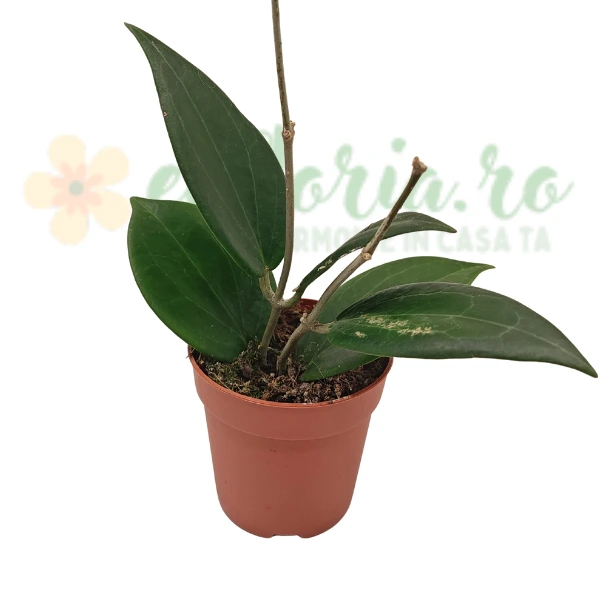
![Hoya macrophylla 'Borneo' — large leathery leaves with five parallel veins, Ø10.5cm pot | Eufloria [1]](https://gomagcdn.ro/domains2/eufloria.ro/files/product/original/hoya-macrophylla-borneo-d10-5-912218.png "Hoya macrophylla 'Borneo' — large leathery leaves with five parallel veins, Ø10.5cm pot | Eufloria [1]")
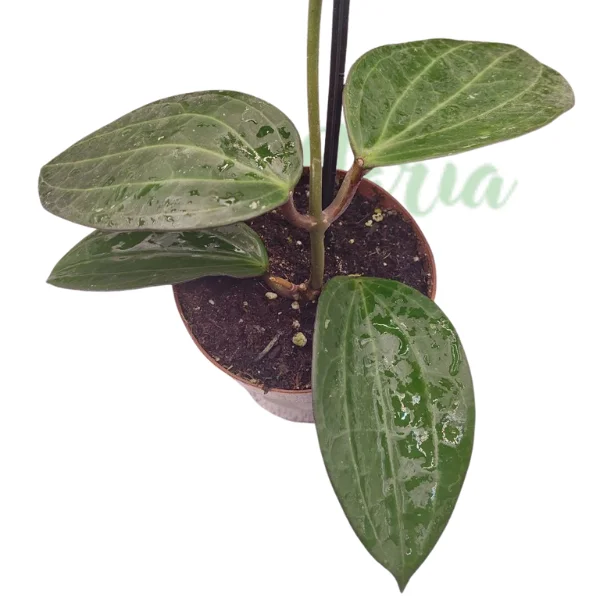
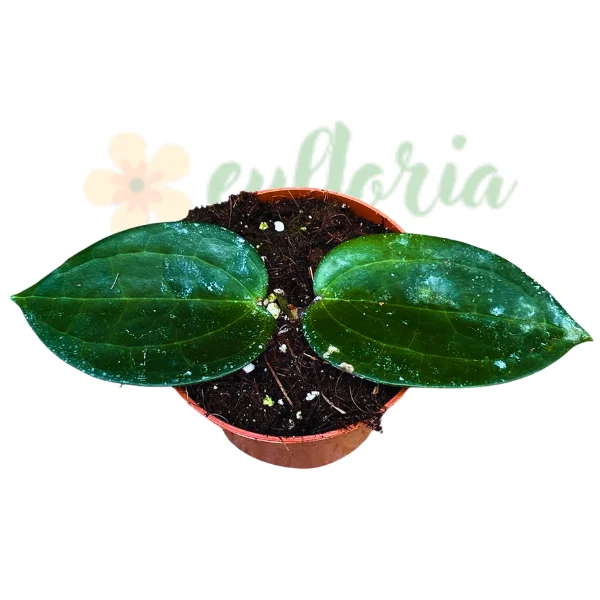
Hoya macrophylla 'Borneo' — epiphytic vine from Borneo with large leaves (up to 20 cm), thick and leathery, with five prominent parallel veins (cinnamon pattern). Bicoloured flowers — lime + burgundy corona, intense sweet scent. Needs support. Ø10.5cm pot.
Approx height (including pot): 15 cm
Flowering state: No flowers
Country of origin: Netherlands
Pot diameter: 10.5 cm
- Description
- Characteristics
- Reviews (0)
- FAQ
🌿 Hoya macrophylla 'Borneo' — large leaves with cinnamon-like venation
Hoya macrophylla Blume is an impressive epiphytic vine of the Apocynaceae family, officially described as early as 1827 in Bijdragen tot de Flora van Nederlandsch Indië. The species name comes from the Greek makros + phyllon = "large leaf" — and the dominant visual feature is exactly this: the thick, leathery leaves reach up to 20 cm in length, with five prominent parallel veins evoking the pattern of a cinnamon leaf. The "Borneo" form we offer comes directly from the Bornean range of the species. It is part of our Hoya collection.
Our specimen comes in a Ø10.5cm nursery pot, perfect to be moved into a decorative ceramic pot of the same size, without transplant stress.
🌍 Origin and 2025 Taxonomic Update
Hoya macrophylla has a native range in Vietnam, western Malesia (Malaya, Sumatera, Java) and extends to the Lesser Sunda Islands and Borneo. The "Borneo" form represents the native Bornean populations, not a commercial introduction. A major taxonomic update occurred in 2025, when Michele Rodda published in Gardens' Bulletin Singapore a revision demonstrating that Hoya cinnamomifolia Hook. (described in 1848) is a heterotypic synonym of H. macrophylla. Many plants historically sold as H. cinnamomifolia are, in fact, H. macrophylla.
Unlike Hoya carnosa 'Krimson Queen', which has small leaves without marked venation, macrophylla impresses through scale and through the pattern of five clearly outlined parallel veins on the lamina. The frequent confusion with Hoya latifolia G.Don is real — many variegated forms sold as "Pot of Gold" or "Albomarginata" are in fact H. latifolia botanically, according to the post-2025 analysis.
🌱 Foliage — scale and cinnamon-like pattern
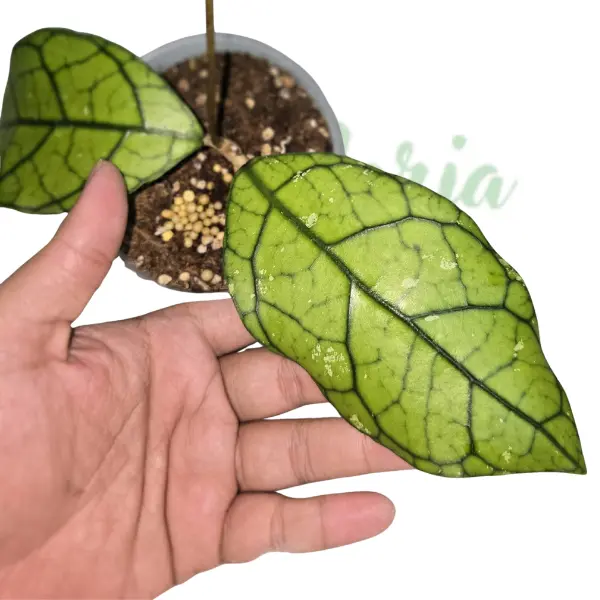
The leaves of Hoya macrophylla are broadly elliptical to paddle-shaped, with slightly recurved margins, typical length ~20 cm and width ~6-7 cm. The texture is thick, hard, leathery, semi-succulent. The base colour is deep green, and the main diagnostic feature is the five prominent parallel veins running from the base of the lamina toward the apex, giving the leaf the appearance of a "cinnamon leaf" (hence the synonym name H. cinnamomifolia).
The stems are voluble, woody at maturity, with adventitious roots that allow it to climb trunks and branches in the canopy. In cultivation, the plant needs support (moss pole or trellis) to display its architectural foliage — without support, the shoots fall pendulously. Growth is vigorous under optimal conditions.
🌸 Inflorescences — lime-green corolla, burgundy corona
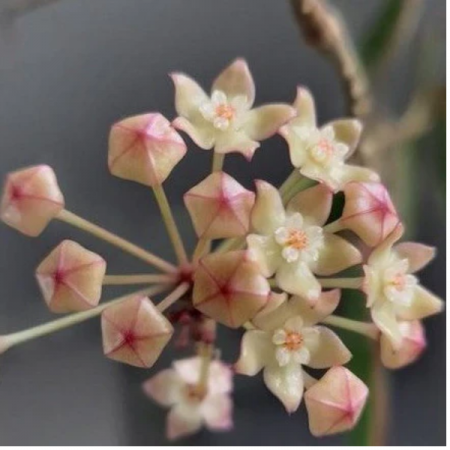
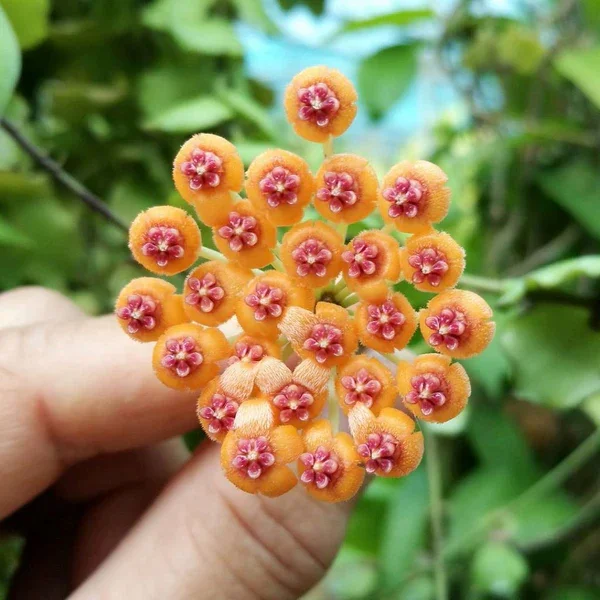
One of the most spectacular traits of this species is the inflorescence: pendulous umbels with 20-30 flowers each, arranged on perennial peduncles. The flowers are ~2 cm in diameter, with a lime-green or yellow-lime corolla with reflexed petals, and a contrasting burgundy-violet central corona. The scent is described as pronounced, sweet, and the individual flower lasts ~10 days.
The floral peduncles are perennial, which means you must never break off dried inflorescences — they will rebloom year after year on the same supports. Hoya macrophylla is featured among our flowering indoor plants with one of the most impressive ratios between leaf size and inflorescence drama.
🌞 Care Requirements — Complete Guide
- Light: bright indirect (~10,000-20,000 lux), filtered. 1-1.5 m from an east/west window or behind a curtain on a south-facing window. No direct sun, which can scorch the large, thick lamina.
- Temperature: optimal 18-24°C. Avoid exposure below 10-15°C — tropical species sensitive to cold.
- Watering: moderate, let the substrate dry 60-80% between waterings. Summer every 7-10 days, winter every 14-20 days. Thick leaves retain water — the plant is sensitive to over-watering.
- Humidity: 60-80% ideal; tolerates drops to 50% if the substrate is well-drained.
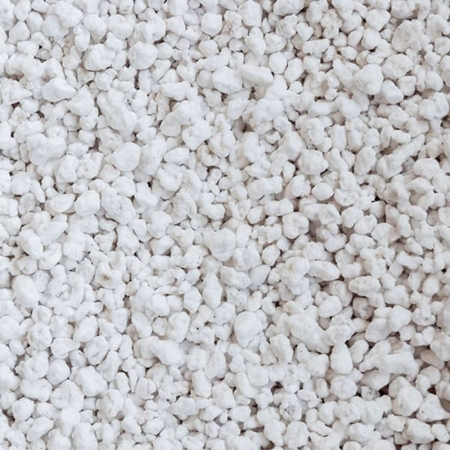
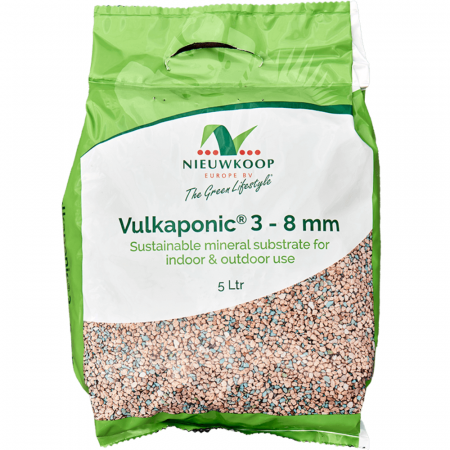
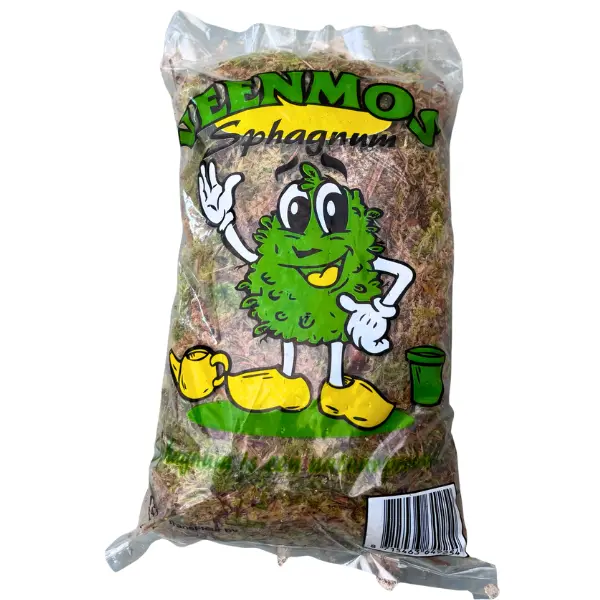
- Substrate: airy, epiphytic — a mix of medium pine bark (50%), natural sphagnum (20%), perlite (20%), and a drainage layer of Vulkaponic at the pot base (10%).
- Support: moss pole or trellis — the climbing habit requires support to display the foliage.
- Fertilising: monthly spring-summer with a mild formula for flowering plants (NPK 6-10-8). Pause in winter.
- Propagation: stem cuttings with 1-2 nodes in moist sphagnum or filtered water; roots in 4-6 weeks.
🐾 Toxicity and Home Safety
The Hoya genus is considered non-toxic according to the ASPCA database, being safe for dogs, cats, and children. The milky sap, common in the Apocynaceae family, may cause minor skin irritation in very sensitive individuals — a pair of gloves is enough at repotting. Hoya macrophylla is thus featured among our child- and pet-friendly plants.
🎓 Why Choose Hoya macrophylla 'Borneo'
It is a species with architectural presence — the large, thick foliage with the cinnamon pattern imposes visual respect and transforms any bright corner of the house into a tropical jungle fragment. The bicoloured inflorescence (lime + burgundy) with intense sweet scent is one of the most spectacular in the Hoya genus. The "Borneo" form offers added value through the declared geographic origin. It integrates beautifully alongside other species from the rare Hoya collection and is an impressive option for statement office plants.
📚 Read also
Lungime: 15 cm
Greutate (kg): 0.5 Kg
Denumire: Hoya
Diametru: 10.5 cm
Cerințe lumină: Partial umbra
Tip plantă: Decorative
Utilizare: Interior
Tip suport: Ghiveci
Material Suport: Plastic
Is Hoya macrophylla the same as Hoya cinnamomifolia?
Why are the leaves so large?
What are the flowers like and what scent do they have?
Does it need a stake or support?
Is Hoya macrophylla safe for cats and dogs?
Recommendations


Ai nevoie și de un ghiveci decorativ?