EN/
EN/ Romana
Begonia masoniana (Iron Cross) Ø12cm
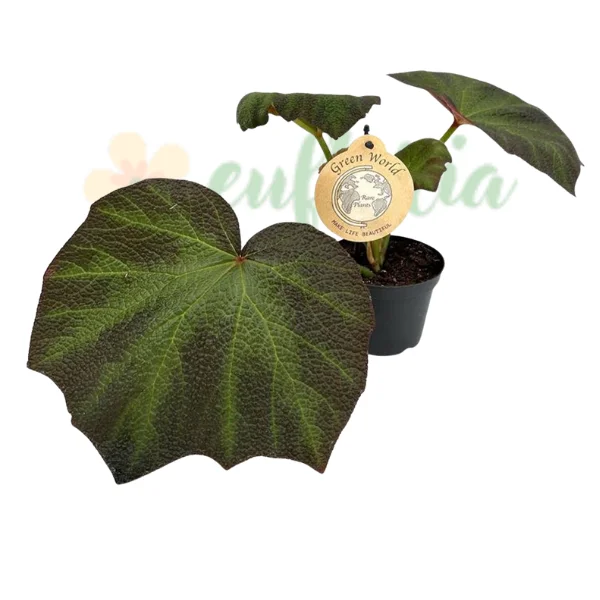
![Begonia masoniana (Iron Cross) — rare indoor plant with cross-patterned leaves [1]](https://gomagcdn.ro/domains2/eufloria.ro/files/product/original/begonia-masoniana-d12-426885.webp "Begonia masoniana (Iron Cross) — rare indoor plant with cross-patterned leaves [1]")
Begonia masoniana (Iron Cross) is a spectacular rhizomatous begonia with large, textured, bright green leaves marked with an iconic brown cross-shaped pattern. Native to China and Vietnam. Prefers indirect light and moderate humidity. Caution: toxic plant – contains calcium oxalates.
Note: Product images are for guidance only. Due to different batches of imported products, there may be differences between the images on the website and the actual appearance of the products.
Approx height (including pot): 22 cm
Flowering state: No flowers
Country of origin: Denmark
Pot diameter: 12 cm
- Description
- Characteristics
- Reviews (0)
- FAQ
🌿 The Iron Cross Begonia — Nature’s Living Heraldry
Among the vast genus Begonia, with its more than 2,000 described species, few possess the instant recognition factor of Begonia masoniana. Known universally as the Iron Cross Begonia, this rhizomatous species from Southeast Asia bears one of the most distinctive leaf markings in the entire plant kingdom — a bold, dark cross-shaped pattern that radiates from the centre of each leaf like a medieval coat of arms stamped by nature herself. It is a plant that commands attention not through size or floral display, but through the sheer audacity of its foliage design.
What makes Begonia masoniana particularly compelling for collectors is the remarkable texture of its leaves. The surface is covered in tiny conical bumps called papillae, giving each leaf a three-dimensional, almost reptilian quality that is entirely unique within the genus. When light catches these textured surfaces, the interplay of shadows and highlights transforms the plant into a living sculpture that changes character throughout the day as light conditions shift.
For indoor gardeners seeking a statement plant that delivers maximum visual impact with a moderate care routine, the Iron Cross Begonia is an exceptional choice. It requires more attention to humidity than the average houseplant, but rewards that care with a steady production of magnificent new leaves, each bearing the signature iron cross marking that makes this species unforgettable.
🌍 Origin and Botanical History
Begonia masoniana was introduced to Western horticulture in 1952 when specimens were collected from southeastern China’s Guizhou (formerly Kweichow) province. The species was formally described by botanist Leslie Maurice Mason in 1961, and the specific epithet honours his contributions to Begonia taxonomy and cultivation. The plant’s natural range extends into northern Vietnam, where it inhabits subtropical montane forests at elevations between 500 and 1,500 metres above sea level.
The genus Begonia itself was established by Charles Plumier in 1700 and named in honour of Michel Bégon, then governor of the French colony of Saint-Domingue (modern-day Haiti). It has since grown to become one of the largest genera of flowering plants, with species distributed throughout tropical and subtropical regions worldwide. Begonia masoniana belongs to the section Reichenheimia and is classified as a rhizomatous begonia — a group characterised by thick, fleshy rhizomes that creep along or just below the substrate surface.
In its native habitat, the species thrives on limestone outcrops covered in moss, along shaded stream banks, and on humus-rich forest floors where filtered light, consistently high humidity, and moderate temperatures create ideal growing conditions. Understanding these natural conditions is key to successful cultivation, as the species performs best when its domestic environment approximates these forest-floor conditions.
🌱 The Foliage
The leaves of Begonia masoniana are, without exaggeration, among the most visually arresting in the entire plant kingdom. Each leaf is asymmetrically cordate (heart-shaped), measuring 15 to 20 cm across in mature specimens, supported by long petioles of 15–25 cm that hold the leaf blade at a slightly tilted angle to maximise light capture — an adaptation to the dappled light of its forest understory habitat.
The base colour ranges from olive green to bright chartreuse, depending on light levels, and serves as the canvas for the species’ signature marking: the iron cross. This bold pattern of dark chocolate-brown to reddish-brown pigmentation radiates from the petiole attachment point along the main veins, creating a symmetrical cross shape that covers a significant portion of each leaf’s surface area. The intensity of this marking responds directly to light conditions — brighter indirect light produces deeper, more defined crosses, while lower light results in subtler, more diffuse patterns.
The most remarkable tactile feature is the leaf surface texture. Densely covered in papillae — small, conical protuberances that give the surface a pebbled, almost pustulate appearance reminiscent of reptile skin or elaborate textile work. Fine hairs cover the entire leaf surface, adding a soft, almost velvety feel when touched gently. The leaf margins are irregularly dentate, creating a jagged edge that adds visual complexity. Combined with the three-dimensional surface texture and the dramatic colour contrast of the iron cross marking, each leaf becomes a miniature work of natural art that changes character with every shift in lighting angle.
🌸 The Flowers
While Begonia masoniana is cultivated almost exclusively for its spectacular foliage, the species does produce occasional inflorescences — delicate racemes of small white to pale pink flowers that rise above the foliage canopy on slender floral stems. Individual flowers measure 1–1.5 cm and possess a quiet, understated charm that complements rather than competes with the dramatic foliage display below.
Flowering typically occurs in spring or summer when the plant receives optimal growing conditions. Many cultivators choose to remove developing flower stalks before they bloom, redirecting the plant’s energy toward foliage production. This practice is entirely harmless and can result in faster production of new leaves. However, allowing the plant to flower provides a complete botanical experience and can yield seeds for propagation, though seed-grown Begonia masoniana requires considerable patience and skill.
The flowers are monoecious, with separate male and female flowers on the same inflorescence. If successfully pollinated, they produce small, winged capsules containing extremely fine seeds — a characteristic shared across the Begonia genus. Seed germination requires controlled conditions of warmth, humidity, and light, making it a project best suited to experienced growers.
🌱 Growth Habits and Cultivation
Begonia masoniana develops a compact, spreading habit through its thick, fleshy rhizomes that extend horizontally across the substrate surface. From these rhizomes emerge the long petioles supporting the magnificent foliage in an asymmetric rosette formation that can reach 40–50 cm in diameter at maturity. Growth rate is moderate, with the plant typically producing 3–5 new leaves per growing season under optimal conditions, each new leaf unfurling with the same remarkable iron cross pattern and textured surface that define the species.
Active growth occurs primarily during spring and summer, with a natural slowdown in autumn and winter when the plant enters a period of relative dormancy. The rhizomes branch gradually over time, and established plants can be divided to create new specimens — the most reliable propagation method for maintaining the species’ characteristic features.
- Light: Moderate to bright indirect light is essential. Direct sunlight scorches the leaves and bleaches the iron cross marking. North or east-facing windows are ideal. In insufficient light, the marking fades and petioles become excessively elongated as the plant stretches toward available light.
- Temperature: Optimum range 18°C–25°C. Does not tolerate temperatures below 13°C — cold causes rapid leaf drop and can damage the rhizomes. Avoid cold draughts and sudden temperature fluctuations, which stress this subtropical species.
- Watering: Keep the substrate consistently lightly moist but never waterlogged. Water when the top centimetre of substrate has dried. Use room-temperature water. Critically, avoid wetting the leaves — Begonia masoniana is susceptible to powdery mildew and leaf rot when moisture sits on the textured leaf surfaces.
- Humidity: Requires elevated humidity between 50–70%. Below 40%, leaf margins dry and curl. A room humidifier provides the most consistent results. Avoid direct misting of the leaves, as standing water on the papillate surface promotes fungal issues.
- Substrate: Light, airy, well-draining mix: 40% peat or coco coir, 30% perlite, 20% vermiculite, 10% fine bark. Slightly acidic pH (5.5–6.5). Excellent drainage is essential to prevent rhizome rot. Shallow, wide pots suit the spreading rhizome habit better than deep, narrow containers.
- Fertilising: Apply a balanced liquid fertiliser (NPK 10-10-10) diluted to one-quarter recommended strength twice monthly during the growing season. Cease feeding during the dormancy period (October–February) when the plant’s nutritional needs are minimal.
- Propagation: Division of rhizomes in spring is the most reliable method. Leaf cuttings placed on moist substrate can also produce new plantlets, though this method requires patience — the process typically takes 6–12 weeks before new growth appears from the cutting base.
Lungime: 20 cm
Greutate (kg): 1 Kg
Denumire: Begonia
Diametru: 12 cm
Cerințe lumină: Strong, indirect light
Tip plantă: Decorative
Utilizare: Interior
Tip suport: Ghiveci
Material Suport: Plastic
Is Begonia masoniana (Iron Cross Begonia) toxic to cats and dogs?
Yes, Begonia masoniana is toxic to cats, dogs, and horses according to the ASPCA. The plant contains soluble calcium oxalates, with the underground rhizomes being the most toxic part. If ingested, pets may experience vomiting, excessive drooling, oral irritation, and difficulty swallowing. While rarely fatal, the symptoms are uncomfortable. Keep this plant out of reach of pets, and contact your veterinarian immediately if you suspect ingestion.
Why is it called the "Iron Cross" Begonia?
The name comes from the distinctive dark chocolate-brown pattern at the center of each leaf, which strikingly resembles the Iron Cross – a symbol used on shields and flags during the medieval Crusades. English plant collector L. Maurice Mason gave the plant this evocative common name when he brought it from Singapore to England in 1952. The species name "masoniana" also honors him. The bold cross-shaped marking makes this one of the most instantly recognizable houseplants in the world.
Why are there white powdery spots on my Iron Cross Begonia leaves?
White powdery patches on Begonia masoniana indicate powdery mildew, a fungal infection that thrives when foliage stays wet in humid conditions with poor air circulation. Never mist this plant directly – the textured, hairy leaves trap moisture and are highly susceptible to mildew. Instead, increase humidity using a pebble tray or humidifier. Remove affected leaves promptly, improve air circulation around the plant, and ensure water only reaches the soil, not the foliage. Severe cases may require fungicide treatment.
How often should I water Begonia masoniana?
Water when the top 2-3 cm of soil feels dry – typically weekly during active growth, less frequently in winter. The underground rhizomes store water, making overwatering more dangerous than slight underwatering. Always water at the base of the plant, never on the leaves, to prevent mildew. Ensure excellent drainage and never let the plant sit in water. In winter when growth slows, reduce watering significantly but don't allow complete dryness. Yellow, drooping leaves typically indicate overwatering; crispy brown edges suggest underwatering or low humidity.
Why are the leaf markings on my Iron Cross Begonia fading?
Fading of the distinctive chocolate-brown cross pattern usually indicates too much direct light. While Begonia masoniana needs bright light for healthy growth, direct sunlight bleaches the markings and can burn the leaves. Move the plant to a spot with bright but filtered or indirect light – near a window with sheer curtains, or a few feet back from south-facing windows. The vibrant contrast between the bright green leaves and dark cross pattern will return once lighting conditions are corrected.
How do you care for Begonia masoniana (Iron Cross)?
Begonia masoniana thrives in bright indirect light, well-draining soil kept slightly moist, and temperatures between 18–24°C (65–75°F). Avoid direct sunlight, which scorches the leaves, and cold draughts. High ambient humidity (above 50%) is ideal – a pebble tray works well. Fertilise monthly with diluted liquid fertiliser during the growing season (spring–summer).
How often should Begonia masoniana be watered?
Water Begonia masoniana when the top 2–3 cm of soil feel dry. During the warm season this typically means 2–3 times per week; in winter less often. Use room-temperature water and avoid letting water collect in the saucer. Begonia masoniana is sensitive to overwatering – roots rot easily if the soil stays waterlogged.
Is Begonia masoniana toxic to pets?
Yes, Begonia masoniana is toxic to dogs, cats and horses according to the ASPCA. The plant contains soluble calcium oxalates, with the underground rhizomes being the most toxic part. Symptoms of ingestion include vomiting, excessive drooling, oral irritation and difficulty swallowing. Keep the plant away from pets.
How can Begonia masoniana be propagated?
Begonia masoniana is most easily propagated by dividing the rhizome during spring repotting. Each section should have at least one node and healthy roots. Another effective method is leaf cuttings: cut a healthy leaf with its petiole, place it on moist substrate and cover with clear plastic to maintain humidity. New plantlets should appear within 4–8 weeks.
What temperature does Begonia masoniana prefer?
Begonia masoniana prefers temperatures between 18–24°C (65–75°F) year-round. The minimum tolerated temperature is around 13°C (55°F) – below this the plant stops growing and may suffer damage. Avoid cold draughts and sudden temperature changes. Do not place the plant near radiators or air conditioning units.
Recommendations
Ai nevoie și de un ghiveci decorativ?