EN/
EN/ Romana
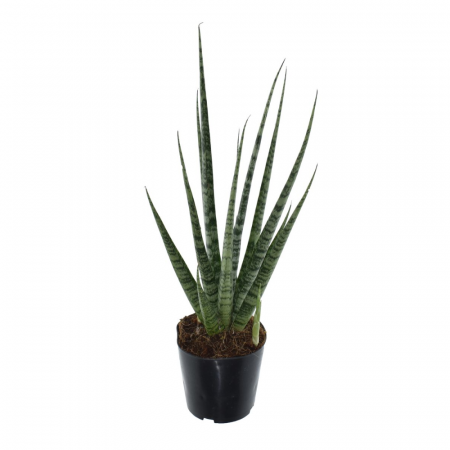
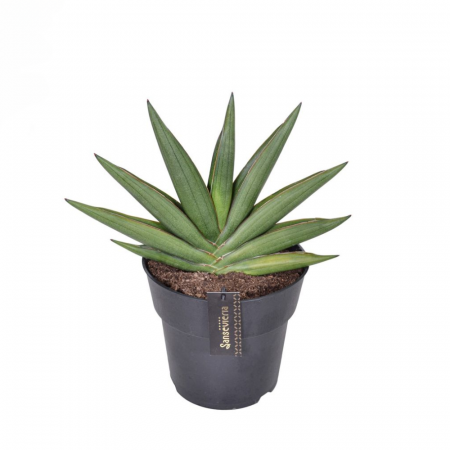
Sansevieria cylindrica 'Skyline' Ø7cm
![Sansevieria cylindrica 'Skyline' [1]](https://gomagcdn.ro/domains2/eufloria.ro/files/product/original/sansevieria-cylindrica-skyline-187057.png "Sansevieria cylindrica 'Skyline' [1]")
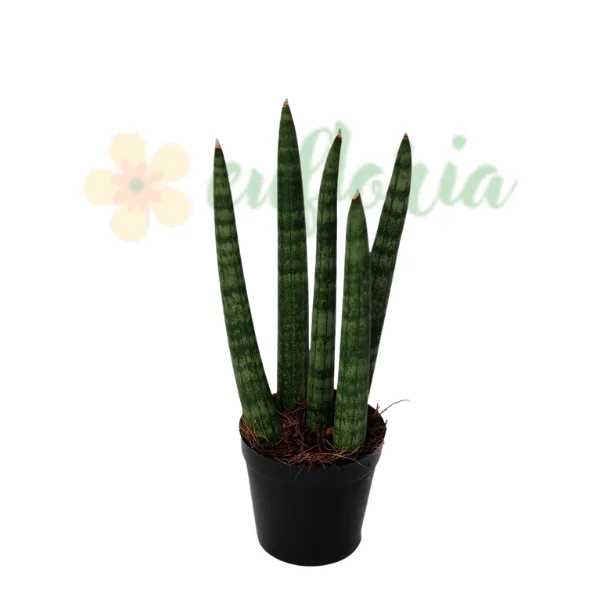
Sansevieria Cylindrica 'Skyline' este o varietate remarcabilă de Sansevieria, cunoscută pentru frunzele sale cilindrice, lungi și perfect simetrice, care creează un aspect arhitectural spectaculos. Această plantă este ideală pentru spații moderne și minimaliste, aducând un aer contemporan oricărui decor interior.
Approx height (including pot): 40 cm
- Description
- Characteristics
- Reviews (0)
- FAQ
🌿 Sansevieria cylindrica ‘Skyline’ — A Living Sculpture from the Heart of Africa
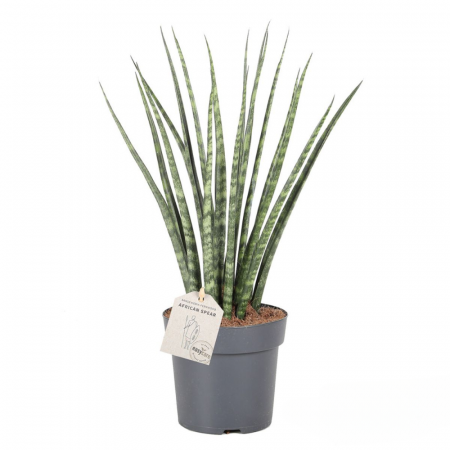
Sansevieria cylindrica ‘Skyline’ is one of the most expressive forms within the Dracaena genus (formerly Sansevieria), a plant that appears crafted by a sculptor rather than by nature. Its cylindrical, rigid, perfectly symmetrical leaves rise vertically like the columns of an ancient temple, lending any space an unmistakable architectural presence.
Originating from the arid regions of tropical Africa, this species belongs to the Asparagaceae family and was recently reclassified from the genus Sansevieria to Dracaena, though in commerce and among collectors it continues to be known by its former name. The ‘Skyline’ cultivar stands out for its exceptionally straight and uniform leaves, with a finely striated texture and a grey-green hue that emanates minimalist elegance.
In its natural habitat, Sansevieria cylindrica grows in dry savannahs and rocky terrain, where daytime temperatures frequently exceed 35°C and rainfall is rare and seasonal. This extreme adaptation to drought makes it one of the most resilient houseplants in existence — ideal for those who travel frequently or occasionally forget to water their plants.
🌍 Origin and Botanical Context
Sansevieria cylindrica is native to Angola, where it colonises arid terrain, open woodlands and savannah margins. Wild specimens have been documented in other sub-Saharan regions as well, including Tanzania and Mozambique, though the precise distribution remains a subject of ongoing research.
The first scientific description of the species dates to 1837, when German botanist Heinrich Wilhelm Schott catalogued it as Sansevieria cylindrica, referring to the unique shape of its leaves. Unlike most plants, whose leaves are flat, those of the cylindrical Sansevieria are completely tubular, with a circular cross-section — an adaptation that minimises water loss through transpiration.
The robust underground rhizome allows the plant to survive prolonged periods of drought, storing water and nutrients for critical moments. This survival strategy is the reason Sansevieria can tolerate neglect in indoor culture better than almost any other plant.
🌱 Complete Care Guide
Sansevieria cylindrica ‘Skyline’ is, without exaggeration, one of the easiest plants to maintain. However, understanding its needs allows you to achieve a vigorous, healthy plant with active growth.
Light is not a limiting factor. Sansevieria tolerates the full spectrum, from shaded corners to direct sunlight. However, for optimal growth, place it in bright indirect light. In low-light conditions, the plant survives but grows extremely slowly.
Watering is the most critical aspect — and also the simplest. Water ONLY when the substrate has dried completely, including at depth. During the warm season, this typically means once every 2-3 weeks; in winter, once a month or even less. Overwatering is the only serious threat — it causes root and leaf base rot.
Substrate must be extremely well-drained. A cactus and succulent mix enriched with perlite or coarse sand is ideal. Ensure the pot has functional drainage holes.
Temperature ideally ranges between 15-30°C. Sansevieria tolerates temperatures down to 10°C, but prolonged exposure below this threshold combined with wet substrate can be fatal. Avoid cold air draughts.
🌸 Benefits and Interior Design Uses
Sansevieria cylindrica ‘Skyline’ excels in contemporary interior design. Its pure geometric forms make it the ideal candidate for minimalist interiors, modern offices, or commercial spaces where a plant presence is desired without the maintenance effort of traditional plants.
NASA studies included the Sansevieria genus among the most effective indoor air-purifying plants, capable of removing toxins such as formaldehyde, benzene, and trichloroethylene. An additional benefit: Sansevieria is one of the few plants that continues to produce oxygen at night (through CAM metabolism), making it ideal for bedrooms.
As a decorative element, it can be used individually as a focal point or grouped in compositions of multiple specimens at different heights, creating a dramatic “column forest” effect.
🌱 Propagation and Long-term Growth
Sansevieria cylindrica propagates most simply through rhizome division during repotting. Carefully separate the offsets that appear at the base of the mother plant, ensuring each division has at least 2-3 leaves and a portion of rhizome with roots. Plant in dry substrate and wait 5-7 days before the first watering.
Repotting is done rarely — every 2-3 years or when the pot becomes visibly too small. Sansevieria prefers to be slightly cramped in its pot, which also stimulates the growth of lateral offsets. Choose heavy pots (ceramic or concrete) for stability — the tall cylindrical leaves can unbalance lightweight plastic pots.
Growth is slow but steady. Under optimal conditions, leaves can reach 1-1.5 metres in height at maturity, though in indoor culture they typically remain between 30-60 cm. The plant can live for decades with minimal care, becoming a permanent presence in your home.
Lungime: 15 cm
Greutate (kg): 0.5 Kg
Denumire: Sansevieria
Cerințe lumină: Umbra
Tip plantă: Decorative
Utilizare: Interior
Tip suport: Ghiveci
Material Suport: Plastic
Does Sansevieria cylindrica 'Skyline' purify the air?
Sansevieria cylindrica 'Skyline' is recognized for its ability to purify indoor air. This plant filters toxins such as formaldehyde, benzene, and xylene, contributing to a healthier indoor environment. It is one of the most effective houseplants for air purification.
How often should I water Sansevieria?
Sansevieria needs rare watering - every 2-3 weeks in summer and once a month in winter. Allow the soil to dry completely between waterings. Overwatering is the main cause of death for this plant, causing root rot.
Is Sansevieria toxic to pets?
Yes, Sansevieria is mildly toxic to dogs and cats. It contains saponins that can cause nausea, vomiting and diarrhea if ingested. Keep the plant away from pets and small children.
What type of soil is suitable for Sansevieria?
Use a special cactus and succulent substrate or a mix of universal soil with sand and perlite in equal parts. Sansevieria needs excellent drainage to prevent root rot.
Does Sansevieria tolerate low light?
Yes, Sansevieria is one of the most low-light tolerant plants. It can survive in shade conditions, though growth will be slower. For optimal growth and vibrant colors, provide moderate to bright indirect light.
How do I propagate Sansevieria?
Sansevieria can be propagated by dividing the clump (fastest method) or through leaf cuttings. Cut a leaf into 5-7 cm sections, let them dry for 1-2 days, then plant in moist substrate. Rooting takes 4-8 weeks.
Ai nevoie și de un ghiveci decorativ?