EN/
EN/ Romana
Hoya waymaniae 'Kapuas' Ø10.5cm
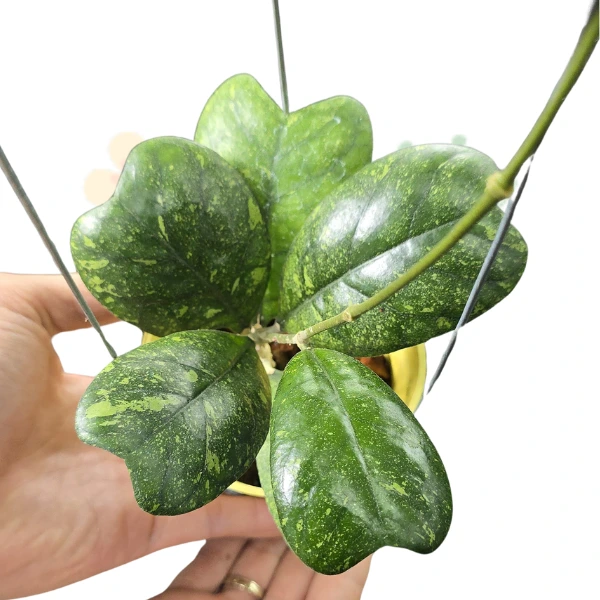
![Hoya waymaniae 'Kapuas' — rare species endemic to Borneo with large waxy oval intense-green leaves and prominent central veins, collector Hoya [1]](https://gomagcdn.ro/domains2/eufloria.ro/files/product/original/planta-naturala-de-interior-hoya-waymaniae-kapuas-248271.png "Hoya waymaniae 'Kapuas' — rare species endemic to Borneo with large waxy oval intense-green leaves and prominent central veins, collector Hoya [1]")
Hoya waymaniae 'Kapuas' is a rare collector species from the Apocynaceae family, endemic to Borneo island (Indonesia), scientifically described in 1995. The 'Kapuas' population comes from the Kapuas river basin and is distinguished by vigor and stability. Large waxy oval intense-green leaves with prominent veins, umbels of cherry-red flowers with cream coronas.
Approx height (including pot): 10 cm
Flowering state: No flowers
- Description
- Characteristics
- Reviews (0)
- FAQ
🌿 Hoya waymaniae 'Kapuas' — The Waxy Jewel of Borneo Jungles
Hoya waymaniae 'Kapuas' is one of the most sought-after Hoya collector species, a rarity originating from the Kapuas river region of Borneo, Indonesia. The name 'Kapuas' identifies this specific population, harvested from the Kapuas basin, one of the richest tropical biodiversity areas in the world. Plants cultivated from this location are distinguished by exceptional vigor and by the stability of morphological characteristics.
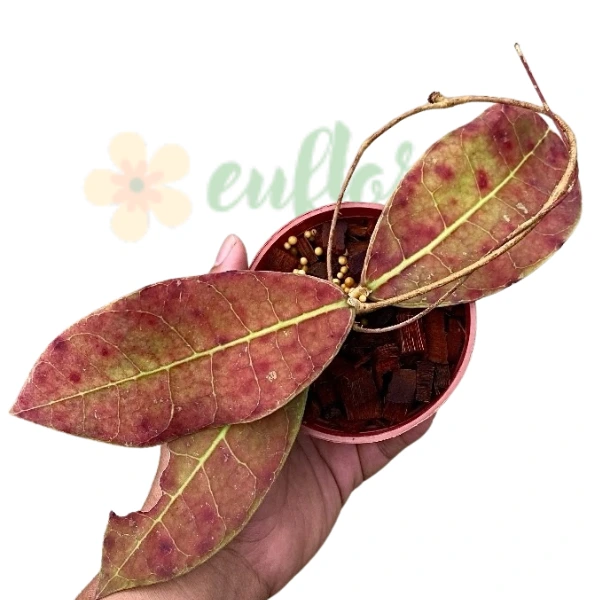
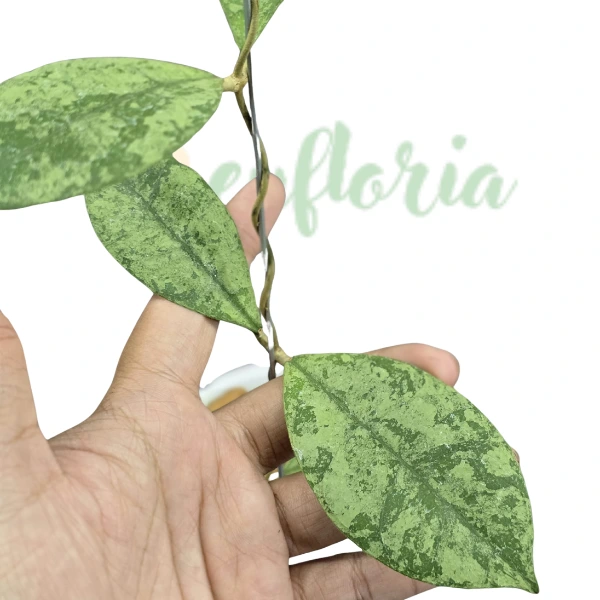
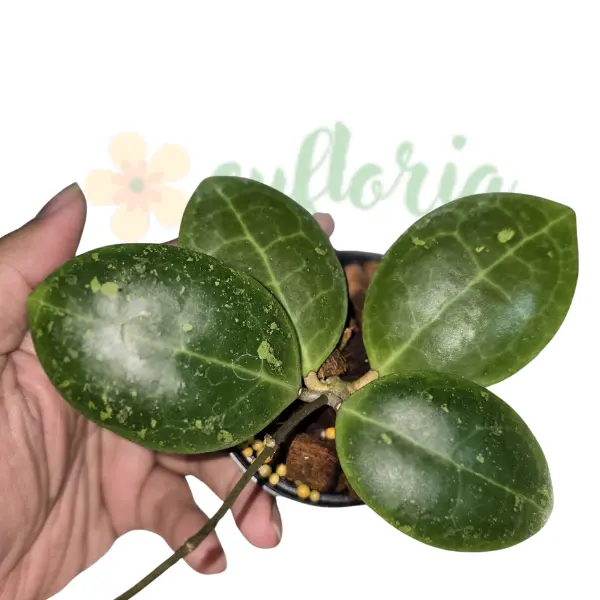
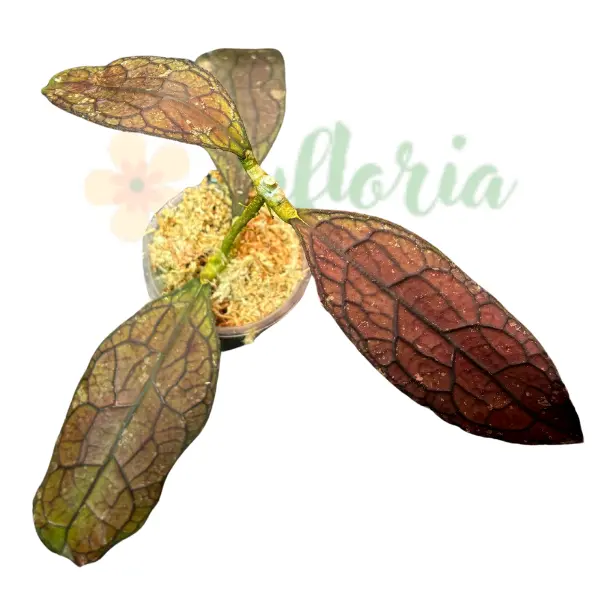
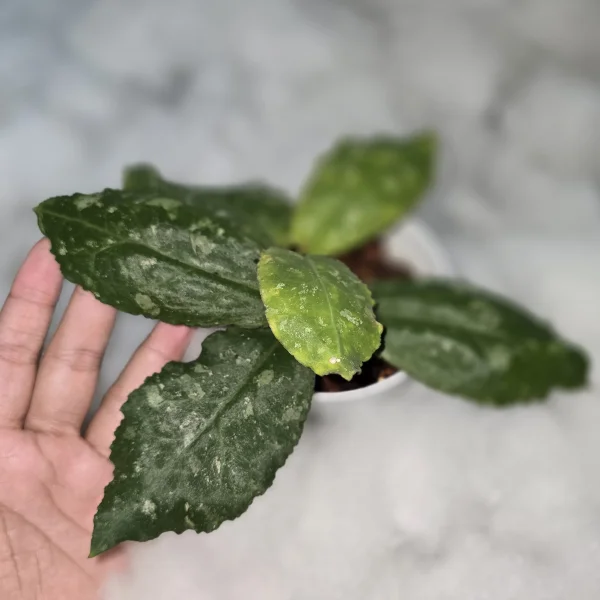
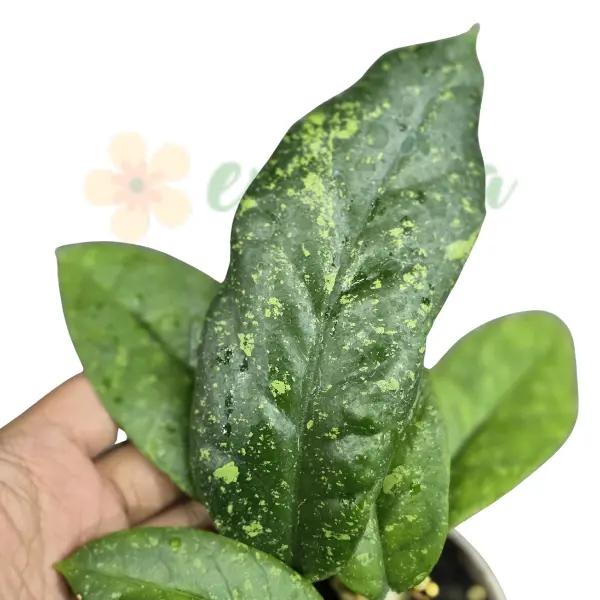
The leaves are impressive — large, oval-elliptical, with firm and waxy texture, of rich intense-green, with prominent central veins that accentuate with maturity. Each leaf can reach 10-15 cm in length, arranged in opposite pairs along robust vining stems. It is a plant with strong visual presence that elegantly dominates any tropical collection.
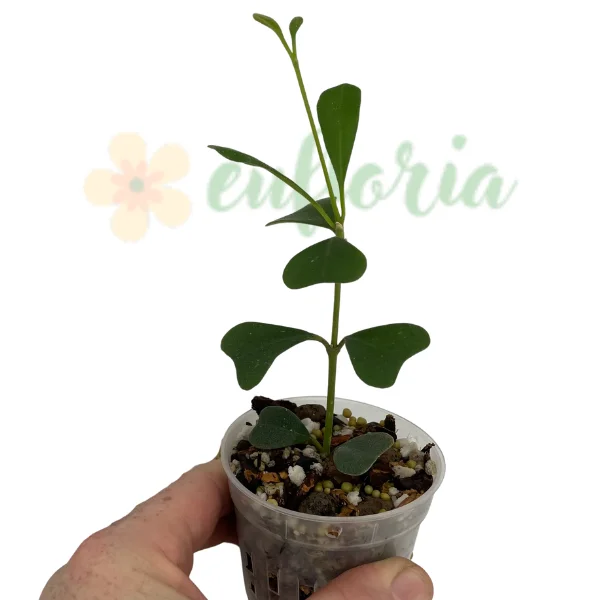
Offered in two variants: Ø10.5cm pot (mature plant with developed stems and characteristic leaves) or unpotted pre-order (cuttings/bare-root plants for collectors who prefer to replant in their own substrate). It is a species for authentic Hoya genus enthusiasts, appreciated for its rarity and foliage beauty.
🌍 Origin and Botanical History
Hoya waymaniae was scientifically described in 1995 by Australian botanist Dale Kloppenburg, a specialist in the Hoya genus. It is endemic to Borneo island, where it grows epiphytically on tree trunks in humid tropical forests. The population from the Kapuas region (western Borneo, Indonesia — West Kalimantan province) is considered one of the most representative, with plants typical of the species.
The Apocynaceae family, to which the Hoya genus belongs, comprises over 200 Hoya species. Hoya waymaniae belongs to the Acanthostemma section, alongside species like H. finlaysonii and H. archboldiana — a group of Hoyas with large, waxy leaves and flowers in dense umbels.
🌱 Impressive Foliage
Hoya waymaniae leaves are one of the most remarkable characteristics of the species. Oval to elliptical in shape, with rounded base and subtly pointed tip, they measure 8-15 cm length and 5-8 cm width at maturity (larger in epiphytic cultivation on moss support). Texture is thick, waxy-succulent, with smooth and slightly glossy upper surface.
Color is medium to dark green, with prominent central veins that accentuate as the leaf matures. Some plants may develop pronounced secondary veins, creating a decorative venation pattern. Under bright light, leaf edges may take on slightly purple or coppery hues ('sun stress').
🌸 The Flowers
Hoya waymaniae produces spectacular spherical umbels of 15-25 waxy flowers, of deep cherry-red with contrasting cream-yellow central corona. Each flower measures approximately 1.5-2 cm diameter, with unique velvety-waxy texture. Fragrance is subtle, sweet-floral, more intense in the evening. Mature plants can produce consecutive umbels on the same peduncle for years.
DO NOT cut flower peduncles after flowers fall — they are perennial and produce new umbels in subsequent years. A well-maintained mature plant can develop multiple active peduncles simultaneously, offering a memorable visual spectacle.
🌱 Growth Habit and Care
Hoya waymaniae 'Kapuas' is an epiphytic plant with vining-semi-climbing habit, ideal for hanging pots or vertical moss supports where it can develop larger leaves.
- Light: bright indirect, essential for inducing flowering. East- or west-facing windowsill ideal. Avoid strong direct sun.
- Temperature: 20-28°C optimal; does not tolerate below 15°C. Loves stable tropical climate.
- Watering: moderate to infrequent; let substrate dry almost completely between waterings. Every 10-14 days in summer, every 3-4 weeks in winter. Thick leaves store water.
- Humidity: 60-80% ideal; adapts to 50% as well. Weekly misting beneficial.
- Substrate: very airy, well-drained — aroid/orchid mix with pine bark, perlite, sphagnum, activated charcoal.
- Fertilization: every 3-4 weeks during growing season, diluted by half. Higher phosphorus in spring stimulates flowering.
- Propagation: via stem cuttings with 2-3 nodes. Spring-summer optimal.
🌿 Safety and Non-toxicity
Hoya waymaniae is classified as non-toxic for humans and pets according to ASPCA. The milky sap may cause minor skin irritation in sensitive individuals. One of the safest plants for homes with cats, dogs or children.
🌸 Why Choose waymaniae 'Kapuas'
Hoya waymaniae 'Kapuas' is a plant for serious Hoya genus collectors. The combination of rarity (Borneo endemic species), impressive foliage (large, waxy leaves with prominent veins) and spectacular flowers (cherry-red umbels with cream coronas) makes it a top piece in any collection. The specific 'Kapuas' population is appreciated for its vigor and stability.
🌱 Specifics of the 'Kapuas' Population
The term 'Kapuas' is not an official cultivar, but a denotation of the natural harvest location — the Kapuas river basin in western Borneo, Indonesia. Plants from this region display certain typical characteristics: increased vigor, larger leaves, more pronounced veins and more intensely colored flowers compared to populations from other locations. Collectors appreciate these 'locality' distinctions as part of the charm of plants collected directly from nature.
🌱 Common Problems
Yellow leaves: overwatering. Check drainage and reduce watering frequency.
Slow growth: insufficient light or low temperature.
Lack of flowers: plant too young (3+ years from rooting), insufficient light, or pot too large.
Brown tips: low humidity. Mist leaves or increase ambient humidity.
Lungime: 30 cm
Greutate (kg): 0.5 Kg
Denumire: Hoya
Diametru: 10.5 cm
Cerințe lumină: Partial umbra
Tip plantă: Decorative
Utilizare: Interior
Tip suport: Ghiveci
Material Suport: Plastic
What does the 'Kapuas' designation mean?
What do the flowers look like?
How often should it be watered?
Is it toxic?
How to propagate?
What temperature does Hoya waymaniae Kapuas prefer?
How long until blooming?
What light does it need?
Is it toxic to cats or dogs?
How to propagate Hoya waymaniae?

Ai nevoie și de un ghiveci decorativ?