EN/
EN/ Romana
Hoya waliniana 'Super Splash'
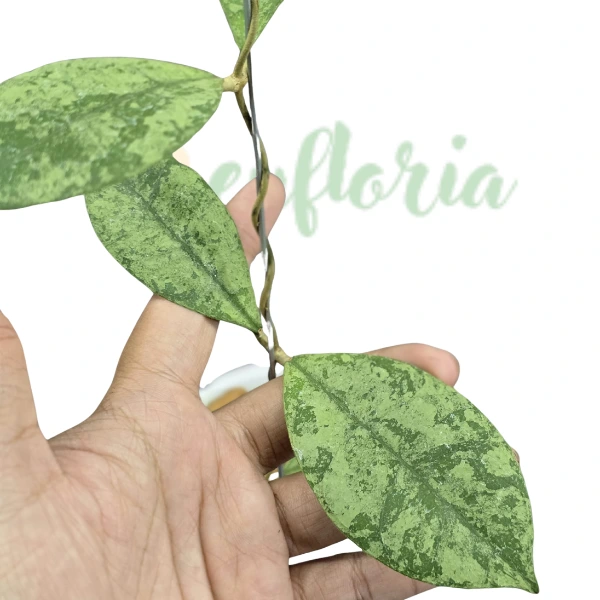
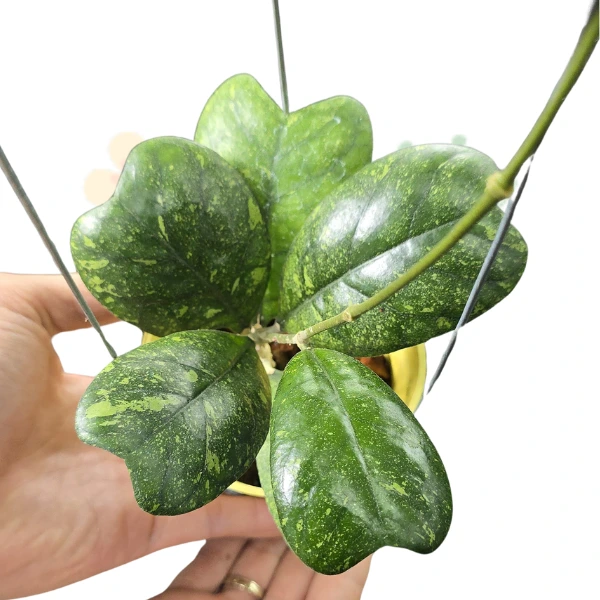
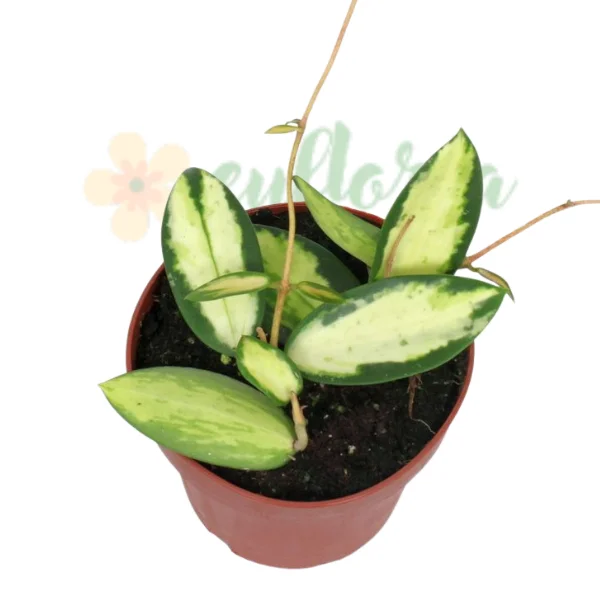
![Hoya waliniana Super Splash with intense silver splashes [1]](https://gomagcdn.ro/domains2/eufloria.ro/files/product/original/hoya-waliniana-super-splash-178572.png "Hoya waliniana Super Splash with intense silver splashes [1]")
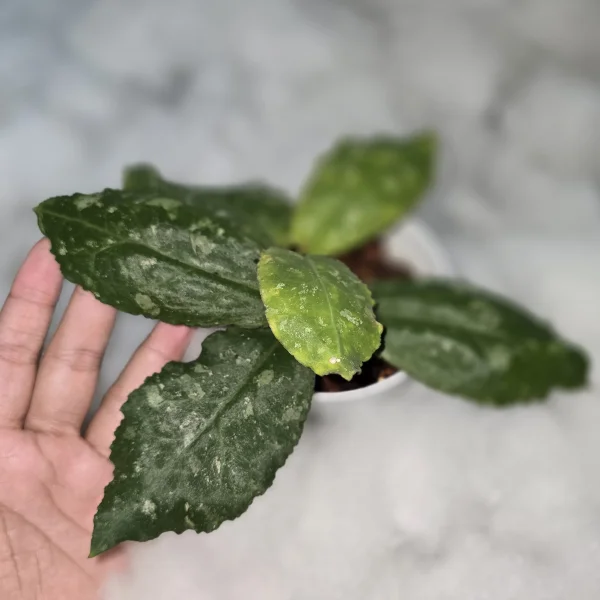
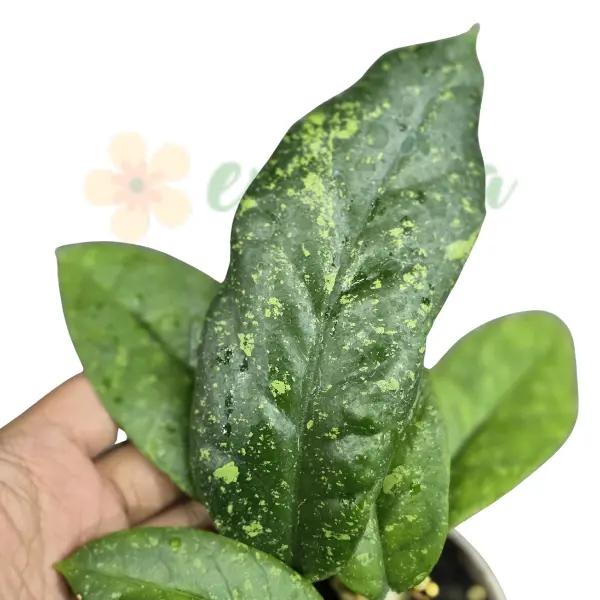
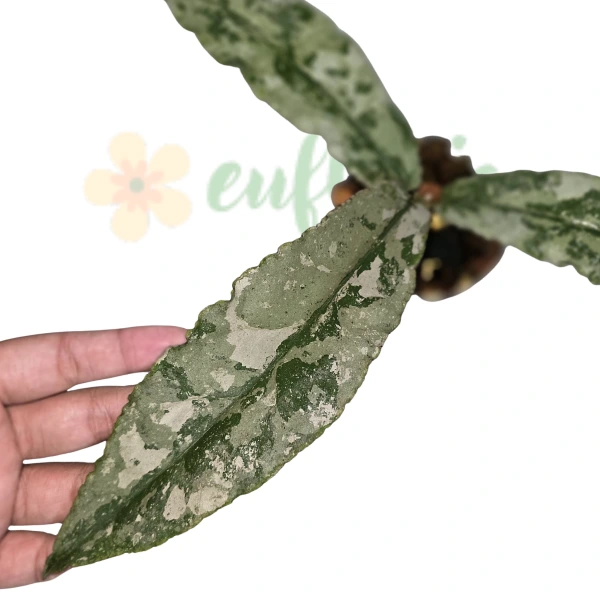
Hoya waliniana 'Super Splash' — spectacular cultivar with large silver splashes covering nearly entire leaf surface. Rare piece.
Pot diameter: (no pot)
- Description
- Reviews (0)
- FAQ
🌿 Silver Speckles on Green Velvet — The Beauty of the Super Splash Cultivar
Hoya waliniana 'Super Splash' commands attention instantly through its deep-green leaves covered with a fine silver dust, as if each leaf had been sprayed with stellar light frozen in vegetal wax. This cultivar, selected from the species Hoya waliniana, combines a distinct botanical elegance with collector-level rarity — the silver splashes are so pronounced that they nearly replace the green background in the densest spots, creating a living tableau that looks painted with jewels.
Recently discovered in the Philippine islands, Hoya waliniana long remained outside international commercial circulation, known almost exclusively to specialized collectors. The 'Super Splash' cultivar amplifies the species' hereditary trait — the presence of silvery pigment beneath the thin epidermis — to the level of a graphic explosion, where each leaf takes on a unique identity, different from the others, like a fingerprint.
Beyond its spectacular foliage, this Hoya develops small umbels of creamy flowers with a pale-yellow center, opening the plant to a second aesthetic dimension — the sweet, slightly waxy fragrance is perceptible in the evening and at dawn, when ambient humidity naturally rises. Offered on Eufloria as a collector piece, 'Super Splash' is an ideal choice for Hoya lovers seeking rare specimens, impossible to confuse with common varieties.
🌍 Origin and Botanical History
Hoya waliniana is a relatively new species in botanical literature, officially described in 2008 by American botanists Dale Kloppenburg and Anthony Siar, two of the most prolific modern taxonomists of the Hoya genus. The description was published in Fraterna, the leading journal of the International Hoya Association, the reference institution for research and classification of this complex genus within the Apocynaceae family.
The species is endemic to the island of Luzon in the Philippine archipelago, observed in the natural habitat of humid tropical forests at altitudes between 300 and 900 meters. The epiphytes of these forests develop clinging to the trunks of large trees, where air humidity consistently exceeds 75% and temperatures oscillate between 20 and 28 degrees Celsius year-round. Under these conditions, Hoya waliniana evolved as a climbing plant with slow but steady growth, capable of surviving the alternation between monsoon torrential rains and the relatively dry periods of the warm season.
The etymology of 'waliniana' honors a person, following classic taxonomic usage — likely a researcher or collector who contributed to the species' discovery. The 'Super Splash' cultivar appeared later on the specialized market as a selection of forms with accentuated silver variegation, rapidly becoming one of the most desired specimens among European and North American collectors, precisely due to the extraordinary visual contrast between the deep-green background and the bright silver speckles.
The Hoya genus currently includes over 500 recognized species, with species like waliniana, bogorensis, cutis-porcelana, and leucantha forming the collectors' elite thanks to rarity and unique visual characteristics. Kew Gardens and the International Hoya Association maintain the authoritative databases for these species, documenting each new discovery and taxonomic synonymy.
🌱 The Foliage
The leaves of Hoya waliniana 'Super Splash' represent the plant's central point of attraction — each leaf is a work of botanical art. Typical dimensions vary between 4 and 7 centimeters long and 2–3 centimeters wide, with an oval-elongated shape, slightly pointed at the tip and rounded at the base. The texture is characteristic of Hoya — succulent, waxy, with the surface covered by a thick cuticle that gives the leaf a semi-glossy appearance in light.
The base color of the leaf is a deep emerald-green, with shades that vary slightly according to light exposure — leaves receiving strong indirect sun develop darker, more saturated tonalities, while those in shade tend toward a lighter green, almost olive. Over this generous background spread the silver speckles characteristic of the 'Super Splash' cultivar — irregular patches, sometimes concentric, sometimes diffuse, covering between 30% and 70% of the leaf surface depending on the individual.
These silver speckles are not strictly pigments — they are caused by microscopic air spaces formed between the epidermal layers, which reflect light in a metallic-pearl manner. The phenomenon, known botanically as "blistering" or "window pattern", is an evolutionary adaptation that allows the plant to optimize the capture of diffuse light in the understory of tropical forests, where the amount of direct light is limited by the tree canopy.
To the touch, the leaves are firm and cool — a sensation typical of Hoya, due to the high water content in the parenchymal tissue. The central vein is slightly prominent on the ventral side of the leaf, while the secondary veins are almost invisible, covered by the silver pigment. This particularity makes each leaf appear as a unique painting, impossible to reproduce identically twice.
🌸 The Flowers
Under optimal care conditions and at maturity (after 2–3 years of growth), Hoya waliniana 'Super Splash' produces small, compact umbels with 8–15 individual flowers grouped in a spherical rosette. Each flower measures between 8 and 12 millimeters in diameter, with the classic Hoya form — five fleshy petals arranged in a star, with a contrasting inner corona at the center.
The flowers' chromatic palette is subtle but refined — the outer petals are creamy-white with slightly yellowish tones, and the inner corona is golden-yellow, sometimes with pink-peach tints on the edges. The texture of the petals is specific to the genus — waxy, satin-like, with a gentle luminosity reminiscent of fine porcelain or candle wax.
The fragrance is perhaps the species' most surprising characteristic — sweet, slightly fruity, with notes of honey and orange blossom, more intense in the evening and at dawn. This reflects the species' pollination strategy in its natural habitat, where nocturnal insects (moths in particular) are the main pollinators. Indoors, the fragrance is perceptible in the immediate vicinity of the plant, not strong enough to perfume an entire room.
Flowering can repeat on the same peduncles ("spurred peduncles") across successive seasons, which is why peduncles should NEVER be cut after the flowers have fallen — the next flower will appear from the same spot. This behavior is universal in the Hoya genus and represents a unique particularity among tropical indoor plants.
🌱 Growth and Development
Hoya waliniana 'Super Splash' is a climbing plant with slow to moderate growth, typical of montane epiphytes from Southeast Asia. Under optimal conditions, it produces 15–30 centimeters of new vine annually, developing nodes every 3–5 centimeters from which opposite pairs of leaves emerge. The plant can be guided onto moss poles, decorative hooks, or metal trellises — it offers excellent results when allowed to hang freely from suspended pots.
The root system is fine, almost aerial in line with the species' epiphytic nature, preferring a porous substrate that allows constant air exchange at the root level. Indoors, the plant responds very well to pots with generous drainage holes or even pots perforated laterally, which allow root ventilation — a method increasingly popular among Hoya collectors.
- Light: Strong indirect light, equivalent to an east or west window with a thin curtain. Direct summer midday sun burns the leaves; morning or evening sun is tolerated. Below 8,000 lux, the silver variegation fades.
- Temperature: 18–28°C during the day, minimum 15°C at night. Below 12°C growth stops, and below 8°C irreversible damage occurs. Does not tolerate cold drafts.
- Watering: Moderate watering, after the top 2–3 cm of substrate has completely dried. Summer: every 5–7 days; winter: every 14–21 days. Use filtered or rainwater, at room temperature.
- Humidity: 60–75% optimal. Below 50% the leaf edges curl. A humidifier or a pebble tray with moist gravel is recommended in apartments with dry air.
- Substrate: Aerated, well-draining mix: 40% pine bark (5–15 mm), 30% perlite, 20% sphagnum, 10% horticultural charcoal. Optimal pH 5.5–6.5.
- Fertilization: Hoya or orchid fertilizer, diluted to 1/4 of the recommended concentration, every 3–4 weeks during the growing season (April–September).
- Propagation: Vine cuttings with 2–3 nodes, rooting in moist sphagnum or perlite at 24–26°C. Rooting time: 4–6 weeks.
How do I care for Hoya waliniana Super Splash?
What does Super Splash mean?
Is it toxic to pets?
What substrate do you recommend?
Can it be grown in a hanging pot?

Ai nevoie și de un ghiveci decorativ?