EN/
EN/ Romana
Hoya undulata 'Army'
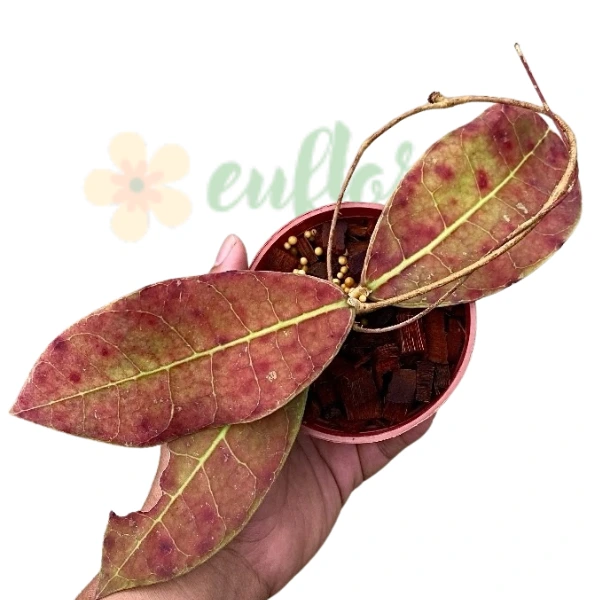
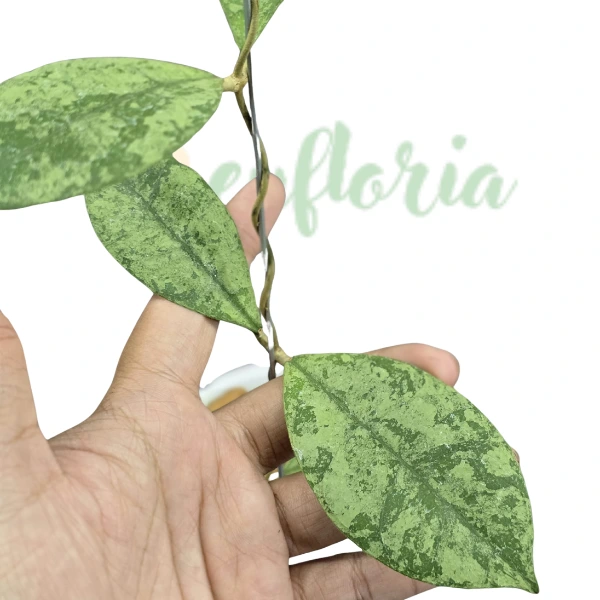
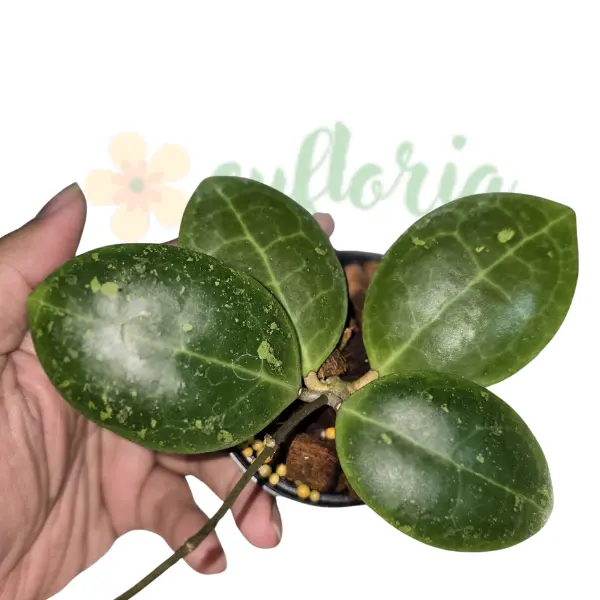
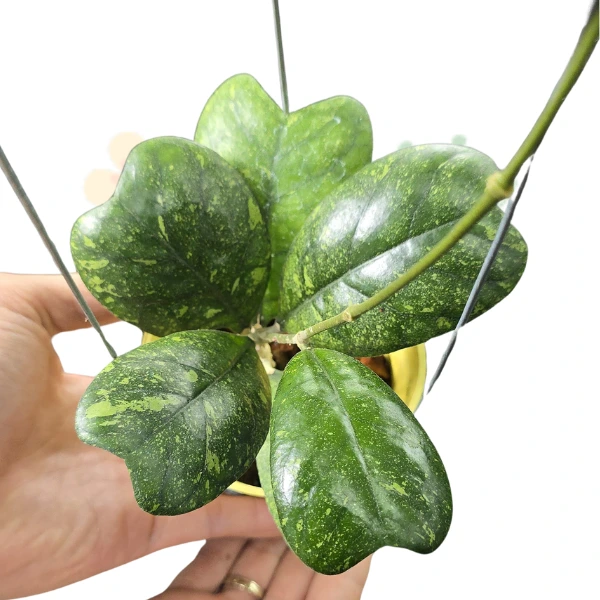
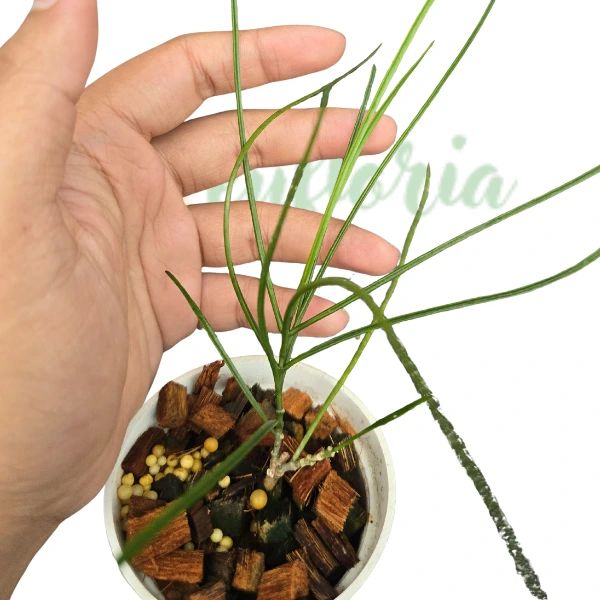
![Hoya undulata Army with deep green wavy leaves [1]](https://gomagcdn.ro/domains2/eufloria.ro/files/product/original/hoya-undulata-army-500083.png "Hoya undulata Army with deep green wavy leaves [1]")
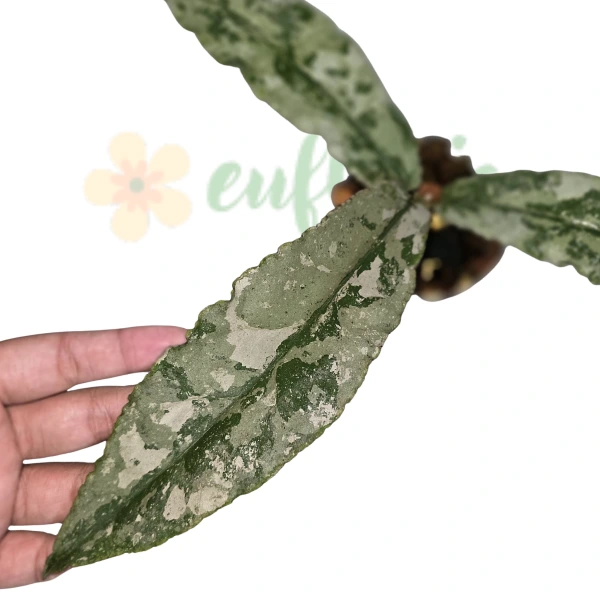
Hoya undulata 'Army' — cultivar with deep green wavy leaves like military camouflage and fragrant pale pink star flowers.
Pot diameter: (no pot)
- Description
- Reviews (0)
- FAQ
🌿 Hoya undulata 'Army' — Tropical Camouflage with Rippled Leaves
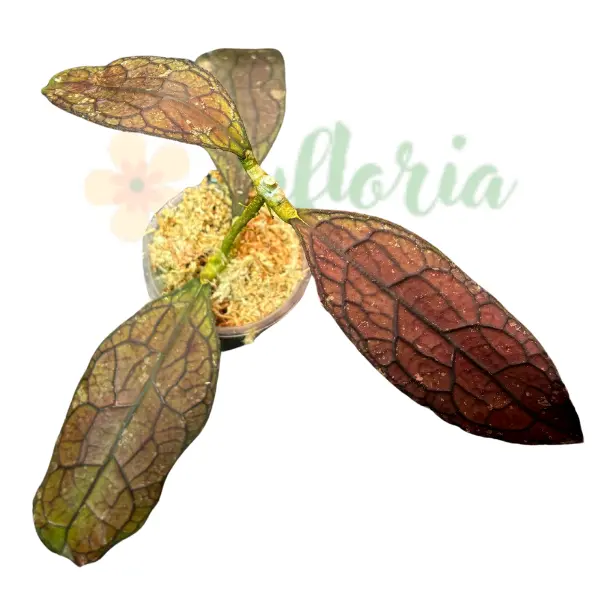
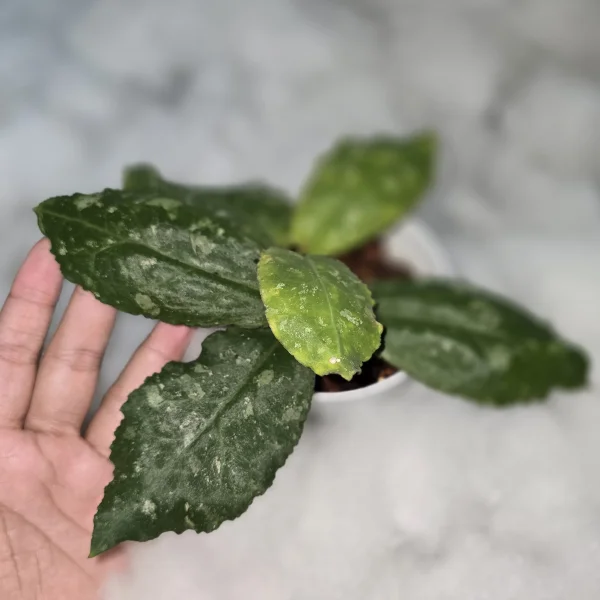
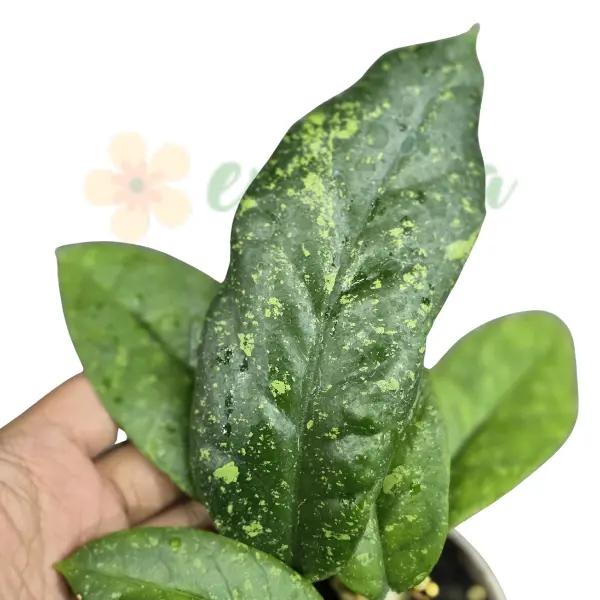
Hoya undulata 'Army' is a rare selection of the species Hoya undulata, combining two spectacular features: strongly undulated leaf margins and a dark olive-green coloring reminiscent of military prints — hence the name 'Army'. The wavy appearance of the leaves, combined with the special shade of green, transforms the plant into a unique piece in any rare plant collection.
The species Hoya undulata is already one of the hardest-to-find Hoyas in European commerce, and the 'Army' cultivar — with that specific dark green hue — is even rarer. Plants reach us through specialized collector networks and are propagated in limited quantities, which is why prices remain high compared to common Hoyas. For collectors in Romania and the European Union, availability on Eufloria.ro represents a rare opportunity.
🌍 Origin and Botanical History
The genus Hoya, described in 1810 by Robert Brown in honor of British botanist Thomas Hoy, comprises over 500 species spread across Southeast Asia, Oceania, and the Pacific region. Hoya undulata is a species endemic to the humid tropical forests of the Philippines and Borneo, where it grows as an epiphyte on trees in primary forests.
The specific name "undulata" comes from the Latin undula ("rippling", "small wave"), directly referring to the wavy edges of the leaves. The 'Army' cultivar was selected for its specific coloration — a dark green, almost olive, with bronze reflections in strong light. This selection is appreciated especially in the Asian and Eastern European collector communities.
In its natural habitat, Hoya undulata lives clinging to tree trunks at medium heights, in the partial shade of the forest canopy. Aerial roots absorb moisture from tropical air and plant debris — which is why, in cultivation, the plant prefers a very airy substrate with excellent drainage.
🌱 Unique Features of the 'Army' Cultivar
'Army' is distinguished by several distinct traits:
- Dark olive-green leaves, with a matte-waxy appearance reminiscent of military prints — hence the cultivar name.
- Strongly undulated edges, with regular waves that give the plant a sculptural, three-dimensional appearance.
- Lighter veins that contrast with the dark green background, visible especially when the plant is backlit.
- Bronze reflections in strong indirect light — a "sun stress" effect highly prized by collectors.
- Climbing/trailing growth, suited for support or hanging basket.
- Firm, rigid leaf texture — much more consistent than other Hoyas.
- Slow growth typical of rare Hoyas — each new leaf is an event awaited with excitement.
🌸 Flowering
Hoya undulata 'Army' produces, at maturity, umbellate inflorescences — clusters of 10-15 small, star-shaped, waxy flowers, with five petals in cream-pink tones and a darker center. Flowers emit a sweet floral scent in the evening, highly prized for its intensity. An umbel remains active for 7-14 days, then the flowers fall but the peduncle remains on the plant.
Warning: flower peduncles (the short stalks that supported the umbels) must NEVER be cut — from them, new umbels will grow each season. These peduncles remain active for years and become longer over time, producing increasingly spectacular inflorescences. Cutting them is the most common mistake of beginners in Hoya cultivation.
Flowering stimulation: strong indirect light, reducing nitrogen in fertilizer in spring, maintaining a slight day-night temperature difference (4-6°C) during autumn.
🌱 Care Requirements
- Light: bright indirect light, east/west window. Tolerates south with a curtain. Avoid direct noon sun.
- Watering: let the substrate dry 80-90% before watering again. Every 7-10 days in summer, 14-21 days in winter.
- Humidity: 50-70%. Tolerates 45% but grows better at 60%+.
- Temperature: 18-28°C optimal. Minimum 15°C in winter, absolutely never below 12°C.
- Substrate: very airy mix — orchid bark + perlite + coco fiber, equal proportions. Never compact universal soil.
- Fertilization: liquid fertilizer at 1/4 dose every 3 weeks during the active season. Nothing in winter.
- Pot: small, root-bound. Repot every 2-3 years, only 2 cm larger.
- Support: trellis, moss pole, or hanging basket — climbing stimulates larger leaves.
🤚 Why It's a Market Rarity
Hoyas from the undulata series are rare for biological reasons: the species has a low growth and vegetative propagation rate, each viable cutting needs 3-6 months to develop strong roots, and the loss rate in propagation is significant. The 'Army' cultivar, selected for its specific olive-green shade, is produced in even more limited quantities — each commercially available plant represents months of careful work by specialized propagators.
The rare Hoya collector community in Europe is relatively small but very active. Many special cultivars circulate only through direct exchanges between enthusiasts, and opportunities to acquire already stabilized plants, legally imported with complete phytosanitary documents, are rare. Our products come exclusively from verified Dutch sources, with all the documents necessary for EU import.
🔎 Tips for Advanced Collectors
If you add 'Army' to your collection: leave the plant 2-3 weeks in quarantine away from other Hoyas, to observe the appearance of any pests (mealybug and spider mites are the most common on Hoya). Check the leaf axils and the underside of the leaf blade — the favorite spots of these pests. If the plant comes with substrate, leave it for a month before transplanting, so as not to overlap the stress of adaptation with that of the change of environment.
How do I care for Hoya undulata Army?
What makes the leaves look like camouflage?
Is it toxic to pets?
What substrate do you recommend?
Why is it so expensive?

Ai nevoie și de un ghiveci decorativ?