EN/
EN/ Romana
Hoya rigidifolia
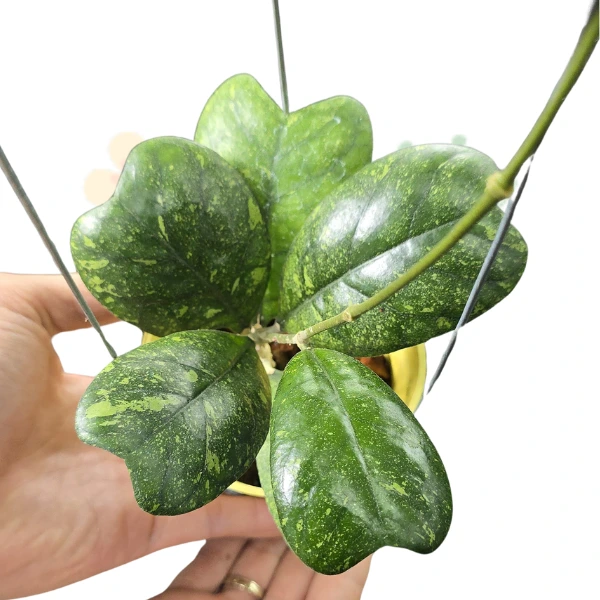
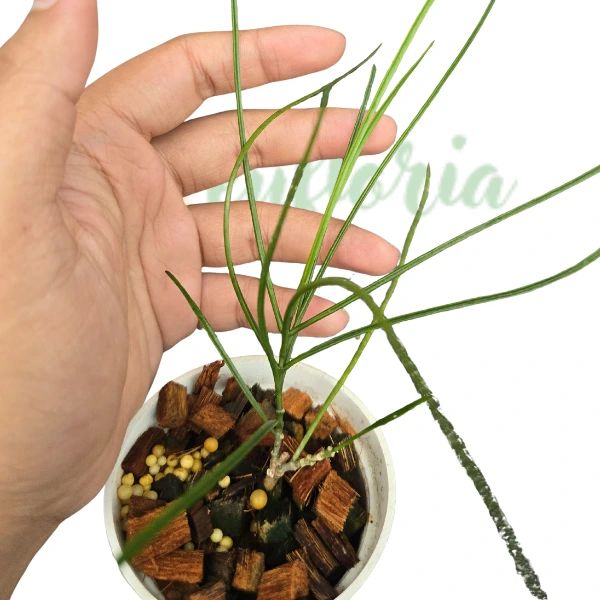
![Hoya rigidifolia with rigid deep green leaves [1]](https://gomagcdn.ro/domains2/eufloria.ro/files/product/original/hoya-rigidifolia-084277.png "Hoya rigidifolia with rigid deep green leaves [1]")
Hoya rigidifolia — impressive species with rigid leathery leaves and large yellowish-cream umbels with reddish corona and cinnamon fragrance.
Pot diameter: (no pot)
- Description
- Reviews (0)
- FAQ
🌿 Plant Characteristics
Hoya rigidifolia is a rare tropical epiphytic species from the Apocynaceae family, subfamily Asclepiadoideae. The scientific name derives from the Latin "rigidus" (rigid, hard) and "folium" (leaf), perfectly describing the unusually rigid texture of its leaves — one of the characteristics that immediately distinguishes it from most other Hoya species. First described in the early 20th century, the species is considered a botanical rarity appreciated by advanced collectors due to its unmistakable foliage and relatively specific care requirements.
The species is native to tropical forests of northern Thailand and southwestern China (Yunnan province), at medium-high altitudes of 800–1800 meters, where it grows epiphytically on the trunks of tall trees. In natural habitat, conditions are characterized by more pronounced day-night temperature variations than in lowland equatorial zones, high atmospheric humidity (70–90%), seasonal rainfall, and a dry winter period that plays an important role in the flowering cycle.
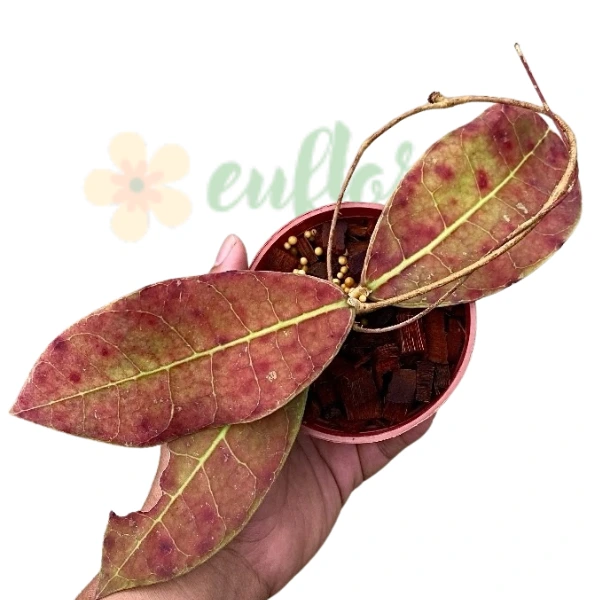
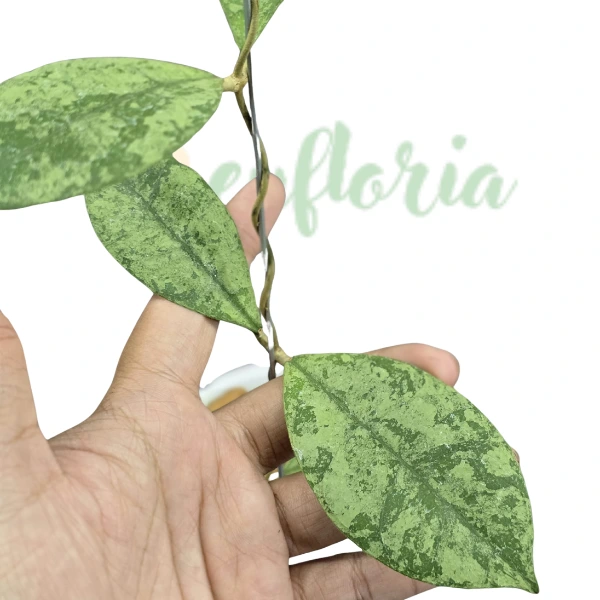
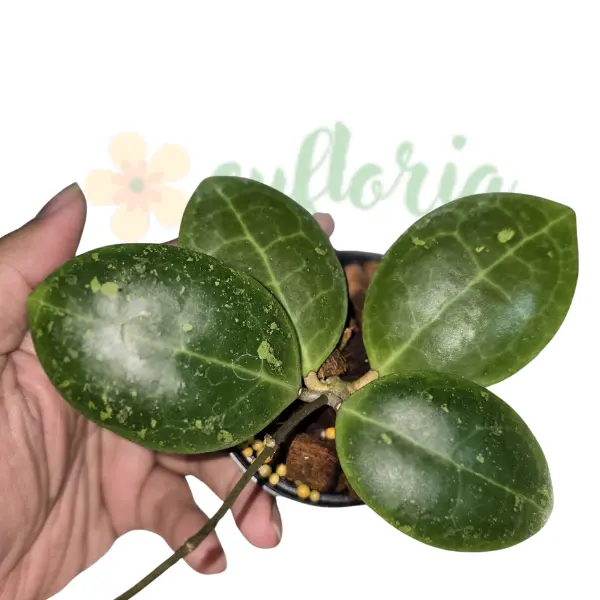
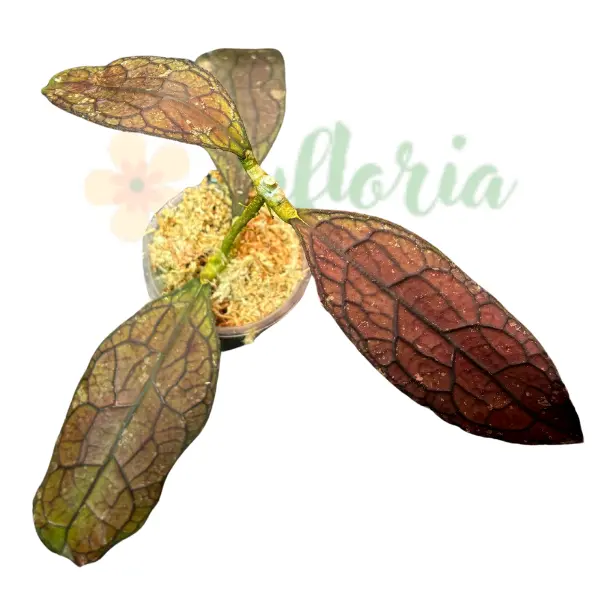
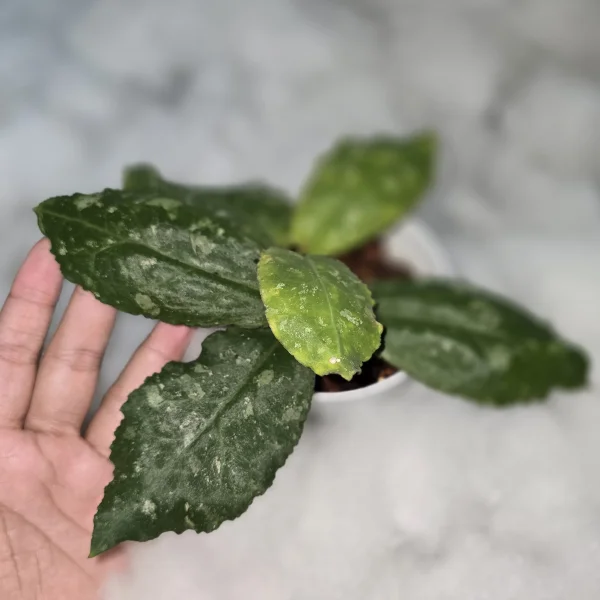
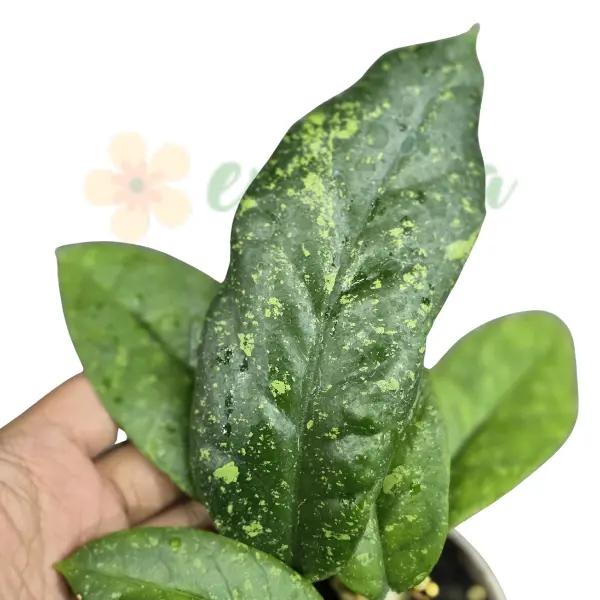
Leaves are elongated-oval, 6–12 cm long and 3–5 cm wide, with an unusually rigid and semi-waxy surface. Color is an intense dark green, sometimes with visible pale veins. The rigid texture causes them to slightly "click" when touched — a unique aspect among Hoya. Tendrils are relatively thick, with medium distances between nodes, forming plants with orderly appearance and clear architecture. Growth is moderate, and the plant develops visible aerial roots on older tendrils.
Flowers appear in compact spherical umbels with 15–25 florets, each 10–12 mm in diameter. Color is cream or yellowish-white with a pink-violet or dark red center — a particularly pleasing visual contrast. Fragrance is sweet, aromatic, with notes of honey and slight spiciness, more intense in the evening. An umbel lasts 6–10 days, and peduncles (spurs) must be kept intact — they will produce new rounds of flowering in subsequent years.
☀️ Light Requirements
Hoya rigidifolia needs bright indirect light, more than many other Hoya. Ideally, provide 3–5 hours of filtered sunlight daily, with a maximum of 2 hours of direct morning sun. An east or northeast-facing window is optimal. On south-facing windows, place the plant 50–80 cm from the glass or use thin filtering curtains.
The plant tolerates stronger light better than some Hoya due to its thick, rigid leaves, which have a more developed cuticle for protection. However, exposure to unfiltered midday summer sun can cause burns — signs are whitish or discolored patches on exposed areas. If such patches appear, within two days move the plant to an area with more filtered light.
Insufficient light is a more frequent problem than excess for this species. Signs of too little light include: slow or stagnant growth, large distances between nodes on new tendrils, paler leaves without the characteristic sheen, total refusal to bloom even at maturity. For apartments with low natural light, supplementing with full-spectrum LED 30–40W positioned 30 cm above the plant, on 12–14 hours daily, resolves the problem completely.
During short winter days (November–February), even south-facing windows may be insufficient for this species. Rotate the pot weekly for uniform growth and carefully monitor tendril orientation — if they lean visibly in one direction, this indicates an insufficient light source and the need for rotation or supplementation.
💧 Care and Watering
Hoya rigidifolia prefers a moderate to infrequent watering schedule, less frequent than some Hoya with thin leaves. The thick, rigid leaves have a developed cuticle that reduces evapotranspiration, allowing the plant to withstand longer drying periods well. Water every 10–14 days in spring-summer, when the top 4–5 cm of substrate are completely dry.
In winter, drastically reduce to every 21–28 days, sometimes even less frequently if the plant is in a cool room (15–18°C). This reduced winter watering period mimics the dry season in natural habitat and is important for flower bud initiation for the following spring. Don't confuse "drying" with "drought" — substrate should be dry, not "permanently desiccated".
Use water decanted 24–48 hours for complete chlorine evaporation, water filtered with a reverse osmosis filtration system, or collected rainwater. Hard tap water is problematic long-term — limescale deposits alkalize the substrate and reduce nutrient absorption. Water temperature should be identical to room temperature.
The preferred watering method is bottom-watering: place the pot in a basin of water for 15–20 minutes, letting the substrate absorb water through drainage holes. This ensures uniform hydration, prevents substrate compaction, and avoids wetting leaves which can favor fungal diseases. Empty the basin after absorption and don't leave stagnant water in the saucer.
Optimal atmospheric humidity is 60–75%. Hoya rigidifolia tolerates moderate humidity (45–55%) better than some species due to thick leaves, but for optimal growth and flowering, higher humidity is essential. In Romanian apartments, especially in winter, an electronic humidifier is the best investment for maintaining 55–65% humidity.
Fertilization is done monthly from April through September with balanced fertilizer for epiphytes (NPK 3-1-2), diluted by half. In winter, completely suspend or fertilize only every 8–10 weeks with very diluted concentration. To stimulate flowering, use a fertilizer rich in phosphorus (NPK 1-3-2) with 2–3 applications in the March-April period.
Many Hoya growers recommend a winter rest period with reduced watering and cooler temperatures (13–16°C) to stimulate flowering in the following season. This mimics the natural dry season in montane habitats and is particularly important for species like H. rigidifolia that come from regions with distinct seasonal patterns. Without this rest period, some plants may never bloom even when otherwise healthy.
🌡️ Temperature and Climate
The optimal temperature range for Hoya rigidifolia is 18–26°C during the day and 14–18°C at night. This species, originating from mountain zones, prefers slightly cooler temperatures than lowland Hoya and especially appreciates day-night variations of 6–8°C, which simulate natural habitat conditions. This thermal variation contributes to flowering initiation.
Hoya rigidifolia tolerates short-term minimums down to 10°C, but temperatures below 12°C for prolonged periods dramatically slow metabolism. It's one of the few Hoya that appreciates winter cooling periods (4–8 weeks at 13–16°C) to force flowering — a well-known trick of collectors who want to trigger first flowering in mature young plants.
In summer, temperatures up to 30°C are tolerated if humidity is adequate. Above 32°C, combined with dry air, the plant enters thermal stress — growth stops and leaves may become temporarily soft. On scorching days, move the plant to a cooler room, mist surrounding air (not leaves), and avoid watering during peak hours when evaporation is maximum.
Completely avoid cold drafts, radiators functioning directly on the plant, and frequently opening windows in winter. These cumulative thermal stress sources are the main cause of leaf drop and flowering failure in beginner collectors. Stable temperatures within optimal range are the key to long-term success with this species.
🪴 Pot and Substrate
The ideal substrate for Hoya rigidifolia is extremely airy and with fast drainage, mimicking conditions on tree trunks in its montane natural habitat. Recommended recipe: 45% pine bark (8–15 mm fraction, coarser than for other Hoya), 20% coarse perlite, 15% sphagnum moss, 10% coconut chips, 5% horticultural charcoal, 5% pumice or lava rock. Optimal pH is 5.5–6.5, slightly acidic.
Universal substrates for apartment plants are completely unsuitable — they retain too much water, are too compact, and lead to rapid rot of roots. Commercial orchid mixes (Phalaenopsis) are a decent alternative, but mandatorily add 25–30% supplementary perlite and 5–10% lava or pumice to adjust to H. rigidifolia's specific requirements.
Porous terracotta or porous ceramic pots are preferred for this species — their walls allow water evaporation, keeping substrate drier, an essential condition for fragile root health. Choose pots with numerous drainage holes, diameter only 2–3 cm larger than the root ball. Plastic works but requires rarer and more careful watering.
Hoya rigidifolia, like most Hoya, blooms much better when "rootbound" in the pot. Don't rush to repot it "for growth space" — constrained roots signal the plant to invest energy in flowering. Only when you see roots abundantly protruding through drainage holes or substrate has visibly degraded, consider repotting.
Repot only every 3–4 years, in early spring (March-April), when temperature and light conditions are optimal for recovery. When repotting, handle roots with extreme care — they're fragile and break with aggressive handling. Inspect for rot signs (soft, black, foul-smelling roots) and remove affected parts with scissors sterilized in 70% isopropyl alcohol.
After repotting, keep the plant in a location with moderate light, stable temperature (20–24°C), and high humidity for the first 2–3 weeks. Water very moderately (only when substrate is completely dry) and don't fertilize for 4–6 weeks. The adaptation period may show visible stress (wilting, single leaf drop), but the plant fully recovers in 6–8 weeks if conditions are correct.
How do I care for Hoya rigidifolia?
Why is it called rigidifolia?
Is it toxic?
Is it easy to care for?
What substrate do you recommend?

Ai nevoie și de un ghiveci decorativ?