EN/
EN/ Romana
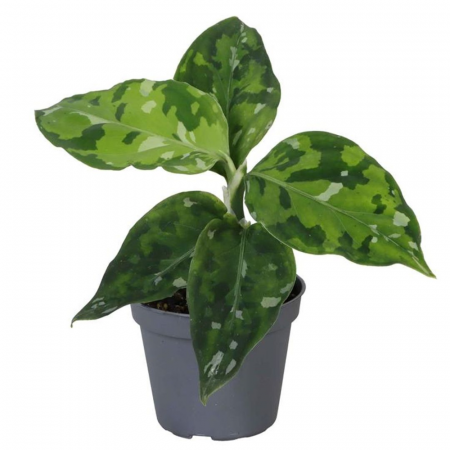
Labisia 'Turtle Back' Ø10.5cm
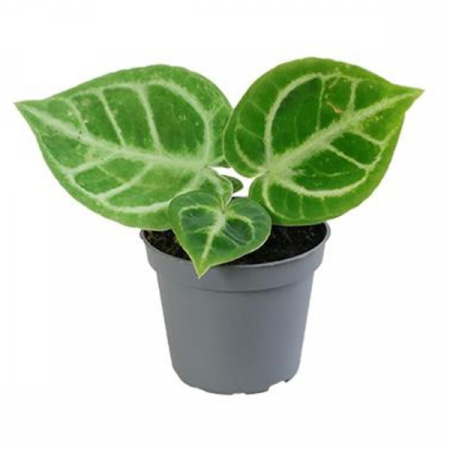
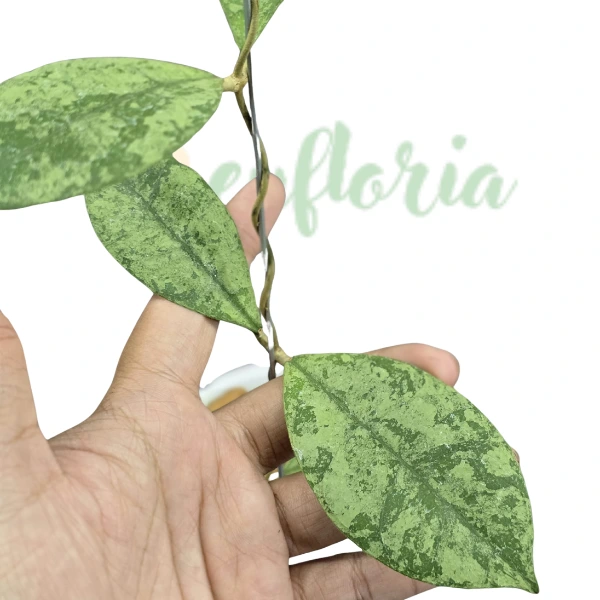
![Labisia 'Turtle Back' — textured dark green shell-like leaves, Ø10.5cm pot Eufloria [0]](https://gomagcdn.ro/domains2/eufloria.ro/files/product/medium/planta-naturala-de-interior-labisia-turtle-back-d10-5-461670.png "Labisia 'Turtle Back' — textured dark green shell-like leaves, Ø10.5cm pot Eufloria [0]")
![Labisia 'Turtle Back' — textured dark green shell-like leaves, Ø10.5cm pot Eufloria [1]](https://gomagcdn.ro/domains2/eufloria.ro/files/product/medium/planta-naturala-de-interior-labisia-turtle-back-d10-5-354994.png "Labisia 'Turtle Back' — textured dark green shell-like leaves, Ø10.5cm pot Eufloria [1]")
![Labisia 'Turtle Back' — textured dark green shell-like leaves, Ø10.5cm pot Eufloria [1]](https://gomagcdn.ro/domains2/eufloria.ro/files/product/original/planta-naturala-de-interior-labisia-turtle-back-d10-5-461670.png "Labisia 'Turtle Back' — textured dark green shell-like leaves, Ø10.5cm pot Eufloria [1]")
![Labisia 'Turtle Back' — textured dark green shell-like leaves, Ø10.5cm pot Eufloria [2]](https://gomagcdn.ro/domains2/eufloria.ro/files/product/original/planta-naturala-de-interior-labisia-turtle-back-d10-5-354994.png "Labisia 'Turtle Back' — textured dark green shell-like leaves, Ø10.5cm pot Eufloria [2]")
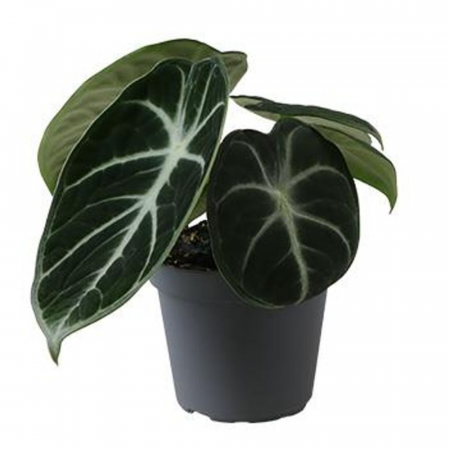
Labisia 'Turtle Back' — rare Malaysian plant with textured leaves like turtle shell. Dark green glossy. Humidity 70-90%, indirect light, 18-26°C. Collector plant for terrariums.
Approx height (including pot): 15 cm
Flowering state: No flowers
Pot diameter: 10.5 cm
- Description
- Characteristics
- Reviews (0)
- FAQ
🌿 A Miniature Turtle Shell — a Rare Collector's Plant With Sculpted Leaves
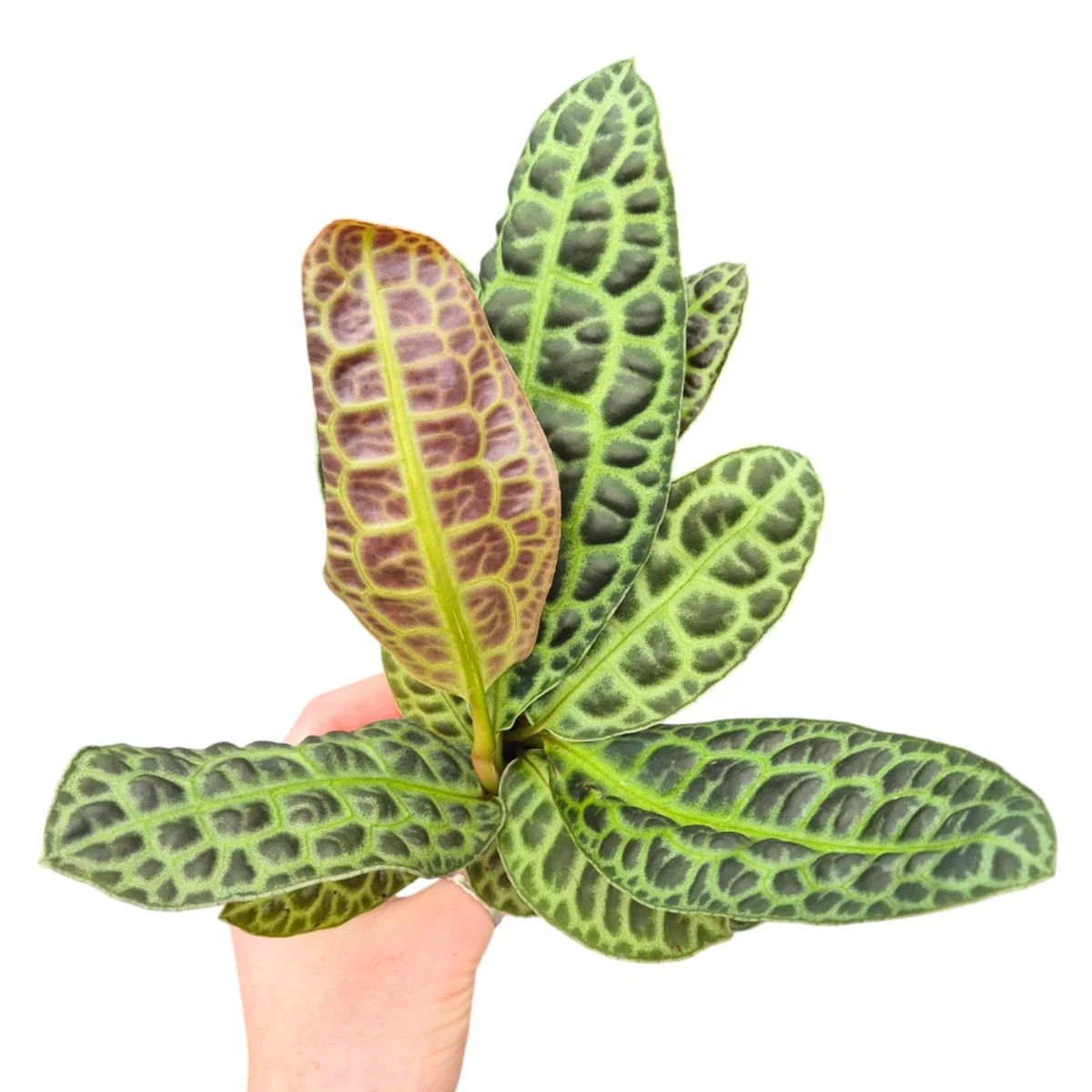
Labisia 'Turtle Back' is a rare plant of unusual beauty that fully deserves its name: its rounded, thick, textured leaves strikingly resemble a turtle's shell, with a raised surface, hollows and bulges that follow the veins, like a pattern of natural plates. It is a plant collectors seek precisely for this special texture, which makes it completely different from any ordinary houseplant.
The leaves are a deep, dark green, often with darker tones along the veins and a lighter or slightly reddish underside, and their matte, velvety surface catches the light in a special way, emphasising the sculpted relief. It is a tropical understorey plant, accustomed to the humid shade of the forest, which makes it ideal for terrariums and for plant lovers who appreciate rare species with special needs.
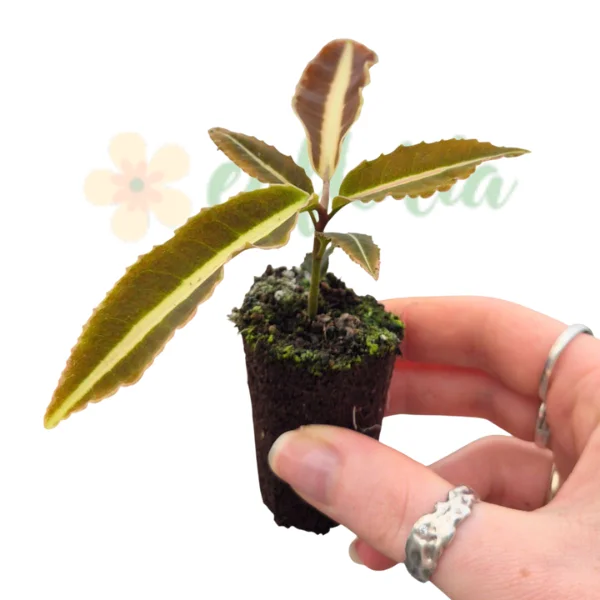
Offered in a 10.5 cm pot, it is a well-developed plant, a true collector's jewel. It grows slowly and compactly, always keeping that orderly, sculptural look that makes it so prized. For the enthusiast seeking something truly special, 'Turtle Back' is a living treasure.
For the plant lover who appreciates texture, rarity and the beauty of a collector's species, Labisia 'Turtle Back' is a memorable choice — a plant that impresses through its unique character and its foliage sculpted like a small work of nature's art.
🌍 Origin and Botanical History
The genus Labisia belongs to the Primulaceae family and is native to the humid tropical forests of South-East Asia, particularly Malaysia, Borneo, Sumatra and neighbouring regions, where it grows on the shady forest floor, sheltered by the dense canopy of tall trees. Here, in the constant humidity and filtered light of the understorey, the plant developed its textured foliage and its adaptation to humid shade.
The genus's best-known species, Labisia pumila, is a plant with a long history in the traditional medicine of South-East Asia, where it is known as "Kacip Fatimah" and has been used for generations. The ornamental forms, such as 'Turtle Back', are prized first and foremost for their decorative foliage and their rarity in cultivation.
The 'Turtle Back' cultivar is a particularly prized horticultural selection, remarkable for the raised texture of its leaves, which evokes a turtle's shell. This unique feature, together with its high humidity requirements, places it in the category of collector's and terrarium plants, sought by enthusiasts who want something out of the everyday.
Its origin as a humid tropical understorey plant explains all its needs: a preference for constant warmth, very high humidity, filtered indirect light and an airy substrate that imitates the rich, loose soil of the tropical forest.
🌱 The Foliage
The foliage is, without doubt, the absolute star of this plant. The leaves are oval to rounded, thick and firm, carried on short petioles that lift them into a dense, orderly rosette. Their distinctive feature is the texture: the leaf surface is not smooth but raised, with hollows and bulges that follow the veins, creating that sculpted, turtle-shell pattern that gave it its name.
The colour is a deep, dark green, often with darker, almost black tones along the main veins, which further emphasises the relief of the leaf. The underside of the leaves is usually lighter, sometimes with a reddish or purple tint, a subtle contrast visible when the leaves tilt. The surface has a matte, velvety sheen that catches the light gently and showcases the three-dimensional texture.
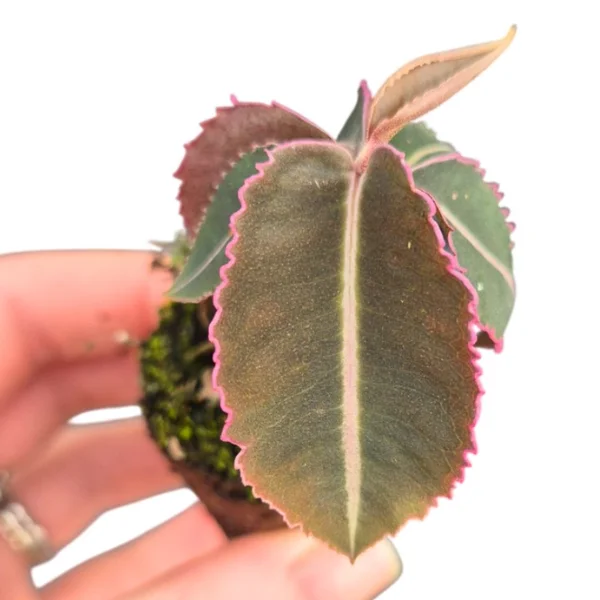
Young leaves emerge from the centre of the rosette and unfurl gradually, slowly revealing their sculpted texture — more delicate and lighter in colour at first, they darken and firm up as they mature. This slow unfurling is one of the most beautiful aspects of growing a collector's plant like this.
This combination of thick, textured, deep-green leaves makes 'Turtle Back' a particularly decorative plant, impressing through texture and its sculptural character, offering an ever-new visual spectacle on close inspection.
🌸 The Flowers
Labisia can produce, at maturity and in good conditions, small, discreet flowers grouped along the stems or at the base of the plant, in shades ranging from pale pink to reddish. These are sometimes followed by small, round, coloured fruits. In apartment and terrarium culture, however, flowering is rare and has the value of a botanical curiosity rather than a decorative one.
For the plant lover, flowering is by no means the goal — this plant is grown exclusively for its textured foliage and its rarity, which offer a permanent spectacle regardless of the season. The flowers, when they appear, remain a pleasant curiosity, a sign of a mature and contented plant.
The entire ornamental value of this plant therefore lies in its leaves sculpted like a turtle's shell, which do not fade or pass but remain, year after year, the main reason 'Turtle Back' is so prized by collectors.
🌱 Growth and Development
Labisia 'Turtle Back' is a slow-growing plant that builds a dense, compact rosette, leaf by leaf. Its habit stays small and orderly, making it ideal for terrariums, plant cabinets and enclosed spaces where humidity can be controlled. Because of its special needs, it is a plant more for enthusiasts than for beginners.
Its great need is humidity: as a tropical understorey plant, it needs constantly humid air to thrive, which makes it perfect for terrariums and more demanding in the dry air of homes. Otherwise, if provided with the right humidity, warmth and filtered light, it becomes a grateful plant that rewards attentive care with ever more beautiful, textured leaves.
- Light: indirect, filtered, medium to bright light; shield it completely from direct sun, which can scorch its delicate leaves — imitate the gentle light of the tropical understorey.
- Temperature: prefers 18–26 °C and constant warmth; keep it away from cold below 15 °C and from cold draughts.
- Watering: keep the substrate constantly lightly moist, watering as soon as the top layer begins to dry; never let the plant dry out completely, but do not keep it in standing water either.
- Humidity: essential and very high (above 60–70%); growing in a terrarium, a humidifier or grouping with other plants is almost obligatory to keep it healthy.
- Substrate: an airy, rich mix that can retain moisture — a forest-plant substrate with coco fibre, fine bark and perlite is ideal.
- Fertilising: feed moderately, every 4–6 weeks in the warm growing season, with a balanced, diluted fertiliser; reduce in winter.
- Propagation: by dividing mature rosettes or carefully separating offshoots, keeping high humidity during rooting.
As a rare collector's plant, Labisia 'Turtle Back' looks superb alongside other terrarium plants and humidity-loving species, together creating a corner of tropical jungle full of textures and unusual foliage.
Lungime: 15 cm
Greutate (kg): 0.5 Kg
Denumire: Labisia
Cerințe lumină: Partial umbra
Tip plantă: Decorative
Utilizare: Interior
Tip suport: Ghiveci
Material Suport: Plastic
Why Turtle Back?
What humidity?
Is it toxic?
How to propagate?
How to water?
Recommendations
Ai nevoie și de un ghiveci decorativ?