EN/
EN/ Romana
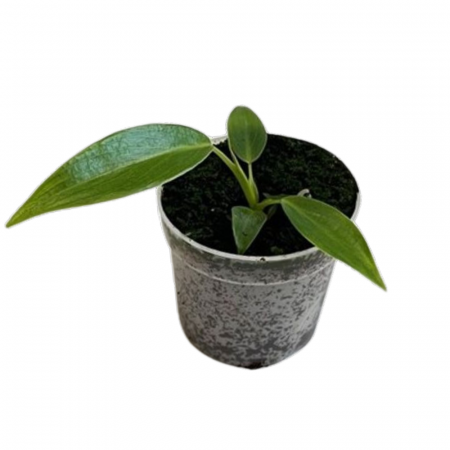
Philodendron 'Pink Princess Marble' Ø6cm
![Philodendron Pink Princess Marble — dark green leaves marbled with vivid pink [0]](https://gomagcdn.ro/domains2/eufloria.ro/files/product/medium/philodendron-pink-princess-marble-443797.webp "Philodendron Pink Princess Marble — dark green leaves marbled with vivid pink [0]")
![Philodendron Pink Princess Marble — dark green leaves marbled with vivid pink [1]](https://gomagcdn.ro/domains2/eufloria.ro/files/product/medium/philodendron-pink-princess-marble-339855.png "Philodendron Pink Princess Marble — dark green leaves marbled with vivid pink [1]")
![Philodendron Pink Princess Marble — dark green leaves marbled with vivid pink [1]](https://gomagcdn.ro/domains2/eufloria.ro/files/product/original/philodendron-pink-princess-marble-443797.webp "Philodendron Pink Princess Marble — dark green leaves marbled with vivid pink [1]")
![Philodendron Pink Princess Marble — dark green leaves marbled with vivid pink [2]](https://gomagcdn.ro/domains2/eufloria.ro/files/product/original/philodendron-pink-princess-marble-339855.png "Philodendron Pink Princess Marble — dark green leaves marbled with vivid pink [2]")
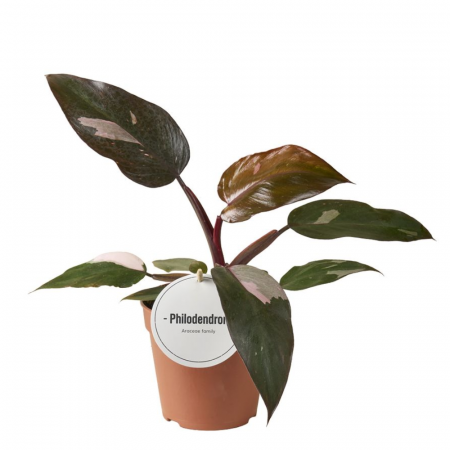
Philodendron 'Pink Princess Marble' is one of the most sought-after collector philodendrons, prized for its dark, almost black green leaves marbled in vivid pink. The "Marble" form stands out through its diffuse, marbled variegation, where green and pink intertwine on every leaf in an unrepeatable pattern. Climbing and elegant, it becomes the star of any indoor plant collection.
Approx height (including pot): 15 cm
Pot diameter: 6 cm
- Description
- Characteristics
- Reviews (0)
- FAQ
🌿 Pink Princess Marble — the Pink Queen of Philodendrons
Few houseplants stir as much desire as Philodendron 'Pink Princess Marble'. Its dark, almost black green leaves are splashed and marbled with vivid pink, as if someone had spilled glowing paint over dark velvet. In the "Marble" form, the pink does not appear in solid blocks but weaves through the green in a diffuse, marbled design — every leaf becomes an unrepeatable abstract painting, impossible to predict before it unfurls.
It is one of those plants that test your patience and reward it in kind: with the right light, every new leaf can bring a pink surprise — sometimes a few delicate flecks, other times whole sectors of colour. It is precisely this unpredictability that turns it into an object of fascination for collectors around the world, who watch each new growth with the excitement of opening a gift.
Pink Princess Marble is not just a plant but a statement of style. Placed on a bright shelf or trained on a moss pole, it becomes the focal point of any collection, a piece visitors ask about immediately. It belongs to the fascinating world of collector philodendrons and is, without doubt, one of the most coveted variegated plants of the past decade — a star that fully deserves its reputation.
🌍 Origin and Botanical History
The genus Philodendron belongs to the Araceae family (aroids) and includes over 480 species spread across the tropical forests of Central and South America. The name comes from Greek — philo (love) and dendron (tree) — describing the climbing habit of many species, which rise up tree trunks in search of light. Philodendrons are among the most beloved indoor aroids precisely because of their adaptability and varied foliage.
'Pink Princess' is a cultivated hybrid derived from Philodendron erubescens, a species known for its reddish stems and new growth. The selection was made in nurseries specifically for its spectacular pink variegation, and the plant only became popular in recent years, when demand for variegated plants exploded worldwide. The "Marble" form is a selection with marbled variegation, more diffuse and balanced than the classic "block" variant, in which the pink appears in large, clean sectors.
Biologically, the pink comes from a partial lack of chlorophyll in certain leaf cells — a stable mutation that allows other pigments (anthocyanins) to become visible. This is exactly why the plant needs good light to maintain its balance: the green zones produce the energy needed for survival, while the pink zones are purely decorative and contribute nothing to photosynthesis. This delicate balance explains why a Pink Princess grown in low light tends to produce ever greener leaves, while one grown in good light (without direct sun) keeps its pink intense. It shares its Araceae family and many care needs with Monstera and Syngonium, close botanical relatives.
🌱 The Foliage
The leaves are elongated heart-shaped, 10–18 cm long on young plants and considerably larger on mature specimens, of a deep, glossy dark green, almost black in low light. Over this dark background spread splashes and swirls of bubblegum pink, distributed in the marbled pattern characteristic of the "Marble" form. The variegation varies enormously from leaf to leaf: some are almost entirely green, others have large pink sectors, and the most prized combine both in a harmonious balance of pink-green marble.
The petioles (leaf stalks) and stems often carry pink-cherry tones too, completing the chromatic display and giving the plant a unified, sophisticated air. New growth may emerge with a more intense pink that softens as the leaf matures, or with reddish tints that recall its erubescens ancestor.
To keep the pink vivid, the plant needs bright, indirect light — in low light new leaves emerge mostly green and the variegation is gradually lost. It is a climbing plant that appreciates a moss pole as it grows: vertical support encourages larger, better-variegated leaves, mimicking how it climbs trees in nature. The leaf texture is firm and glossy, easy to clean with a damp cloth. For decorative foliage in an entirely different register — silvery and velvety — the Aglaonema genus is also worth exploring.
🌱 Growth and Development
Pink Princess Marble grows moderately with a climbing habit. Young plants stay compact and bushy, but as they mature they develop a stem that climbs and appreciates vertical support. With good care and adequate light, it develops ever larger and more intensely variegated leaves, and on a moss pole it can reach impressive sizes within a few years. It is a grateful plant that rewards steady attention with its ever-renewed chromatic spectacle, alongside other Philodendron plants.
Its variegation is not genetically guaranteed on every leaf, which makes correct care essential to maintain it. The requirements are clear and, once followed consistently, the plant responds generously:
- Light: bright, indirect light — essential to maintain the pink variegation. An east- or west-facing window, sheltered from harsh midday rays, is ideal. Harsh direct sun scorches the pink sectors (which lack the protection of chlorophyll), while too little light leads to green leaves.
- Temperature: 18–27°C; avoid cold draughts, frosty windows and drops below 13°C.
- Watering: water when the top 2–3 cm of substrate have dried; always check with your finger. Never leave the roots in standing water, which quickly leads to rot. In summer watering may be needed every 5–7 days, in winter much less often.
- Humidity: 50–65%; appreciates misting or a humidifier, especially in winter when home air is dry.
- Substrate: airy aroid mix — pine bark, perlite and coco fibre, similar to that for Monstera. Excellent drainage is essential.
- Fertilising: balanced, diluted liquid fertiliser every 3–4 weeks during the growing season (spring–autumn).
- Propagation: stem cuttings with a node and, ideally, a portion with both green and pink tissue; rooted in water or sphagnum. Cuttings with too much pink tissue will not survive, as they cannot photosynthesise — choose nodes with at least some green.
🌸 Common Problems, Solutions and Who Pink Princess Marble Is Perfect For
Pink Princess Marble communicates clearly through its leaves, and the most common situations have simple solutions. New leaves increasingly green, without pink: the most common signal that light is insufficient — move the plant to a brighter spot (without direct sun) and the pink variegation will gradually return on new growth. Pink sectors turning black or scorched: usually from direct sun or air that is too dry; the pink zones, lacking chlorophyll, are sensitive and scorch easily — move the plant to filtered light. The plant produces only pink leaves, no green: although spectacular, this is dangerous in the long term, as the plant can no longer produce energy — cut above a node with green tissue to encourage balanced growth. Brown tips: indicate dry air or hard water; raise the humidity and use filtered water. Soft stem, permanently wet substrate: root rot from excess water — repot into fresh, airy substrate and reduce watering.
Like all aroids, it can occasionally attract spider mites or mealybugs in dry air; periodic inspection and wiping the leaves prevent most problems. It is a plant toxic through calcium oxalate, so it must be kept away from pets and small children — see the safety section.
In conclusion, Pink Princess Marble is the ideal choice for enthusiasts who want a truly spectacular plant and are ready to give it the light it needs to shine. It is not the most demanding plant, but its variegation deserves a little extra attention, and the reward matches the effort: a collector's piece that turns every head. Place it in a bright spot, alongside other collector philodendrons, and you will have a star that renews its pink spectacle with every leaf, year after year.
Lungime: 15 cm
Greutate (kg): 0.25 Kg
Denumire: Philodendron
Diametru: 6 cm
Cerințe lumină: Partial umbra
Tip plantă: Decorative
Utilizare: Interior
Tip suport: Ghiveci
Material Suport: Plastic
PPP Marble vs PPP difference?
Light?
Toxic?
Propagation?
Humidity?
Recommendations




Ai nevoie și de un ghiveci decorativ?