EN/
EN/ Romana
Philodendron 'Mars'
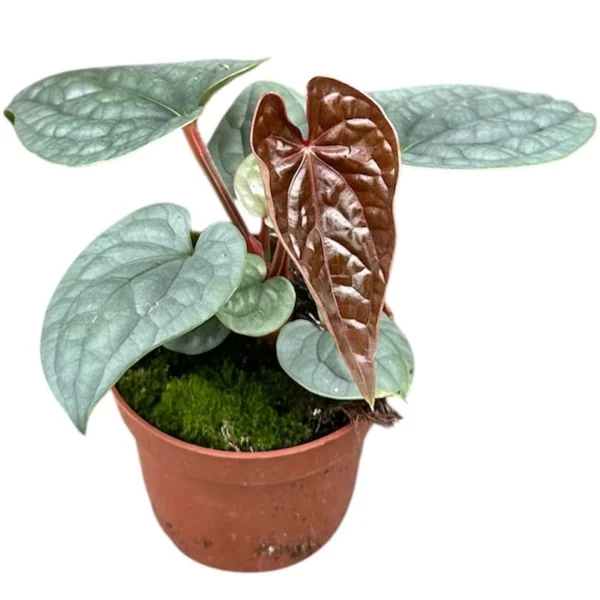
![Philodendron Mars — lobed leaves with orange-coral new growth, collector plant [1]](https://gomagcdn.ro/domains2/eufloria.ro/files/product/original/philodendron-mars-769159.webp "Philodendron Mars — lobed leaves with orange-coral new growth, collector plant [1]")
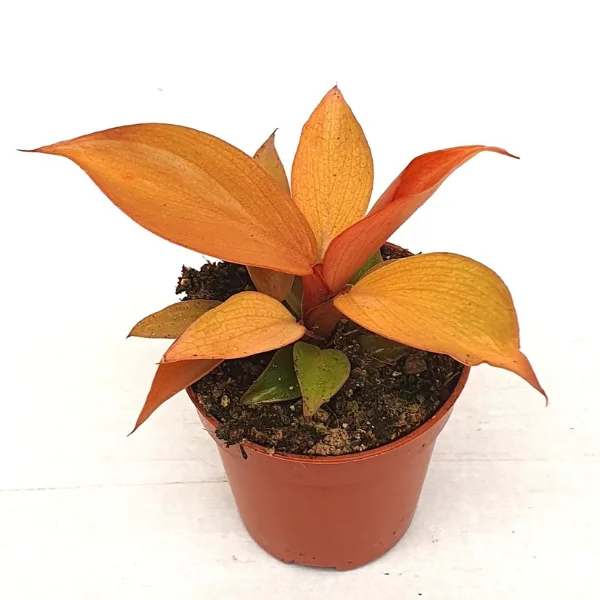
Philodendron 'Mars' is a compact, self-heading collector hybrid from the Araceae family, prized for its deeply lobed leaves and its bright orange-coral new growth that matures through coppery tones to dark green. The contrast between the bright young leaves and the mature green ones gives it a warm, dynamic air. Compact and elegant, it is a superb choice for lovers of colourful philodendrons.
Approx height (including pot): 15 cm
Pot diameter: 7 cm
- Description
- Characteristics
- Reviews (0)
- FAQ
🌿 Philodendron Mars — an Orange Sunset Caught in Leaves
Philodendron 'Mars' is a plant that brings the warmth of a sunset into your home. Its new leaves unfurl in a bright orange-coral, like a candle flame, then gradually mature through coppery and bronze tones to a deep dark green. A healthy plant always displays several shades at once — from the fiery orange of fresh growth to the calm green of mature leaves — in a spectacular chromatic gradient.
Beyond its warm colour, Mars has distinctive foliage: the leaves are deeply lobed, with wavy margins that give them a sculptural, dynamic shape, very different from the simple leaves of many philodendrons. This combination of colour and form turns it into a piece that catches the eye immediately, a small living spectacle on any shelf or desk.
Compact and self-heading, Mars does not invade space and needs no stake when young, which makes it surprisingly convenient for such a spectacular plant. It belongs to the fascinating world of collector philodendrons, prized for their varied foliage and forgiving nature, and is an ideal choice for those who want warm colour without high demands.
🌍 Origin and Botanical History
The genus Philodendron belongs to the Araceae family (aroids) and counts over 480 species from the tropical forests of Central and South America. The name comes from Greek — philo (love) and dendron (tree) — describing the climbing habit of many species, which rise up tree trunks toward the filtered light of the canopy.
'Mars' is a cultivated hybrid, part of a group of colourful philodendrons obtained through careful hybridisation, related to famous cultivars such as 'Prince of Orange' and 'McColley's Finale', which transformed the philodendron world by introducing warm orange and red colours into the foliage. These hybrids are selected specifically for the spectacular pigmentation of their new growth.
The orange-coral colour of the young leaves comes from anthocyanins and carotenes, protective pigments that temporarily cover the chlorophyll on new leaves, shielding them from strong light until they mature. As the leaf ages, these pigments retreat and the green of chlorophyll becomes dominant. This colour dynamic, controlled by light, means the plant is always changing. It shares its Araceae family with famous relatives such as Monstera and Syngonium.
🌱 The Foliage
The leaves are deeply lobed, with wavy margins that divide them into segments, 12–20 cm long on mature plants, glossy and firm. New growth emerges in a bright, almost fluorescent orange-coral, then passes through salmon, coppery and bronze tones before darkening to deep green. This chromatic transition unfolds over several weeks for each leaf.
The sculptural shape of the leaves, combined with the colour gradient, gives the plant a dynamic, textured look, very different from philodendrons with simple, heart-shaped leaves. The petioles often carry reddish tones too, completing the warm palette. The glossy leaves reflect light and can be wiped easily with a soft damp cloth to keep their shine.
The habit is compact and self-heading, with leaves rising from a short central stem and arranged radially — a plant that keeps its tidy shape without a stake, ideal for a desk or shelf. For decorative foliage in other chromatic registers, the rest of the Philodendron genus is also worth exploring.
🌱 Growth and Development
Philodendron Mars grows moderately with a compact, self-heading habit. It is a forgiving plant, suited both to the ambitious beginner and to the collector, asking for no special conditions beyond good light and balanced watering. Good light is essential to maintain the intense orange colour of new growth — in low light, new leaves emerge greener, losing some of the spectacle.
- Light: bright, indirect light — essential for the intensity of the orange colour of new growth. Avoid harsh direct sun, but also too little light, which reduces the warm pigmentation.
- Temperature: 18–27°C; avoid cold draughts and drops below 13°C.
- Watering: water when the top 2–3 cm of substrate have dried; check with your finger. Avoid standing water at the roots, which quickly leads to rot.
- Humidity: 50–65%; appreciates misting or a humidifier, especially in winter.
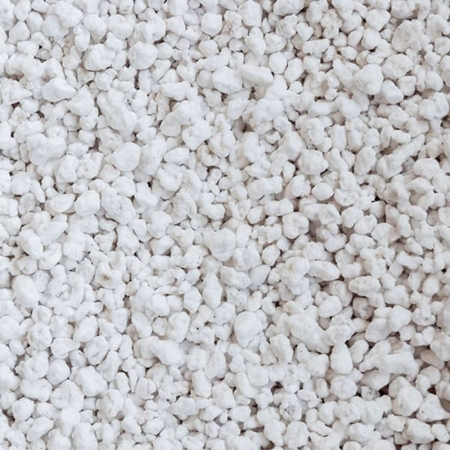
- Substrate: airy aroid mix — pine bark, perlite and coco fibre, just like for Monstera. Excellent drainage is essential.
- Fertilising: balanced diluted liquid fertiliser every 3–4 weeks during the growing season.
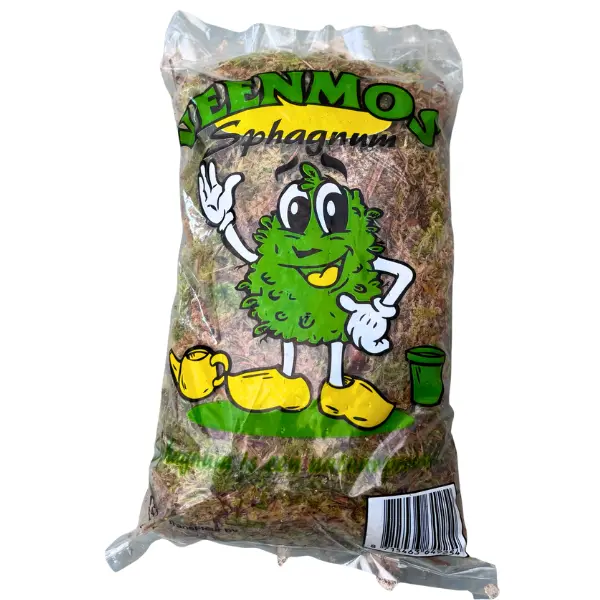
- Propagation: by division or stem cuttings with a node, rooted in water or sphagnum. Like other aroids such as Epipremnum, they root easily.
🌸 Common Problems, Solutions and Who It Is Perfect For
Philodendron Mars is a forgiving plant, but it communicates through its leaves. New growth is greener, without intense orange: usually insufficient light — move the plant closer to a good light source and the orange colour will return on new leaves. Brown tips or edges: dry air or hard water — raise the humidity and use filtered water. Yellow leaves at the base: if they appear on old leaves, it is normal; if there are many and they are soft, it indicates overwatering — let the substrate dry more. Long stems with sparse leaves (etiolation): insufficient light — move the plant to light. Soft stem, permanently wet substrate: root rot — repot into fresh substrate and reduce watering.
Like all aroids, it can occasionally attract spider mites or mealybugs in dry air; periodic inspection prevents problems. It is a plant toxic through calcium oxalate and must be kept away from pets and small children.
In conclusion, Philodendron Mars is the ideal choice for enthusiasts who want a plant with warm colour and sculptural form, without the fuss. Its orange new growth brings warmth to any collection, and its compact, forgiving nature makes it accessible to ambitious beginners too. Place it in a bright spot, alongside other collector philodendrons, and you will have a plant that catches a sunset in its leaves, year after year.
Lungime: 15 cm
Greutate (kg): 0.25 Kg
Denumire: Philodendron
Diametru: 7 cm
Cerințe lumină: Partial umbra
Tip plantă: Decorative
Utilizare: Interior
Tip suport: Ghiveci
Material Suport: Plastic
Light?
Toxic?
Propagation?
Water?
Humidity?
Recommendations
Ai nevoie și de un ghiveci decorativ?