EN/
EN/ Romana
Platycerium superbum Ø12cm
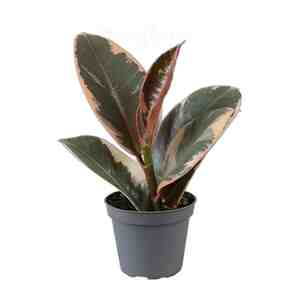
![Platycerium superbum — Australian staghorn fern with dual fronds: rounded protective sterile green-cream at base and fertile dichotomously branched in antler shape [1]](https://gomagcdn.ro/domains2/eufloria.ro/files/product/original/feriga-platycerium-superbum-431877.png "Platycerium superbum — Australian staghorn fern with dual fronds: rounded protective sterile green-cream at base and fertile dichotomously branched in antler shape [1]")
Platycerium superbum, popularly known as the 'staghorn fern', is one of the most spectacular epiphytic ferns. Native to Australia (Queensland, New South Wales), it produces two types of fronds: rounded protective sterile shield fronds, and spectacular dichotomously branched fertile fronds like deer antlers, up to 1.5 m long. From the Polypodiaceae family.
Pot diameter: 12 cm
- Description
- Reviews (0)
- FAQ
🌿 Platycerium superbum — The Staghorn Fern, Queen of Australian Epiphytes
Platycerium superbum, popularly known as "staghorn fern", is one of the most spectacular epiphytic ferns in the world. Native to the tropical forests of northeastern Australia, this species produces two distinct types of fronds — a visual ensemble that makes it immediately recognizable and a top piece in any botanical collection.
Sterile fronds (called "shield fronds") are rounded, flat, pale green to cream-brown at maturity, and serve a protective role — enveloping the substrate and roots. Above these grow the fertile fronds, which branch spectacularly in a pattern reminiscent of deer antlers — hence the common name. These fronds can reach 1-1.5 meters in length on mature plants, creating a unique architectural spectacle.
At the offered size — Ø12cm pot — the plant is young-mature, with sterile fronds already formed and fertile fronds in development. It is ideal for wood board mounting (mounted), for hanging pots or as an ascending architectural piece in a tropical composition.
🌍 Origin and Botanical History
Platycerium superbum was scientifically described in 1969 by botanist de Joncheere, as a separation from the Platycerium grande species complex. It is endemic to the tropical and subtropical forests of northeastern Australia (Queensland, New South Wales). In its natural habitat, it grows epiphytically on massive tree trunks, at moderate altitudes, forming impressive colonies that can weigh tens of kilograms on a single tree.
The Polypodiaceae family comprises over 1600 fern species, of which the Platycerium genus has only 18 species — but all are famous for their unusual appearance. The genus name derives from Ancient Greek: platys ("wide") and keras ("horn"), referring to the wide fronds branched like antlers.
🌱 The Dual Fronds
Platycerium superbum has two fundamentally different types of fronds, each with a specific role:
Sterile fronds (shield fronds): rounded, flat, arranged in concentric overlaps at the base of the plant. They start green, but mature to cream-brown, becoming a "nest" that envelops the substrate and retains water, nutrients and natural matter. DO NOT cut them — they are essential for the plant's survival.
Fertile fronds: branch dichotomously in antler shape, with dimensions of 1-1.5 m at maturity. They are gray-green, covered with fine silver fuzz (trichomes) that reduces water loss and reflects strong light. At maturity, they develop sporangia (reproductive structures) on the underside — large velvet-brown patches.
🌱 Growth Habit and Care
Platycerium superbum is an epiphytic plant that requires specific conditions — it is more demanding than ordinary ferns.
- Light: bright indirect; tolerates even filtered direct sun (morning/late afternoon). DO NOT avoid light — Platycerium needs more intense light than many other ferns.
- Temperature: 15-28°C; tolerates 10-32°C. Australian species adapted to temperature variations.
- Watering: by immersion. Soak the plant in water for 10-15 minutes, once a week in summer, once every 2-3 weeks in winter. DO NOT water directly on fronds.
- Humidity: 50-80% ideal; tolerates 40%. Daily misting of fertile fronds beneficial.
- Substrate: specific for epiphytes — sphagnum + pine bark + perlite + activated charcoal. Alternatively, can be mounted on wood board with moss.
- Fertilization: occasionally (every 6-8 weeks) with fertilizer diluted to a quarter of the dose. Some growers add banana peel pieces under sterile fronds — they absorb nutrients naturally.
- Propagation: via pups (daughter plants) that appear at the base of the mother plant. Separate when 10 cm in size.
🌿 Safety and Non-toxicity
Platycerium superbum is classified as non-toxic for humans and pets according to ASPCA. It is a perfectly safe plant for homes with cats, dogs or curious children.
🌸 Why Choose Platycerium superbum
Platycerium superbum is a plant for those who appreciate natural botanical architecture and unusual forms. The duality of fronds (protective sterile and spectacular fertile) makes it a conversation plant, a living art object. Mounted on a wood board and hung on a wall, it transforms an ordinary space into a mini tropical ecosystem. It is a long-term investment — mature plants can live for decades and become increasingly impressive with age.
🌱 How to Mount on Wood Board
For wood board mounting: wrap sterile fronds and roots in a layer of moist sphagnum, tie with transparent fishing line or flexible wire, attach to a treated wood board (oak, cedar). Hang on the wall in an area with bright indirect light. Water by daily misting of sphagnum and weekly immersion (untie, soak, retie). Sterile fronds will grow and progressively cover the board.
🌱 Common Problems
Sterile fronds brown: NORMAL — this is their natural cycle. They start green and mature to brown, protective role. DO NOT cut them.
Fertile fronds wilt: lack of water. Soak the plant for 15 minutes.
Black spots on fronds: rot from standing water. Improve drainage and air circulation.
Brown patches on underside of fertile fronds: NORMAL — these are reproductive sporangia, sign of a healthy mature plant.
Why are sterile fronds brown?
How to water Platycerium?
How much light does it need?
How to mount on wood board?
Is it toxic to pets?
Ai nevoie și de un ghiveci decorativ?