Philodendron spiritus-sancti Ø7cm

-33%
399,00 RON 268,00 RON

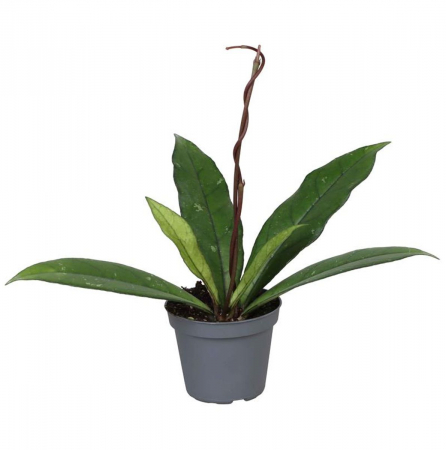
Philodendron spiritus-sancti is one of the rarest and most coveted species in the Araceae family, native exclusively to the endangered Atlantic Forest of Espírito Santo, Brazil. Distinguished by its extraordinary elongated, lanceolate leaves that can reach up to 90 cm in length, this hemiepiphytic climber displays a deep, glossy green foliage with a gracefully pendulous habit unlike any other Philodendron. Regarded as the “Holy Grail” of aroid collectors worldwide, each cultivated specimen represents a living piece of botanical history and a meaningful contribution to the conservation of one of Earth’s most critically endangered plant species.

Approx height (including pot): 15 cm

Country of origin: Netherlands

Pot diameter: 7 cm

In stock
Stock limit
Add to cart
Product Code: 4000058880650 Do you need help? 0724.394.887
Add to wishlist Request information
  • Description
  • Characteristics
  • Reviews (0)

🌿 The Holy Grail of Aroids — A Living Legend Among Philodendrons

In the vast and endlessly fascinating world of tropical aroids, few species command the reverence and admiration that Philodendron spiritus-sancti inspires. Described by the German-Brazilian botanist Gerhard Hatschbach and later formally published by Graziela Maciel Barroso in 1987, this extraordinary species is widely regarded as the most sought-after Philodendron in existence — a botanical treasure whose rarity is matched only by its breathtaking elegance.

Native exclusively to the Atlantic Forest remnants of Espírito Santo state in southeastern Brazil, Philodendron spiritus-sancti exists in vanishingly small wild populations. The species takes its name directly from this region — “spiritus sancti” meaning “holy spirit” in Latin, a reference to the state where it was first discovered. Habitat destruction and its extremely limited natural range have placed this species among the most critically endangered plants on Earth, making each cultivated specimen a genuine contribution to the preservation of biodiversity.

To encounter a Philodendron spiritus-sancti in person is to understand immediately why collectors worldwide speak of it with such passion. The plant possesses an almost architectural quality, its elongated, pendulous leaves creating silhouettes of extraordinary grace. There is something both ancient and modern about its form — as if nature had sculpted a living artwork that would look equally at home in a primeval forest canopy or a contemporary gallery space.

For the discerning collector, acquiring a Philodendron spiritus-sancti represents a milestone. This is not merely a plant to be grown; it is a botanical companion of profound significance, a species whose story intertwines conservation, botanical history, and the deep human impulse to nurture and protect the rarest expressions of the natural world.

🌍 Origin and Botanical History

Philodendron spiritus-sancti belongs to the family Araceae, subfamily Aroideae, within the immense genus Philodendron which comprises over 500 recognized species. The genus name derives from the Greek words “philo” (love) and “dendron” (tree), referencing the climbing habit of many species. Within the genus, P. spiritus-sancti is classified in the subgenus Philodendron, section Philodendron, placing it among the true philodendrons with their characteristic growth patterns.

The species was first collected in the municipality of Domingos Martins, in the mountainous interior of Espírito Santo state, Brazil. This region lies within the Atlantic Forest biome — one of the most biodiverse and simultaneously most threatened ecosystems on the planet. Once stretching continuously along Brazil’s Atlantic coast, this forest has been reduced to approximately 12% of its original extent, and the specific microhabitats where P. spiritus-sancti occurs have been further fragmented by agriculture and urbanization.

In its natural habitat, the species grows as a hemiepiphyte at elevations between 600 and 850 meters above sea level, in humid montane forest characterized by persistent cloud cover, moderate temperatures, and rich, well-drained substrates. The wild population is estimated at fewer than a few dozen mature individuals, making it one of the rarest vascular plants known to science. Its IUCN conservation status reflects this precarious situation, underscoring the importance of responsible cultivation programs.

🌱 The Foliage

The leaves of Philodendron spiritus-sancti are nothing short of spectacular and immediately distinguish it from all other members of the genus. Each mature leaf can reach 60 to 90 centimeters in length, forming a narrow, elongated, lanceolate blade that tapers to an elegant, drawn-out tip. The shape is reminiscent of a slender sword or an elongated pendant — unlike the broad, heart-shaped leaves typically associated with philodendrons.

The leaf surface presents a deep, saturated green on the adaxial (upper) side, with a subtle glossy sheen that catches and reflects light in the most captivating manner. The texture is firm and somewhat coriaceous (leathery), giving the leaves a sense of substance and permanence. Running along the blade, the midrib is prominently raised, creating a central axis from which secondary veins extend in a pinnate arrangement, each one visible as a gentle depression on the upper surface and a corresponding ridge below.

The abaxial (lower) surface of the leaves presents a paler green tone, sometimes with subtle reddish or purplish undertones along the petiole junction and primary veins — a characteristic that adds depth and visual interest when the leaves are observed from below, as they naturally hang in a gracefully pendulous manner. The petioles themselves are robust yet proportional, supporting the considerable leaf blades with an almost effortless poise.

Young leaves emerge tightly rolled, revealing their form gradually as they unfurl over the course of several days. The new growth often displays a lighter, almost luminous green that darkens and strengthens as the leaf matures and hardens. This process of emergence and maturation is one of the most rewarding spectacles in indoor plant cultivation — each new leaf a renewal of the extraordinary beauty that defines this species.

🌸 The Flowers

Like all members of the genus Philodendron, P. spiritus-sancti produces inflorescences consisting of a spadix enclosed within a spathe, rather than conventional petals and sepals. The spathe is elongated and cream to pale green in color, while the spadix bears the tiny, densely packed true flowers arranged in distinct zones: female flowers at the base, a sterile zone in the middle, and male flowers at the apex.

In cultivation, flowering is an exceptionally rare event, typically requiring a mature specimen of considerable size that has been growing under optimal conditions for many years. The plant must reach a level of physiological maturity that allows it to divert energy from vegetative growth toward reproduction. When flowering does occur, it is a noteworthy event in the collector community, as fertile seed production from cultivated specimens could contribute meaningfully to the species’ genetic diversity and conservation.

For most growers, however, the foliage alone provides more than sufficient ornamental value. The extraordinary leaves are the true attraction of this species, and the plant’s rarity and prestige derive primarily from their unique and unforgettable form rather than from any floral display.

🌱 Growth Habit and Care Requirements

Philodendron spiritus-sancti grows as a hemiepiphytic climber in nature, beginning life on the forest floor and gradually ascending tree trunks toward the canopy using its adventitious aerial roots. In cultivation, it develops a semi-upright to climbing habit, producing a thick, sturdy stem from which the magnificent pendant leaves emerge at regular intervals. Growth is moderate — typically producing 3 to 6 new leaves per year under good conditions — which is part of what makes each new leaf such an anticipated event.

Providing a moss pole, coconut coir pole, or other vertical support is strongly recommended, as the aerial roots will attach and the plant will develop larger, more impressive foliage when allowed to climb. The support should be kept consistently moist to encourage root attachment.

  • Light: Bright indirect light is ideal. An east-facing or filtered south/west-facing window works well. Avoid direct midday sun, which can scorch the leaves. The species tolerates moderate light levels but will produce smaller, less impressive foliage in lower light conditions.
  • Temperature: Optimal range is 18–28°C (65–82°F). The species is sensitive to cold and should never be exposed to temperatures below 15°C (59°F). Avoid cold drafts, air conditioning vents, and sudden temperature fluctuations.
  • Watering: Keep the substrate evenly moist but never waterlogged. Water thoroughly when the top 2–3 cm of substrate feels dry to the touch. Reduce watering frequency slightly in winter. Use room-temperature, filtered or rainwater when possible.
  • Humidity: 60–80% relative humidity is ideal. In drier indoor environments, use a humidifier, pebble tray, or group the plant with other tropical species. Misting provides only temporary benefit and is not a substitute for consistently elevated ambient humidity.
  • Substrate: A well-draining, airy mix is essential. Recommended composition: 40% orchid bark (medium grade), 25% perlite, 20% coco coir or peat, 10% horticultural charcoal, 5% worm castings. The mix should retain moisture while allowing excess water to drain freely.
  • Fertilization: Apply a balanced liquid fertilizer (NPK 20-20-20 or similar) diluted to half strength every 2–4 weeks during the active growing season (spring through early autumn). Reduce or cease fertilization in winter. Avoid over-fertilization, which can cause salt buildup and root damage.
  • Propagation: Stem cuttings with at least one node and aerial root are the most reliable method. Air layering is also effective for larger specimens. Propagation should be performed in spring or early summer when the plant is actively growing.
Product compliance information

Lungime: 15 cm

Greutate (kg): 0.5 Kg

Denumire: Philodendron

Diametru: 7 cm

Cerințe lumină: Partial umbra

Tip plantă: Decorative

Utilizare: Interior

Tip suport: Ghiveci

Material Suport: Plastic

If you want to express your opinion about this product you can add a review.

The review was sent successfully.

Compara produse

You must add at least one product to compare products.

Was added to wishlist!

Was removed from wishlist!