EN/
EN/ Romana
Philodendron 'Ring of Fire' Ø6cm
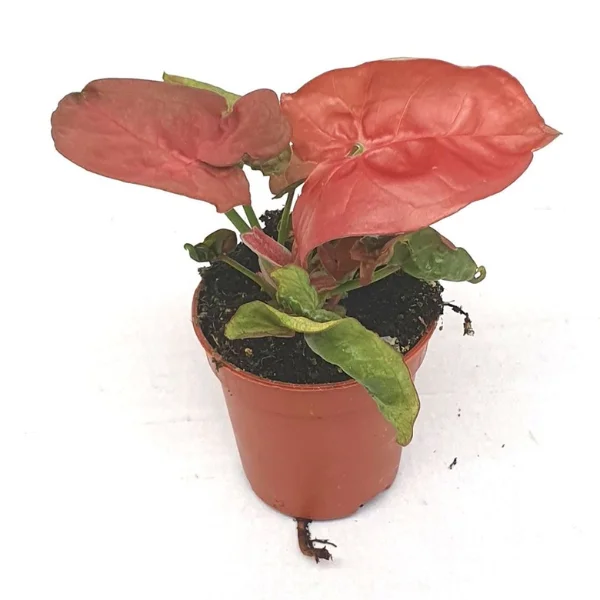
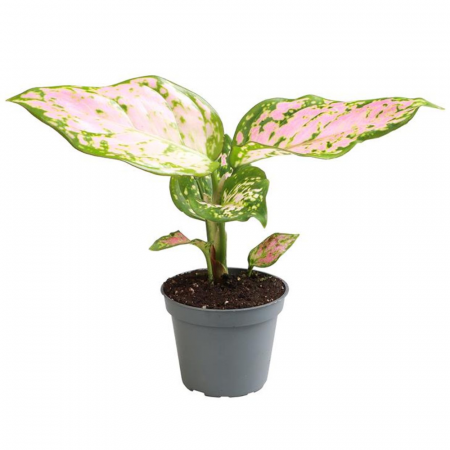
![Philodendron 'Ring of Fire' — deeply cut variegated orange-red-cream leaves, Ø6cm pot Eufloria [1]](https://gomagcdn.ro/domains2/eufloria.ro/files/product/original/330995.png "Philodendron 'Ring of Fire' — deeply cut variegated orange-red-cream leaves, Ø6cm pot Eufloria [1]")
Philodendron 'Ring of Fire' — extremely rare variegated cultivar with deeply cut leaves in serrated lobes and burning pattern of orange, salmon pink, burgundy red, cream and green. Very slow growth. Humidity 65-85%, bright indirect light, 18-27°C. The Grail of advanced collectors.
Approx height (including pot): 15 cm
Pot diameter: 6 cm
- Description
- Characteristics
- Reviews (0)
- FAQ
🌿 Philodendron 'Ring of Fire' — the ring of fire, the Grail of variegated collectors
Philodendron 'Ring of Fire' is one of the rarest and most desired variegated cultivars in the Philodendron world, an exceptional horticultural creation with deeply cut leaves in spectacular serrated lobes and unique variegation in burning tones of orange, salmon pink, burgundy red, cream and intense green. Its name — "Ring of Fire" — reflects the fiery palette of the foliage that seems to permanently burn in a vegetal flame.
The plant is extremely slow-growing and notorious for its reproduction difficulty, reasons why its prices on the international market are among the highest in the Philodendron world. Each leaf is a unique abstract painting — the variegation pattern completely differs from one leaf to another, and the appearance of a new leaf is always an emotional moment for the grower.
Philodendron 'Ring of Fire' is a hybrid cultivar of Philodendron tortum × Philodendron wendlandii with unique variegated additions, creating one of the most unusual silhouettes in the Araceae family. For advanced collectors who want to have the rarest variegated Philodendron in their collection, this is the supreme choice.
🌍 Botanical origin and history
Philodendron 'Ring of Fire' first appeared in the 1980s-1990s from American hybridizer Keith Henderson, known for creating rare variegated Philodendrons. It is a complex hybrid, likely between Philodendron tortum (with deeply cut leaves) and other species in the Schizophyllum section, and the variegation is the result of a stable spontaneous genetic mutation.
The Araceae family, to which the Philodendron genus belongs, comprises over 3,700 species distributed predominantly in tropical areas. The Philodendron genus includes approximately 500 species native to Central and South America. The name "Philodendron" derives from ancient Greek — "philo" (love) and "dendron" (tree).
The cultivar's ancestors grow in the tropical forests of Central and South America, where atmospheric humidity exceeds 75% and light filtered through the canopy creates a gentle microclimate. 'Ring of Fire' has inherited these preferences and thrives in similar conditions, with high humidity and bright indirect light.
🌱 The fiery foliage
The foliage of Philodendron 'Ring of Fire' is its visual signature. The leaves are deeply cut in regularly serrated lobes, with slightly twisted tips, creating an almost aragonite silhouette — like the teeth of a vegetal saw. Leaf size reaches 25-40 cm in mature culture.
Chromatics is the main attraction — a mixture of dark green with cream, peach-orange, salmon pink and burgundy red in varied areas. Each leaf has its own unique pattern, depending on age, light and plant conditions. Young leaves may appear more red or orange, and mature ones more green with colored accents.
The texture is slightly leathery, and the surface may have metallic reflections. The petioles are robust and reddish or brown-purple in color, elegantly contrasting with the colored leaves. The plant grows slowly, developing new leaves every 6-8 weeks under optimal conditions.
🌸 The flowers
Philodendron 'Ring of Fire' blooms extremely rarely in culture, only on very mature plants. The flowers are typical Araceae — a cylindrical spadix wrapped in a cream-greenish spathe. They are not fragrant.
The collector's attention is exclusively on the foliage — the flowers are considered a rare bonus. Variegation is preserved ONLY through vegetative propagation, not through seeds.
In the wild, pollination is carried out by specialized beetles, but this process does not occur in apartment culture.
🌱 Growth habit and care
Philodendron 'Ring of Fire' is a demanding and very slow-growing plant, suitable for advanced collectors. It is a climbing plant and BENEFITS greatly from a moss pole.
Essential requirements:
- Light: bright indirect — essential for variegation. East or south-east windowsill. Avoid direct sun.
- Temperature: 18-27°C optimal; does not tolerate below 15°C.
- Watering: moderate — when the top 3-4 cm are dry. Every 7-10 days in summer, every 10-14 days in winter.
- Humidity: 65-85% ideal — humidifier essential.
- Substrate: very well-drained and airy — aroid mix with bark, perlite, sphagnum and activated charcoal.
- Support: moss pole strongly recommended.
- Fertilization: every 4-6 weeks during growing season with balanced fertilizer diluted to a quarter.
- Propagation: exclusively by cuttings with variegation — extremely difficult and slow.
🌿 Why choose Philodendron 'Ring of Fire'
It is the supreme choice for collectors who want an extremely rare and unique variegated cultivar. The pattern in orange, red and cream fire makes the plant a piece of vegetal art. Suitable for experienced enthusiasts, accept the challenge of slow growth and careful care. An investment plant and a collector's statement.
Lungime: 15 cm
Greutate (kg): 0.25 Kg
Denumire: Philodendron
Cerințe lumină: Partial umbra
Tip plantă: Decorative
Utilizare: Interior
Tip suport: Ghiveci
Material Suport: Plastic
Why is Philodendron 'Ring of Fire' so expensive?
How slowly does Ring of Fire grow?
What optimal conditions does Ring of Fire need?
Is Ring of Fire toxic?
How to make a cutting from Ring of Fire?
Ai nevoie și de un ghiveci decorativ?