EN/
EN/ Romana
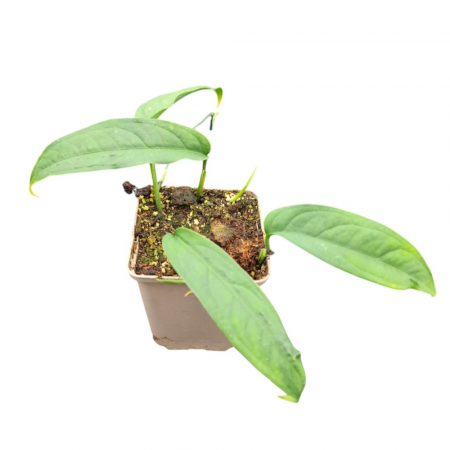
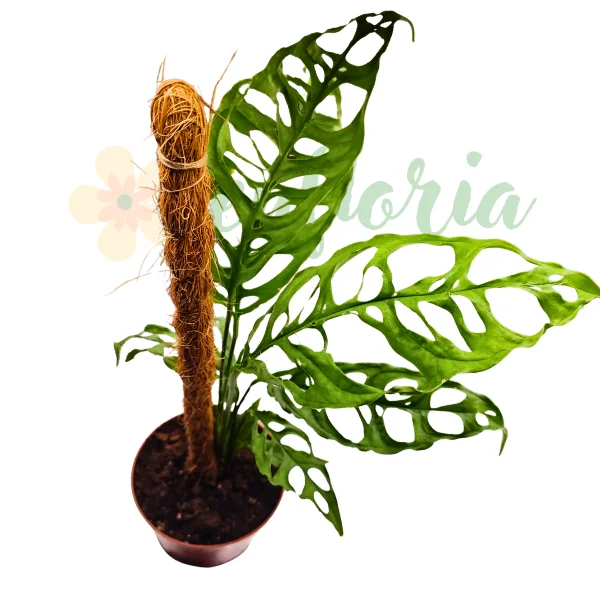
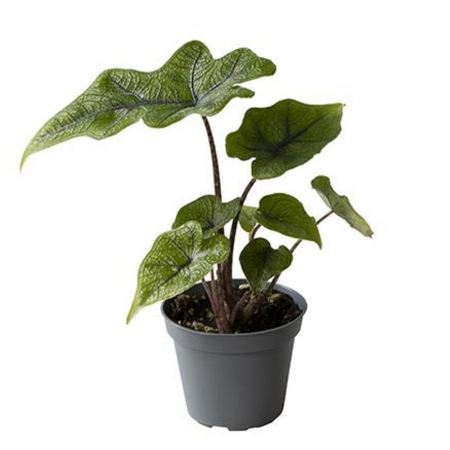
Monstera friedrichsthalii Ø11cm
![Monstera friedrichsthalii — Narrow-Leaf Swiss Cheese Vine [1]](https://gomagcdn.ro/domains2/eufloria.ro/files/product/original/monstera-friedrichsthalii-d11-820843.webp "Monstera friedrichsthalii — Narrow-Leaf Swiss Cheese Vine [1]")
Approx height (including pot): 20 cm
Pot diameter: 11 cm
- Description
- Characteristics
- Reviews (0)
- FAQ
🧀 The Elegant Narrow-Leaf Swiss Cheese Vine
Monstera friedrichsthalii is a graceful, narrow-leaved form of the beloved Swiss Cheese Vine — a climbing aroid that has captured the hearts of houseplant enthusiasts worldwide with its distinctively fenestrated (perforated) foliage. Where the standard Monstera adansonii presents broad, heart-shaped leaves, the friedrichsthalii form offers a more elegant silhouette: longer, narrower leaves that taper to a point, creating a refined, almost delicate appearance. Steve's Leaves notes: "The narrow leaves have large oval shaped holes in them. This plant makes an unusual hanging basket or trailing over a mixed pot." Brian's Botanicals describes the distinction: "The Monstera friedrichsthalii clone has a longer more narrow leaf... Monstera friedrichsthalii will grow leaves up to 2 feet long and 8 inches wide or wider." This is the Swiss Cheese Vine for those who appreciate subtlety and grace in their tropical plant collection.
🌏 Origins & Botanical History
The taxonomic history of this plant reflects the complexity often found in popular aroids. According to Kew's Plants of the World Online (POWO), Monstera friedrichsthalii Schott (published in Oesterreichisches Botanisches Wochenblatt in 1854) is now considered a synonym of Monstera adansonii subsp. laniata (Schott) Mayo & I.M.Andrade. The subspecies laniata is native to "Nicaragua to S. Tropical America" per Kew — spanning Central America through much of tropical South America including Colombia, Ecuador, Peru, Bolivia, and Brazil. Steve's Leaves confirms: "Monstera adansonii is usually listed under Monstera Friedrichsthalii but the correct name is M. adansonii." In the horticultural trade, the name "friedrichsthalii" persists for plants with the characteristic narrow-leaf form — distinguishing them from the rounder, broader-leaved forms more commonly seen in cultivation. The species name honours Emanuel von Friedrichsthal (1809-1842), an Austrian botanist and explorer who collected plants in Central America. The genus name "Monstera" derives from the Latin "monstrum" (monster or abnormal), referring to the unusual fenestrated leaves.
🍃 Foliage — Narrow, Elegant & Fenestrated
The leaves are the star attraction of this plant — and what distinguishes the friedrichsthalii form from other Monstera adansonii types. The leaves are narrower and more elongated than the standard "round form," tapering to a point with a slightly asymmetrical tip. Easy Care Houseplants describes: "Narrow form leaves may have less fenestrations than wide form and the immature ones may show no fenestrations at all. On the narrow form leaf, the shape is much more pointed and lance-like." LoveThatLeaf adds: "The narrow form has much thinner, more vine-like stems than other adansonii. Leaves are narrower, longer, thinner and smoother, and normally point slightly to one side at the tip." The fenestrations (holes) are oval-shaped or elongated rather than round — smaller and fewer than in the wide form. Brian's Botanicals notes leaves can grow "up to 2 feet long and 8 inches wide or wider" in mature specimens. The foliage has a glossy, smooth texture — the characteristic waxy sheen that makes Monstera so photogenic. The colour is deep green, becoming lighter when exposed to bright light or lacking nutrients.
🌱 Growth Habit & Development
Monstera friedrichsthalii is a hemiepiphytic vine — in nature, it grows on the forest floor before climbing trees using aerial roots to reach filtered light in the canopy. Paraíso Plant Studio notes: "Grows under trees in the wild, so they need a moss pole or stake to climb up for better growth." The Plant Boys describes it as having "a smaller size compared to other Monstera varieties" making it "ideal for apartments, offices, or any space where you want to add a tropical flair without overwhelming the room." The narrow form is known for its particularly thin, vine-like stems compared to the thicker stems of the round form. When allowed to climb, the plant produces progressively larger leaves with more pronounced fenestrations; when left to trail, leaves tend to remain smaller with fewer holes. Home to Heather explains: "If you leave your plant to trail it will be doing the opposite of what it likes to do in nature. This may result in smaller leaves with less fenestrations." The plant is vigorous and can grow several feet per year under optimal conditions.
🌸 Flowers & Fruit
Like all Monstera, this species can produce inflorescences consisting of a spathe (modified leaf) surrounding a spadix — the characteristic "flower" structure of the aroid family. However, PlantCareToday notes: "Flowering is not very common if it's an indoor plant. The flowers are typically tiny and are situated near the spadix." In the wild, pollination is mediated by beetles attracted to volatile scents emitted by the spadix; the inflorescence exhibits thermogenesis, generating heat to disperse these scents. The fruit, when produced, is a syncarpium similar to (but smaller than) that of Monstera deliciosa. For most indoor growers, flowering is rare — the plant is cultivated primarily for its spectacular fenestrated foliage.
Care Requirements:
- Light: Bright, indirect light is ideal and essential for producing well-fenestrated leaves. Paraíso Plant Studio recommends: "Very bright filtered or indirect light." Steve's Leaves notes the plant "tolerates low light" but adds this will result in smaller leaves with fewer holes. Home to Heather emphasises: "The more bright, indirect light the plant receives, the more fenestrations (holes) the leaves will have." Avoid direct sunlight, which can scorch leaves; some morning sun is tolerated.
- Water: Allow soil to dry partially between waterings. Paraíso Plant Studio advises: "Water every 7-10 days or so, when top 2 inches of soil are dry." PlantCareToday explains the plant "has fairly thick and substantial roots so it can withstand drought however it may respond by... yellowing and dropping leaves. On the other side, overwatering will not be well received either and could also cause yellowing leaves!" Consistency is key — irregular watering is a common cause of problems.
- Soil: Well-draining, aerated substrate is essential. Paraíso Plant Studio recommends: "Mix potting soil with perlite and orchid bark." Ken's Philodendrons advises: "moist soils with high organic matter" while emphasising the need for good drainage. Avoid dense, water-retentive mixes that stay soggy.
- Temperature: Ken's Philodendrons states: "Indoors plants thrive at temperatures between 55°- 80°F" (13-27°C). PlantCareToday gives the ideal range as "65° – 75° degrees Fahrenheit (18° C – 24° C)" with a minimum of 50°F (10°C). Protect from cold drafts and sudden temperature drops.
- Humidity: As a tropical rainforest native, this plant appreciates higher humidity. Paraíso Plant Studio notes it "Grows larger leaves when in high humidity and bright light." While adaptable to average household humidity, 60%+ is ideal. A humidifier, pebble tray, or regular misting can help, especially in heated indoor environments during winter.
- Feeding: Feed with balanced liquid fertilizer every 2-4 weeks during the growing season (spring-summer). PlantCareToday warns: "The heavy salts in cheaper fertilizers will damage the roots and possibly kill the plant." Periodically flush soil to prevent salt buildup. Reduce feeding in winter.
- Support: For best results, provide a moss pole, trellis, or other climbing support. This encourages larger leaf development and more pronounced fenestrations. Ken's Philodendrons notes the plant grows "best when provided with a mossy post or burlap wrapped pole to climb."
Botanical Info: Family: Araceae | Genus: Monstera | Species: Monstera adansonii Schott (1830) | Subspecies: subsp. laniata (Schott) Mayo & I.M.Andrade | Trade Name: Monstera friedrichsthalii (synonym) | Common Names: Swiss Cheese Vine, Swiss Cheese Plant, Monkey Mask, Five Holes Plant, Narrow Form Adansonii | Type: Hemiepiphytic Climbing Vine | Native Range: Nicaragua to S. Tropical America (Central America, Colombia, Ecuador, Peru, Bolivia, Brazil, West Indies) | Zone: USDA 10-12 (indoor cultivation in temperate climates) | Mature Leaf Size: Up to 60 cm long, 20 cm wide (when climbing) | Growth Rate: Moderate to Fast
Lungime: 20 cm
Greutate (kg): 0.5 Kg
Denumire: Monstera
Diametru: 11 cm
Cerințe lumină: Partial umbra
Tip plantă: Decorative
Utilizare: Interior
Tip suport: Ghiveci
Material Suport: Plastic
Is Monstera friedrichsthalii toxic to cats and dogs?
Yes, Monstera friedrichsthalii (Monstera adansonii) is toxic to cats, dogs, and other household pets. Paraíso Plant Studio clearly states it is "Toxic to animals if ingested." The plant contains calcium oxalate crystals that cause immediate oral irritation, drooling, vomiting, and difficulty swallowing when chewed. While rarely life-threatening, symptoms are painful and distressing. If your pet ingests any part of this plant, contact your veterinarian immediately. For households with curious pets, consider pet-safe alternatives like Hoya species, or place this plant well out of reach.
Is Monstera friedrichsthalii the same as Monstera adansonii?
Botanically, yes. According to Kew's Plants of the World Online, Monstera friedrichsthalii Schott is a synonym of Monstera adansonii subsp. laniata. Steve's Leaves confirms: "Monstera adansonii is usually listed under Monstera Friedrichsthalii but the correct name is M. adansonii." However, in the horticultural trade, the name "friedrichsthalii" is used to distinguish the narrow-leaf form from the broader, rounder forms. Brian's Botanicals explains: "The Monstera friedrichsthalii clone has a longer more narrow leaf... One I found from Thailand has more cordate (Heart Shaped) leaves and a bit of a sheen to them. It can be difficult to tell them apart unless side by side." Both forms require identical care.
How do I get my Monstera friedrichsthalii to develop more holes in its leaves?
Fenestration (hole development) is primarily controlled by light levels and whether the plant is climbing. Home to Heather explains: "The more bright, indirect light the plant receives, the more fenestrations (holes) the leaves will have." Providing a moss pole or other climbing support is equally important — in nature, the plant develops larger, more fenestrated leaves as it climbs toward light. LoveThatLeaf notes the narrow form "tends not to fenestrate as easily when young until climbing and mature." Patience is also required: juvenile plants naturally have fewer holes, and fenestration increases with maturity. Ensure adequate humidity (60%+) and consistent care for best results.
What is the difference between narrow form and round form Monstera adansonii?
The two forms differ in several ways. Easy Care Houseplants explains: "On the narrow form leaf, the shape is much more pointed and lance-like. On the wide form, the shape is much more round." Foliage Friend adds: "The narrow form has... crinkled" texture while "the wide leaf has a glossy and smooth texture." The narrow form has thinner, more vine-like stems; the round form has thicker stems. Fenestrations also differ: "The holes in narrow-form leaves are oval-shaped or elongated. Wide-form adansonii plants have larger, round fenestrations and more of them per leaf." Care requirements are identical for both forms.
Why are the leaves on my Monstera friedrichsthalii turning yellow?
Yellow leaves typically indicate either overwatering or underwatering — both produce similar symptoms. PlantCareToday notes: "Overwatering and root rot is one of the most common disease problems stemming from overwatering and allowing the soil to stay soggy." Check soil moisture: if soggy, reduce watering frequency; if bone dry, water more consistently. Other causes include too much direct sunlight (causing bleaching), insufficient light (causing pale colour), nutrient deficiency (feed during growing season), or salt buildup from fertilizers (flush soil periodically). Some lower leaf yellowing is natural as the plant grows and sheds older foliage.
Can I grow Monstera friedrichsthalii in a hanging basket?
Absolutely! Steve's Leaves describes it as making "an unusual hanging basket or trailing over a mixed pot." Ken's Philodendrons confirms: "Monstera plants can be grown in pots, hanging baskets or outdoors as a ground cover." However, there's a trade-off: when allowed to trail (rather than climb), the plant produces smaller leaves with fewer fenestrations. Home to Heather explains: "If you leave your plant to trail it will be doing the opposite of what it likes to do in nature. This may result in smaller leaves with less fenestrations which is fine. It won't hurt the plant." If you want the dramatic, large-holed leaves, provide a climbing support instead.
How to care for Monstera?
Indirect light, drained soil, water when partially dry. Climbing support. 18-27°C.
Propagation?
Stem cuttings with node in water/moist substrate.
Why no split leaves?
Fenestrations appear at maturity and with enough light. Young plants have whole leaves.
How big?
Can reach 2-3 m indoors with support. Vigorous growth.
Recommendations
Ai nevoie și de un ghiveci decorativ?