EN/
EN/ Romana
Labisia obtusifolia 'Kura Kura' Ø5cm
![Labisia obtusifolia 'Kura Kura' [0]](https://gomagcdn.ro/domains2/eufloria.ro/files/product/medium/labisia-obtusifolia-kura-kura-d5-795950.webp "Labisia obtusifolia 'Kura Kura' [0]")
![Labisia obtusifolia 'Kura Kura' [1]](https://gomagcdn.ro/domains2/eufloria.ro/files/product/medium/labisia-obtusifolia-kura-kura-d5-283264.webp "Labisia obtusifolia 'Kura Kura' [1]")
![Labisia obtusifolia 'Kura Kura' [1]](https://gomagcdn.ro/domains2/eufloria.ro/files/product/original/labisia-obtusifolia-kura-kura-d5-795950.webp "Labisia obtusifolia 'Kura Kura' [1]")
![Labisia obtusifolia 'Kura Kura' [2]](https://gomagcdn.ro/domains2/eufloria.ro/files/product/original/labisia-obtusifolia-kura-kura-d5-283264.webp "Labisia obtusifolia 'Kura Kura' [2]")
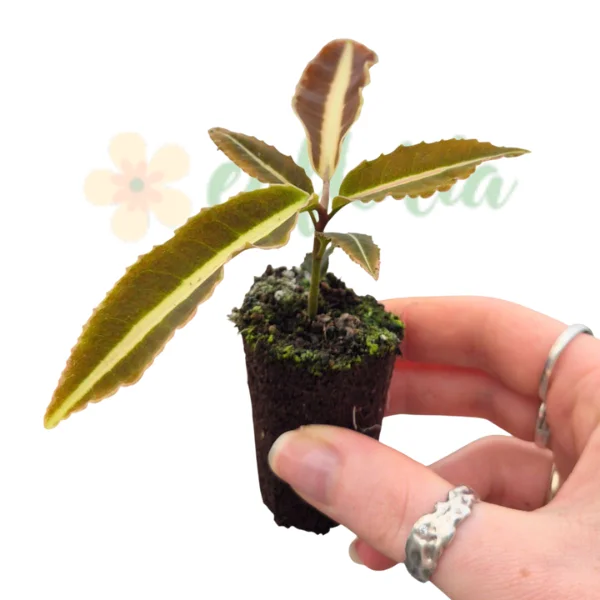
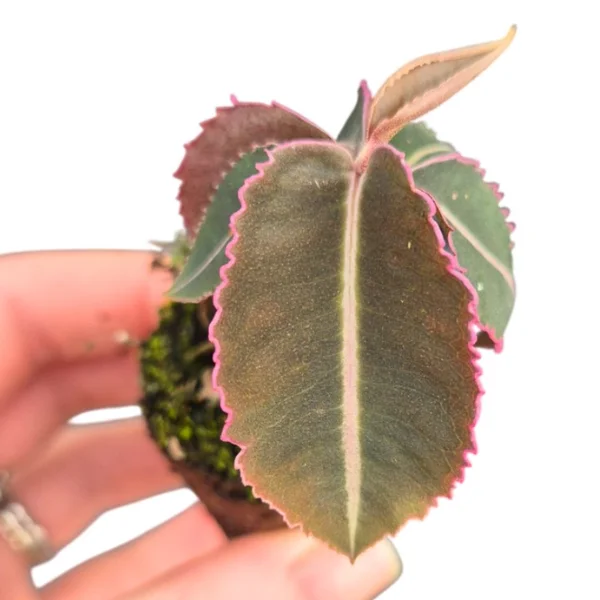
Labisia obtusifolia 'Kura Kura' – a rare tropical plant with spectacular turtle shell-patterned leaves. From the Primulaceae family, native to Southeast Asia. Ideal for terrariums. Requires high humidity and indirect light. Non-toxic plant.
Approx height (including pot): 15 cm
Flowering state: No flowers
Pot diameter: 5 cm
- Description
- Characteristics
- Reviews (0)
- FAQ
🌿 Labisia obtusifolia 'Kura Kura' – Spectacular Turtle Shell Patterned Leaves
Labisia obtusifolia 'Kura Kura' is a rare tropical plant highly sought after by collectors, known for its exceptional leaves featuring a pattern reminiscent of a turtle shell – hence the name "Kura Kura" (turtle in Malay). It belongs to the Primulaceae family and is native to the tropical forests of Southeast Asia.
🌍 Origins and Botanical History
Labisia obtusifolia grows naturally in the understory of humid forests in Malaysia, Borneo, and other regions of the Malay Archipelago. It thrives in shaded environments with rich soil and constant moisture. The 'Kura Kura' variety has become extremely popular among rare plant collectors due to the unique appearance of its leaves, which differ significantly from the typical species form.
🌿 Leaves – Natural Art with Shell Patterns
The leaves are the star feature of this plant. Rounded and slightly leathery, they display prominent veins that create a fascinating geometric pattern similar to a turtle shell. The coloring ranges from deep green to darker shades, with contrasting veins that accentuate the unique texture. Leaves grow in compact rosettes, providing a remarkable decorative appearance.
🌸 Flowers – Delicate Accents at the Rosette Base
The plant produces small inflorescences with pink or reddish flowers that appear at the base of the leaves. While discrete, the flowers may be followed by small colorful fruits, adding an extra decorative element. Flowering occurs under optimal humidity and light conditions.
🌱 Growth Habit and Care
Labisia obtusifolia 'Kura Kura' requires indirect light, high humidity (above 70%), and consistent temperatures between 20-28°C (68-82°F). The soil should be well-drained but consistently slightly moist, ideally a substrate based on sphagnum, perlite, and peat. It is perfect for enclosed terrariums or plant display cases. Growth is slow, and the plant remains compact.
Lungime: 10 cm
Greutate (kg): 0.15 Kg
Denumire: Labisia
Diametru: 5 cm
Cerințe lumină: Partial umbra
Tip plantă: Decorative
Utilizare: Interior
Tip suport: Ghiveci
Material Suport: Plastic
What kind of light does Labisia obtusifolia 'Kura Kura' prefer?
How often should this plant be watered?
Is it suitable for a terrarium?
Does it need high ambient humidity?
Is there any information known about the toxicity of Labisia obtusifolia 'Kura Kura'?
How do I care for Labisia?
How often should I water Labisia?
What substrate is suitable for Labisia?
Is Labisia toxic?
How do I propagate Labisia?
What is Labisia obtusifolia 'Kura Kura' and where does it come from?
How do I care for Labisia obtusifolia 'Kura Kura'?
Is Labisia obtusifolia 'Kura Kura' suitable for a terrarium?
How large does Labisia obtusifolia 'Kura Kura' grow?
Why are the leaves of my Labisia obtusifolia turning yellow?
Recommendations
Ai nevoie și de un ghiveci decorativ?