EN/
EN/ Romana
Hoya sp. Malang Ø10.5cm
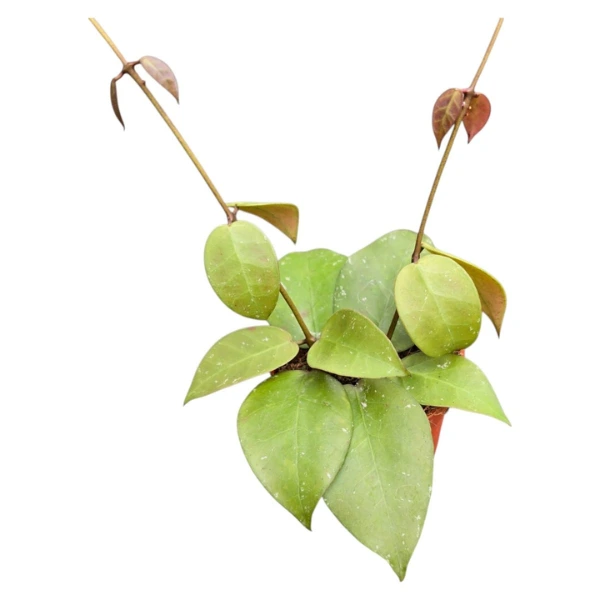
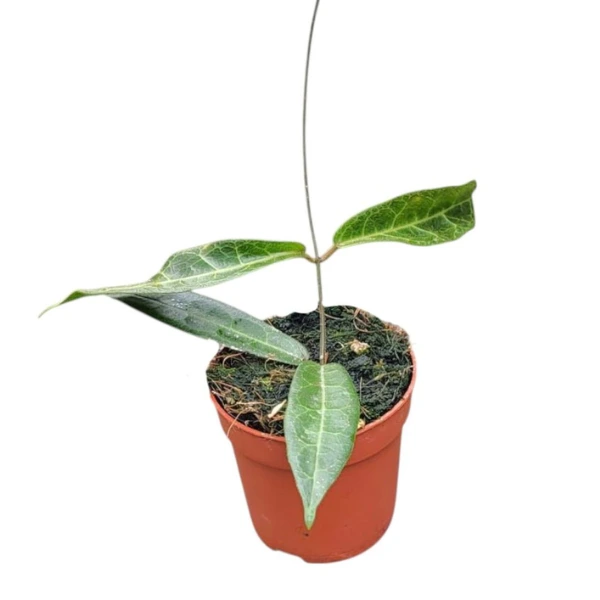
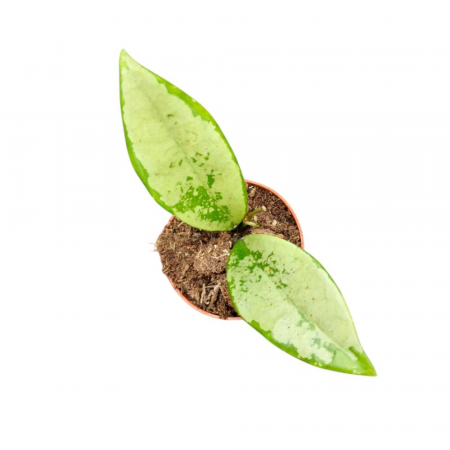
![Hoya sp. Malang – rare Javanese houseplant with oval leaves and purple-tinted new growth [0]](https://gomagcdn.ro/domains2/eufloria.ro/files/product/medium/hoya-sp-malang-d10-5cm-998439.png "Hoya sp. Malang – rare Javanese houseplant with oval leaves and purple-tinted new growth [0]")
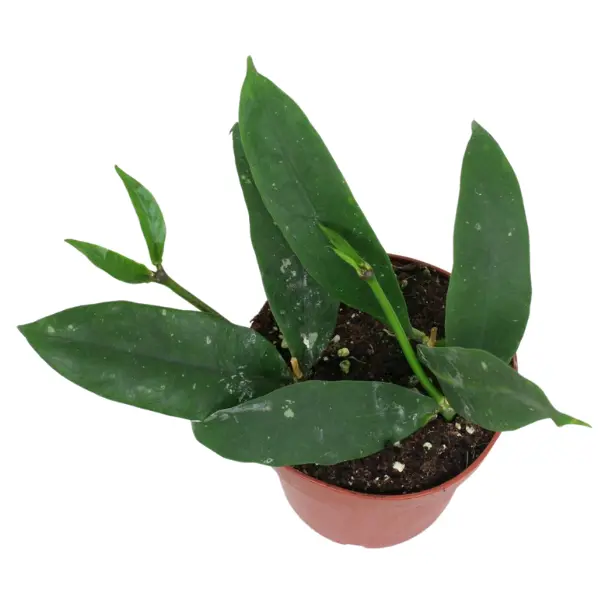
![Hoya sp. Malang – rare Javanese houseplant with oval leaves and purple-tinted new growth [1]](https://gomagcdn.ro/domains2/eufloria.ro/files/product/medium/hoya-sp-malang-d10-5cm-428297.png "Hoya sp. Malang – rare Javanese houseplant with oval leaves and purple-tinted new growth [1]")
![Hoya sp. Malang – rare Javanese houseplant with oval leaves and purple-tinted new growth [1]](https://gomagcdn.ro/domains2/eufloria.ro/files/product/original/hoya-sp-malang-d10-5cm-998439.png "Hoya sp. Malang – rare Javanese houseplant with oval leaves and purple-tinted new growth [1]")
![Hoya sp. Malang – rare Javanese houseplant with oval leaves and purple-tinted new growth [2]](https://gomagcdn.ro/domains2/eufloria.ro/files/product/original/hoya-sp-malang-d10-5cm-428297.png "Hoya sp. Malang – rare Javanese houseplant with oval leaves and purple-tinted new growth [2]")
Approx height (including pot): 15 cm
Flowering state: No flowers
Country of origin: Netherlands
Pot diameter: 10.5 cm
- Description
- Characteristics
- Reviews (0)
- FAQ
🌿 Hoya sp. Malang — The Unexplored Mystery of East Java’s Forests
In the fascinating world of Hoya collectors, there exists a special category of plants that bear, in place of a formal scientific name, only a geographic clue — an “sp.” followed by a locality, a tantalising promise that nature has created something so unique that taxonomy has not yet managed to give it an official name. Hoya sp. Malang belongs to this botanical elite — a scientifically undescribed species collected from the humid tropical forests near Malang city, in East Java Province, Indonesia. The fact that it lacks an official Latin binomial does not diminish its value — on the contrary, it lends an aura of mystery and exclusivity that makes it all the more coveted.
What makes Hoya sp. Malang a memorable plant is the combination of its compact habit, oval leaves with a fine and elegant texture, and most notably the purple-reddish accents that colour new growth, giving it an exotic and refined air. In a genus of over 500 species, each with its own personality, Hoya sp. Malang distinguishes itself through its elegant discretion — not a plant that imposes itself through size or loud colours, but one that reveals itself gradually, disclosing subtle details with each attentive glance.
Its origin in the montane forests of East Java, one of the most densely populated islands on Earth yet also a bastion of tropical biodiversity, adds a further layer of fascination. The forests around Malang, situated at the foot of active volcanoes such as Semeru and Arjuno, harbour a remarkably diverse epiphytic flora, and Hoya sp. Malang is one of the purest expressions of this unique ecosystem.
🌍 Origin and Botanical History
Hoya sp. Malang is a formally unidentified species collected from the tropical montane forests near Malang, a city in East Java (Java Timur) Province, Indonesia. Malang sits at an elevation of approximately 440–600 metres, at the foot of the Semeru-Tengger-Bromo volcanic massif, in a region receiving 1,500–2,500 mm of annual rainfall with average temperatures of 22–28°C. The humid tropical forests of this region are renowned for their extraordinary diversity of epiphytes, including orchids, ferns, and Hoya species.
The genus Hoya belongs to the family Apocynaceae, subfamily Asclepiadoideae, and currently numbers over 500 described species according to the World Checklist of Selected Plant Families at Kew Gardens. However, estimates suggest that a further 50–100 species await formal description, many known only under trade names linked to their collection locality. Hoya sp. Malang falls into this category — a real, distinct species that has not yet been published in a scientific journal with a valid binomial name.
East Java is recognised as a centre of diversity for the genus Hoya, with over 30 species documented on this island alone. The microclimatic conditions created by the varied elevation — from coastal plains to volcanic peaks above 3,000 m — permit the existence of distinct ecological niches, each harbouring its own adapted species. Hoya sp. Malang originates from the lower montane zone, an area characterised by frequent cloud cover, consistently high humidity, and moderate temperatures that never drop below 15°C.
🌱 The Foliage
The leaves of Hoya sp. Malang possess a discreet elegance that wins the appreciation of the attentive observer. Oval to elliptical in shape, they measure approximately 5–8 cm in length and 3–4 cm in width, with a semi-thick, waxy texture typical of succulent epiphytes in the Hoya genus. The predominant colour is a medium to deep green, with lightly visible veins forming a fine network across the leaf surface. The characteristic waxy coating covers the leaves, lending a satin-matte sheen that captures light in a subtle and pleasing manner.
The distinctive trait that makes this species a favourite among collectors is the purple-reddish accents appearing on new growth. Young leaves unfurl in a vinaceous hue, like young red wine, which gradually attenuates as the leaf matures, leaving behind only a subtle reddish reflex on the margins and dorsal surface. This anthocyanin pigmentation phenomenon is more pronounced when the plant receives bright indirect light, the chromo-intensification serving as a photoprotective response that doubles as spectacular natural ornamentation.
To the touch, the leaves are firm yet flexible, with a smooth, slightly cool surface — a sign of the succulent water-storage capacity. The margins are entire, slightly curved upward, creating a subtle concave profile that adds visual dimension. As the stems extend, the leaves are arranged oppositely at regular intervals, generating a harmonious visual rhythm that transforms each branch into a natural garland.
🌸 The Flowers
As a formally undescribed species, information about the flowers of Hoya sp. Malang comes primarily from observations by cultivators and collectors. The flowers appear in compact, rounded umbels of approximately 10–20 individual blooms, each bearing the classic five-pointed star shape coated in the translucent waxy layer that defines the entire Hoya genus. The colour ranges from creamy white to pale pink, with a slightly darker central corona, creating a delicate contrast.
The fragrance, though not as extensively documented as in described species, is reported as sweet and discreet, with floral notes that intensify in the evening hours — the nocturnal olfactory pattern typical of moth-pollinated Hoya species. Transparent nectar collects in fine droplets on the flower surface, glistening in light like tiny gemstones. The peduncles are persistent and produce flowers in repetitive cycles, becoming more productive with each season.
In indoor cultivation, flowering of Hoya sp. Malang requires patience and appropriate conditions. Most collectors report the first flowering after 3–5 years from rooting, when the plant has reached sufficient maturity and benefits from bright indirect light, a slightly snug pot, and a winter rest period with lower temperatures of 15–18°C and reduced watering.
🌱 Growth Habit and Care
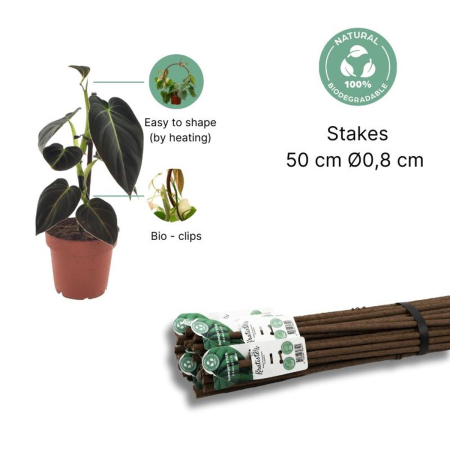
Hoya sp. Malang distinguishes itself through its relatively compact habit compared to many other Hoya species, making it particularly suited to smaller spaces. The stems are slender but vigorous, with short internodes that maintain a dense, full appearance. Growth rate is moderate — approximately 10–20 cm per year initially, with gradual acceleration as the root system establishes. At maturity, stems can reach 1.5–2.5 m, making it an excellent candidate for both hanging baskets and vertical support training.
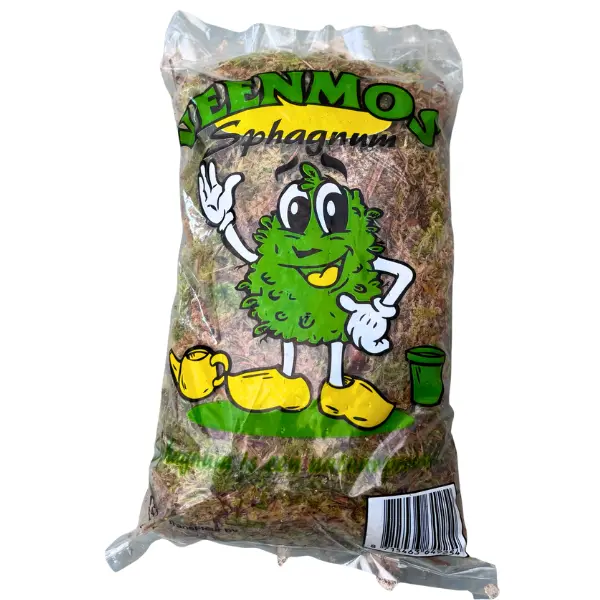
Aerial roots develop along the stems, an epiphytic adaptation that in cultivation can be exploited by mounting on sphagnum moss-covered supports. This method stimulates vigorous growth and keeps the plant naturally hydrated.
Care requirements are moderate, suitable for both experienced collectors and those with intermediate experience:
Like all Hoya plants, Hoya sp. Malang has a trailing habit, ideal for hanging pots, and is easy-care.
- Light: Bright to moderate indirect light. East or west window ideal. Strong light intensifies purple accents on young leaves.
- Temperature: 18–28°C optimally. Temporary tolerance to 15°C. Rest period at 15–18°C November–February stimulates flowering.
- Watering: Allow substrate to dry 70–80% between waterings. Summer: every 7–10 days; winter: every 2–3 weeks. Avoid waterlogging.
- Humidity: 50–70% optimal. Adapts to 40–50%. Mist leaves in summer.
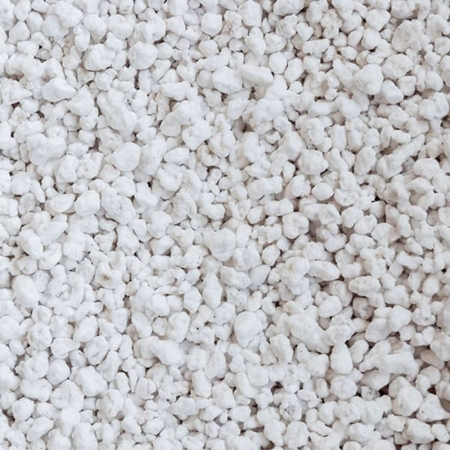
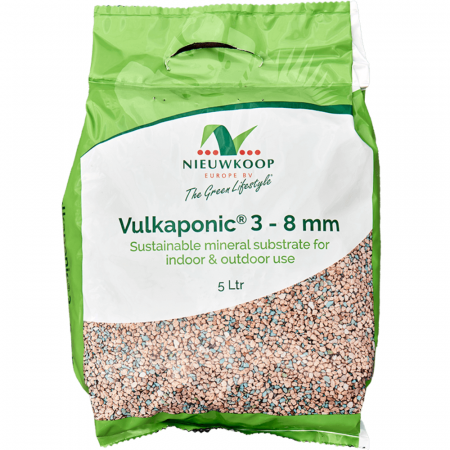
- Substrate: Aerated mix: 40% pine bark, 30% perlite, 20% coco coir, 10% activated charcoal. pH 5.5–6.5.
- Fertilising: NPK 10-10-10 diluted to half strength, monthly April–September. Phosphorus supplement (NPK 10-30-20) July–August to stimulate flowering.
- Propagation: Stem cuttings with 2–3 nodes, in water or moist perlite, at 22–26°C. Rooting in 4–6 weeks.
Lungime: 10.5 cm
Greutate (kg): 0.5 Kg
Denumire: Hoya
Diametru: 10.5 cm
Cerințe lumină: Strong, indirect light
Tip plantă: Decorative
Utilizare: Interior
Tip suport: Ghiveci
Material Suport: Plastic
Where does Hoya sp. Malang come from?
How do you water Hoya sp. Malang?
Is Hoya sp. Malang toxic to pets?
What light does Hoya sp. Malang need?
How is Hoya sp. Malang propagated?
Recommendations

Ai nevoie și de un ghiveci decorativ?