EN/
EN/ Romana
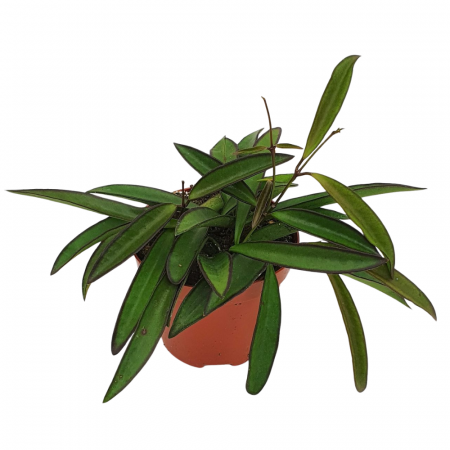
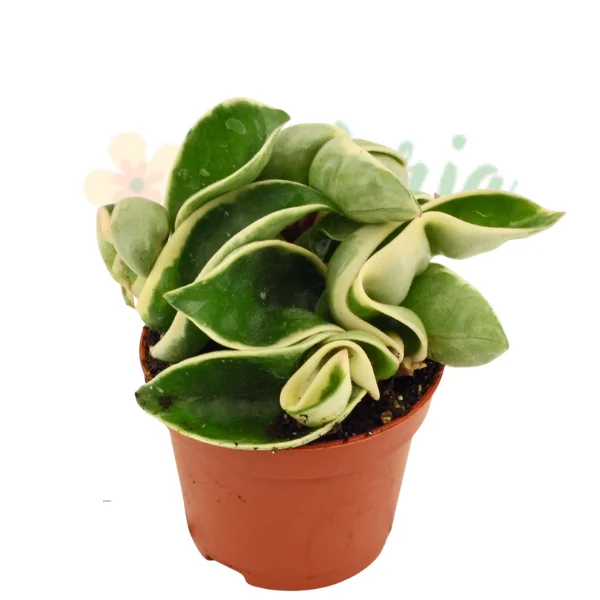
Hoya pubicalyx 'Black Dragon' Ø10,5cm
![Hoya pubicalyx 'Black Dragon' — Darkest Flowers in the Hoya Genus [0]](https://gomagcdn.ro/domains2/eufloria.ro/files/product/medium/hoya-pubicalyx-black-dragon-d10-5-146265.webp "Hoya pubicalyx 'Black Dragon' — Darkest Flowers in the Hoya Genus [0]")
![Hoya pubicalyx 'Black Dragon' — Darkest Flowers in the Hoya Genus [1]](https://gomagcdn.ro/domains2/eufloria.ro/files/product/medium/hoya-pubicalyx-black-dragon-d10-5-264818.webp "Hoya pubicalyx 'Black Dragon' — Darkest Flowers in the Hoya Genus [1]")
![Hoya pubicalyx 'Black Dragon' — Darkest Flowers in the Hoya Genus [2]](https://gomagcdn.ro/domains2/eufloria.ro/files/product/medium/hoya-pubicalyx-black-dragon-d10-5-651247.webp "Hoya pubicalyx 'Black Dragon' — Darkest Flowers in the Hoya Genus [2]")
![Hoya pubicalyx 'Black Dragon' — Darkest Flowers in the Hoya Genus [1]](https://gomagcdn.ro/domains2/eufloria.ro/files/product/original/hoya-pubicalyx-black-dragon-d10-5-146265.webp "Hoya pubicalyx 'Black Dragon' — Darkest Flowers in the Hoya Genus [1]")
![Hoya pubicalyx 'Black Dragon' — Darkest Flowers in the Hoya Genus [2]](https://gomagcdn.ro/domains2/eufloria.ro/files/product/original/hoya-pubicalyx-black-dragon-d10-5-264818.webp "Hoya pubicalyx 'Black Dragon' — Darkest Flowers in the Hoya Genus [2]")
![Hoya pubicalyx 'Black Dragon' — Darkest Flowers in the Hoya Genus [3]](https://gomagcdn.ro/domains2/eufloria.ro/files/product/original/hoya-pubicalyx-black-dragon-d10-5-651247.webp "Hoya pubicalyx 'Black Dragon' — Darkest Flowers in the Hoya Genus [3]")
Approx height (including pot): 15 cm
Flowering state: No flowers
Pot diameter: 10.5 cm
- Description
- Characteristics
- Reviews (0)
- FAQ
🐉 The Darkest Flowers in the Hoya Kingdom
Hoya pubicalyx 'Black Dragon' is a breathtaking cultivar that produces some of the darkest flowers in the entire Hoya genus — blooms so deeply pigmented they appear almost black. Discovered clinging to seaside cliffs on the western coast of Luzon Island in the Philippines, this wild-collected form has quickly become one of the most sought-after Hoyas among collectors who appreciate the dramatic and unusual. While most Hoya pubicalyx varieties offer flowers in shades of pink and red, the Black Dragon delivers something genuinely different: velvety, fuzzy star-shaped blooms in deep burgundy to near-black, with contrasting red centres that seem to glow against the dark petals. Add to this a sweet, intoxicating fragrance that intensifies at night, and you have a plant that rewards growers with one of the most memorable flowering experiences the genus has to offer.
🌏 Origins & Botanical History
The species Hoya pubicalyx was described by Elmer Drew Merrill in 1918, published in the Philippine Journal of Science. The species name comes from Latin pubi- (pubescent, hairy) and calyx (the sepals of the flower), referring to the distinctive fuzzy texture of the flower buds and calyx that characterises this species. Hoya pubicalyx is endemic to the Philippines, specifically Luzon Island, where it was first collected in Mauban, Quezon Province in 1913, growing on trees along streams in damp forests. The 'Black Dragon' form was discovered by George Mendoza of Forrest Treasures nursery in the Philippines, collected from wild populations growing along shoreline cliffs on the western part of Luzon Island. According to Mendoza, "The H. pubicalyx 'Black Dragon' is not a hybrid. It was collected along the shorelines hanging on a cliff in western part of Luzon Island." It was introduced to international cultivation around 2010 through SRQ Hoyas. Notably, it has a counterpart called 'White Dragon' which was later reclassified as a separate species, Hoya celata, by Dale Kloppenburg in 2012 — demonstrating how much botanical diversity remains to be discovered in the Philippines.
🍃 Foliage — Clean & Elegant
Unlike many Hoya pubicalyx varieties that display heavy silver flecking on their leaves, the Black Dragon is unusual in having foliage that is largely unmarked — clean, solid lime-green to deep green leaves without the characteristic silver splash patterns. This gives the plant an elegant, understated appearance that makes the dramatic dark flowers even more striking when they appear. The leaves are typical of the species: thick, fleshy, lanceolate (lance-shaped) to oblong-ovate, measuring approximately 8-15 cm long and 2.5-6 cm wide. They are glossy, leathery, and grow on twining vines that can reach several metres in length. New growth may emerge with reddish tones before maturing to green. The lack of silver flecking distinguishes this cultivar from varieties like 'Pink Silver', 'Red Buttons', or 'Royal Hawaiian Purple', making it immediately recognisable to experienced collectors.
🌸 Flowers — Almost Black & Sweetly Fragrant
The flowers are the Black Dragon's signature attraction. They are flat to slightly reflexed, star-shaped, and covered in the fine pubescent (fuzzy) hairs characteristic of the species — giving them a soft, velvety appearance. Individual flowers measure approximately 10-18 mm across and appear in rounded umbels of 20-40 blooms. The colour is what sets this cultivar apart: the corolla ranges from deep burgundy to dark crimson-purple to nearly black, depending on growing conditions and light levels. Vermont Hoyas notes that flowers can appear "really almost black" under good conditions, while Greenboog describes them as ranging "from deep burgundy to near black." The corona (central structure) is typically red to burgundy, creating a striking contrast. The fragrance is strong and sweet, described as "intoxicating" by Vermont Hoyas, and intensifies dramatically at night — a natural adaptation to attract nocturnal pollinators. Flowers typically appear from late spring through summer on mature plants, lasting approximately 1-2 weeks per umbel. As with all Hoyas, never remove the peduncles (flower stalks) after blooming, as the plant will produce new flowers from the same spurs.
🌿 Growth Habit & Development
Growth habit is vining and climbing. Stems are twining and will wrap around supports, or cascade attractively from hanging baskets. This is a fairly fast-growing Hoya that establishes readily and can reach 1.5-2 metres under cultivation, though wild plants can extend to 6 metres or more. Vermont Hoyas describes it as "a fantastic plant that blooms well" even under grow lights, making it more reliable for flowering than some other Hoyas. It is sometimes confused with the closely related Hoya carnosa, but can be distinguished by its narrower, more lanceolate leaves and the pubescent (hairy) flower buds. The World of Flowering Plants confirms it is "a fairly fast grower with blooms in the springtime." Cuttings root easily and plants can flower within 2-3 years of propagation under good conditions.
Care Requirements:
- Light: Bright, indirect light is ideal, with some direct sun beneficial for encouraging flowering and enhancing flower colour intensity. The darkness of the flowers can vary significantly based on light levels — plants receiving more light tend to produce darker blooms. A few hours of direct morning or late afternoon sun is beneficial. Avoid harsh midday sun, which can scorch leaves. This species will survive in lower light but will flower less and produce lighter-coloured blooms. Six hours of filtered light daily is considered optimal.
- Water: Allow the top 2-5 cm of substrate to dry between waterings, then water thoroughly. Hoya pubicalyx is more forgiving than many Hoyas and tolerates occasional inconsistency, but consistent overwatering will cause root rot. The thick, succulent leaves store water well, so the plant handles brief dry periods without issue. Reduce watering in winter when growth slows. North Carolina Extension notes this species is "drought tolerant" but sensitive to "wet soils."
- Soil: Well-draining, aerated substrate is essential. A chunky mix of orchid bark, perlite, and coco coir provides excellent drainage while retaining some moisture. Standard orchid mix works well. As an epiphyte, the roots need access to air — avoid dense, water-retentive soils. Some growers use pure coconut husk or semi-hydroponics successfully.
- Temperature: 16-29°C is the acceptable range, with optimal growth between 18-27°C. This species is notably cold-tolerant compared to many tropical Hoyas — it can handle temperatures down to 10°C briefly if dry, and even light frost for short periods according to some sources. However, prolonged cold will damage foliage. Protect from cold drafts and sudden temperature drops. Can be grown outdoors year-round in USDA zones 10a-11b.
- Humidity: 40-70% humidity is acceptable, with 60-70% being optimal. This species is adaptable and tolerates average household humidity reasonably well. Higher humidity encourages faster growth and more reliable flowering. Avoid direct misting of leaves; ambient humidity from a humidifier is preferable. Good air circulation prevents fungal issues.
- Feeding: Apply a balanced liquid fertilizer at half-strength monthly during the growing season (spring-summer). Some growers use a bloom-boosting fertilizer with higher phosphorus to encourage flowering. Do not overfeed — this species is a light feeder. Stop fertilizing in winter when the plant is semi-dormant.
Botanical Info: Family: Apocynaceae (subfamily Asclepiadoideae) | Genus: Hoya | Species: Hoya pubicalyx Merr. (1918) | Cultivar: 'Black Dragon' (wild-collected dark-flowered form) | Common Names: Black Dragon Wax Plant, Wax Plant, Porcelain Flower | Type: Epiphytic Climbing Vine | Native Range: Philippines (Luzon Island — western coastal cliffs) | Zone: USDA 10a-11b (indoor cultivation in temperate climates) | Flowering: Deep burgundy to near-black corolla with red corona, fuzzy/pubescent, 20-40 per umbel, strong sweet fragrance (intensifies at night), late spring-summer, 1-2 weeks per umbel | Growth Rate: Moderate to Fast
Lungime: 15 cm
Greutate (kg): 1 Kg
Denumire: Hoya
Diametru: 10.5 cm
Cerințe lumină: Partial umbra
Tip plantă: Decorative
Utilizare: Interior
Tip suport: Ghiveci
Material Suport: Plastic
What does Hoya pubicalyx 'Black Dragon' smell like?
The fragrance of Hoya pubicalyx 'Black Dragon' flowers is strong and sweet, with the scent intensifying dramatically at night. Vermont Hoyas describes it as "quite intoxicating." The evening fragrance is a natural adaptation to attract nocturnal pollinators in its native Philippine habitat. The scent has been compared to other sweet-flowered Hoyas, though descriptions vary among growers. The flowers may also produce visible nectar — a sweet, sticky substance that can drip from the blooms. Most growers find the fragrance pleasant and consider it one of the plant's attractions. Individual blooms last 1-2 weeks, with the fragrance present throughout the flowering period. If fragrance sensitivity is a concern, position the plant in a well-ventilated area during blooming.
Is Hoya pubicalyx 'Black Dragon' difficult to grow?
No — Hoya pubicalyx is widely considered one of the easiest Hoyas to grow, and the Black Dragon cultivar is no exception. Vermont Hoyas states: "Everyone should have at least one Hoya pubicalyx! Care is all basically the same — they are one of the easier Hoyas to grow and will do well anywhere." This species tolerates a range of light conditions, handles occasional inconsistent watering, is notably cold-tolerant for a tropical plant (down to 10°C briefly), and flowers reliably without extraordinary measures. It is an excellent choice for beginners to the Hoya genus, or for collectors who want something dramatic without the challenge of a finicky species. The main requirements are good drainage (to prevent root rot) and adequate light (for best flowering and flower colour).
What is the difference between Hoya pubicalyx 'Black Dragon' and other pubicalyx varieties?
Hoya pubicalyx has produced numerous cultivars with different flower colours and leaf patterns. The Black Dragon is distinguished by two main characteristics: its flowers are among the darkest in the species, ranging from deep burgundy to near-black (most other varieties produce pink, red, or purple flowers); and its leaves are largely unmarked lime-green without the heavy silver flecking seen in varieties like 'Pink Silver', 'Red Buttons', or 'Royal Hawaiian Purple'. Other notable varieties include 'Pink Dragon' (discovered alongside Black Dragon), 'Royal Hawaiian Purple' (variable flower colour, sometimes called 'Chimera'), and 'Red Buttons' (wine-red flowers). The 'White Dragon', originally thought to be a pubicalyx variety, has been reclassified as a separate species (Hoya celata). Care requirements are identical across all pubicalyx varieties.
Why aren't my Black Dragon flowers as dark as expected?
The darkness of Hoya pubicalyx 'Black Dragon' flowers varies significantly depending on growing conditions. Vermont Hoyas notes that their plant "bloomed under the relatively low light conditions of my grow tent so it is not nearly as black as the photo on the Forrest Treasures Website." The key factor is light intensity: plants receiving more bright, indirect light (and some direct sun) tend to produce darker, more intensely pigmented flowers. Plants in lower light will still bloom, but flowers may appear more burgundy than black. Temperature can also play a role — cooler night temperatures during bud development may enhance colour intensity. If your flowers are lighter than expected, try gradually increasing light exposure for future blooming cycles.
How do I get my Hoya pubicalyx 'Black Dragon' to bloom?
Hoya pubicalyx is one of the more reliable flowering species in the genus, and the Black Dragon cultivar maintains this reputation. Vermont Hoyas describes it as "a fantastic plant that blooms well." To encourage flowering: provide bright light — this is the most important factor, and plants receiving more light produce darker flowers; allow the plant to become somewhat root-bound, as Hoyas flower more prolifically when their roots are constrained; maintain consistent care without major environmental changes; ensure adequate warmth during growing season (18-27°C); and never remove old flower stalks (peduncles) as the plant will rebloom from the same spurs. Most plants flower within 2-3 years of propagation. Flowers typically appear from late spring through summer.
Is Hoya pubicalyx 'Black Dragon' toxic to cats and dogs?
No, Hoya pubicalyx 'Black Dragon' is not toxic to cats, dogs, or other household pets. The ASPCA confirms that Hoya plants are non-toxic to cats, dogs, and horses. North Carolina Extension specifically lists Hoya pubicalyx as "non-toxic for horses, non-toxic for dogs, non-toxic for cats." The genus does not contain compounds known to be poisonous to animals. As with any plant, eating large amounts of foliage might cause mild stomach upset simply because pets are not designed to digest plant material — but this is not a toxic reaction. The milky latex sap released when stems are cut can cause minor irritation but is not dangerous. This makes Hoya pubicalyx 'Black Dragon' an excellent choice for pet-friendly households.
How to care for Hoya?
Does Hoya bloom?
How often to water?
Toxic?
Propagation?
Recommendations