EN/
EN/ Romana
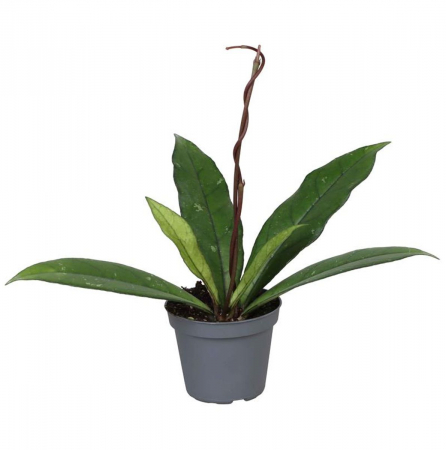
Hoya nabawanensis 'Splash' Ø7cm
![Hoya nabawanensis 'Splash' [0]](https://gomagcdn.ro/domains2/eufloria.ro/files/product/medium/hoya-nabawanensis-splash-d7-471237.webp "Hoya nabawanensis 'Splash' [0]")
![Hoya nabawanensis 'Splash' [1]](https://gomagcdn.ro/domains2/eufloria.ro/files/product/medium/hoya-nabawanensis-splash-d7-215878.webp "Hoya nabawanensis 'Splash' [1]")
![Hoya nabawanensis 'Splash' [2]](https://gomagcdn.ro/domains2/eufloria.ro/files/product/medium/hoya-nabawanensis-splash-d7-543578.webp "Hoya nabawanensis 'Splash' [2]")
![Hoya nabawanensis 'Splash' [3]](https://gomagcdn.ro/domains2/eufloria.ro/files/product/medium/hoya-nabawanensis-splash-d7-651810.webp "Hoya nabawanensis 'Splash' [3]")
![Hoya nabawanensis 'Splash' [1]](https://gomagcdn.ro/domains2/eufloria.ro/files/product/original/hoya-nabawanensis-splash-d7-471237.webp "Hoya nabawanensis 'Splash' [1]")
![Hoya nabawanensis 'Splash' [2]](https://gomagcdn.ro/domains2/eufloria.ro/files/product/original/hoya-nabawanensis-splash-d7-215878.webp "Hoya nabawanensis 'Splash' [2]")
![Hoya nabawanensis 'Splash' [3]](https://gomagcdn.ro/domains2/eufloria.ro/files/product/original/hoya-nabawanensis-splash-d7-543578.webp "Hoya nabawanensis 'Splash' [3]")
![Hoya nabawanensis 'Splash' [4]](https://gomagcdn.ro/domains2/eufloria.ro/files/product/original/hoya-nabawanensis-splash-d7-651810.webp "Hoya nabawanensis 'Splash' [4]")
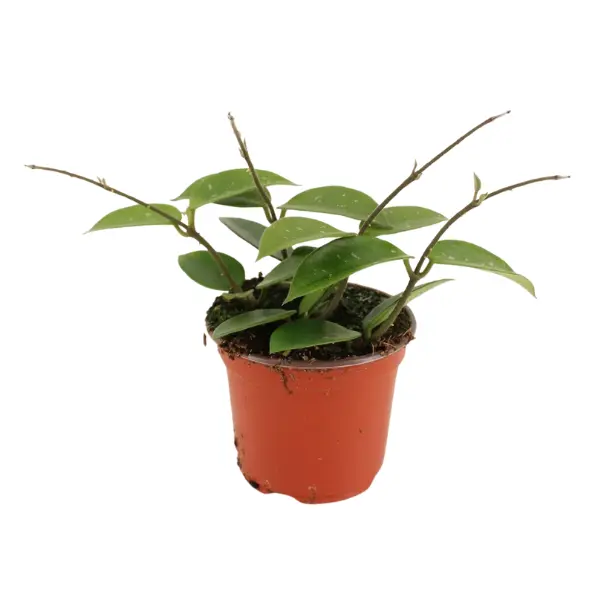
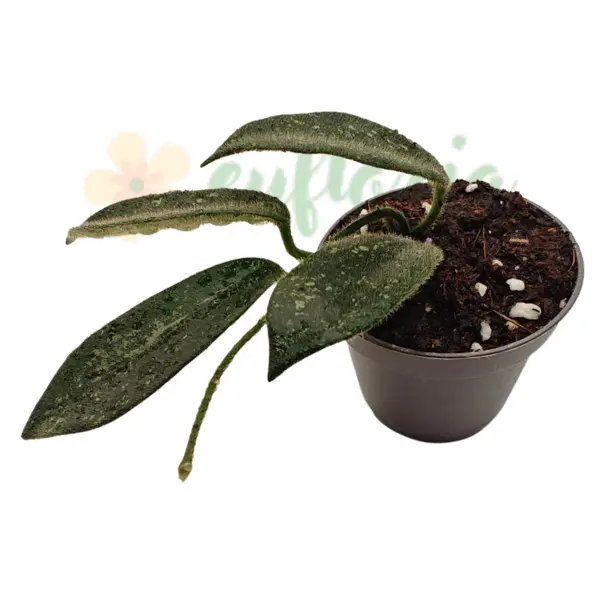
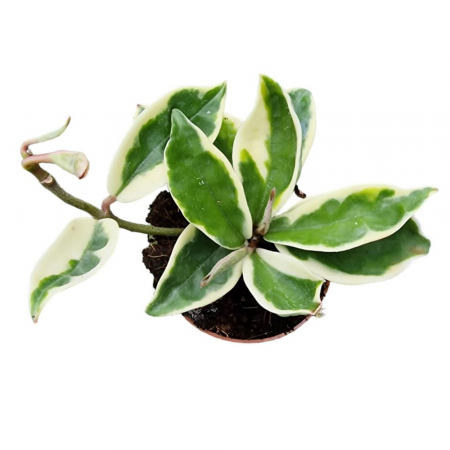
Hoya nabawanensis 'Splash' is a rare Borneo species with green leaves covered in glistening silver spots and fragrant cream-pink flowers. A climbing epiphytic plant, ideal for hanging pots or vertical supports.
Approx height (including pot): 15 cm
Flowering state: No flowers
Pot diameter: 7 cm
- Description
- Characteristics
- Reviews (0)
- FAQ
🌿 Hoya nabawanensis 'Splash' Characteristics
Hoya nabawanensis 'Splash' is a rare and spectacular species from the Hoya genus, family Apocynaceae, native to Sabah, Borneo (Malaysia). The species name derives from the Nabawan district in the interior of Sabah state, where it was first discovered. The 'Splash' cultivar is distinguished by the silver spots scattered across the leaf surface, creating an exceptionally attractive visual effect.
The leaves are oval to lanceolate, medium-sized, with a waxy, glossy texture. The dark green leaf background is covered with randomly distributed silver spots and flashes (splash), making each leaf unique. The intensity of the silver spots varies from leaf to leaf and can be influenced by the level of light received. Under more intense light, the spots become more prominent and brighter.
The flowers are typical of the Hoya genus: small, perfectly star-shaped, with a waxy texture. Petal colour ranges from cream to pale pink with a darker centre. The inflorescences appear in compact spherical umbels and emit a sweet, pleasant fragrance, more intense in the evening. The glistening nectar produced by the flowers adds an extra decorative element.
Growth is climbing, with flexible stems that develop vigorously. The plant can be grown on arch supports, trellises, or left to trail from hanging pots. Growth rate is moderate to good under optimal conditions, with new leaves appearing regularly throughout the warm season. With maturity, the plant produces increasingly more branches and inflorescences.
☀️ Light Requirements
Hoya nabawanensis 'Splash' requires bright indirect light to maintain its vibrant silver spots and to stimulate flowering. The ideal position is near an east- or west-facing window. The plant benefits from 2–3 hours of direct morning sun, which intensifies the silvery colouring of the leaves.
Under insufficient light, the silver spots become less visible, growth slows, and flowering becomes rare. Internodes elongate excessively. If you notice these signs, move the plant to a brighter location or supplement with grow lights.
Avoid intense direct midday sun which can burn the leaves. In summer, sheer curtains provide sufficient protection. Full-spectrum grow lights at 25–35 cm, 12–14 hours/day, are excellent in winter.
Rotate the pot every 2 weeks for even growth and equal light distribution across all leaves.
💧 Care and Watering
Water when the top 3–4 cm of substrate have dried completely, usually every 7–10 days in summer and 14–21 days in winter. As an epiphytic plant, Hoya nabawanensis does not tolerate permanently wet substrate. Excess water causes root rot, the main problem in Hoya cultivation.
Use room-temperature, preferably filtered water. Water slowly at the base, ensuring complete drainage. Never leave the pot in stagnant water.
Ideal atmospheric humidity is 60–80%. In dry environments, use a humidifier or pebble tray. High humidity contributes to healthy leaf development with intense silver spots.
Over-watering: yellow leaves, soft stems, unpleasant smell. Under-watering: wrinkled, soft leaves that recover after watering. It is better to water too little than too much.
🌡️ Temperature and Climate
Hoya nabawanensis prefers temperatures between 18°C and 28°C, with an optimum of 22–26°C. It tolerates temperatures up to 32°C with sufficient humidity and ventilation. Minimum tolerable temperature: 13–15°C. Frost is fatal. In Romania, cultivation is exclusively indoors.
Avoid cold draughts and proximity to radiators. A 3–5°C day/night difference stimulates flowering. In summer, the plant can be placed on a sheltered balcony when nights exceed 16°C.
Its origin in Borneo, where the climate is equatorial with consistent temperatures and high humidity, means this species appreciates stable environments without sudden temperature fluctuations.
🪴 Pot and Substrate
Airy, well-drained substrate: pine bark (30%), perlite (25%), coco peat (25%), sphagnum moss (20%). Pot with generous drainage holes, proportional to the roots. Terracotta is ideal for porosity, but plastic works well with adjusted watering.
Hoyas prefer to be slightly rootbound. Repot every 2–3 years in spring, with a pot 2 cm larger. Fertilise every 2 weeks April–September with balanced NPK diluted to half. NPK 10-30-20 stimulates flowering. Do not fertilise in winter.
Propagation: stem cuttings with 2–3 nodes in moist sphagnum, rooting in 4–8 weeks at 22–25°C. Main pests: mealybugs and mites, treated with neem oil. Regular leaf inspection prevents infestations.
Do not cut flower peduncles after blooming — they will produce new flowers in subsequent seasons. With proper care, Hoya nabawanensis 'Splash' will become a living jewel in your tropical plant collection, rewarding you with glistening silver leaves and unforgettable fragrant blooms.
Hoya nabawanensis 'Splash' is a plant that improves with age. Young specimens already display the silver splash pattern, but as the plant matures and produces increasingly larger leaves, the decorative effect becomes even more pronounced. Mature plants can develop leaves with silver spots covering up to 50–60% of the leaf surface, creating an almost metallic appearance in the right light.
The adaptability of this species to various growing conditions makes it suitable for both experienced collectors and plant lovers beginning their journey into the world of Hoyas. The plant responds well to consistent care and does not require extreme conditions to thrive. Even in ordinary apartments with decent light and moderate humidity, Hoya nabawanensis 'Splash' will develop beautifully and produce attractive silver leaves.
Combining with other Hoya species in vertical or hanging arrangements creates a remarkable visual effect. The contrast between the silver leaves of the 'Splash' cultivar and the plain green leaves of other species highlights the beauty of each plant. On a wall with multiple hanging pots, each containing a different Hoya species, you create a fascinating tropical vertical garden that becomes a conversation piece in any room.
Regular leaf cleaning with a soft damp cloth maintains the natural lustre of the silver spots and helps the plant photosynthesise efficiently. Avoid leaf shine products that can block pores. Regular inspection of leaves, especially on the undersides, allows early detection of any pest or disease problems, keeping the plant healthy and vibrant long-term.
Hoya nabawanensis is part of a group of Borneo species currently under botanical study, and the exact identification of forms and cultivars continues to be refined by specialists. This adds an element of mystery and fascination to collecting this plant, making it even more valuable for tropical botany enthusiasts. Its provenance from the pristine tropical forests of Sabah, a region renowned for its mega-biodiversity, underscores the importance of responsible conservation and cultivation of these rare species.
Lungime: 15 cm
Greutate (kg): 0.25 Kg
Denumire: Hoya
Diametru: 7 cm
Cerințe lumină: Partial umbra
Tip plantă: Decorative
Utilizare: Interior
Tip suport: Ghiveci
Material Suport: Plastic
What does splash mean on Hoya nabawanensis?
Is Hoya nabawanensis Splash rare?
What humidity does Hoya nabawanensis need?
When does Hoya nabawanensis bloom?
Can I keep the splash on cuttings?
Ai nevoie și de un ghiveci decorativ?