EN/
EN/ Romana
Hoya kerrii 'Variegata' D6
![Hoya kerrii 'Variegata' – Heart-Shaped Variegated Sweetheart Hoya [1]](https://gomagcdn.ro/domains2/eufloria.ro/files/product/original/hoya-kerrii-variegata-d6-510019.webp "Hoya kerrii 'Variegata' – Heart-Shaped Variegated Sweetheart Hoya [1]")
Approx height (including pot): 10 cm
Flowering state: No flowers
Pot diameter: 6 cm
- Description
- Characteristics
- Reviews (0)
- FAQ
💚 A Living Valentine – The Perfect Heart-Shaped Symbol of Love
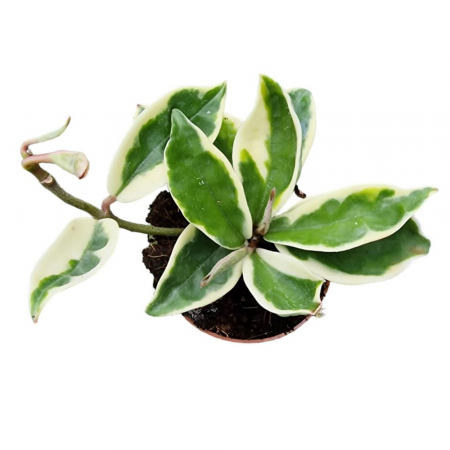
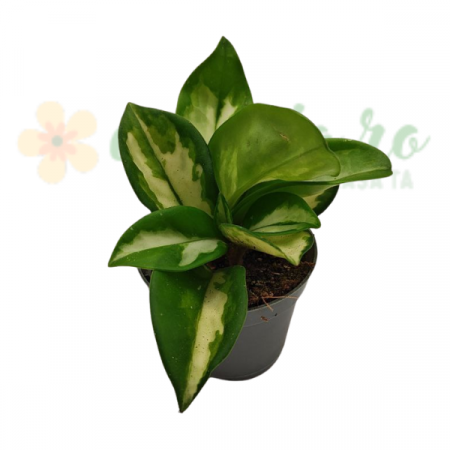
Hoya kerrii 'Variegata' in its single-leaf form is one of nature's most romantic creations – a perfect heart-shaped succulent leaf adorned with creamy white and yellow variegation that frames its deep green centre like a natural work of art. This charming little plant has become the ultimate botanical Valentine, a living symbol of affection that can survive for years with minimal care. Each thick, waxy leaf is a unique masterpiece, with variegation patterns that differ from plant to plant – some showing broad cream margins, others displaying splashes of yellow that seem to glow in bright light. It's small enough to fit on a desk, windowsill, or bedside table, yet meaningful enough to carry genuine emotional weight as a gift.
📌 Important Note About Single-Leaf Hoyas: This product is a single rooted leaf without a stem node. While it is a living plant that can survive for many years with proper care, it is important to understand that most single-leaf Hoya kerrii will not grow into a full vining plant. Without a stem node (the growth point from which new vines and leaves emerge), the leaf will likely remain as a single heart forever. This is not a defect – it is the nature of how these plants are propagated and sold. Some extremely rare exceptions exist where a tiny bit of stem tissue was accidentally included, and after several years, a vine may sprout – but this should not be expected. Please purchase this plant understanding and appreciating it for what it is: a beautiful, long-lived, heart-shaped living decoration.
🌍 Origins & Botanical History
Hoya kerrii was first collected in 1910 by Arthur Francis George Kerr, an Irish physician and botanist working in Southeast Asia. He discovered the species in the Doi Suthep mountains west of Chiang Mai in northern Thailand, at an altitude of approximately 390 metres. The plant was formally described and named by William Grant Craib in 1911, published in the Bulletin of Miscellaneous Information at Kew. The species name "kerrii" honours its collector. The genus name "Hoya" pays tribute to Thomas Hoy, an 18th-century English gardener who served as head gardener at Syon House. In its native habitat across Southeast Asia – including Thailand, Vietnam, Laos, Cambodia, Malaysia, southern China, and Java – Hoya kerrii grows as a climbing epiphyte in tropical rainforests, using aerial roots to cling to tree trunks and branches. The 'Variegata' form is a cultivated variety selected for its striking cream-margined leaves, which has become highly sought after by collectors for its ornamental beauty.
🍃 The Leaf – A Heart of Living Art
The single leaf of Hoya kerrii 'Variegata' is a botanical gem. It is thick, fleshy, and succulent-like – approximately 6 cm wide and 5 mm thick – with a distinctive heart shape (technically described as "obcordate" or inversely heart-shaped, with the point where the petiole attaches being the tip of the heart). The variegation consists of creamy white to butter yellow margins surrounding a deep green centre, creating beautiful contrast. The leaf surface has a waxy, glossy appearance that gives Hoyas their common name "wax plants." Variegation patterns vary from leaf to leaf – some show broad, clean cream edges, while others display more irregular splashing or mottling. In strong light, the yellow tones may intensify; in lower light, the variegation may become less pronounced. The leaf is remarkably durable and can survive for many years when properly cared for, maintaining its shape and colour with minimal intervention.
🌸 About Flowering – Managing Expectations
Mature Hoya kerrii vines produce exquisite clusters of 10-25 small, star-shaped flowers in pale pink to white, with a darker rose-purple corona centre. The flowers have a sweet fragrance and produce droplets of reddish-brown nectar. However, a single-leaf Hoya kerrii will never flower. Flowering requires a mature vining plant with multiple growth points and established root systems – none of which a single leaf possesses. If you dream of Hoya flowers, you will need to acquire a full plant with stems and nodes, not a single-leaf cutting. This single leaf is valued purely for its ornamental foliage and symbolic meaning, not for any future flowering potential.
🌱 Understanding Single-Leaf Growth (Or Lack Thereof)
This is perhaps the most important section to understand when purchasing a single-leaf Hoya kerrii. In nature, Hoya kerrii is a vigorous climbing vine that can reach 4 metres or more in length. New growth emerges from nodes – the points along the stem where leaves attach. When a single leaf is cut and rooted without any stem tissue containing a node, it can develop roots and survive – sometimes for many years – but it lacks the meristematic (growth-producing) tissue needed to create new vines or leaves. It will simply remain as that single heart-shaped leaf, unchanging. Very occasionally, nurseries accidentally include a tiny piece of stem with a dormant node when taking cuttings. In these rare cases, after years of patient waiting, a vine may eventually sprout from the base. But this is the exception, not the rule – perhaps 1 in 50 or fewer single leaves will ever grow. Please appreciate this plant for its beauty as-is, not for what it might become.
Care Requirements:
- Light: Bright, indirect light is essential for maintaining the beautiful variegation. Variegated plants need more light than their all-green counterparts because the white/cream portions contain little or no chlorophyll and cannot photosynthesize. An east-facing window with gentle morning sun is ideal. Too little light will cause the variegation to fade as the plant produces more chlorophyll to compensate; too much direct sun can scorch the leaves, causing brown patches. If you notice the leaf looking pale or washed out, it may be receiving too much light; if the variegation is fading toward green, it needs more light.
- Water: Allow the soil to dry out almost completely between waterings, then water thoroughly. The thick, succulent leaf stores water efficiently, making this plant quite drought-tolerant. Overwatering is the primary killer of Hoya kerrii – waterlogged soil leads to root rot, which will cause the leaf to turn yellow, become mushy at the base, and eventually die. During winter, reduce watering further as the plant's metabolic activity slows. A good rule: when in doubt, wait a few more days before watering.
- Soil: Fast-draining soil is essential. Use a cactus/succulent mix, or create your own by combining regular potting soil with generous additions of perlite and orchid bark (approximately 60% soil, 20% perlite, 20% bark). The roots need excellent aeration and quick drainage – remember, this is naturally an epiphyte that grows on trees, not in dense forest floor soil. Ensure your pot has drainage holes.
- Temperature: Prefers warm temperatures between 18-27°C. Being tropical, it dislikes cold – avoid temperatures below 10°C, which can cause cold damage. Keep away from cold drafts, air conditioning vents, and frosty windows in winter.
- Humidity: Originates from humid tropical rainforests, so appreciates moderate to high humidity (50-60% ideal). However, a single leaf is surprisingly tolerant of average household humidity. If your home is very dry, occasional misting or a nearby humidity tray can help, but this is not critical for survival.
- Feeding: Very light feeder. A single leaf has minimal nutritional needs since it isn't actively growing. You may apply a diluted balanced fertilizer once or twice during the growing season (spring-summer), but feeding is largely unnecessary and excessive fertilization can cause salt buildup that damages the roots.
Botanical Info: Family: Apocynaceae (subfamily Asclepiadoideae) | Genus: Hoya | Species: Hoya kerrii Craib (1911) | Cultivar: 'Variegata' (also sold as 'Albomarginata') | Common Names: Variegated Sweetheart Hoya, Variegated Valentine Hoya, Variegated Lucky Heart, Variegated Hoya Heart, Wax Heart | Type: Epiphytic Succulent-Leaved Vine (sold here as single rooted leaf) | Native Range: Southeast Asia – Thailand, Vietnam, Laos, Cambodia, Malaysia, southern China, Java | Zone: USDA 11a-11b (indoor cultivation in temperate climates) | Flowering: Not applicable for single-leaf form | Growth: Single leaf will likely not grow further
Lungime: 6 cm
Greutate (kg): 0.1 Kg
Denumire: Hoya
Diametru: 6 cm
Cerințe lumină: Partial umbra
Tip plantă: Decorative
Utilizare: Interior
Tip suport: Ghiveci
Material Suport: Plastic
Will my single-leaf Hoya kerrii 'Variegata' grow into a full plant?
Almost certainly not. This is the most important thing to understand when purchasing a single-leaf Hoya kerrii. The leaf has been rooted without a stem node – the growth point from which new vines and leaves would emerge. Without a node, the leaf can survive for many years but cannot produce new growth. It will remain as a single heart-shaped leaf indefinitely. Very occasionally (perhaps 1 in 50 or fewer), a nursery accidentally includes a tiny piece of stem with a dormant node, and after years of waiting, a vine may eventually sprout. But this is extremely rare and should never be expected. Please purchase this plant appreciating it for what it is – a beautiful, long-lived, heart-shaped living decoration – not for what it might become.
How long will my single-leaf Hoya kerrii 'Variegata' live?
With proper care, a single-leaf Hoya kerrii can survive for many years – some report keeping theirs alive for 5, 10, or even more years. The thick, succulent leaf is remarkably durable and stores water efficiently, making it resistant to neglect. However, it will not be as long-lived as a full vining Hoya plant, which can live for 30+ years. The key to longevity is avoiding overwatering (the number one killer), providing adequate bright indirect light, and using well-draining soil. Think of it as a very long-lived living decoration rather than a plant that will grow and change over time.
Why is my Hoya kerrii 'Variegata' losing its variegation?
Variegation in plants requires adequate light to maintain – the white and cream portions of the leaf contain little or no chlorophyll and cannot photosynthesize, so the plant depends on the green portions to produce energy. In low light conditions, the plant may respond by producing more chlorophyll, causing the variegation to fade toward green. To maintain strong variegation, provide bright indirect light – an east-facing window with morning sun is ideal. Avoid direct harsh afternoon sun, which can scorch the leaf, but don't place it in a dark corner either. If the variegation has already faded, unfortunately a single leaf cannot "recover" its pattern the way a growing plant might produce new variegated leaves.
Is Hoya kerrii 'Variegata' toxic to cats and dogs?
No, Hoya kerrii is generally considered non-toxic and safe for households with pets. The ASPCA does not list Hoya plants among their toxic species. In fact, in parts of Southeast Asia (particularly Thailand), the leaves of Hoya kerrii are traditionally eaten as an edible vegetable. While the milky latex sap produced when the leaf is damaged could potentially cause mild stomach upset if a pet ate a large amount, the plant is not considered dangerous. That said, it's always wise to discourage pets from chewing on houseplants – both for the pet's sake and to protect your plant from damage.
How often should I water my single-leaf Hoya kerrii 'Variegata'?
Allow the soil to dry out almost completely between waterings, then water thoroughly. For most indoor conditions, this means watering approximately every 2-3 weeks in spring/summer and once a month or less in winter. The thick, succulent leaf stores water efficiently, making overwatering a much greater danger than underwatering. Signs of overwatering include yellowing at the base of the leaf, soft or mushy texture, and eventually rotting. Signs of underwatering (less common) include wrinkling or slight puckering of the leaf. When in doubt, wait a few extra days before watering – this plant is far more tolerant of drought than excess moisture.
What's the difference between Hoya kerrii 'Variegata' and 'Reverse Variegata'?
The difference is the location of the variegation. Standard Hoya kerrii 'Variegata' (also called 'Albomarginata') has cream/white margins around the edges of the leaf with a green centre – this is the most common variegated form. 'Reverse Variegata' (also called 'Inner Variegata' or 'Splash') displays the opposite pattern: the variegation appears in the centre of the leaf with green margins around the edges. The reverse variegated form is generally considered rarer and may show pinkish hues in strong light. Both forms have identical care requirements and the same limitation regarding single-leaf growth. Both are beautiful – the choice comes down to personal preference for the variegation pattern.