EN/
EN/ Romana
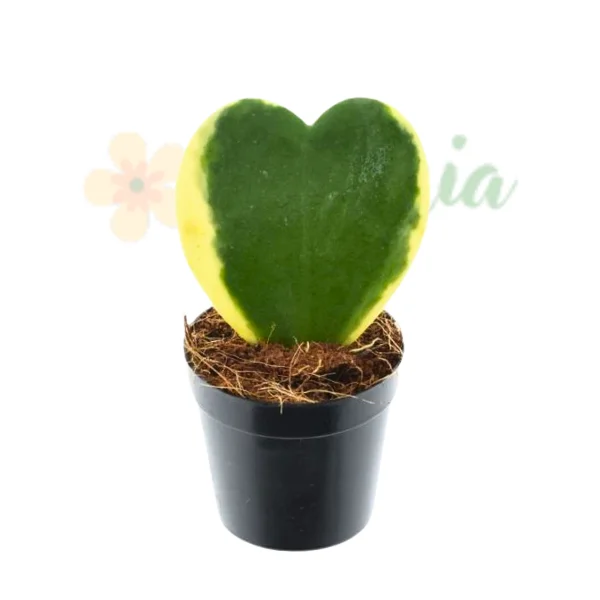
Hoya kerrii D6
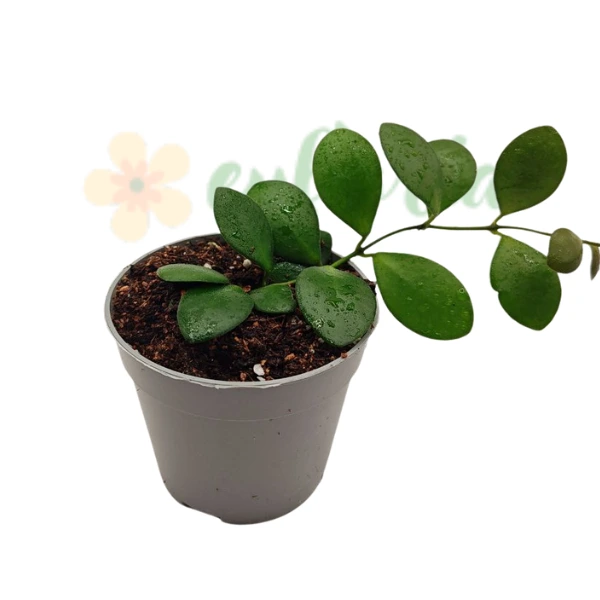
![Hoya kerrii 'Variegata' – Heart-Shaped Variegated Sweetheart Hoya [1]](https://gomagcdn.ro/domains2/eufloria.ro/files/product/original/hoya-kerrii-d6-120568.webp "Hoya kerrii 'Variegata' – Heart-Shaped Variegated Sweetheart Hoya [1]")
Approx height (including pot): 10 cm
Flowering state: No flowers
Pot diameter: 6 cm
- Description
- Characteristics
- Reviews (0)
- FAQ
💚 The Living Valentine – A Heart You Can Keep Forever
Hoya kerrii Single Leaf is nature's own Valentine – a perfectly heart-shaped succulent leaf that has become one of the most beloved symbolic plants in the world. Often called the "Sweetheart Hoya," "Valentine Hoya," or "Lucky Heart Plant," this charming botanical curiosity captures hearts with its unmistakable form: a single, thick, glossy leaf shaped like a perfect green heart, planted upright in a small pot like a living love letter. It has become a classic gift for Valentine's Day, anniversaries, and any occasion that calls for a meaningful symbol of affection. Unlike cut flowers that wilt within days, this little heart can live for years – even decades – with minimal care, making it a lasting token of love that grows more meaningful with time.
🌍 Origins & Botanical History
The species Hoya kerrii was first collected by Irish physician and botanist Arthur Francis George Kerr in 1910 or 1911, in the Doi Suthep mountains west of Chiang Mai in Northern Thailand, at an elevation of approximately 390 metres. The species was formally described and published by Scottish botanist William Grant Craib in 1911 in the Bulletin of Miscellaneous Information at the Royal Botanic Gardens, Kew, based on a specimen that flowered at Kew after Kerr's collection was transplanted there. The species name kerrii honours Kerr himself, who worked extensively as a plant collector across Southeast Asia during the early 20th century. Hoya kerrii is native to a broad region spanning southern China, Vietnam, Laos, Cambodia, Thailand, and the Indonesian island of Java, where it grows as an epiphytic vine climbing through tropical and semi-deciduous forests at elevations between 200 and 800 metres. In its natural habitat, it scrambles up tree trunks using aerial roots, seeking dappled light among the forest canopy. The species was once classified as a variety of Hoya obovata but is now recognised as a distinct species with close phylogenetic relationship to its former parent taxon.
🍃 Foliage – The Perfect Heart
The leaves of Hoya kerrii are the plant's defining feature and the reason for its enduring popularity. Each leaf is thick, fleshy, and distinctly succulent – measuring approximately 4-12 cm in length and 5-9.5 cm in width, with a thickness of around 5 mm. The shape is unmistakably heart-like: broadly obovate to orbicular, with a deeply notched apex that creates two rounded lobes forming the characteristic "heart" silhouette. The leaf surface is smooth, glossy, and bright green, with a subtle central vein. The petiole (leaf stalk) attaches to the pointed base of the heart, allowing the leaf to be planted upright with its romantic shape clearly displayed. The succulent nature of the leaves allows them to store water efficiently, contributing to the plant's remarkable resilience. Single-leaf specimens sold in small pots consist of just one rooted leaf – a cutting harvested without an attached stem node – which gives them their distinctive appearance as a "potted heart."
🌸 Flowers – A Reward for Patient Growers
Important Note: Single-leaf Hoya kerrii specimens typically do not flower. Flowering requires a mature vine with multiple leaves and stems – something a single rooted leaf cannot produce without a growth node (see "Growth Habit" below). However, for context, mature Hoya kerrii plants produce clusters of 10-25 small, waxy, star-shaped flowers in rounded umbels approximately 5 cm in diameter. The flowers feature a white to pale pink corolla with a velvety red to burgundy corona at the centre, creating a striking contrast. They produce copious amounts of reddish-brown nectar that can drip from the blooms. The fragrance is subtle to mild – notably less intense than many other Hoya species – sometimes described as faintly sweet or slightly honey-like, though some specimens produce little discernible scent. Mature vines typically bloom in summer after reaching at least 2-3 years of age. The flowers can last up to two weeks, and plants re-bloom from persistent peduncles.
🌿 Growth Habit & Development
⚠️ Important Information About Single-Leaf Hoya kerrii:
A single rooted leaf of Hoya kerrii will not develop into a full plant with vines, additional leaves, or flowers unless a portion of stem with a growth node was included when the cutting was taken. This is a crucial point that many buyers do not realise until after purchase. Unlike some succulents (such as Echeverias) that can regenerate entire plants from leaf cuttings, Hoyas require meristematic tissue from the stem – specifically a node – to produce new growth. A leaf without a node can root successfully and survive for many years, but it lacks the cellular material needed to generate new shoots.
In rare cases – perhaps 1 in 10 or fewer – a single leaf may have been cut with a tiny sliver of stem tissue attached to the petiole. If so, it may eventually produce a shoot after several years. But in the vast majority of cases, a single-leaf Hoya kerrii will remain exactly as purchased: a single beautiful heart-shaped leaf that lives on but never grows larger or produces companions.
This is not a defect – it is simply the botanical reality of the plant. For buyers who want a growing vine, a stem cutting with nodes is required. For buyers who appreciate a charming, living symbol that requires almost no care and lasts for years, the single-leaf form is perfect.
When grown as a full vine (from stem cuttings with nodes), Hoya kerrii is a slow-growing epiphytic climber that can eventually reach 4 metres in length. Stems are slender but sturdy, approximately 7 mm in diameter, and produce pairs of heart-shaped leaves at regular intervals. The plant climbs using aerial roots that attach to supports. Growth is notably slow – among the slowest of commonly cultivated Hoyas – and patience is required. However, the single-leaf specimens sold as "Sweetheart Plants" represent a static form that will not develop further without the necessary stem tissue.
Care Requirements:
- Light: Bright, indirect light is ideal. Hoya kerrii tolerates a range of light conditions better than many houseplants – from moderate light to some direct morning sun. However, intense midday sun can scorch or bleach the leaves, particularly in hot climates. A bright windowsill with filtered light is perfect. In very low light, the leaf will survive but may gradually lose vibrancy. Single-leaf specimens are remarkably tolerant of varied light conditions due to their succulent nature.
- Water: Water sparingly – allow the soil to dry out completely between waterings. The thick, succulent leaf stores water efficiently, making Hoya kerrii extremely drought-tolerant. Overwatering is the most common cause of death for this plant; waterlogged soil leads to root rot. Water thoroughly when the soil is completely dry, then wait. In winter, reduce watering further – once every 3-4 weeks may be sufficient. Use room-temperature water and avoid letting the pot sit in water.
- Soil: Fast-draining, aerated substrate is essential. A cactus and succulent mix works well, or create a custom blend of orchid bark, perlite, and coco coir. The roots must not sit in moisture. Standard potting soil retains too much water for this epiphytic species. Some growers successfully use LECA (semi-hydroponics) with appropriate nutrient management.
- Temperature: 18-27°C (65-80°F) is the ideal range. This tropical species does not tolerate cold – avoid temperatures below 10°C (50°F), which can cause cold damage. Protect from cold drafts, air conditioning vents, and frosty windows in winter. Consistent warmth supports health and, for vining specimens, encourages eventual flowering.
- Humidity: Average household humidity (40-60%) is perfectly adequate. Hoya kerrii is more tolerant of dry conditions than many tropical plants due to its succulent leaves. Higher humidity (60-80%) can support faster growth in vining specimens but is not necessary for single-leaf plants. Avoid misting directly, which can leave water spots.
- Feeding: Minimal feeding is required for single-leaf specimens – once or twice per year with a dilute, balanced fertilizer is sufficient. Vining plants can be fed monthly during the growing season (spring-summer) with a balanced liquid fertilizer at half strength. Avoid overfertilising, which can cause salt buildup and root damage.
Botanical Info: Family: Apocynaceae (subfamily Asclepiadoideae) | Genus: Hoya | Species: Hoya kerrii Craib (1911) | Synonym: Hoya obovata var. kerrii (Craib) Costantin (1912) | Common Names: Sweetheart Hoya, Sweetheart Plant, Valentine Hoya, Lucky Heart Plant, Wax Hearts, Heart Leaf Hoya | Type: Epiphytic Climbing Vine (full plant) / Rooted Leaf Cutting (single-leaf form) | Native Range: Southern China, Vietnam, Laos, Cambodia, Thailand, Java (Indonesia) | Elevation: 200-800 m in native habitat | Zone: USDA 10-12 (indoor cultivation in temperate climates) | Flowering: White to pale pink with red/burgundy corona, 10-25 flowers per umbel, mild fragrance, summer (mature vines only) | Growth Rate: Very Slow
Lungime: 6 cm
Greutate (kg): 0.1 Kg
Denumire: Hoya
Diametru: 6 cm
Cerințe lumină: Partial umbra
Tip plantă: Decorative
Utilizare: Interior
Tip suport: Ghiveci
Material Suport: Plastic
Will my single-leaf Hoya kerrii grow into a full plant?
Almost certainly not. This is the most important thing to understand when purchasing a single-leaf Hoya kerrii. The leaf has been rooted without a stem node – the growth point from which new vines and leaves would emerge. Without a node, the leaf can survive for many years but cannot produce new growth. It will remain as a single heart-shaped leaf indefinitely. Very occasionally (perhaps 1 in 50 or fewer), a nursery accidentally includes a tiny piece of stem with a dormant node, and after years of waiting, a vine may eventually sprout. But this is extremely rare and should never be expected. Please purchase this plant appreciating it for what it is – a beautiful, long-lived, heart-shaped living decoration – not for what it might become.
How long will my single-leaf Hoya kerrii live?
With proper care, a single-leaf Hoya kerrii can survive for many years – some report keeping theirs alive for 5, 10, or even more years. The thick, succulent leaf is remarkably durable and stores water efficiently, making it resistant to neglect. However, it will not be as long-lived as a full vining Hoya plant, which can live for 30+ years. The key to longevity is avoiding overwatering (the number one killer), providing adequate bright indirect light, and using well-draining soil. Think of it as a very long-lived living decoration rather than a plant that will grow and change over time.
Why is my Hoya kerrii leaf turning yellow or soft?
Yellowing or softness in a Hoya kerrii leaf is almost always a sign of overwatering or root rot. The thick, succulent leaf is designed to store water, and too much moisture causes the tissue to break down. Check the soil – if it is constantly wet or waterlogged, you are watering too frequently. Remove the plant from its pot and inspect the roots: healthy roots are white or tan; rotted roots are brown, black, or mushy. If rot has set in, allow the plant to dry out completely, trim any dead roots, and repot in fresh, fast-draining soil. Water much less frequently going forward. Yellow leaves can also result from excessive direct sun (sunburn) or extreme cold exposure. Adjust placement accordingly.
Is Hoya kerrii 'Variegata' toxic to cats and dogs?
No, Hoya kerrii is generally considered non-toxic and safe for households with pets. The ASPCA does not list Hoya plants among their toxic species. In fact, in parts of Southeast Asia (particularly Thailand), the leaves of Hoya kerrii are traditionally eaten as an edible vegetable. While the milky latex sap produced when the leaf is damaged could potentially cause mild stomach upset if a pet ate a large amount, the plant is not considered dangerous. That said, it's always wise to discourage pets from chewing on houseplants – both for the pet's sake and to protect your plant from damage.
How often should I water my single-leaf Hoya kerrii?
Allow the soil to dry out almost completely between waterings, then water thoroughly. For most indoor conditions, this means watering approximately every 2-3 weeks in spring/summer and once a month or less in winter. The thick, succulent leaf stores water efficiently, making overwatering a much greater danger than underwatering. Signs of overwatering include yellowing at the base of the leaf, soft or mushy texture, and eventually rotting. Signs of underwatering (less common) include wrinkling or slight puckering of the leaf. When in doubt, wait a few extra days before watering – this plant is far more tolerant of drought than excess moisture.
Can a Hoya kerrii single leaf flower?
No – a single rooted leaf without a stem node cannot produce flowers. Hoya kerrii flowers develop on mature vines that have multiple leaves and established peduncles (flower stalks). Since a single leaf lacks the stem tissue necessary to generate new growth, it cannot develop the structure required for flowering. If you want to experience Hoya kerrii blooms – clusters of fuzzy, star-shaped white-and-pink flowers with a subtle fragrance – you will need to grow a vining plant from a stem cutting with nodes. Mature vines typically flower in summer after reaching at least 2-3 years of age and when slightly root-bound. The single-leaf form, while charming, is a static ornament rather than a developing plant.
Recommendations