EN/
EN/ Romana
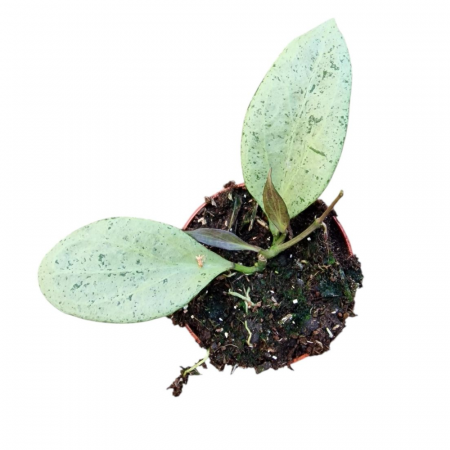
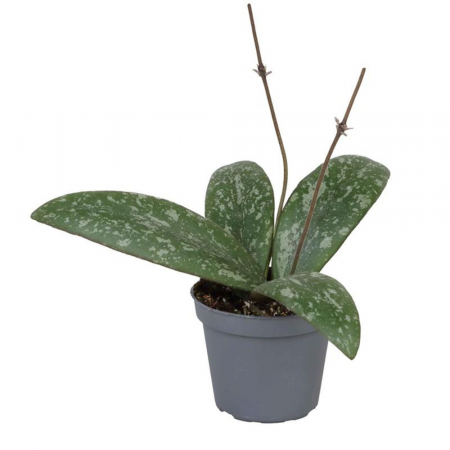
Hoya bella 'Lida Buis' Ø12cm
![Hoya bella Lida Buis - epiphytic indoor plant with fragrant white flowers [1]](https://gomagcdn.ro/domains2/eufloria.ro/files/product/original/hoya-bella-lida-buis-d12cm-701473.jpg "Hoya bella Lida Buis - epiphytic indoor plant with fragrant white flowers [1]")
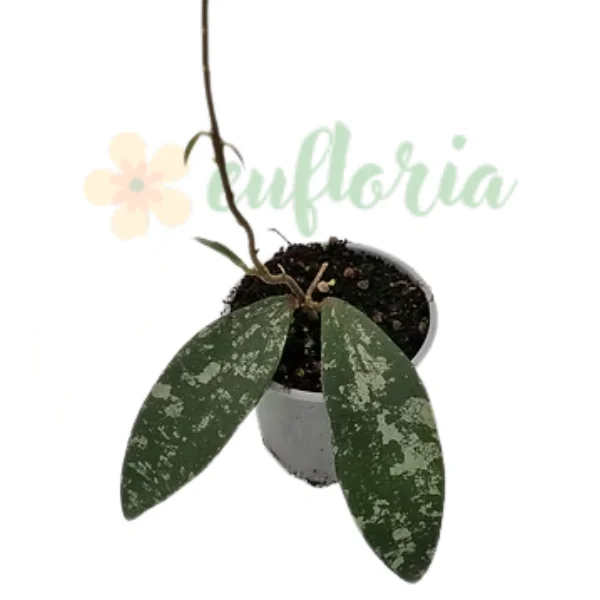
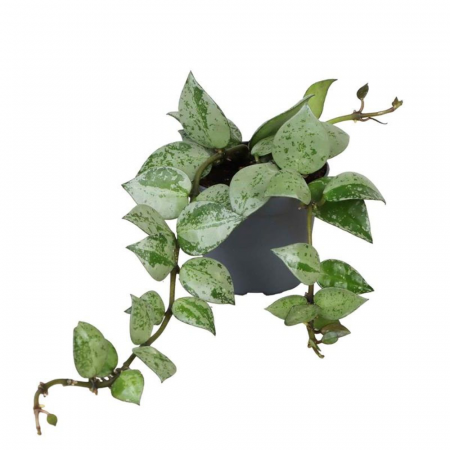
Hoya bella ‘Lida Buis’ is a rare and refined cultivar from the Apocynaceae family, prized for its compact, waxy foliage in silvery green and its perfect star-shaped flowers, white with pink-magenta centres, that emit a delicate fragrance of honey and vanilla. An epiphytic trailing plant, perfect for hanging baskets.
Note: Product images are for guidance only. Due to different batches of imported products, there may be differences between the images on the website and the actual appearance of the products.
Approx height (including pot): 15 cm
Flowering state: No flowers
- Description
- Characteristics
- Reviews (0)
- FAQ
🌿 A botanical jewel with a Dutch soul
Hoya bella ‘Lida Buis’ is one of the most enchanting forms of Hoya lanceolata subsp. bella, a cultivar dedicated to the memory of Lida Buis, a passionate Dutch tropical plant collector who significantly contributed to popularizing the Hoya genus in Europe. This small, compact plant is a true botanical jewel, capable of transforming any corner of the home into an exotic retreat. With its delicate, waxy, slightly silvery foliage and impeccable flowers, Hoya bella ‘Lida Buis’ captivates admirers through its discreet elegance and the subtle fragrance that fills the room on summer evenings.
Unlike other cultivars of the bella species, ‘Lida Buis’ distinguishes itself through slightly more pronounced vigour and more compact leaves with a particularly pleasant waxy texture. It is a plant that rewards your patience — once acclimated, it becomes a faithful and generous presence, offering year after year its fragrant umbels of white flowers with pink centres. Each flower is a miniature work of art, with petals symmetrically arranged like a perfect star, covered in a fine waxy film that gives them their characteristic lustre.
This Hoya is the ideal choice for those seeking a houseplant with personality, easy to care for yet with remarkable visual impact. Whether you let it cascade freely from a hanging basket or guide it on a small support, Hoya bella ‘Lida Buis’ will quickly become the focal point of your plant collection.
🌍 Origin and Botanical History
Hoya bella was first described by Joseph Dalton Hooker in 1848, based on specimens collected from the Khasia region of north-eastern India (present-day Meghalaya state). Initially classified as a distinct species, it was later reclassified by taxonomists as a subspecies of Hoya lanceolata, becoming Hoya lanceolata subsp. bella. However, in the horticultural world and among collectors, the name Hoya bella remains the most commonly used.
The species’ natural distribution extends from north-eastern India, through Myanmar and Thailand, to south-western China, where it grows as an epiphyte on tree trunks and branches in humid tropical forests, at altitudes between 300 and 1,200 metres. In its natural habitat, the plant develops in filtered light conditions beneath the dense forest canopy, benefiting from high humidity and moderate temperatures throughout the year.
The ‘Lida Buis’ cultivar emerged in the Dutch horticultural landscape as a tribute to the passion and dedication of a woman who contributed to spreading these wonderful plants among European collections. Selected for its superior ornamental qualities and adaptability to indoor growing conditions, this cultivar quickly gained the appreciation of collectors worldwide.
🌱 The Foliage
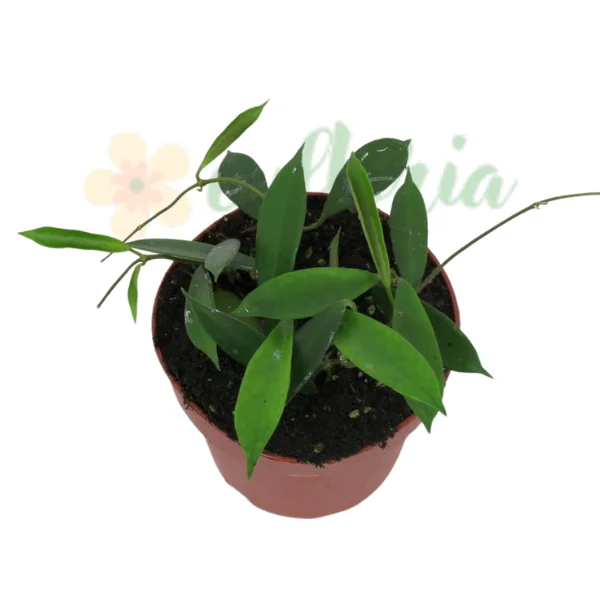
The leaves of Hoya bella ‘Lida Buis’ are of a delicate beauty, measuring approximately 2–3 cm in length and 1–1.5 cm in width. Their shape is ovate-lanceolate, with a slightly pointed tip and rounded base, arranged oppositely on thin but surprisingly resilient stems. Their texture is one of the most pleasant in the entire Hoya genus — each leaf is covered with a fine layer of natural wax that gives it a satiny, almost metallic sheen when light strikes it at the right angle.
The foliage colour is medium to dark green, with a subtle silvery hue that becomes more apparent on young leaves. The central vein is visible and slightly prominent, creating a delicate relief on the leaf surface. As leaves mature, they become thicker and waxier, developing remarkable resistance to desiccation. This compact, dense foliage makes the plant an excellent choice for small spaces or hanging baskets where the cascade of branches with gleaming leaves creates a spectacular visual effect.
🌸 The Flowers
The flowers are, without doubt, the most precious asset of Hoya bella ‘Lida Buis’. Clustered in pendulous umbels of 7–10 flowers, they appear on short peduncles that form at the nodes of mature stems. Each individual flower measures approximately 1–1.5 cm in diameter and displays the classic five-petalled star shape characteristic of the Hoya genus.
The petals are pure white, slightly reflexed and covered in a waxy texture that gives them an almost artificial appearance in their beauty. The central crown, or paracorolla, is a delicate pink-magenta, contrasting superbly with the white petals and creating a mesmerizing visual effect. The flower fragrance is sweet and subtle, with notes of honey and vanilla, intensifying during the evening and night hours when the plant attempts to attract nocturnal pollinators from its natural habitat.
Under optimal growing conditions, Hoya bella ‘Lida Buis’ can bloom multiple times per year, especially during May–September. Floral peduncles should not be removed after flowers fade, as the plant will produce new umbels on the same peduncles in subsequent seasons. A mature, well-cared-for plant can develop several umbels simultaneously, transforming it into a true floral spectacle.
🌱 Growth Habit and Development
Hoya bella ‘Lida Buis’ has a naturally trailing habit, with thin and flexible stems that arch elegantly under the weight of the foliage. Growth rate is moderate, with the plant adding 15–25 cm of new growth annually under optimal conditions. Unlike other Hoya species that can become imposing, bella remains compact and easy to manage, making it perfect for limited spaces.
The plant is excellently suited for hanging baskets, where its branches can cascade freely, but it can also be guided on a small trellis or ring support. Branching occurs naturally at nodes, creating over time a dense and lush plant with a full, generous appearance.
- Light: Bright indirect light; tolerates medium light but blooms more abundantly with good light. Avoid intense direct sun which can scorch the delicate leaves.
- Temperature: 18–26°C optimal. Minimum tolerated is 12°C. Prefers consistent temperatures without sudden fluctuations.
- Watering: Allow the substrate to dry slightly between waterings. Water moderately in summer (every 5–7 days) and reduce in winter (every 10–14 days). Avoid water stagnation in the saucer.
- Humidity: 50–70% ideal. Adapts to normal household humidity but appreciates occasional misting.
- Substrate: Light, well-draining — a mix of peat, perlite and pine bark in equal proportions. A specialised epiphyte or orchid mix is ideal.
- Fertilizing: Liquid fertilizer for flowering plants, diluted to half strength, twice monthly during the growing season (April–September).
- Propagation: Through stem cuttings with 2–3 nodes, in water or moist substrate, during the warm season. Rooting takes 3–6 weeks.
Lungime: 12 cm
Greutate (kg): 1 Kg
Denumire: Hoya
Diametru: 12 cm
Cerințe lumină: Strong, indirect light
Tip plantă: Decorative
Utilizare: Interior
Tip suport: Ghiveci
Material Suport: Plastic
How often should I water Hoya bella 'Lida Buis'?
Hoya bella ‘Lida Buis’ prefers to dry out slightly between waterings. Water approximately once every 7–10 days during the warm season and every 14–21 days in winter. Always check the top 2–3 cm of substrate — if dry, it is time to water. Overwatering is the main cause of problems with this species.
Is Hoya bella 'Lida Buis' toxic to pets?
No, Hoya bella ‘Lida Buis’ is considered non-toxic to dogs, cats and other pets. The Hoya genus does not contain dangerous substances. However, it is recommended to avoid leaf ingestion, as any plant may cause mild digestive discomfort if consumed in large quantities.
What is the best substrate for Hoya bella 'Lida Buis'?
Hoya bella ‘Lida Buis’ requires a very well-draining and aerated substrate. An ideal mix contains pine bark (40%), perlite (30%) and peat or coco coir (30%). The substrate must allow the roots to breathe and not retain excess water, as the epiphytic roots of this species are sensitive to rot.
When does Hoya bella 'Lida Buis' bloom indoors?
Hoya bella ‘Lida Buis’ can bloom indoors usually between spring and summer (May–August), after the plant has reached maturity (typically after 2–3 years). The flowers are small, white with a pink-purple centre, clustered in fragrant umbels. To encourage blooming, provide bright indirect light and a winter rest period with reduced watering.
How do I propagate Hoya bella 'Lida Buis'?
Hoya bella ‘Lida Buis’ is most easily propagated by stem cuttings. Cut a stem section of 8–12 cm with at least 2–3 nodes and a few leaves. Let the cut dry for 1–2 hours, then place the cutting in moist sphagnum moss or perlite. Maintain high humidity and a temperature of 22–26°C. Rooting typically takes 3–6 weeks.
Ai nevoie și de un ghiveci decorativ?