EN/
EN/ Romana
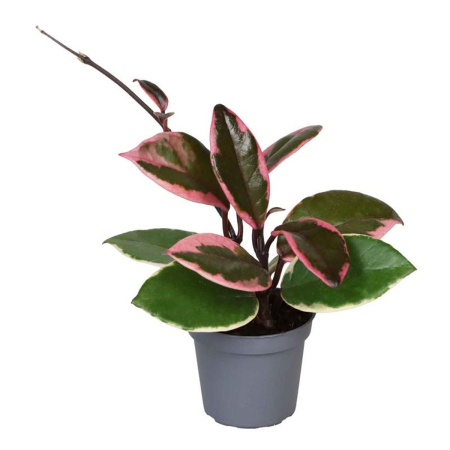
Hoya australis ssp. tenuipes Ø12cm
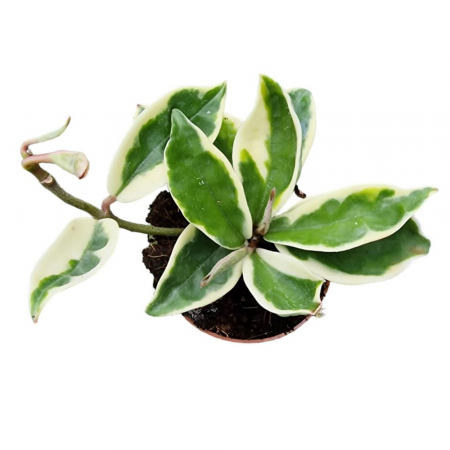
![Hoya australis ssp. tenuipes — vigorous subspecies with thin vining stems and glossy green oval-lanceolate leaves, umbels of fragrant waxy white flowers with red centers [0]](https://gomagcdn.ro/domains2/eufloria.ro/files/product/medium/944496.png "Hoya australis ssp. tenuipes — vigorous subspecies with thin vining stems and glossy green oval-lanceolate leaves, umbels of fragrant waxy white flowers with red centers [0]")
![Hoya australis ssp. tenuipes — vigorous subspecies with thin vining stems and glossy green oval-lanceolate leaves, umbels of fragrant waxy white flowers with red centers [1]](https://gomagcdn.ro/domains2/eufloria.ro/files/product/medium/424538.png "Hoya australis ssp. tenuipes — vigorous subspecies with thin vining stems and glossy green oval-lanceolate leaves, umbels of fragrant waxy white flowers with red centers [1]")
![Hoya australis ssp. tenuipes — vigorous subspecies with thin vining stems and glossy green oval-lanceolate leaves, umbels of fragrant waxy white flowers with red centers [1]](https://gomagcdn.ro/domains2/eufloria.ro/files/product/original/944496.png "Hoya australis ssp. tenuipes — vigorous subspecies with thin vining stems and glossy green oval-lanceolate leaves, umbels of fragrant waxy white flowers with red centers [1]")
![Hoya australis ssp. tenuipes — vigorous subspecies with thin vining stems and glossy green oval-lanceolate leaves, umbels of fragrant waxy white flowers with red centers [2]](https://gomagcdn.ro/domains2/eufloria.ro/files/product/original/424538.png "Hoya australis ssp. tenuipes — vigorous subspecies with thin vining stems and glossy green oval-lanceolate leaves, umbels of fragrant waxy white flowers with red centers [2]")
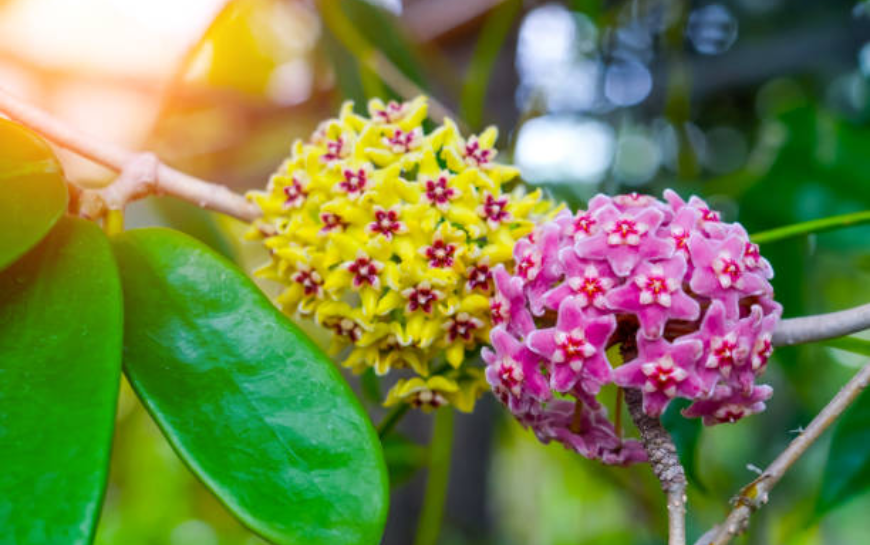
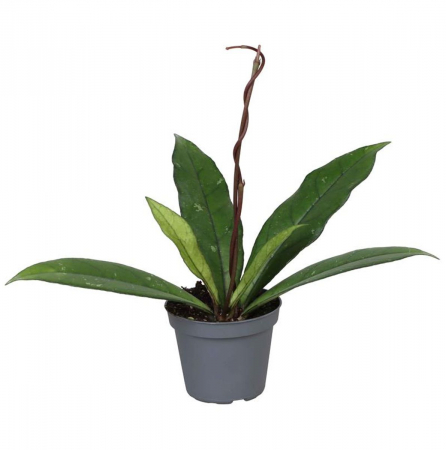
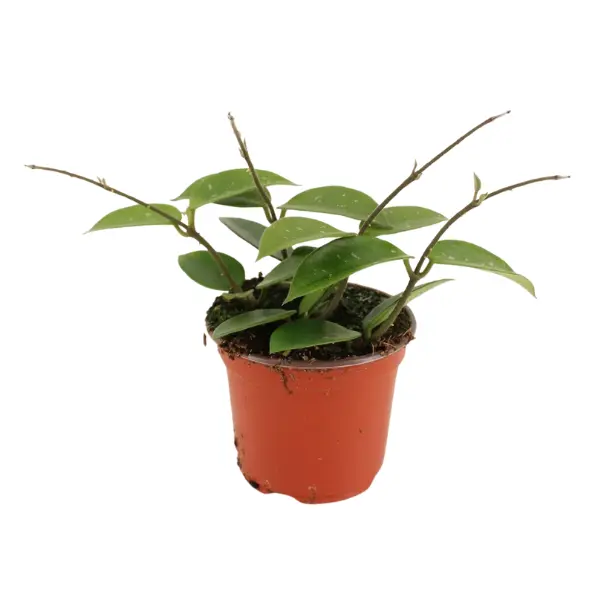
Hoya australis ssp. tenuipes is a vigorous subspecies of Hoya australis, distinguished by its thin flexible vining stems and glossy green oval-lanceolate leaves. Spherical umbels of waxy white flowers with reddish centers, subtly fragrant. A rare epiphytic species native to Southeast Asia and Australia, perfect for hanging pots and collectors.
Approx height (including pot): 15 cm
Flowering state: No flowers
Pot diameter: 12 cm
- Description
- Characteristics
- Reviews (0)
- FAQ
🌿 Hoya australis ssp. tenuipes — the elegant subspecies of an Australian classic
In the world of Hoya collectors, there are certain subspecies that, although less famous, succeed in captivating through their particular elegance. Hoya australis ssp. tenuipes is one of these — a thinner, more delicate and more graceful variant than the typical form of the species, which retains all the virtues of the classic Hoya australis but wraps them in a finer and more vertical silhouette.
The subspecies name — tenuipes, from the Latin tenuis (thin) and pes (foot, stem) — refers to the fine, almost threadlike stems on which this plant develops. Unlike the typical form of Hoya australis, with thick and woody stems, ssp. tenuipes creates subtle vines that climb elegantly on support, forming vegetal curtains of a delicacy rarely seen among the species of this genus.
It is a plant that seduces gradually — not through spectacular dimensions or explosive colors, but through the perfect balance between the glossy foliage and the fragrant flowers, through maturity and the wisdom of revealing itself over time. It is the choice of the collector who seeks nuances rather than effects, and who appreciates the refinement of a plant that blooms discreetly but persistently.
🌍 Origin and botanical history
Hoya australis was scientifically described by Austrian botanist Stephan Endlicher in 1848, based on specimens collected from Queensland, Australia. It is one of the few Hoya species native to continental Australia — hence the specific epithet "australis", which simply means "southern". The family it belongs to is Apocynaceae, subfamily Asclepiadoideae, the group of large fragrant tropical and subtropical vines.
The subspecies tenuipes is native to northeastern Australia (Queensland), Papua New Guinea and the islands of the Solomon Sea. It grows naturally in humid tropical forests and moderately high mountains at 300-1200 m altitude, where temperatures remain stable around 20-26°C and atmospheric humidity frequently exceeds 70%. In its natural habitat, it climbs the trunks of old trees, using aerial roots to attach itself.
It is considered a relatively rare subspecies in European and North American collections, which makes well-developed specimens sought-after pieces by collectors. According to the Royal Horticultural Society, species in the Hoya australis group are among the most tolerant Hoyas, adapting well to apartment conditions.
🌱 The foliage
The leaves of the tenuipes subspecies are what most clearly distinguish it from the typical form of the species. They are narrower and more elongated, oval-lanceolate, with typical lengths of 5-8 cm and widths of 2-4 cm. The texture is waxy and glossy, with a medium to intense green shade that becomes more saturated as the plant receives more light.
The leaf surface is firm and smooth to the touch, with a subtle sheen that reflects differently depending on the angle. The main venation is discreet — visible, but without dominating the visual composition of the leaf. The margins are entire, slightly undulating in some specimens, with a sharp but not aggressive tip.
A remarkable aspect is the suppleness of the stems — the vines are fine, green-brown, and twist naturally around the support with a delicacy rarely encountered. As the plant ages, the older stems slightly lignify, acquiring a rusty hue that pleasantly contrasts with the green of the foliage.
🌸 The flowers
The blooming of Hoya australis ssp. tenuipes is one of the most impressive spectacles this plant offers. The flowers are grouped in spherical umbels of 15-30 individual flowers, each measuring 1-1.5 cm in diameter. The shape is stellate, with five waxy petals of pure white, and in the center sits an inner corona of intense burgundy-red that creates a spectacular visual contrast.
The fragrance is perhaps the most memorable characteristic — a sweet, floral scent with notes of honey and white chocolate, which intensifies noticeably in the evening and at night. This nocturnal fragrance release is an adaptation to attract nocturnal pollinators in the natural habitat — in the apartment, however, it becomes an extraordinary olfactory gift that can fill an entire room with aromas of a fresh bouquet.
The blooming season is spring and summer, and the peduncles (flower stalks) should never be cut — the same stalk will produce new flowers year after year. The plant must be mature (at least 2-3 years) and receive abundant light to initiate flowering.
🌱 Growth and development
Hoya australis ssp. tenuipes is a vigorous but elegant plant, with a moderate to fast growth rate in optimal conditions — it can produce 30-50 cm of new vine in the growing season. The habit is climbing, with fine stems that wrap naturally around the support offered. It can be grown both as a hanging plant and on vertical support (moss pole, trellis), and both approaches highlight the elegance of its fine vines.
For optimal care, follow these requirements:
- Light: Bright indirect light, the equivalent of 10,000-20,000 lux. Direct morning sun (east) is well tolerated; midday sun can burn the leaves. For flowering, light must be abundant.
- Temperature: Optimal 18-28°C. Tolerates minimums of 12°C for short periods, but temperatures below 10°C are harmful. Avoid cold drafts and sudden changes.
- Watering: Moderate — water when the top 2-3 cm of substrate has dried, usually once every 7-10 days in summer and every 10-14 days in winter. Use room-temperature water, preferably filtered or rainwater.
- Humidity: 50-70% ideal. In dry apartments, a humidifier or a tray with moist pebbles helps maintain optimal conditions.
- Substrate: Well-drained and aerated — a mix of 40% pine bark, 30% perlite, 20% peat or coco coir and 10% horticultural charcoal.
- Fertilization: In the growing season (spring-summer), balanced fertilizer for tropical plants or Hoya, diluted to 1/2 the recommended dose, every 2-3 weeks.
- Propagation: Through stem cuttings with 2-3 nodes, in moist perlite and sphagnum substrate. Roots appear in 3-5 weeks at 22-25°C.
📚 Related blog articles
Lungime: 15 cm
Greutate (kg): 1 Kg
Denumire: Hoya
Diametru: 12 cm
Cerințe lumină: Lumina indirectă
Tip plantă: Plantă agățătoare
Utilizare: Interior
Tip suport: Ghiveci
Material Suport: Plastic
How often should I water Hoya australis ssp. tenuipes?
Is Hoya australis toxic to cats and dogs?
When does Hoya australis ssp. tenuipes bloom?
What soil mix is suitable for Hoya australis?
Is Hoya australis suitable for beginners?
What is a subspecies (ssp.) in botanical taxonomy?
How does ssp. tenuipes differ from classic Hoya australis?
How often should it be watered?
Is it toxic to cats and dogs?
How do I make it bloom?
Ai nevoie și de un ghiveci decorativ?