EN/
EN/ Romana
Hoya australis 'Lisa' Ø9-Ø12cm
![Hoya australis 'Lisa' — multicolor variegated cultivar with oval leaves painted in green, cream, straw-yellow and pink-coral edges, classic collector Hoya [0]](https://gomagcdn.ro/domains2/eufloria.ro/files/product/medium/hoya-carnosa-tricolor-d9-d12-088167.png "Hoya australis 'Lisa' — multicolor variegated cultivar with oval leaves painted in green, cream, straw-yellow and pink-coral edges, classic collector Hoya [0]")
![Hoya australis 'Lisa' — multicolor variegated cultivar with oval leaves painted in green, cream, straw-yellow and pink-coral edges, classic collector Hoya [1]](https://gomagcdn.ro/domains2/eufloria.ro/files/product/medium/hoya-carnosa-tricolor-d9-d12-440513.png "Hoya australis 'Lisa' — multicolor variegated cultivar with oval leaves painted in green, cream, straw-yellow and pink-coral edges, classic collector Hoya [1]")
![Hoya australis 'Lisa' — multicolor variegated cultivar with oval leaves painted in green, cream, straw-yellow and pink-coral edges, classic collector Hoya [2]](https://gomagcdn.ro/domains2/eufloria.ro/files/product/medium/hoya-carnosa-tricolor-d9-d12-863551.webp "Hoya australis 'Lisa' — multicolor variegated cultivar with oval leaves painted in green, cream, straw-yellow and pink-coral edges, classic collector Hoya [2]")
![Hoya australis 'Lisa' — multicolor variegated cultivar with oval leaves painted in green, cream, straw-yellow and pink-coral edges, classic collector Hoya [1]](https://gomagcdn.ro/domains2/eufloria.ro/files/product/original/hoya-carnosa-tricolor-d9-d12-088167.png "Hoya australis 'Lisa' — multicolor variegated cultivar with oval leaves painted in green, cream, straw-yellow and pink-coral edges, classic collector Hoya [1]")
![Hoya australis 'Lisa' — multicolor variegated cultivar with oval leaves painted in green, cream, straw-yellow and pink-coral edges, classic collector Hoya [2]](https://gomagcdn.ro/domains2/eufloria.ro/files/product/original/hoya-carnosa-tricolor-d9-d12-440513.png "Hoya australis 'Lisa' — multicolor variegated cultivar with oval leaves painted in green, cream, straw-yellow and pink-coral edges, classic collector Hoya [2]")
![Hoya australis 'Lisa' — multicolor variegated cultivar with oval leaves painted in green, cream, straw-yellow and pink-coral edges, classic collector Hoya [3]](https://gomagcdn.ro/domains2/eufloria.ro/files/product/original/hoya-carnosa-tricolor-d9-d12-863551.webp "Hoya australis 'Lisa' — multicolor variegated cultivar with oval leaves painted in green, cream, straw-yellow and pink-coral edges, classic collector Hoya [3]")
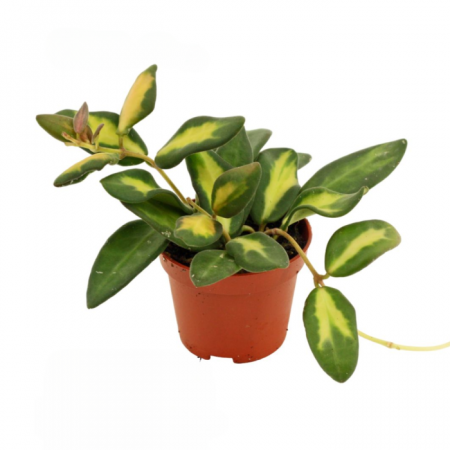
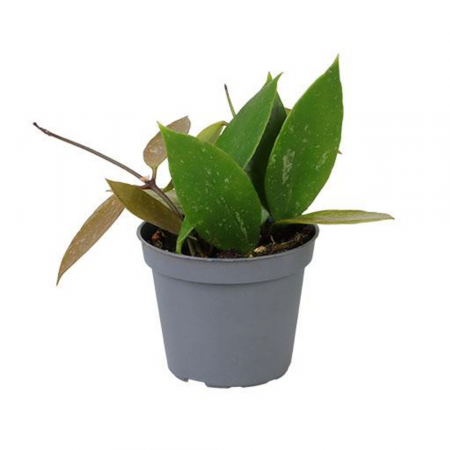
Hoya australis 'Lisa' is an iconic variegated cultivar of the australis species, with oval, thick, waxy leaves painted with spectacular variegation in deep green, cream, straw-yellow and pink-coral edges. Umbels of white star-shaped flowers with pink-coral center, fragrant, complete the chromatic spectacle. A robust classic Hoya, transformed into a living painting. Available in two sizes.
Approx height (including pot): 25 cm
Flowering state: No flowers
- Description
- Characteristics
- Reviews (0)
- FAQ
🌿 Hoya australis 'Lisa' — The Color Palette of a Variegated Classic
Hoya australis 'Lisa' is the iconic variegated cultivar of the australis species, transforming a botanical classic into a chromatic spectacle impossible to overlook. Its oval, thick and waxy leaves are painted with sector and splash variegation: deep green at the base, wide areas of cream and straw-yellow, edges that color in shades of pink-coral, peach and bronze in strong light. Each leaf is a unique creation, and the combination of hues makes it one of the most beloved variegated Hoyas in the world.
The vining stems, firm and flexible, can reach 1–2 meters in indoor cultivation, making the plant perfect for hanging pots, wall baskets or vertical supports. At maturity, the plant can produce umbels of white star-shaped flowers with pink-coral corona, fragrant with sweet honey notes — a spectacular bonus to the already painting-like foliage.
Offered in two pot sizes (Ø9cm and Ø12cm), 'Lisa' is ready to impress in any botanical composition. The smaller sizes are ideal for windowsills or desks, and the larger ones for mature hanging pots, where the variegated foliage cascade becomes the focal point of the room.
🌍 Origin and Botanical History
Hoya australis 'Lisa' is a modern horticultural cultivar selected for its distinct variegation. The parent species Hoya australis was scientifically described in 1810 by the British botanist Robert Brown and is native to eastern Australia (Queensland, New South Wales), the Pacific Islands (Fiji, Vanuatu, Samoa) and New Guinea. The 'Lisa' cultivar appears in international horticultural trade in the early 2000s and has spread rapidly due to its stable variegation and distinctive beauty.
The Hoya genus, from the Apocynaceae family, was established in 1810 by the same Robert Brown, in honor of his friend Thomas Hoy. Today the genus comprises over 200 species and hundreds of cultivars, and 'Lisa' is one of the most appreciated variegated selections, due to pigmentation stability and the relatively resilient behavior of the parent species.
🌱 Foliage and Variegation
Hoya australis 'Lisa' leaves are oval to nearly round, with rounded base and slightly pointed tip, measuring between 4 and 8 centimeters in length and 3–5 centimeters in width. The texture is thick, waxy-succulent, and the base color — deep green — is contrasted by wide areas of cream, straw-yellow and pink-peach, distributed in unpredictable sector and splash patterns.
In bright light (indirect!), the leaf edges color intensely, developing shades of coral, pink-bronze and sometimes almost purplish — a phenomenon called "sun stress" that does not harm the plant, but signals that it is receiving exactly the amount of light it needs. Venation is discreet, and the waxy surface gives the leaves a subtle shine that accentuates the variegation.
Each leaf is unique: some are almost entirely cream with only a few green spots, others are greener with yellow splashes and pink edges, and others show perfect combinations of all three. It is exactly this unpredictability that has made 'Lisa' one of the most collected Hoyas in the world.
🌸 The Flowers
Hoya australis 'Lisa' produces the same generous umbels as the parent species, with 20–40 small white star-shaped flowers with a pink-coral or burgundy-red center, sweetly fragrant with notes of honey and vanilla. The fragrance intensifies in the evening and during the night. Mature plants (2–3 years from rooting) usually flower in summer, and a blooming umbel can subtly perfume a room for almost a week. DO NOT cut flower peduncles after flowers fall — they are perennial, producing new umbels year after year.
🌱 Growth Habit and Care
Hoya australis 'Lisa' is one of the easier variegated Hoyas to grow in indoor cultivation. It inherits the robust parent species but requires more light to maintain its variegation. Insufficient light can lead to "reversion" — new leaves appear increasingly green, and variegation fades. Move it to a brighter location at the first signs and variegation returns.
- Light: bright indirect, essential for variegation. East- or west-facing windowsill ideal. On a south-facing window, use a filtering curtain. Avoid direct midday sun.
- Temperature: 18–28°C optimal; does not tolerate below 12°C.
- Watering: moderate; let the substrate dry almost completely between waterings. Once a week in summer, every 2–3 weeks in winter.
- Humidity: 50–70% ideal; adapts to 40% as well.
- Substrate: airy, well-drained — pine bark + perlite + sphagnum + activated charcoal; aroid/orchid mix.
- Fertilization: every 3–4 weeks during the growing season with balanced liquid fertilizer diluted by half.
- Propagation: via stem cuttings with 2–3 nodes, with attention to selecting variegated nodes (variegation is inherited unpredictably).
🌸 Why Choose 'Lisa'
Hoya australis 'Lisa' is a plant for enthusiasts who appreciate chromatic spectacle — a living painting that constantly changes as new leaves appear, each with its own color combination. It combines the beauty of a variegated plant with the resilience of a classic Hoya australis, offering the collector the satisfaction of a decorative plant without care compromises.
🌿 Practical Tips for Maintaining Variegation
The variegation of Hoya australis 'Lisa' is more stable than in many other variegated cultivars, but still requires adequate conditions to maintain long-term. Watch the new leaves carefully — if they appear increasingly green, the plant is telling you that light is insufficient. The solution is quick: move it to a brighter location without direct midday sun, and after 2–3 new leaves, the variegation should return with intensity.
In extreme situations, when a stem consistently produces entirely green leaves, you can cut just above a visibly variegated node to redirect the plant's energy to variegated buds. Never cut all green leaves at once — the plant needs them for photosynthesis, as white areas contain less chlorophyll.
🌱 The Difference Between the Two Offered Sizes
On Eufloria we offer Hoya australis 'Lisa' in two sizes to meet different needs. The Ø9cm pot contains a young plant with 4–8 formed leaves and short stems — ideal for watching the plant's development, for desks, small windowsills or collectors wanting to start from the initial stage. The Ø12cm pot contains a mature plant with 10–15 leaves and already developed stems of 30–50 cm — suitable for hanging pots, where it will quickly begin to "flow" over the pot edges.
In both cases, the plant will continue to develop increasingly rich foliage in subsequent years, and variegation is maintained consistently if light requirements are met. For optimal results after replanting, keep the plant 2–3 weeks in more moderate light, then gradually move it to the bright indirect light it needs to reveal its entire chromatic palette.
Lungime: 25 cm
Greutate (kg): 0.5 Kg
Denumire: Hoya
Diametru: 9 cm
Cerințe lumină: Lumina indirectă
Tip plantă: Plantă agățătoare
Utilizare: Interior
Tip suport: Ghiveci
Material Suport: Plastic
What makes 'Lisa' so special?
How do I maintain 'Lisa' plant variegation?
What's the difference between Ø9cm and Ø12cm sizes?
Is Hoya australis 'Lisa' toxic?
Does 'Lisa' flower indoors?
Recommendations
Ai nevoie și de un ghiveci decorativ?