EN/
EN/ Romana
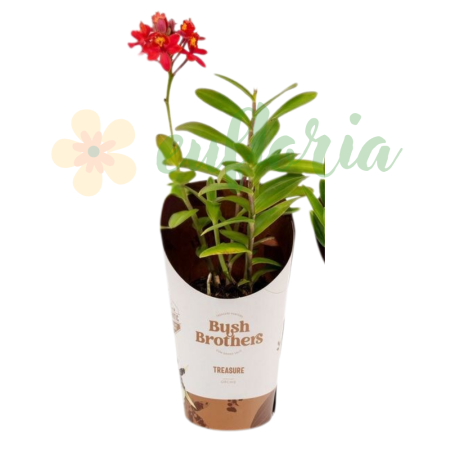
Epidendrum Orchid Ø9cm
![Epidendrum Ø9cm — crucifix orchid [4]](https://gomagcdn.ro/domains2/eufloria.ro/files/product/medium/orhidee-epidendrum-d9cm-980685.png "Epidendrum Ø9cm — crucifix orchid [4]")
![Epidendrum Ø9cm — crucifix orchid [6]](https://gomagcdn.ro/domains2/eufloria.ro/files/product/medium/orhidee-epidendrum-d9cm-868017.png "Epidendrum Ø9cm — crucifix orchid [6]")
![Epidendrum Ø9cm — crucifix orchid [7]](https://gomagcdn.ro/domains2/eufloria.ro/files/product/medium/orhidee-epidendrum-d9cm-914306.png "Epidendrum Ø9cm — crucifix orchid [7]")
![Epidendrum Ø9cm — crucifix orchid [1]](https://gomagcdn.ro/domains2/eufloria.ro/files/product/original/orhidee-epidendrum-d9cm-829281.png "Epidendrum Ø9cm — crucifix orchid [1]")
![Epidendrum Ø9cm — crucifix orchid [2]](https://gomagcdn.ro/domains2/eufloria.ro/files/product/original/orhidee-epidendrum-d9cm-703061.png "Epidendrum Ø9cm — crucifix orchid [2]")
![Epidendrum Ø9cm — crucifix orchid [3]](https://gomagcdn.ro/domains2/eufloria.ro/files/product/original/orhidee-epidendrum-d9cm-421808.png "Epidendrum Ø9cm — crucifix orchid [3]")
![Epidendrum Ø9cm — crucifix orchid [4]](https://gomagcdn.ro/domains2/eufloria.ro/files/product/original/orhidee-epidendrum-d9cm-554270.png "Epidendrum Ø9cm — crucifix orchid [4]")
![Epidendrum Ø9cm — crucifix orchid [5]](https://gomagcdn.ro/domains2/eufloria.ro/files/product/original/orhidee-epidendrum-d9cm-980685.png "Epidendrum Ø9cm — crucifix orchid [5]")
![Epidendrum Ø9cm — crucifix orchid [6]](https://gomagcdn.ro/domains2/eufloria.ro/files/product/original/orhidee-epidendrum-d9cm-708593.png "Epidendrum Ø9cm — crucifix orchid [6]")
![Epidendrum Ø9cm — crucifix orchid [7]](https://gomagcdn.ro/domains2/eufloria.ro/files/product/original/orhidee-epidendrum-d9cm-868017.png "Epidendrum Ø9cm — crucifix orchid [7]")
![Epidendrum Ø9cm — crucifix orchid [8]](https://gomagcdn.ro/domains2/eufloria.ro/files/product/original/orhidee-epidendrum-d9cm-914306.png "Epidendrum Ø9cm — crucifix orchid [8]")
![Epidendrum Ø9cm — crucifix orchid [9]](https://gomagcdn.ro/domains2/eufloria.ro/files/product/original/orhidee-epidendrum-d9cm-133757.png "Epidendrum Ø9cm — crucifix orchid [9]")
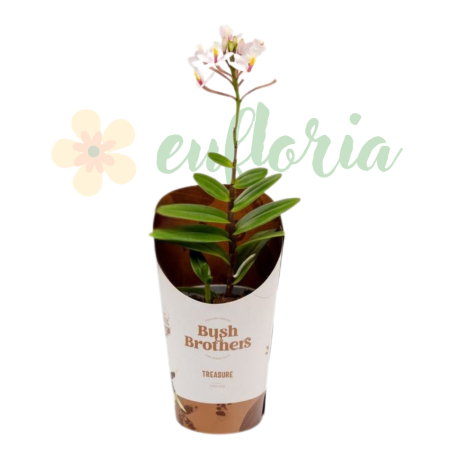
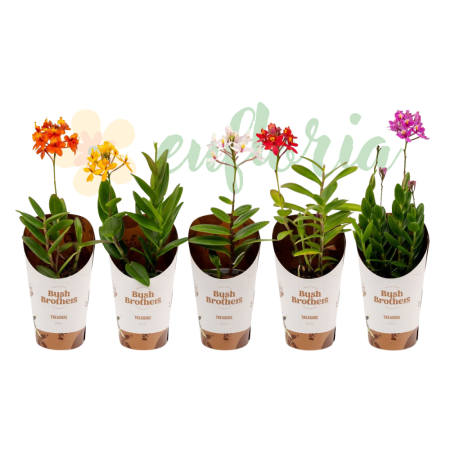
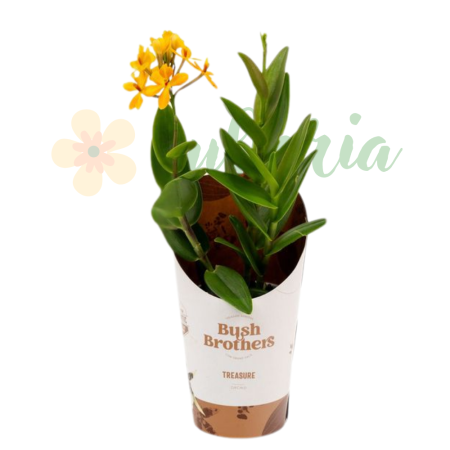
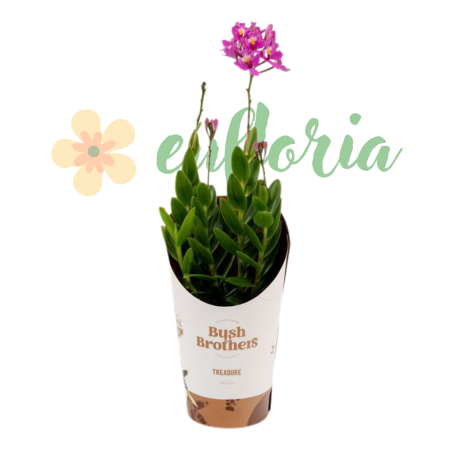
Epidendrum is a "reed-stem" orchid from the Orchidaceae family, with over 1500 species native to Central and South America. Known as "crucifix orchid" due to cruciform appendage on the labellum (flower lip). Has long stems with elongated leaves and colorful inflorescences (red/orange/yellow). Prolonged flowering, accessible for beginners.
Note: Product images are for guidance only. Due to different batches of imported products, there may be differences between the images on the website and the actual appearance of the products.
Approx height (including pot): 20 cm
Flowering state: With flowers
Pot diameter: 9 cm
- Description
- Characteristics
- Reviews (0)
- FAQ
Epidendrum is one of the largest and most diverse orchid genera, with over 1500 species native to Central and South America. Popularly known as "crucifix orchids" due to the characteristic shape of the labellum (flower lip) which features a distinctive cruciform-lobed appendage, Epidendrum plants are appreciated for their relative robustness, prolonged flowering, and vivid flower colors. This hybrid Epidendrum (typically derived from popular species such as E. radicans or E. ibaguense) represents an accessible orchid for beginners, ideal for those who want to enter the orchid world without the demands of complex exotic species.
Origin and Botanical Characteristics
Epidendrum belongs to the Orchidaceae family, the largest plant family in the world with over 28000 species. The Epidendrum genus is widely distributed throughout the New World, from Florida and Mexico to northern Argentina, in varied habitats — from humid forests at sea level to mountain areas above 3000m altitude. This diversity of habitats explains the plant's remarkable adaptability to varied cultivation conditions.
Unlike classic Phalaenopsis-type orchids (with large pseudobulbs and succulent leaves), most Epidendrum are "reed-stem" orchids — they have long, straight or slightly curved stems with elongated leaves alternating along them. At maturity, the plant can reach 40-80 cm in height, and new stems grow continuously from the plant's base. This "branched-vertical" character makes it an orchid different in appearance from typical apartment orchids.
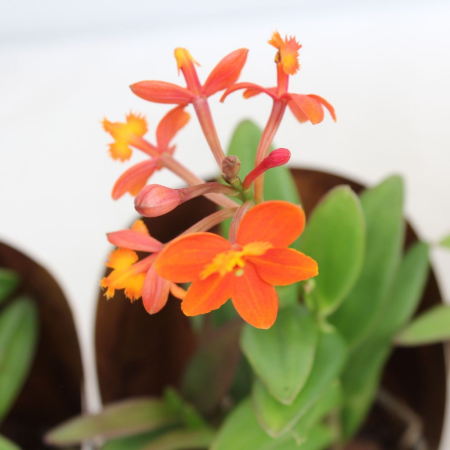
The leaves are dark green, elongated (5-10 cm), with a waxy texture that gives them a slight luster. Inflorescences appear at the tips of mature stems, forming dense flower heads that can last for weeks. Flowers have the characteristic structure of all orchids: 3 sepals (outer segments) and 2 lateral petals, plus a third modified petal called the "labellum" (lip) that functions as a landing platform for pollinators. In Epidendrum, the labellum is characteristic — often three-lobed with a central appendix forming a cruciform structure, creating the impression of a small cross in the middle of the flower. At the center of the flower, the column combines reproductive organs (anther with pollinia + stigma) into a single structure, a unique trait of the Orchidaceae family. Colors range from intense red, orange, yellow, pink to white, depending on the hybrid.
Flowering can occur at any time throughout the year under good conditions, although peak is usually late spring and summer. A single inflorescence can carry 5-15 flowers lasting 2-4 weeks, and the plant can produce multiple inflorescences simultaneously in years with optimal conditions.
Why It Is Appreciated by Beginners
Epidendrum is one of the most accessible orchids for beginners — combining resistance to varied conditions with spectacular flowering. Unlike Phalaenopsis (which require high humidity and can be capricious), Epidendrum tolerates greater variations in humidity and temperature, forgiving minor care mistakes. For those who want to develop their confidence in orchid cultivation before investing in rare species, Epidendrum is an excellent option.
In more advanced collections, Epidendrum pairs well with other orchids with similar requirements — Cattleya, Oncidium, or other warm-growing orchids. Its vertical-branched character creates positive contrast with orchids having flat rosettes, offering visual diversity in any collection.
Care — Complete Guide for Cultivators
Epidendrum is surprisingly tolerant, but blooms spectacularly only with attentive care. Here are the essential parameters:
Light: Bright indirect light, essential for flowering. Tolerates gentle morning or evening sun, but avoid direct midday sun. Best exposure is at an east or west-facing window, or south-facing filtered through a curtain. Under too low light, the plant survives but will not flower — leaves will be dark green but without vigorous new stems.
Watering: Moderate — orchid substrate should dry slightly between waterings. In summer water every 5-7 days, in winter every 10-14 days. Use the "water deeply, let water drain through substrate" method. Stagnant water is lethal to orchid roots. Use room-temperature water, decanted or filtered — tap water with much chlorine and limescale can affect sensitive roots.
Humidity: 50-70% optimal. Epidendrum tolerates lower humidity than many orchids, but below 40% flowering may be diminished. Use a humidifier or grouping with other indoor plants. A pebble tray with water under the pot is a traditional solution.
Substrate: Special orchid mix — pine bark, perlite, activated charcoal, sphagnum, no regular soil. See orchid substrate. Optimal pH is slightly acidic (5.5-6.5). Excellent drainage is absolutely essential.
Temperature: 18-28°C optimal, minimum 15°C. Below 12°C the plant enters dormancy. A 5-7°C variation between day and night stimulates flowering — apartment environment with cool windows in winter creates this variation naturally.
Fertilizing: Special orchid fertilizer, diluted to half, weekly-biweekly during the growing season (March-September). In winter, fertilize only monthly at half concentration. Excess fertilizer leads to chemical "burning" of sensitive roots.
Repotting: Every 2-3 years, in spring, or when substrate has degraded. Use fresh orchid mix and transparent pots with excellent drainage. Check roots and cut dead or rotted ones.
Pruning: After flowering, cut the floral stem above the first node or leave it for possible re-flowering. Old stems that no longer produce flowers can be cut completely to stimulate new stem growth from the base.
Common problems: Yellowed leaves = insufficient light or incorrect watering. Soft brown roots = rot from overwatering (repot urgently). Brown leaf tips = too dry air or chlorinated water. No buds = insufficient light or lack of temperature variation.
Toxicity and Safety
Epidendrum orchids are considered non-toxic to cats, dogs, and children — they don't appear on the ASPCA toxic plant list. This makes it a safe choice for households with pets or young children, falling into the category of family-friendly plants. However, avoid ingestion — no botanical ornament is intended for consumption.
For humans, contact with sap is generally harmless, but in people allergic to the Orchidaceae family (rare) it may cause contact irritation. Use gloves when repotting if sensitive. Wash hands after handling orchid substrate.
Why Choose It for Your Space
Epidendrum is a "gentle introduction" to the orchid world — combining ease of care with the spectacle of flowering that can last for weeks. For cultivators who want an orchid without the demands of rare Phalaenopsis or Cattleya, this hybrid Epidendrum offers a satisfying cultivation experience with impressive visual results. Continuous flowering throughout the year under good conditions makes it a long-term botanical investment.
Unlike other more capricious orchids, Epidendrum forgives minor care mistakes and adapts quickly to new conditions. The Ø9cm diameter allows a stable start with already stabilized orchid roots in a suitable starter pot. In 1-2 years, under good conditions, the plant will double its number of stems and produce multiple inflorescences simultaneously.
For lovers of flowering plants with prolonged display, Epidendrum pairs well with other flowering indoor plants. The composition with several Epidendrum in varied colors (red, orange, yellow) creates a vibrant tropical corner in any room. Delivery across the EU with specialized packaging for orchids — each specimen is selected and prepared to arrive in optimal condition.
Lungime: 15 cm
Greutate (kg): 1 Kg
Denumire: Epidendrum
Diametru: 9 cm
Cerințe lumină: Strong, indirect light
Tip plantă: Decorative
Utilizare: Interior
Tip suport: Ghiveci
Material Suport: Plastic
Is Epidendrum toxic?
No, it is non-toxic to cats, dogs, and children. Safe for households with pets. See other orchids.
How do I care for it to bloom?
Bright indirect light, moderate watering, humidity 50-70%, 5-7°C day/night temperature variation, weekly diluted orchid fertilizer.
What substrate should I use?
Orchid mix: pine bark + perlite + charcoal + sphagnum. Never regular soil. See orchid substrate.
How do I propagate it?
Through 'keiki' (small plants on stem nodes) or by separating pseudobulbs at repotting.
Why is it good for beginners?
Tolerates greater humidity and temperature variations than other orchids, forgives minor mistakes. Blooms for extended periods.
Ai nevoie și de un ghiveci decorativ?