EN/
EN/ Romana
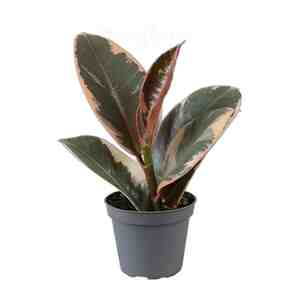
Coffea arabica Ø6cm
![Coffea arabica — indoor coffee plant with glossy deep green leaves [1]](https://gomagcdn.ro/domains2/eufloria.ro/files/product/original/coffea-arabica-d6-871186.png "Coffea arabica — indoor coffee plant with glossy deep green leaves [1]")
Coffea arabica is an exotic tropical plant, known as the coffee plant, valued for its glossy deep green foliage and its ability to produce fragrant white flowers. Native to the Ethiopian highlands, it brings refined tropical charm to any indoor space and thrives with attentive care.
Approx height (including pot): 20 cm
Flowering state: No flowers
Pot diameter: 6 cm
- Description
- Characteristics
- Reviews (0)
🌿 Coffea arabica — The Coffee Tree in the Intimacy of Your Home
Coffea arabica, popularly known as the "coffee tree," is one of the most fascinating tropical plants that can be grown indoors. Native to the mountainous regions of Ethiopia, this species is not only the primary source of the most appreciated coffee in the world, but also an ornamental plant of remarkable beauty, bringing an exotic and authentic charm to any inhabited space. Its glossy leaves, of a deep green color, with slightly wavy edges and deep veins, create an elegant contrast with the fine trunk and delicate branches, transforming this species into a special choice for lovers of rare indoor plants.
In an era when the connection with nature becomes increasingly precious, Coffea arabica brings home more than a simple decorative plant — it carries in its leaves the story of a millennial culture, of calm morning rituals and of the unmistakable aroma that has conquered the world. Even if it will rarely produce beans indoors, its presence commands respect and invites contemplation, reminding us that authentic beauty is built with patience. Each new leaf that appears on its branches seems like a small celebration, a sign that the plant feels good in the environment you offer it.
📖 Origin and Botanical History
Coffea arabica belongs to the Rubiaceae family, a large family of plants that includes over 13,000 species spread throughout the tropical zones of the planet. Its story begins in the high plateaus of Ethiopia, in the Kaffa region, from where legend says that a shepherd named Kaldi observed that his animals became more lively and energetic after consuming the red berries of this shrub. Thus was born, around the 9th century, a story that would change the culture of beverage consumption worldwide and transform Coffea arabica into a plant of global importance.
Over the centuries, this species was brought to European botanical gardens in the 17th and 18th centuries, where horticulturists began to appreciate not only the economic value, but also the ornamental beauty of the plant. The first specimens cultivated in Europe appeared in the Netherlands, in Amsterdam, and from there gradually spread to France and other colonial powers. Today, Coffea arabica enjoys growing appreciation as an indoor plant, offering enthusiasts direct contact with a botanical legend that has crossed continents and centuries.
From a botanical perspective, Coffea arabica is a shrub or small tree with persistent leaves, which in its natural habitat can reach heights of up to 10 meters, but which in commercial cultivation is kept at 2-3 meters to facilitate harvesting. Indoors, with proper care, the plant remains compact and can be modeled into pleasant shapes through light annual pruning, adapting perfectly to modern spaces.
🍃 Foliage and Flower Characteristics
The leaves of Coffea arabica are undoubtedly the main attraction of this indoor plant. Oblong and slightly wavy in shape, measuring approximately 10-15 centimeters long, they have a glossy texture that reflects light in a remarkable way, giving the plant an ever-fresh and lively appearance. The deep green color, sometimes with slight bronze hues on young leaves, remains constant throughout the year, providing an elegant focal point in any room. The visible veins, arranged in parallel and slightly sunken, give the leaves a pleasant tactile texture and a graphic appearance that integrates perfectly into modern interiors.
In optimal conditions — high humidity, filtered light and attentive care — Coffea arabica can bloom even indoors, producing clusters of small, white, star-shaped flowers with a sweet fragrance reminiscent of jasmine flowers. These usually appear on mature plants, at least three or four years old, in the leaf axils and represent a true reward for those who invest time in caring for the plant. After flowering, under ideal conditions, the plant can develop small green fruits that gradually turn into red berries, similar to cherries, from which the famous coffee beans are extracted.
An interesting detail is that the young leaves of Coffea arabica often have a slight bronze or reddish tint, which disappears as the leaf matures and becomes deep green. This chromatic transition adds dynamism to the plant and is a sign that it is developing correctly, with a healthy biological rhythm. The leaves remain on the plant for several years before falling, being gradually replaced by new ones, which ensures a constant decorative presence.
💧 Care Requirements for a Healthy Plant
Coffea arabica, although impressive in appearance, is not a capricious plant — but it has some clear preferences that must be respected for it to develop harmoniously. Light represents the first essential factor: this species prefers filtered, indirect, but abundant light, similar to the conditions it would find under the canopy of the tropical forests where it originates. Direct exposure to summer sun can affect it, causing burns on the delicate leaves and irreversible yellow spots, while a location too dark will lead to weakened growth and loss of the specific gloss.
Watering is done regularly, keeping the soil constantly moist, but without turning it into a puddle. A well-drained substrate is essential — the recommended mix contains peat, perlite and quality universal soil, in a combination that allows water to drain easily, avoiding root rot. A pot with drainage holes at the base is absolutely mandatory, and a layer of gravel or expanded clay at the bottom helps with optimal drainage. During hot and dry periods, it is beneficial to mist the leaves with warm water to compensate for the low humidity indoors, especially in winter, when radiators dry the air dramatically.
The ideal temperature oscillates between 18 and 24 degrees Celsius, with low tolerance to cold drafts and sudden variations. Exposure to temperatures below 10 degrees can cause severe damage, and plants near windows in the cold season must be protected. Fertilization, in spring and summer, every three to four weeks, with a liquid fertilizer for houseplants, supports vigorous growth and maintains the gloss of the leaves. In winter, drastically reduce both watering and nutrient intake, allowing the plant to enter a welcome vegetative rest period, which will help it recover for the next growing season.
🌱 Tips for Flowering, Fruiting and Repotting
For ambitious enthusiasts who dream of their own coffee harvest, there are a few tricks that increase the chances of success. First, patience is key — a Coffea arabica grown from seeds or from a young seedling needs at least three to four years to reach maturity and produce the first flowers. During this period, the plant should be moved into a progressively larger pot every two years, in spring, using a slightly acidic substrate with a pH between 5.5 and 6.5. Avoid pots that are too large — a staged increase in container size stimulates root development in a healthy way.
Another important aspect is regular misting of the leaves with distilled or rainwater — hard water, rich in limescale, can leave spots on the glossy leaves and can negatively influence nutrient absorption at the root level. Also, light pruning at the beginning of spring stimulates branching and maintains the compact shape of the plant, essential for indoor cultivation. Remove weak or deformed branches, as well as old leaves that have lost their gloss, to direct the plant's energy toward new and vigorous growth.
The coffee beans, when they appear, go through fascinating stages: from green to yellow, orange and finally deep red, a sign that they are ripe. The complete process from flower to mature bean takes approximately six to nine months, with patience ultimately rewarded with the authentic aroma of coffee grown right in your living room. Even if the harvest obtained indoors will never be enough to replace store-bought coffee, the satisfaction of seeing your own tree producing beans is unique and deeply gratifying. Coffea arabica is, therefore, much more than an indoor plant — it is an invitation to patience, to calm rituals and to the joy of cultivating, at home, a true botanical legend.
Lungime: 10 cm
Greutate (kg): 0.15 Kg
Denumire: Coffea
Diametru: 6 cm
Cerințe lumină: Partial umbra
Tip plantă: Decorative
Utilizare: Interior
Tip suport: Ghiveci
Material Suport: Plastic
Ai nevoie și de un ghiveci decorativ?