EN/
EN/ Romana
Begonia darthvaderiana 'Green Spots' Ø8cm
![Begonia darthvaderiana 'Green Spots' — rare plant with blackish-green leaves and green dots [0]](https://gomagcdn.ro/domains2/eufloria.ro/files/product/medium/begonia-darthvaderiana-green-spots-o8-cm-266072.jpg "Begonia darthvaderiana 'Green Spots' — rare plant with blackish-green leaves and green dots [0]")
![Begonia darthvaderiana 'Green Spots' — rare plant with blackish-green leaves and green dots [1]](https://gomagcdn.ro/domains2/eufloria.ro/files/product/medium/begonia-darthvaderiana-green-spots-o8-cm-007558.jpg "Begonia darthvaderiana 'Green Spots' — rare plant with blackish-green leaves and green dots [1]")
![Begonia darthvaderiana 'Green Spots' — rare plant with blackish-green leaves and green dots [2]](https://gomagcdn.ro/domains2/eufloria.ro/files/product/medium/begonia-darthvaderiana-green-spots-o8-cm-121943.jpg "Begonia darthvaderiana 'Green Spots' — rare plant with blackish-green leaves and green dots [2]")
![Begonia darthvaderiana 'Green Spots' — rare plant with blackish-green leaves and green dots [3]](https://gomagcdn.ro/domains2/eufloria.ro/files/product/medium/begonia-darthvaderiana-green-spots-o8-cm-858599.jpg "Begonia darthvaderiana 'Green Spots' — rare plant with blackish-green leaves and green dots [3]")
![Begonia darthvaderiana 'Green Spots' — rare plant with blackish-green leaves and green dots [4]](https://gomagcdn.ro/domains2/eufloria.ro/files/product/medium/begonia-darthvaderiana-green-spots-o8-cm-972113.jpg "Begonia darthvaderiana 'Green Spots' — rare plant with blackish-green leaves and green dots [4]")
![Begonia darthvaderiana 'Green Spots' — rare plant with blackish-green leaves and green dots [1]](https://gomagcdn.ro/domains2/eufloria.ro/files/product/original/begonia-darthvaderiana-green-spots-o8-cm-266072.jpg "Begonia darthvaderiana 'Green Spots' — rare plant with blackish-green leaves and green dots [1]")
![Begonia darthvaderiana 'Green Spots' — rare plant with blackish-green leaves and green dots [2]](https://gomagcdn.ro/domains2/eufloria.ro/files/product/original/begonia-darthvaderiana-green-spots-o8-cm-007558.jpg "Begonia darthvaderiana 'Green Spots' — rare plant with blackish-green leaves and green dots [2]")
![Begonia darthvaderiana 'Green Spots' — rare plant with blackish-green leaves and green dots [3]](https://gomagcdn.ro/domains2/eufloria.ro/files/product/original/begonia-darthvaderiana-green-spots-o8-cm-121943.jpg "Begonia darthvaderiana 'Green Spots' — rare plant with blackish-green leaves and green dots [3]")
![Begonia darthvaderiana 'Green Spots' — rare plant with blackish-green leaves and green dots [4]](https://gomagcdn.ro/domains2/eufloria.ro/files/product/original/begonia-darthvaderiana-green-spots-o8-cm-858599.jpg "Begonia darthvaderiana 'Green Spots' — rare plant with blackish-green leaves and green dots [4]")
![Begonia darthvaderiana 'Green Spots' — rare plant with blackish-green leaves and green dots [5]](https://gomagcdn.ro/domains2/eufloria.ro/files/product/original/begonia-darthvaderiana-green-spots-o8-cm-972113.jpg "Begonia darthvaderiana 'Green Spots' — rare plant with blackish-green leaves and green dots [5]")
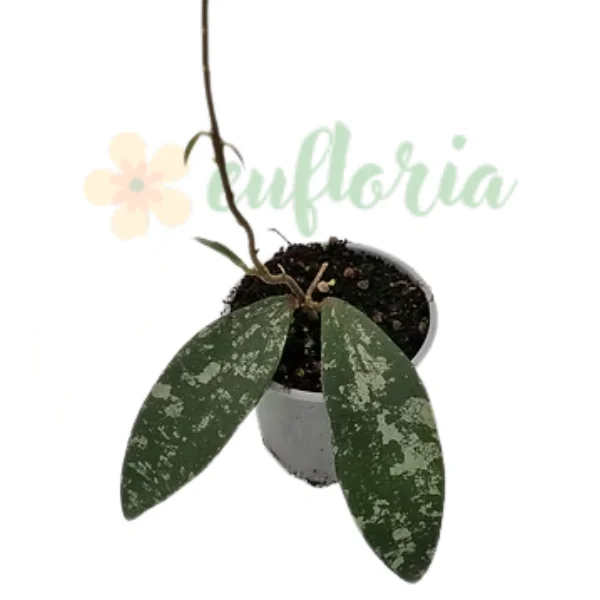
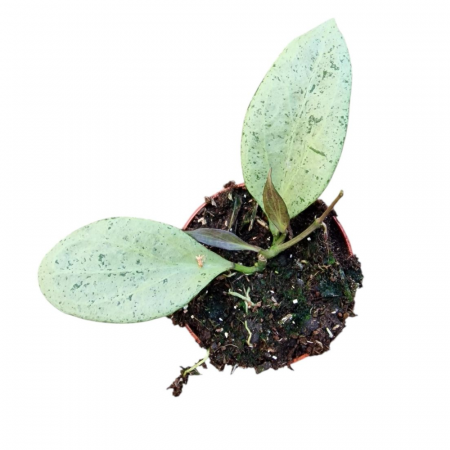
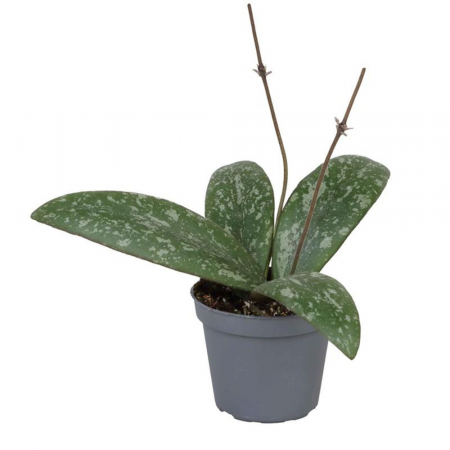
Begonia darthvaderiana 'Green Spots' — a rare collector's cultivar from Borneo with velvety blackish-green leaves covered in bright light-green stars. Small, terrestrial plant, perfect for terrariums and humid vivariums. The species name comes from its resemblance to Darth Vader's mask.
Note: Product images are for guidance only. Due to different batches of imported products, there may be differences between the images on the website and the actual appearance of the products.
Approx height (including pot): 10-15 cm
Diametru Ghiveci: 8 cm
- Description
- Characteristics
- Reviews (0)
- FAQ
Begonia darthvaderiana 'Green Spots' — the dark cultivar with green stars from Borneo's jungles
Few houseplants spark such an immediate reaction as Begonia darthvaderiana 'Green Spots'. Its velvety, blackish-green leaves dotted with bright light-green stars look like they came from a fantasy universe. The species name is no accident: darthvaderiana was chosen in 2014 by botanists Wong Sin Yeng and Peter Boyce, who compared the plant's dark foliage and undulating margin to the mask of the famous Star Wars character. 'Green Spots' is a selected cultivar of this species endemic to Sarawak (Malaysian Borneo), prized in the rarest Begoniaceae collections for the striking contrast between the dark background and the bright spots on its leaves.
This plant isn't just a collector's piece — it's a visual experience in itself. Under good conditions (terrarium, vivarium or a high-humidity area in your home), Begonia darthvaderiana 'Green Spots' develops 4–7 cm leaves with a velvety surface that reflects light like stardust. It's a small, terrestrial, rhizomatous species, perfect for lovers of rare Begonias who want a spectacular plant without large dimensions.
Origin and discovery
Begonia darthvaderiana is a relatively recently described species in the botanical literature. It was identified and named in 2014 by the two botanists specialising in Borneo flora, Wong Sin Yeng and Peter Boyce, as part of their extensive research on Southeast Asian Begoniaceae biodiversity. The discovery took place in moist forests on limestone slopes in Sarawak, the Malaysian state on the island of Borneo. The 'Green Spots' cultivar was subsequently selected for its distinctive trait — the distinct green dots on the nearly black background of the leaves.
This cultivar was quickly appreciated in European exotic plant collections and has become one of the most sought-after rare Begonias for terrariums and humid vivariums. In Europe, this cultivar circulates today through a tight circle of passionate collectors and nurseries specialising in rare aroids and Begoniaceae.
What the plant looks like — the aesthetic details
The defining feature of the 'Green Spots' cultivar is its foliage. The leaves are asymmetrical, oval-elliptic in shape, with a slightly undulating margin. Their surface has a velvety texture, similar to velvet, that absorbs light and creates an impression of cosmic depth. The background colour ranges from blackish-green in low light to dark bronze-green in stronger light. The light-green dots distributed irregularly across the leaf are the element that gives the cultivar its name — they form a unique pattern on each leaf, like a personal constellation.
On the underside of the leaf, the colour is deep burgundy-red, the contrast being dramatic when light passes through the thin lamina. The petioles are hairy and reddish, and the plant grows from creeping rhizomes, not erect stems — which gives it a low, compact habit, ideal for terrariums.
The flowers are small, white-pink, appearing under ideal conditions (humidity around 80%, strong indirect light). They are grouped in discreet inflorescences that don't overshadow the foliage spectacle — on the contrary, they add a delicate point of light against the dark background.
Why choose Begonia darthvaderiana 'Green Spots'
- Unique foliage in the Begoniaceae world — the black-light-green contrast isn't found in any other common species.
- Small, compact plant — ideal for terrariums, vivariums and collections in restricted spaces.
- Collector's piece — a rare cultivar, hard to find on the European market.
- Resilient under humid conditions — thrives where other houseplants would stagnate.
- Conversation starter — every guest will ask what species it is.
Care requirements
Light: Medium to strong indirect light. NO direct light — direct sun will burn the velvety leaves within hours. A north window or an east/west window with a fine curtain is ideal. In a terrarium, LED light 3000–6500K, 8–12 hours/day.
Humidity: Very high — minimum 70%, ideally 80–90%. This species is a terrarium plant par excellence. In dry apartment air (below 50%) the leaves go brown at the edges and the plant stops growing. Use an enclosed terrarium, vivarium or a growth dome.
Temperature: 18–26°C. Tolerates tropical heat but prefers stability. Avoid drops below 16°C — it's a plant from humid equatorial forests, sensitive to cold.
Substrate: Very airy, with excellent drainage. Recommended mix: sphagnum (50%), perlite (25%), fine pine bark (15%), activated charcoal (10%). The substrate should be constantly moist but never saturated — the roots are fine and sensitive to rot.
Watering: With soft water (rainwater, distilled or filtered). Keep the substrate constantly moist but not waterlogged. In a terrarium, daily misting. Never water over the leaves — only water the substrate, because droplets on the velvety leaves can leave spots or favour fungal disease.
Fertiliser: Very weak — 1/8 of the recommended dose for houseplants, once every 4 weeks during the growing season (March–September). In winter, stop fertilising completely.
Air circulation: In a terrarium, ensure light air circulation — stagnation favours mould and bacteria. A small silent fan a few hours a day works wonders.
Possible problems and solutions
Brown leaf margins — humidity too low. Move into a terrarium or raise ambient humidity.
Faded, discoloured foliage — light too strong or direct. Move to softer, more filtered indirect light.
Black spots, mould on leaves — stagnant water on leaves or stagnant air. Ventilate and improve circulation.
Soft, rotten roots — saturated substrate, insufficient drainage. Repot into an airier mix and water only enough to keep the substrate slightly moist.
What you receive
You'll receive a plant in an 8 cm diameter pot, approximately 10–15 cm tall, with a well-formed root system and characteristic cultivar foliage. The plant is individually checked before shipping and carefully packaged for transport.
Delivery and packaging
We send the plant with thermal protection (bubble wrap + warm envelopes during the cold season). Delivery across the EU via courier, 24–120 hours depending on destination. For this sensitive species, we recommend you unpack it immediately on arrival and place it in a terrarium or high-humidity area within the first hours.
Greutate (kg): 0.25
Cerințe lumină: Lumina indirectă
Tip plantă: Planta cu frunze
How do I care for Begonia darthvaderiana ‘Green Spots’?
Provide filtered indirect light, high humidity (70-80%) and temperatures between 18-25°C. Keep the substrate slightly moist but never waterlogged — prefer an airy mix rich in coco fiber and perlite. Ideal for terrariums or rooms with a humidifier.
What light does ‘Green Spots’ need?
Bright indirect light, filtered through a sheer curtain. Avoid direct sun, which scorches the delicate leaves and fades the green spots. Growth is best near a bright east- or north-facing window.
How often should it be watered?
Water when the top 1-2 cm of substrate begins to dry — typically every 5-7 days in summer, less often in winter. Use room-temperature water, ideally rainwater or filtered water. Excellent drainage is essential to prevent rhizome rot.
Is it toxic to pets?
Yes, Begonia is mildly toxic to cats, dogs and other small pets if ingested, due to insoluble calcium oxalate content. It may cause oral irritation and excessive drooling. Keep the plant out of pets’ reach.
How do I propagate it?
Most reliably from rhizome cuttings with at least one attached leaf, placed on damp sphagnum moss in a transparent container (propagator). Under high humidity (90%+) and filtered light, roots emerge in 4-8 weeks. Leaf-vein cuttings also work well.
Ai nevoie și de un ghiveci decorativ?