EN/
EN/ Romana
Aglaonema 'Pink Dolphin' Ø12cm
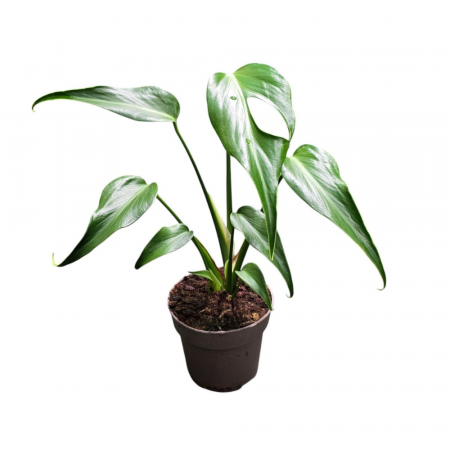
![Aglaonema 'Pink Dolphin' — indoor plant with large leaves in shades of pink-vermilion and green [1]](https://gomagcdn.ro/domains2/eufloria.ro/files/product/original/aglaonema-pink-dolphin-d12cm-152334.png "Aglaonema 'Pink Dolphin' — indoor plant with large leaves in shades of pink-vermilion and green [1]")
Aglaonema 'Pink Dolphin', also known as Chinese Evergreen, is a vibrant indoor plant native to Southeast Asia, prized for its large oval leaves in stunning pink-vermilion with green patterns and silver veins. This rare variety is ideal for beginners thanks to its low maintenance needs and adds a touch of tropical elegance to any space.
Approx height (including pot): 45 cm
Flowering state: No flowers
Country of origin: Netherlands
Pot diameter: 12 cm
- Description
- Characteristics
- Reviews (0)
- FAQ
🌿 Aglaonema 'Pink Dolphin' — A Tropical Colour Explosion for Your Interior
Some plants blend discreetly into décor while others transform it entirely — Aglaonema 'Pink Dolphin' certainly belongs to the latter category. With its large oval leaves in vibrant pink-vermilion hues intersected by green patterns and silver veins, this plant is a living painting that draws eyes and compliments from the very first moment. It is the kind of Aglaonema plant guests notice immediately, invariably asking: "What stunning plant is that?"
Aglaonema, one of the most low-maintenance houseplants, popularly known as the "lucky plant" or "Chinese Evergreen," is a genus that has undergone a remarkable evolution in recent decades. While classic office-friendly varieties were limited to shades of green and silver, modern hybrids like 'Pink Dolphin' have introduced colours few would have imagined possible in an indoor plant: intense pink, vermilion, coral, and even red. This chromatic transformation was made possible by intensive hybridisation programmes in Thailand and Indonesia, where growers systematically selected the most colourful specimens over dozens of generations.
What makes 'Pink Dolphin' truly special in the already rich landscape of Aglaonema varieties is the intensity and distribution of its pink colour. Unlike other cultivars where pink appears only as an accent or border, in 'Pink Dolphin' the pink-vermilion colour dominates nearly the entire leaf, with green patterns serving as an elegant contrast. The visual effect is simultaneously dramatic and sophisticated — a rare combination in the indoor plant world.
🌍 Origin and Botanical History
The Aglaonema genus belongs to the Araceae family and comprises approximately 25 natural species, all native to the tropical and subtropical regions of Southeast Asia. According to the World Checklist of Selected Plant Families (WCSP) maintained by Kew Gardens, the type species is Aglaonema simplex, described by botanists Heinrich Wilhelm Schott and Carl Ludwig Blume in the first half of the 19th century. The name "Aglaonema" derives from the Greek "aglaos" (bright) and "nema" (thread, stamen), referring to the glossy stamens of the flowers.
In their natural habitat, Aglaonema species grow on the floor of humid tropical forests, in the shade of tall trees, at altitudes of 0-500 m. This adaptation to low light levels makes them among the most shade-tolerant indoor plants — an enormous advantage for apartments with north-facing windows or spaces where artificial light predominates. Average annual temperature in their regions of origin is 24-30°C, with constant relative humidity of 70-90% and rainfall of 1,500-3,000 mm/year.
Aglaonema 'Pink Dolphin' is a hybrid cultivar developed in Thai nurseries, the global centre of Aglaonema hybridisation. Thai breeding programmes have produced an astonishing diversity of cultivars over the past 20-30 years, using controlled crossing techniques and clonal selection through tissue culture (in vitro). 'Pink Dolphin' represents one of the most successful selections in the pink range, combining chromatic intensity with vigour and disease resistance.
🌱 The Foliage — A Symphony of Pink and Green
The leaves are indisputably the protagonist of Aglaonema 'Pink Dolphin'. With generous dimensions of 20-30 cm in length and 8-12 cm in width, they are ovate-lanceolate, with pointed tips and a slightly glossy surface. The dominant colour is an intense, almost neon pink-vermilion covering 70-80% of the leaf surface. The green patterns appear as veins and patches distributed elegantly, creating a striking contrast that makes each leaf resemble a miniature abstract painting.
The main veins are usually silver or light green, adding a third layer of visual complexity. The leaf texture is thick and fleshy, with a slightly waxy surface that reflects light pleasantly. To the touch, the leaves feel firm and smooth, with a consistency that conveys health and vigour. The petioles are 10-15 cm long, green with pink tones, supporting the leaves in a rosette arrangement that maximises each leaf's light exposure.
Pink colour intensity depends directly on the amount of indirect light received: in strong filtered light, the hues become more saturated and vibrant, while in shade conditions, green predominates. This is a common trait of pink Aglaonema cultivars and represents a useful visual indicator: if new leaves emerge predominantly green, the plant needs more light. Old leaves maintain their colour, but maximum intensity is observed on recently unfurled leaves.
Compared with other pink cultivars such as Aglaonema 'Valentine' or 'Lady Valentine', 'Pink Dolphin' is distinguished by the more uniform distribution of its pink colour and the stronger contrast with green veins. It is one of the most intense varieties in the Aglaonema pink spectrum, rivalling even the celebrated 'Kochin' in chromatic saturation.
🌸 Flowers and Fruiting
As a member of the Araceae family, Aglaonema 'Pink Dolphin' produces spathe-spadix type inflorescences, structurally similar to those of its relatives Spathiphyllum and Anthurium. The spathe is whitish-green, 5-8 cm in length, enveloping a cylindrical spadix of 3-5 cm. The flowers are inconspicuous and lack significant ornamental value — the foliage remains the main attraction.
Many growers recommend removing inflorescences as soon as they appear to direct the plant's energy towards producing new leaves. Under optimal conditions, flowering can occur at any time of year but is most frequent in spring and summer. If flowers are left to develop, they may produce small oval fruits, red when ripe, 1-2 cm in size, containing viable seeds. However, seed propagation does not preserve cultivar traits — resulting plants will differ from the mother plant.
Frequent appearance of inflorescences is a good indicator of plant health and optimal growing conditions. A plant that flowers regularly is a happy plant — even if the flowers themselves are not spectacular compared with the foliage.
🌱 Growth, Care and Development
Aglaonema 'Pink Dolphin' has a slow to moderate growth rate, adding 3-5 new leaves per year under optimal conditions. Its habit is compact and rosette-like, with leaves radiating from a central point. At maturity, the plant reaches 40-60 cm in height and 30-40 cm in width, forming a dense, well-proportioned bush perfectly suited as a floor, desk, or shelf plant.
One of Aglaonema's greatest qualities is its exceptional tolerance of low light conditions — a direct inheritance from its natural understory forest habitat. According to the NASA Clean Air Study (1989), Aglaonema was identified among plants that efficiently filter the volatile natural compounds formaldehyde and benzene from indoor air. While the original study had methodological limitations, subsequent research has confirmed the bio-filtering capacity of the Aglaonema genus, especially in spaces with limited ventilation.
The species' resilience makes it one of the most suitable plants for beginners: it tolerates occasional forgotten waterings, adapts to office artificial light, and does not require extremely high humidity. However, to achieve maximum pink-vermilion colouration, certain conditions must be met.
Detailed care requirements:
- Light: Moderate to bright indirect light, 5,000-15,000 lux. Tolerates low light (2,000-5,000 lux) but new leaves will be greener and less pink. For maximum chromatic intensity, position near a bright east or north-facing window with filtered light. NEVER direct sun — leaves scorch extremely easily.
- Temperature: Beginner-friendly care: optimal 20-28°C. Aglaonema is cold-sensitive: below 15°C growth stops; below 10°C leaf damage occurs. Absolutely avoid cold draughts and proximity to windows in winter.
- Watering: Moderate — as with most tropical houseplants, allow the top 3-5 cm of substrate to dry between waterings. Summer: once every 5-7 days; winter: every 10-14 days. Overwatering causes root rot and yellowing of lower leaves. Use room-temperature water — cold water shocks tropical roots.
- Humidity: 50-70% ideal, but tolerates 40-50%. Light misting of leaves 1-2 times per week helps in the cold season. A pebble tray under the pot increases local humidity without risking root excess.
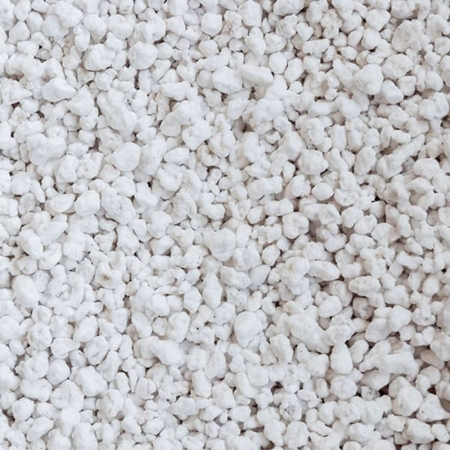
- Substrate: Well-draining with moderate moisture retention: 50% peat or coco, 30% perlite, 20% fine pine bark. pH 5.5-6.5. Pots with drainage holes mandatory. Repot every 2-3 years in spring, into a pot 2-3 cm larger.
- Fertilisation: Balanced liquid fertiliser (NPK 20-20-20) diluted to half strength, once monthly during the growing season (March-September). Do not fertilise in winter. Over-fertilisation causes leaf edge burn.
- Propagation: By dividing the clump during repotting (spring) — the simplest method. Alternatively, via 8-10 cm stem cuttings planted in moist substrate at 24-28°C. Roots appear in 3-4 weeks. Do not propagate by seed — cultivar traits are not preserved.
Aglaonema 'Pink Dolphin' is a plant of good longevity: well-cared-for specimens can live 8-12 years or more, becoming increasingly imposing as the clump thickens and develops lateral shoots. It is a long-term decorative investment that maintains and even intensifies its beauty with age — a rarity in the indoor plant world.
📚 Related blog articles

Lungime: 12 cm
Greutate (kg): 1 Kg
Denumire: Aglaonema
Diametru: 12 cm
Cerințe lumină: Intensitate luminoasă medie spre umbră
Tip plantă: Decorative
Utilizare: Interior
Tip suport: Ghiveci
Material Suport: Plastic
Why are my leaves less pink?
How often do you water Aglaonema 'Pink Dolphin'?
Is Aglaonema 'Pink Dolphin' toxic to pets?
Does Aglaonema 'Pink Dolphin' tolerate low light?
How is Aglaonema 'Pink Dolphin' propagated?
Recommendations

Ai nevoie și de un ghiveci decorativ?