EN/
EN/ Romana
Hoya 'Silver Moon' reverted Ø10.5cm
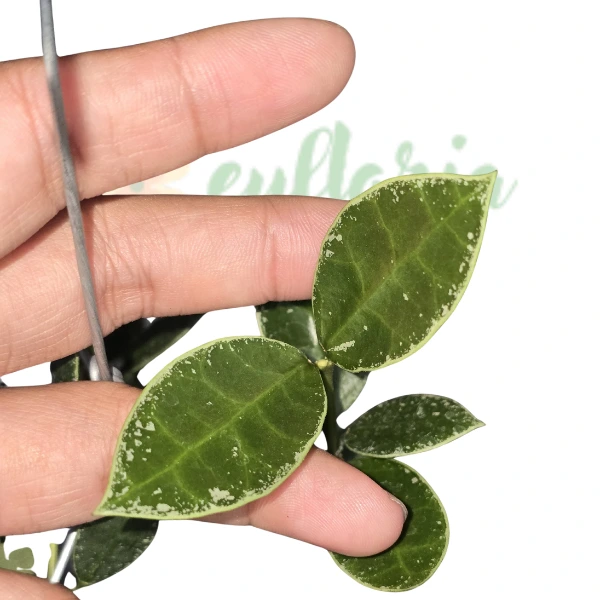
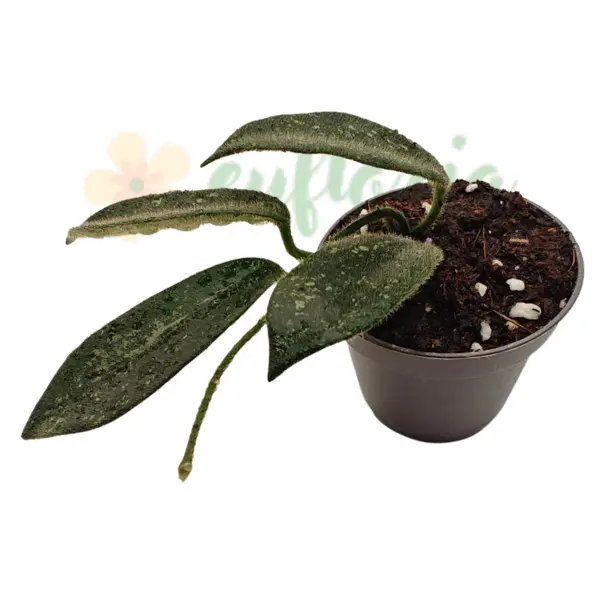
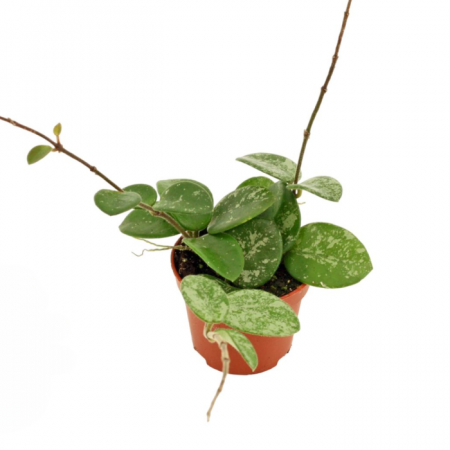
![Hoya 'Silver Moon' reverted — green form of the 'Splash' cultivar, with thick waxy oval intense-green leaves and elegant vining stems, classic Hoya [0]](https://gomagcdn.ro/domains2/eufloria.ro/files/product/medium/hoya-silver-moon-497802.png "Hoya 'Silver Moon' reverted — green form of the 'Splash' cultivar, with thick waxy oval intense-green leaves and elegant vining stems, classic Hoya [0]")
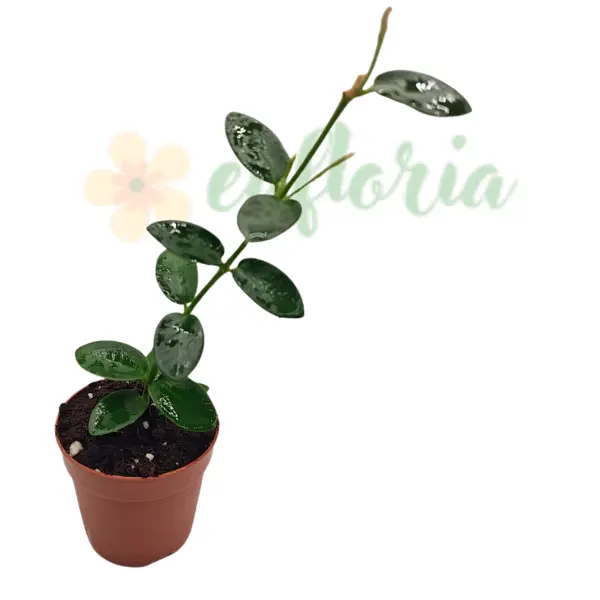
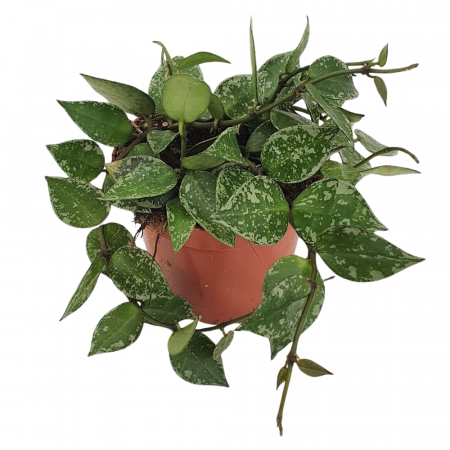
![Hoya 'Silver Moon' reverted — green form of the 'Splash' cultivar, with thick waxy oval intense-green leaves and elegant vining stems, classic Hoya [1]](https://gomagcdn.ro/domains2/eufloria.ro/files/product/medium/planta-naturala-de-interior-hoya-silver-moon-877725.jpg "Hoya 'Silver Moon' reverted — green form of the 'Splash' cultivar, with thick waxy oval intense-green leaves and elegant vining stems, classic Hoya [1]")
![Hoya 'Silver Moon' reverted — green form of the 'Splash' cultivar, with thick waxy oval intense-green leaves and elegant vining stems, classic Hoya [1]](https://gomagcdn.ro/domains2/eufloria.ro/files/product/original/hoya-silver-moon-497802.png "Hoya 'Silver Moon' reverted — green form of the 'Splash' cultivar, with thick waxy oval intense-green leaves and elegant vining stems, classic Hoya [1]")
![Hoya 'Silver Moon' reverted — green form of the 'Splash' cultivar, with thick waxy oval intense-green leaves and elegant vining stems, classic Hoya [2]](https://gomagcdn.ro/domains2/eufloria.ro/files/product/original/planta-naturala-de-interior-hoya-silver-moon-877725.jpg "Hoya 'Silver Moon' reverted — green form of the 'Splash' cultivar, with thick waxy oval intense-green leaves and elegant vining stems, classic Hoya [2]")
Hoya 'Silver Moon' reverted is the green form of the well-known variegated 'Silver Moon' (or 'Splash') cultivar, which has lost its silver variegation and reverted to the classic green form of the parent species. Thick waxy oval intense-green leaves, umbels of star-shaped white-pink flowers fragrant with notes of honey and vanilla. An accessible alternative for Hoya collectors.
Approx height (including pot): 10 cm
Flowering state: No flowers
Country of origin: Netherlands
Pot diameter: 10.5 cm
- Description
- Characteristics
- Reviews (0)
- FAQ
🌿 Hoya 'Silver Moon' reverted — The Classic Green Form of a Silver Cultivar
Hoya 'Silver Moon' reverted is the fully green form of the well-known Hoya 'Silver Moon' cultivar (also known as 'Splash'), a plant that has lost its characteristic silver variegation and returned to the original green form of the parent species. It is an accessible and resilient alternative for Hoya lovers who appreciate the classic charm of this family, without paying the premium price for the variegated form.
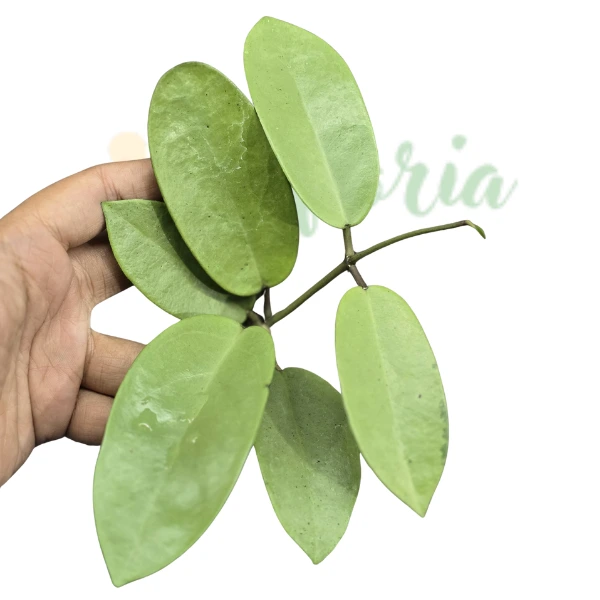
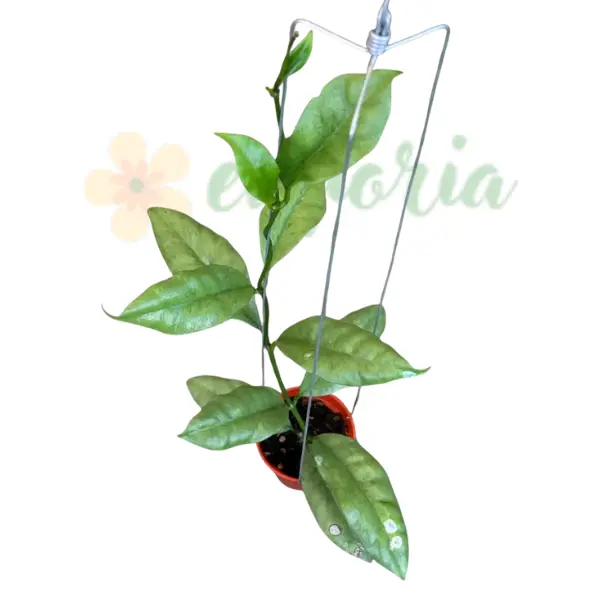
The leaves are oval, thick and waxy, of deep and glossy green, arranged in opposite pairs along the vining, flexible stems. Each leaf retains the firm texture characteristic of Hoyas — waxy-succulent, with a subtle shine that captures light. Even without the silver variegation, the "reverted" form remains a highly decorative plant, with elegant silhouette and vining habit perfect for hanging pots.
At the offered size — Ø10.5cm pot — the plant is mature, with developed stems and numerous leaves, ready to adapt quickly to a new growing environment. It is an ideal plant for beginners wanting to experience "Hoya magic" without the complications of variegated plants, but also for experienced collectors who appreciate botanical classics.
🌍 Botanical Origin
Hoya 'Silver Moon' is a cultivar of the Hoya carnosa species or a closely related hybrid from the Apocynaceae family. The parent species Hoya carnosa was scientifically described in 1810 by the British botanist Robert Brown, the same who established the Hoya genus. It is native to Southeast Asia, where it grows epiphytically on tree trunks in tropical forests.
The term "reverted" refers to the phenomenon by which a variegated plant loses its characteristic variegation and produces entirely green leaves. This process is common in unstable variegated cultivars, especially when the plant receives insufficient light — green zones, more efficient at photosynthesis, gain competitive advantage and become dominant. Once reverted, the plant cannot recover its variegation, but remains vital and decorative in its green form.
🌱 The Foliage
The leaves are oval to slightly elongated, measuring 5–9 cm in length and 3–5 cm in width, with thick, waxy-succulent texture. Color is deep, rich, glossy green, which captures light with a subtle shine. Venation is discreet, and the slightly wavy edges add a subtle detail of texture.
Under strong light, the leaf edges may develop a slightly coppery hue ("sun stress") — a sign that the plant is receiving the optimal amount of light. Leaves grow in opposite pairs, evenly spaced along the stems, creating an orderly and decorative silhouette.
🌸 The Flowers
Hoya 'Silver Moon' produces spherical umbels of 15–30 star-shaped flowers, of delicate white-pink with a more intensely colored center, fragrant with sweet notes of honey and vanilla, more intense in the evening and at night. Mature plants (2–3 years from rooting) usually begin flowering in summer. DO NOT cut flower peduncles after flowers fall — they are perennial and produce new umbels for years.
🌱 Growth Habit and Care
Hoya 'Silver Moon' reverted is a plant with moderate growth, ideal for hanging pots or vertical supports. It develops vining stems that can reach 1–2 meters in cultivation.
- Light: bright indirect, essential for flowering; avoid direct midday sun.
- Temperature: 18–28°C optimal; does not tolerate below 12°C.
- Watering: moderate; let the substrate dry almost completely between waterings. Once a week in summer, every 2–3 weeks in winter.
- Humidity: 50–70% ideal; adapts to 40% as well.
- Substrate: airy, well-drained, for epiphytic plants (pine bark + perlite + sphagnum).
- Fertilization: every 3–4 weeks during the growing season, diluted by half.
- Propagation: via stem cuttings with 2–3 nodes; spring/summer.
🌸 Why Choose 'Silver Moon' reverted
The green "reverted" form of Hoya 'Silver Moon' is the perfect choice for those who want a resilient and beautiful Hoya at an affordable price. It retains all the care qualities of the parent species — resilience, elegant habit, fragrant flowers — without the complications of variegated plants that require special light conditions to maintain pigmentation. It is a plant that rewards basic care with healthy leaves and fragrant flowers, quickly becoming a favorite in any tropical collection.
🌿 Common Problems and Solutions
Yellow leaves: sign of overwatering; let the substrate dry more between waterings, check drainage.
Brown tips: low humidity or water with chlorine; mist leaves weekly with still or rainwater.
Slowed growth: insufficient light; move closer to a source of bright indirect light.
Lack of flowers: the plant is too young (wait 2–3 years), receives too little light, or the pot is too large. Hoyas flower better when slightly root-bound.
🌱 The Difference Between 'Silver Moon' and 'Silver Moon' reverted
Hoya 'Silver Moon' (or 'Splash', as known in some sources) is the variegated cultivar with green leaves outlined by silver patches and splashes, creating a visual effect resembling stars in the sky. This variegation phenomenon is called "splash" — a random spread of cells without chlorophyll that reflect light in a metallic, silver manner.
The "reverted" form represents the same genetic cultivar, but which, for one reason or another (often insufficient light over multiple leaf generations), has lost the ability to produce leaves with silver spots. New leaves appear green, without variegation, and the plant has "reverted" to the green form of the parent species. Although it no longer has the initial silver charm, the green form remains a healthy, resilient and decorative plant.
For collectors who appreciate the pure and simple appearance of a classic Hoya, without additional light requirements for maintaining variegation, the 'reverted' form is a very good choice. The plant retains all its other qualities — fragrant flowers, elegant vining stems, remarkable resilience — at a much more accessible price than the variegated form.
🌸 Safety and Non-toxicity
Hoya 'Silver Moon' reverted, like all Hoyas in the genus, is classified as non-toxic for humans and pets according to toxicology databases (ASPCA, Pet Poison Helpline). The milky sap may cause minor skin irritation in sensitive individuals or mild gastric discomfort if ingested, but contains no dangerous toxins. It is one of the safest plants for homes with curious pets or small children.
🌿 Practical Tips for Optimal Development
To enjoy the maximum from this plant, follow these principles: bright indirect light (but not direct sun), moderate watering with partial drying between waterings, airy substrate specific to epiphytic plants (not regular potting soil), stable temperature between 18 and 28°C. The plant tolerates short periods of neglect, but rewards with abundance for careful care. In 2–3 years of attentive cultivation, you will have a mature, rich plant that will produce its first flower — the moment that rewards patience.
Lungime: 15 cm
Greutate (kg): 0.5 Kg
Denumire: Hoya
Diametru: 10.5 cm
Cerințe lumină: Partial umbra
Tip plantă: Decorative
Utilizare: Interior
Tip suport: Ghiveci
Material Suport: Plastic
What does 'reverted' mean for Hoya 'Silver Moon'?
Is Hoya 'Silver Moon' reverted worth it without variegation?
How often should it be watered?
Is it toxic to cats and dogs?
Can I propagate the green form to obtain variegation?
Recommendations

Ai nevoie și de un ghiveci decorativ?