EN/
EN/ Romana
Hoya guppyi Ø12cm
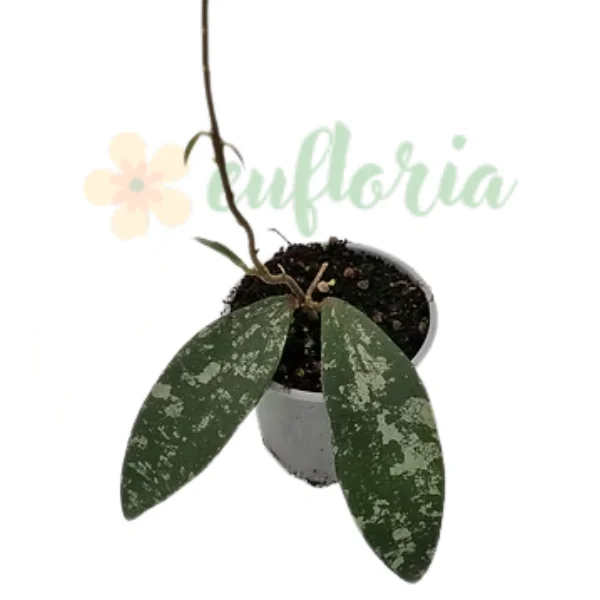
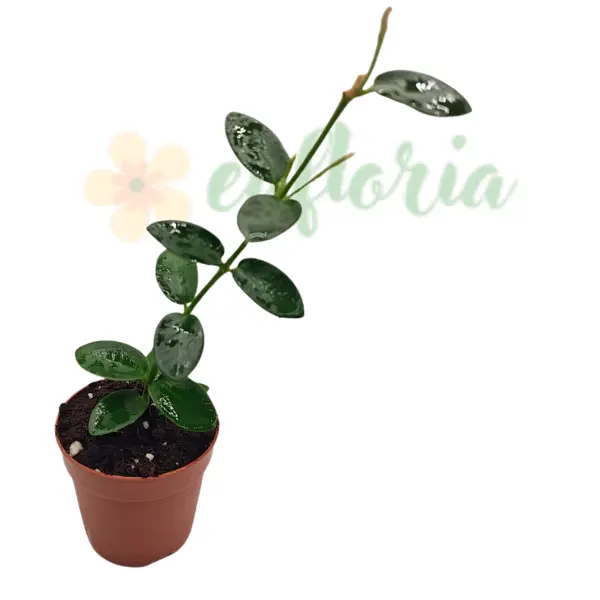
![Hoya guppyi — rare epiphytic vine from the Solomon Islands with deep-green waxy foliage and fragrant flowers [1]](https://gomagcdn.ro/domains2/eufloria.ro/files/product/original/hoya-guppyi-d12cm-671720.jpg "Hoya guppyi — rare epiphytic vine from the Solomon Islands with deep-green waxy foliage and fragrant flowers [1]")
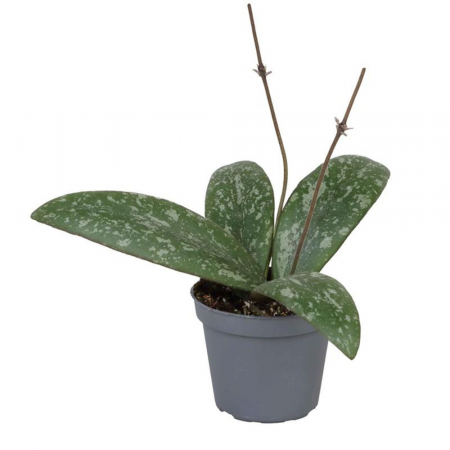
Hoya guppyi is a rare species from the Apocynaceae family, native to the Solomon Islands, prized for its waxy, deep-green foliage with fine veins and a solid texture. Its flowers, clustered in spherical umbels, are creamy white with a reddish centre and sweet fragrance, more intense in the evening. This collector's Hoya grows epiphytically, developing flexible stems that can be trained on a support or left to descend from a hanging pot.
Note: Product images are for guidance only. Due to different batches of imported products, there may be differences between the images on the website and the actual appearance of the products.
Approx height (including pot): 15 cm
Flowering state: No flowers
Pot diameter: 12 cm
- Description
- Characteristics
- Reviews (0)
- FAQ
🌿 Hoya guppyi — A Rare Vine from the Solomon Archipelago
Hoya guppyi is a collector species that carries the signature of its wild homeland: the Solomon Islands, in the South-West Pacific. Belonging to the Apocynaceae family, this Hoya stands out through its thick, waxy foliage of deep green, with fine veins catching the light in silvery reflections. It is one of those plants that seems to gather within it the silence of tropical forests — dense, discreet, yet possessing an elegance that asks to be observed up close.
Unlike Hoya carnosa or Hoya pubicalyx, which have long integrated into common collections, Hoya guppyi remains a rarity. Available specimens are limited, and the plant is sought after by collectors who appreciate less-cultivated species in Europe. Grown with care, it develops long, flexible stems that naturally anchor to supports or descend gracefully from hanging pots.
The plant offered on Eufloria.ro comes in a 12 cm diameter pot with an approximate height of 15 cm. It is a young specimen, yet already mature enough to produce new shoots under suitable conditions. For Hoya enthusiasts, this is an acquisition that completes a collection and, in time, may offer the surprise of a fragrant bloom.
🌍 Origin and Botanical History
Hoya guppyi belongs to the genus Hoya, which includes over 500 described species distributed across South-East Asia, Australia and the tropical Pacific. The species bears the name of Robert John Lechmere Guppy, a British naturalist who collected plants and fossils in the Caribbean and Pacific during the 19th century. The plant was first classified based on specimens gathered from the Solomon archipelago, a group of volcanic islands east of Papua New Guinea.
The natural range of the species extends through the humid tropical forests of the Solomon Islands and neighbouring zones of Oceania. In these regions, the climate is warm and humid year-round, with average temperatures between 24 and 30°C and high atmospheric humidity (70-90%). Hoya guppyi grows epiphytically on tree trunks, without parasitising its host — its roots anchor easily to bark, absorbing moisture from the air and nutrients from organic debris.
The common names associated with the genus — Wax flower, Waxplant, Waxvine — refer to the waxy texture of leaves and flowers, characteristic of all Hoya species. In European cultivation, Hoya guppyi is relatively rare, offered mainly to collectors seeking less-known species within the Hoya genus.
🌱 The Foliage
The leaves are perhaps the most striking feature of this Hoya. Of pronounced elliptical shape, slightly acuminate at the tip, they typically measure 7 to 12 cm long and 3 to 5 cm wide. Their surface is thick, dense, with a pronounced waxy texture that reflects light in metallic shades — a typical look for Hoya species from humid tropical regions.
The dominant colour is a deep, almost dark green, scattered with visible main veins and a fine network of secondary veins. Under intense light conditions, the leaves may develop subtle silvery or bronzed reflections, while young shoots may appear with a slight pink-copper tint, which gradually closes towards mature green.
To the touch, the leaves feel solid, almost rigid — a typical Hoya trait that allows them to retain moisture during dry periods. This quality also makes them resistant to handling, an advantage for plants kept in hanging pots or on supports.
🌸 The Flowers
Hoya guppyi produces spherical inflorescences, called umbels, grouping 10-20 individual small flowers. Each flower measures approximately 8-12 mm in diameter, with a star shape characteristic of the genus, five waxy petals and a well-defined inner crown (corona). The dominant colour is creamy white, sometimes with pale pink tones, while the inner corona often shows a reddish or red-brown centre that contrasts elegantly with the pale petals.
The flowers' fragrance is delicate and sweet, with light honeyed notes, more perceptible in the evening and at night — an adaptive mechanism to attract nocturnal pollinators in the natural habitat. Blooming most often occurs during warm months, late spring and summer, on persistent peduncles (called spurs). It is essential that these peduncles are not cut after flowering — they will produce new blooms in the following years.
In apartment culture, flowering requires patience: the plant must be mature (at least 2-3 years) and receive sufficient light, stable warmth and slight controlled water stress to be stimulated to form flower buds.
🌱 Growth and Development
Hoya guppyi is an epiphytic vine with moderate to slow growth. Initially thin, the stems become woody as the plant matures and can reach lengths of 1-2 m in cultivation. It can be trained on vertical supports (trellises, moss poles) or left to descend naturally from a hanging pot, forming a dense cascade of waxy leaves.
Propagation is most efficient through stem cuttings with 2-3 nodes, placed in moist sphagnum moss or a light mix of perlite and peat. At 70-80% humidity and 24°C, roots appear within 3-6 weeks.
Care requirements:
- Light: bright, indirect light; tolerates direct sun only in the morning and evening.
- Temperature: optimal 20-28°C daytime, minimum 15°C at night; sensitive to cold drafts.
- Watering: moderate — allow the substrate to partially dry between waterings (every 7-10 days in summer, every 14-21 days in winter).
- Humidity: 60-80%; in apartments, use a humidifier or pebble tray with damp pebbles.
- Substrate: airy, well-drained — mix of pine bark (40%), perlite (30%), sphagnum moss (20%) and horticultural charcoal (10%).
- Fertilisation: balanced fertiliser for Hoya or orchids, diluted to half strength, every 3-4 weeks during the growing season.
- Propagation: by stem cuttings with 2-3 nodes, in spring-summer.
Lungime: 12 cm
Greutate (kg): 1 Kg
Denumire: Hoya
Diametru: 12 cm
Cerințe lumină: Strong, indirect light
Tip plantă: Decorative
Utilizare: Interior
Tip suport: Ghiveci
Material Suport: Plastic
How often should I water Hoya guppyi?
Water when the top 2-3 cm of substrate has dried — every 7-10 days in summer and 14-21 days in winter. Use filtered or rainwater at room temperature. The thick leaves retain moisture, so the plant tolerates short dry periods better than excess water.
Is Hoya guppyi toxic to pets?
No, according to ASPCA, the Hoya genus does not appear on the list of plants toxic to dogs, cats or horses. Hoya guppyi is considered non-toxic. However, ingesting any houseplant may cause minor gastric discomfort in sensitive animals.
What is the ideal substrate for Hoya guppyi?
As a tropical epiphyte, Hoya guppyi requires a very airy substrate: 40% pine bark (5-15 mm), 30% perlite, 20% sphagnum moss, 10% horticultural charcoal. Optimal pH 5.5-6.5. Avoid plain universal peat — it causes root rot.
When does Hoya guppyi bloom?
Flowering occurs in late spring and summer, on persistent peduncles (spurs) that must NOT be cut — they will produce new blooms in subsequent years. The plant must be mature (2-3 years) and receive sufficient light. The flowers are small, star-shaped, creamy white with a reddish centre, fragrant.
How can I propagate Hoya guppyi?
Propagation is done through stem cuttings with 2-3 nodes, planted in moist sphagnum moss or a mix of perlite and peat (1:1). At 24-26°C and 70-80% humidity, roots appear within 3-6 weeks. Water propagation is possible, but aquatic roots adapt more slowly to solid substrate.
Ai nevoie și de un ghiveci decorativ?