EN/
EN/ Romana
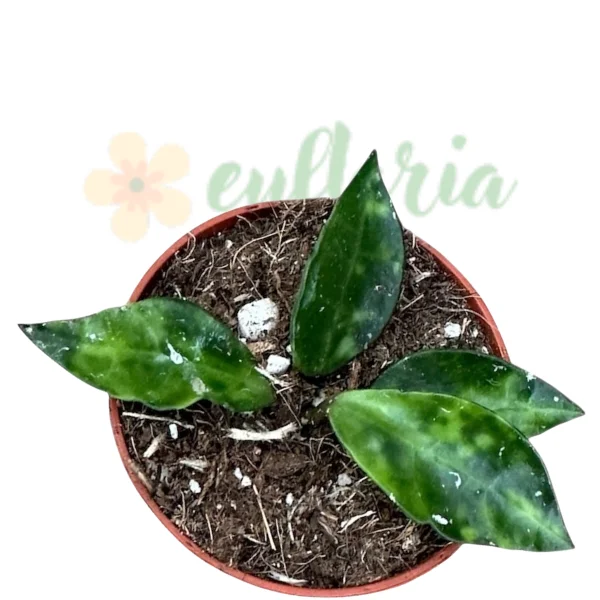
Hoya imbricata Ø14cm
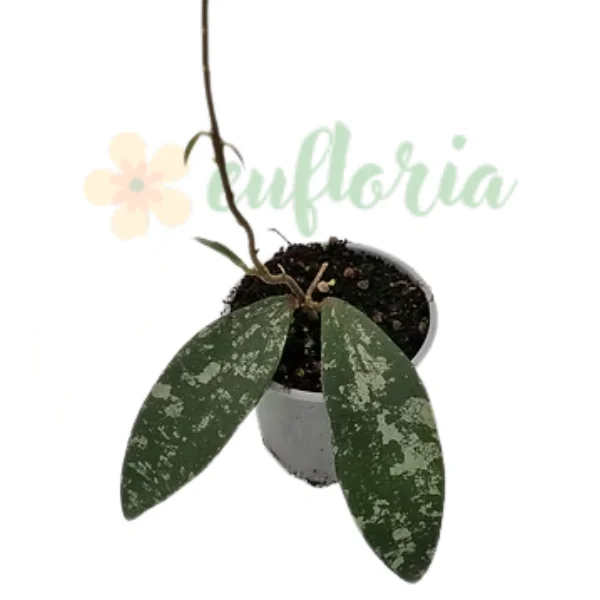
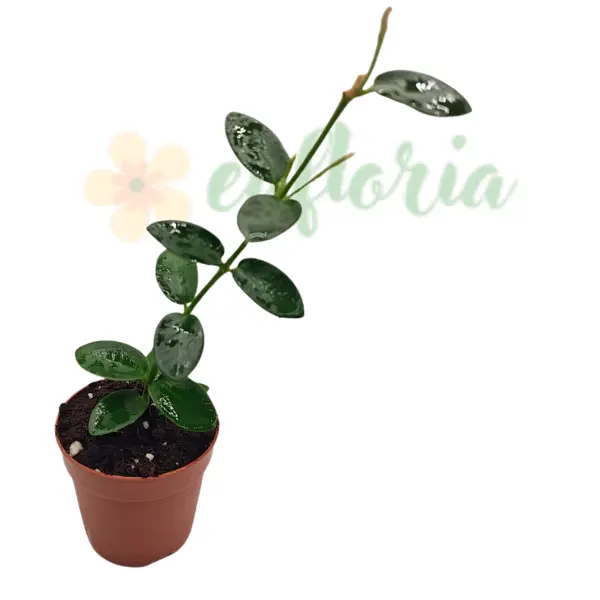
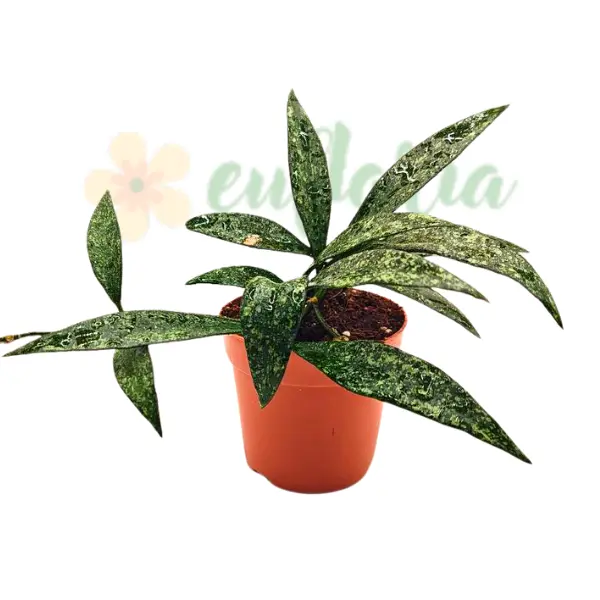
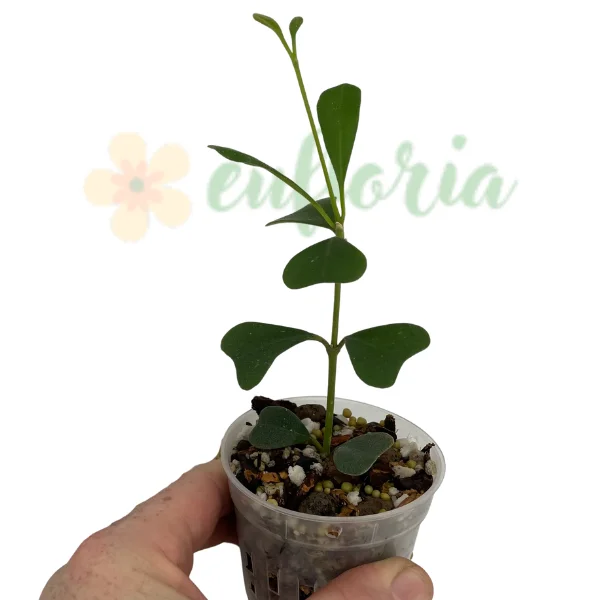
![Hoya imbricata - rare epiphytic plant with shield-shaped leaves growing flat against surfaces [1]](https://gomagcdn.ro/domains2/eufloria.ro/files/product/original/hoya-imbricata-d14cm-999187.jpg "Hoya imbricata - rare epiphytic plant with shield-shaped leaves growing flat against surfaces [1]")
Hoya imbricata is an exceptional epiphytic species from the Apocynaceae family, native to the Philippines, celebrated for its massive, shield-shaped leaves that grow overlapping like roof tiles. It is a rare “shingle plant,” perfect for tropical plant collectors, with fragrant creamy-white flowers and an entirely unique growth habit.
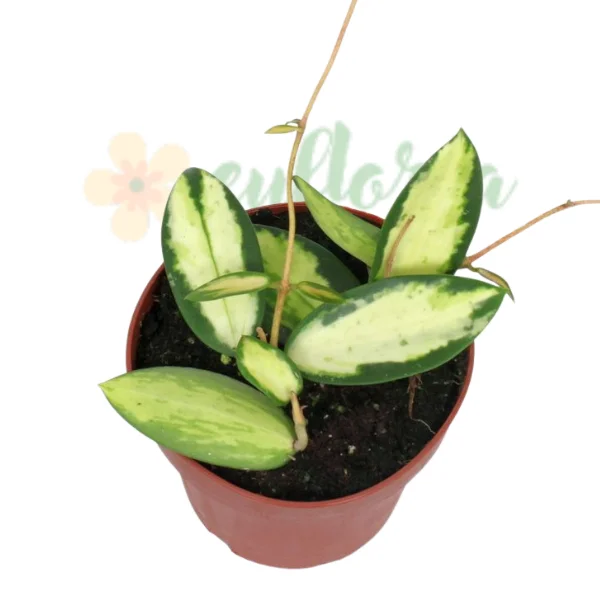
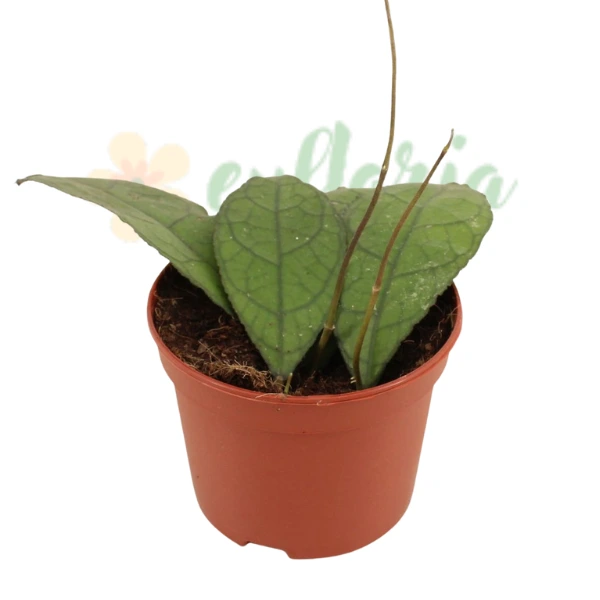
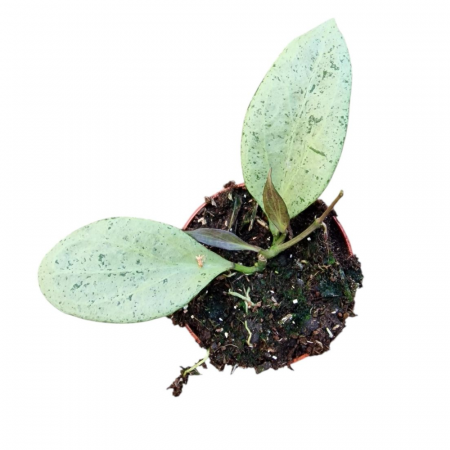
Note: Product images are for guidance only. Due to different batches of imported products, there may be differences between the images on the website and the actual appearance of the products.
Approx height (including pot): 40 cm
Flowering state: No flowers
Pot diameter: 14 cm
- Description
- Characteristics
- Reviews (0)
- FAQ
🌿 A Living Sculpture from the Tropical Jungle
Hoya imbricata is, without a doubt, one of the most fascinating and unconventional species in the Hoya genus — a plant that defies expectations and redefines what a spectacular houseplant can be. Unlike most Hoyas, which grow as climbing vines with paired leaves along their stems, Hoya imbricata adopts an entirely special lifestyle: it is a “shingle plant” — meaning its massive, flat, shield-shaped leaves grow pressed against the surface they climb, overlapping like the tiles of an ancient roof.
This unique adaptation makes Hoya imbricata a true work of botanical art, an organism that seems more like a living sculpture than a conventional plant. Its enormous leaves, reaching diameters of up to 25 cm, form small “shelters” on the support they grow upon, harbouring a microcosm of humidity and adventitious roots beneath each leaf. It is a myrmecophilous plant — in its natural habitat, the space between the leaves and the bark of the host tree is often colonised by ants, which contribute to the plant's fertilisation with their organic debris.
For rare plant collectors and tropical botany enthusiasts, Hoya imbricata represents a coveted trophy — a plant that transforms any indoor corner into a window onto the Southeast Asian jungle.
🌍 Origin and Botanical History
Hoya imbricata was first described by English botanist John Lindley in 1844, in his work “Edwards's Botanical Register.” The specific name “imbricata” comes from the Latin “imbricatus,” meaning “arranged like tiles” or “overlapping” — a perfect reference to the way the leaves overlap on their support.
The species is native to the Philippines and other islands in Southeast Asia, where it grows in humid tropical forests at altitudes between 200 and 1,200 metres. In its natural habitat, Hoya imbricata colonises the trunks of large trees, forming vertical “carpets” of overlapping leaves that can cover impressive areas of bark.
Its taxonomic classification places it in the Apocynaceae family, subfamily Asclepiadoideae, alongside other species in the Hoya genus. However, its unique morphology clearly differentiates it from any other species in the genus.
🌱 The Foliage
The leaves of Hoya imbricata are, without exaggeration, the most impressive in the entire Hoya genus. Each leaf is a circular or slightly oval shield, with a diameter that can reach 25 cm in mature specimens. The texture is thick, leathery, with a slightly glossy surface that reflects light in a subtle and elegant manner.
The colour is a deep, dark green on the upper surface, with lighter veins forming a delicate pattern visible in strong light. The lower surface, pressed against the support, is lighter and features a dense network of adventitious roots that anchor the plant to its support.
What makes the leaves truly extraordinary is their growth pattern: each leaf develops perfectly parallel to the support, and successive leaves partially overlap, creating a visual effect reminiscent of roof tiles or the scales of an exotic fish.
🌸 The Flowers
Hoya imbricata flowers are grouped in compact umbels that emerge from beneath the leaves on short peduncles. Each umbel contains approximately 15-25 small, star-shaped flowers, each approximately 1-1.5 cm in diameter.
The flower colour ranges from creamy white to pale yellow, with a central crown (corona) in shades of light pink to coral red. The flowers emit a sweet, subtle fragrance that intensifies during the evening hours. As with all Hoyas, the flowers produce abundant nectar — clear, sticky droplets that gleam like tiny jewels on the flower surface.
In cultivation, Hoya imbricata flowering requires patience and optimal light and humidity conditions. Mature, well-established plants can bloom annually during the warm season.
🌱 Growth Habit and Development
Hoya imbricata grows as a “shingle” epiphytic plant — a rare growth habit within the Hoya genus. The main stem climbs vertically on its support, emitting strong adventitious roots, while the leaves grow pressed against the climbing surface. Growth rate is moderate — approximately 2-4 new leaves per year under good conditions.
In indoor cultivation, this species can be grown on a bark slab, tree trunk, or a flat vertical support. Alternatively, it can be left to grow hanging, with leaves dangling freely, although this method does not faithfully reproduce the natural habitat.
- Light: Bright, indirect light. Tolerates medium light, but growth will be slower.
- Temperature: 18-28°C, minimum 15°C. Does not tolerate cold.
- Watering: Moderate, allowing the substrate to dry slightly between waterings. Constant moisture on roots.
- Humidity: High, 60-80%. Frequent misting or pebble tray with water.
- Substrate: Well-draining substrate: pine bark, sphagnum, perlite.
- Fertilisation: Monthly with diluted fertiliser during the growing season (April-September).
- Propagation: Through stem cuttings with at least one leaf and adventitious roots.
Lungime: 14 cm
Greutate (kg): 1.5 Kg
Denumire: Hoya
Diametru: 14 cm
Cerințe lumină: Strong, indirect light
Tip plantă: Decorative
Utilizare: Interior
Tip suport: Ghiveci
Material Suport: Plastic
How often should I water Hoya imbricata?
Hoya imbricata should only be watered when the substrate has dried out completely. During the warm season, this means approximately once every 7-10 days, and in winter every 2-3 weeks. Being an epiphytic plant, it prefers well-draining substrate and does not tolerate excess water, which can cause root rot.
Is Hoya imbricata toxic to pets?
Hoya imbricata is considered non-toxic for both humans and pets. The mild latex the plant produces does not contain dangerous substances. However, it is recommended to place the plant where pets cannot excessively chew or damage it.
What is the best substrate for Hoya imbricata?
Hoya imbricata requires a very well-draining substrate, similar to orchid mix. An ideal blend contains pine bark, perlite, sphagnum moss, and activated charcoal. Being an epiphytic plant that grows on tree trunks in its natural habitat, its roots need excellent aeration and cannot tolerate compact or waterlogged substrate.
Why does Hoya imbricata have shield-shaped leaves?
The flat, shield-shaped leaves of Hoya imbricata are an evolutionary adaptation to epiphytic life. In its natural habitat, the plant grows pressed against tree trunks, and its leaves overlap like roof tiles, forming pockets between them and the bark. These pockets collect decomposing organic matter and moisture, providing the plant with additional nutrients.
When does Hoya imbricata bloom indoors?
Hoya imbricata can bloom indoors once the plant has reached maturity, usually after 2-3 years of growth. Flowers appear in small umbels of yellowish-white or light pink, with a subtle fragrance. To encourage blooming, provide bright indirect light, a winter rest period with reduced watering, and avoid moving the plant while flower buds are forming.
Ai nevoie și de un ghiveci decorativ?