EN/
EN/ Romana
Hoya guppyi Ø12cm
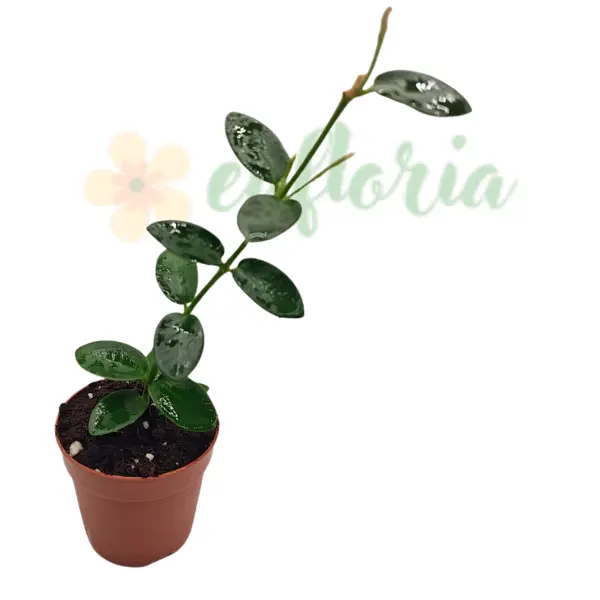
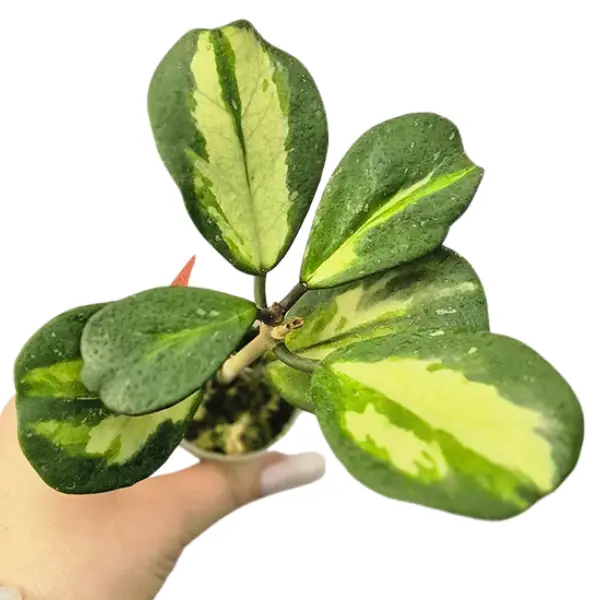
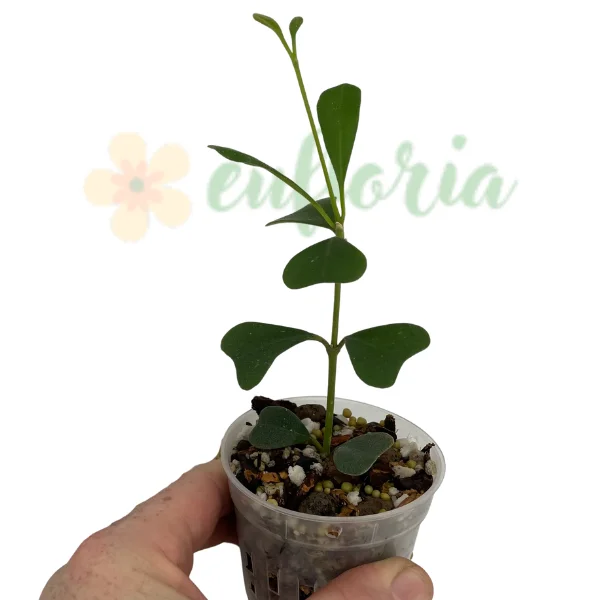
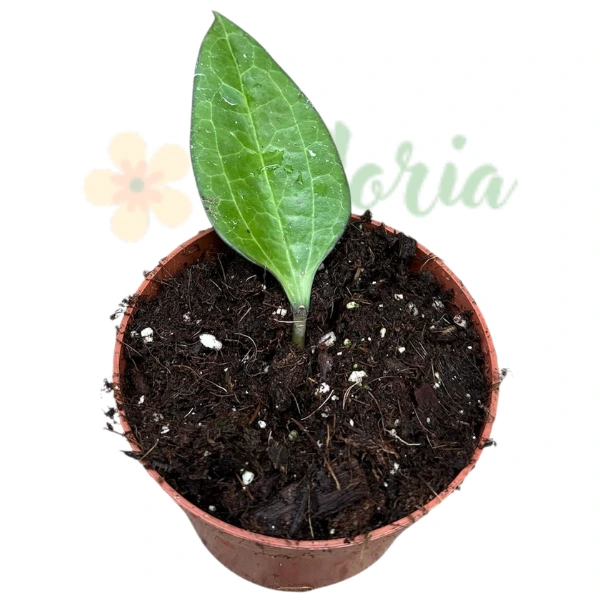
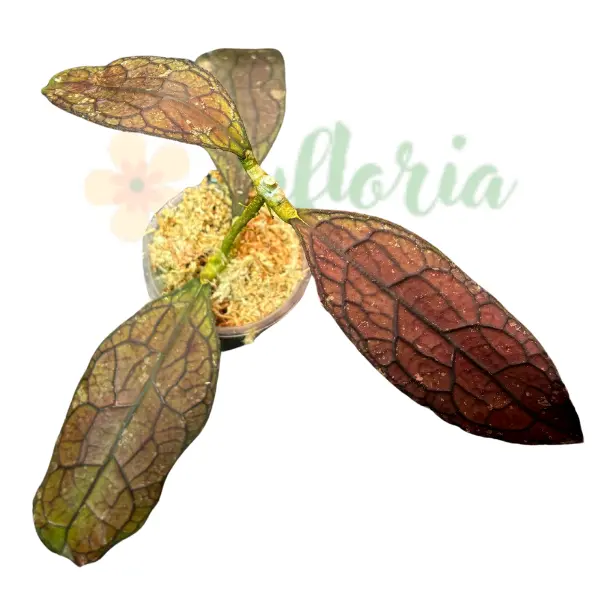
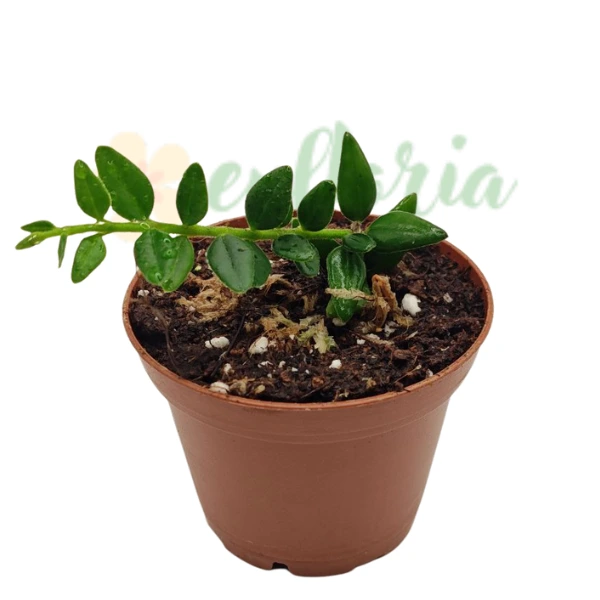
![Hoya guppyi - tropical houseplant with deep green foliage and fragrant flowers [1]](https://gomagcdn.ro/domains2/eufloria.ro/files/product/original/hoya-guppyi-d12cm-363108.jpg "Hoya guppyi - tropical houseplant with deep green foliage and fragrant flowers [1]")
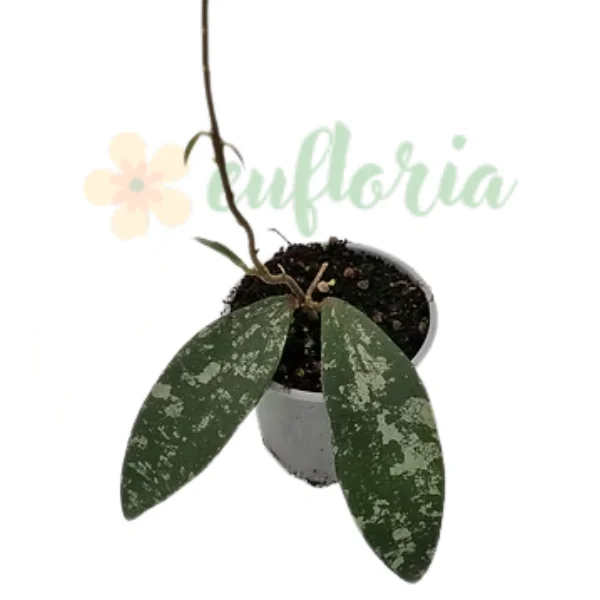
Hoya guppyi is a rare species from the Apocynaceae family, native to Papua New Guinea, prized for its compact, waxy, deep green foliage and fragrant star-shaped flowers. A collector's plant for rare species enthusiasts, with moderate growth and an elegant semi-trailing habit.
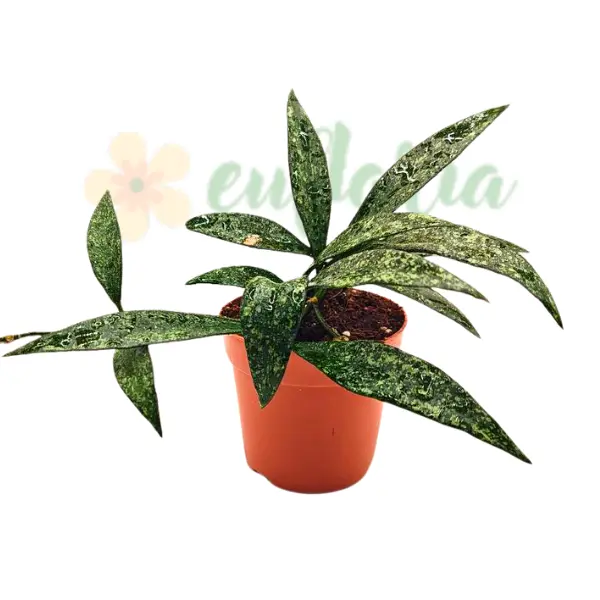
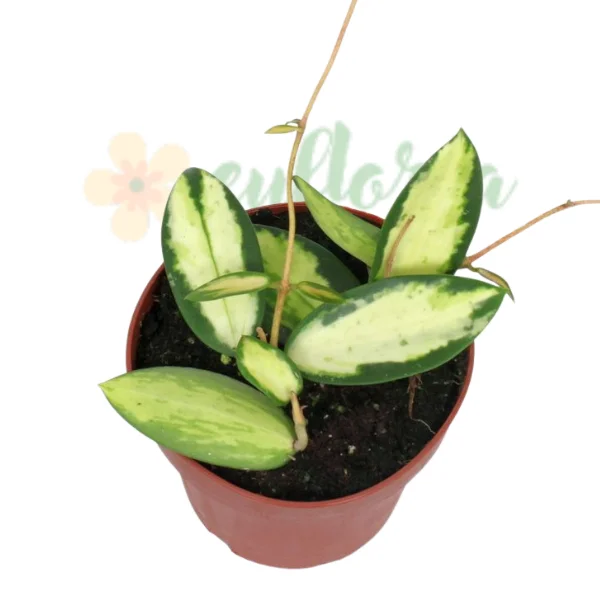
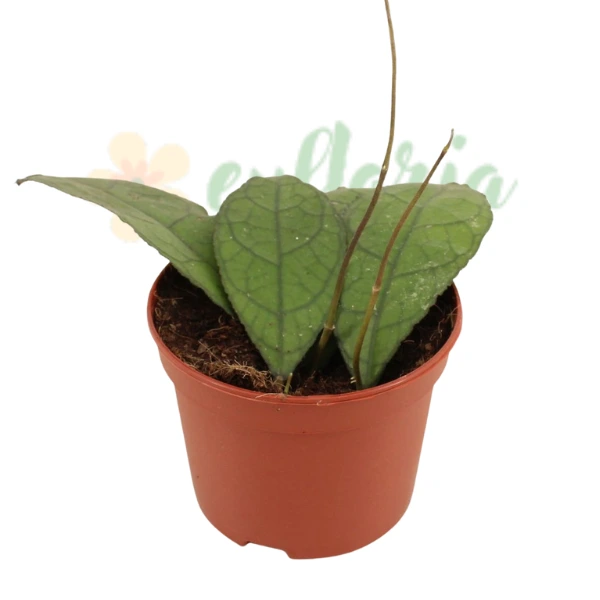
Note: Product images are for guidance only. Due to different batches of imported products, there may be differences between the images on the website and the actual appearance of the products.
Approx height (including pot): 15 cm
Flowering state: No flowers
Pot diameter: 12 cm
- Description
- Characteristics
- Reviews (0)
- FAQ
🌿 A Botanical Jewel from the Heart of Papua
Hoya guppyi is one of the least known and rarest species in the vast Hoya genus, a plant that bears the name of Henry Brougham Guppy, the British naturalist who explored the South Pacific islands in the second half of the 19th century. This fascinating species belongs to the Apocynaceae family (and subfamily Asclepiadoideae), the large and diverse family that encompasses all hoyas, as well as other remarkable plants like Stephanotis and Ceropegia. What makes Hoya guppyi truly special is its extraordinary rarity in cultivation — it is a species that few collectors have had the privilege of caring for, transforming it into a true botanical trophy.
The discovery and description of Hoya guppyi are closely linked to the history of botanical explorations in Melanesia. Guppy, perhaps better known for his contributions to geology than to botany, collected numerous plant specimens during his travels, and this species preserves his memory in the horticultural world. The plant emanates a discreet, almost shy charm, with its small, oval, deep green leaves that seem to capture and concentrate all the vital energy of the tropical jungles from which it originates.
🌍 Origin and Botanical History
Hoya guppyi is native to Papua New Guinea and neighbouring islands in Melanesia, a region that represents one of the richest biodiversity hotspots in the world. This geographical area, characterized by dense tropical forests, high humidity, and constant temperatures throughout the year, provides ideal conditions for the development of epiphytic hoyas.
The species was described within the botanical classifications of the South Pacific flora. In its natural habitat, Hoya guppyi grows as an epiphyte — anchoring itself to tree trunks and branches in the middle layer of the tropical forest, at altitudes between 200 and 1,200 metres. There it benefits from light filtered through the canopy, constant humidity, and the organic substrate formed by mosses, lichens, and decomposing plant matter.
🌱 Foliage
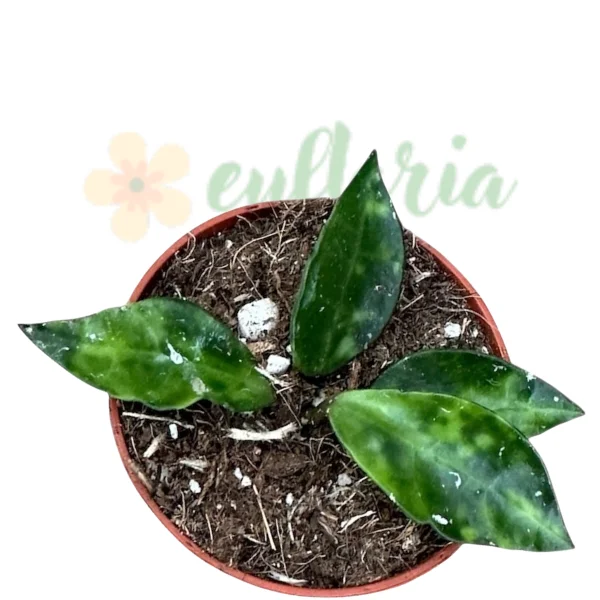
The leaves of Hoya guppyi are fascinating in their discreet elegance. Relatively small compared to other species in the genus, they measure between 4 and 8 cm in length and 2-4 cm in width, having an ovate to elliptical shape with a slightly acuminate tip. The leaf surface has a subtle waxy texture, a typical hoya trait, giving them a delicate sheen when light hits them at the right angle.
The leaf colour is a medium to deep green, uniform, with slightly lighter central veins creating a fine pattern on the leaf surface. The leaves are arranged oppositely on the stem, creating a pleasing symmetry that gives the plant a tidy, balanced appearance. To the touch, they feel firm but flexible, with a medium thickness suggesting good water storage capacity — an adaptation to short drought periods in the natural habitat.
🌸 Flowers
The flowers of Hoya guppyi are a true surprise for those patient enough to wait for blooming. Grouped in small but dense umbels, the flowers have the star shape characteristic of the Hoya genus, with five waxy petals that curve slightly backward. Their colour ranges from creamy white to pale yellow, with a darker central corona that creates a pleasant contrast.
The flower fragrance is sweet and discreet, intensifying in the evening and night hours when it attracts natural pollinators. Each umbel can contain between 10 and 20 individual flowers, and the flower peduncles are persistent — do not cut them after blooming, as they will produce new flowers in subsequent seasons.
🌱 Growth Habit and Development
Hoya guppyi has a semi-trailing growth habit, with thin but resilient stems that can extend up to 1-2 metres in length. Growth is moderate, the plant developing at its own pace, unhurried, adding a few pairs of new leaves per season. This peaceful growth rhythm makes each new leaf a small event for the caretaker.
The stems lend themselves excellently to being guided on a support — a wire hoop, a small trellis, or even a piece of cork on which the plant can anchor with its adventitious roots. Alternatively, it can be left to cascade freely from a hanging pot, where it will create a delicate green waterfall.
- Light: Bright, indirect light. Tolerates a few hours of direct morning sun, but avoid strong midday sun.
- Temperature: 18-28°C optimal. Minimum 15°C in cold season. Does not tolerate frost.
- Watering: Allow substrate to dry slightly between waterings. Every 7-10 days in summer, 14-18 days in winter.
- Humidity: Prefers 60-80% humidity. Mist leaves periodically or use a humidifier.
- Substrate: Airy mix: 40% pine bark, 30% perlite, 30% peat/coco coir.
- Fertilizing: Balanced fertilizer diluted to half strength, once monthly spring-summer.
- Propagation: Through stem cuttings with 2-3 nodes, in moist substrate, in warmth.
Lungime: 12 cm
Greutate (kg): 1 Kg
Denumire: Hoya
Diametru: 12 cm
Cerințe lumină: Strong, indirect light
Tip plantă: Decorative
Utilizare: Interior
Tip suport: Ghiveci
Material Suport: Plastic
How often should I water Hoya guppyi?
Hoya guppyi prefers moderate watering. Allow the substrate to partially dry out between waterings, then water thoroughly. During the warm season, water approximately once a week, and in winter reduce frequency to once every two weeks. Avoid water accumulation in the saucer, as roots are sensitive to rot.
Is Hoya guppyi toxic to pets?
No, Hoya guppyi is considered non-toxic for both humans and pets (cats and dogs). The Hoya genus is recognised as safe, with no toxic substances in leaves or stems. The mild latex the plant produces when cut does not contain dangerous components.
What substrate is recommended for Hoya guppyi?
Hoya guppyi requires a well-draining and airy substrate. An ideal mix contains pine bark, perlite, and coconut coir in equal parts. Being an epiphytic plant, the roots need good air circulation. Avoid overly compact substrates or those that retain excessive moisture.
When does Hoya guppyi bloom indoors?
Hoya guppyi can bloom indoors once it reaches maturity, usually after 2-3 years of growth. Flowers typically appear during the warm season (spring-summer) and are grouped in small, fragrant umbels. To encourage blooming, provide bright indirect light and a slight cooling period during winter.
How do I propagate Hoya guppyi?
Hoya guppyi is most easily propagated through stem cuttings. Cut a stem segment with 2-3 nodes and at least one leaf, let it callous for 24 hours, then plant it in moist perlite and sphagnum substrate. Maintain high humidity and a temperature of 20-25°C. Rooting typically takes 4-6 weeks.
Ai nevoie și de un ghiveci decorativ?