EN/
EN/ Romana
Dracaena marginata Ø19cm
![Dracaena marginata - Madagascar Dragon Tree [1]](https://gomagcdn.ro/domains2/eufloria.ro/files/product/original/dracaena-marginata-d19cm-092524.jpg "Dracaena marginata - Madagascar Dragon Tree [1]")
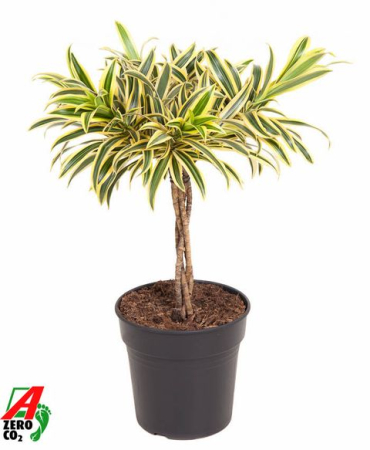
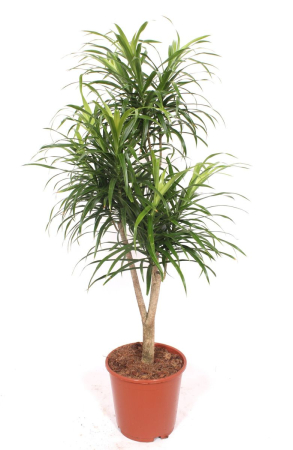
Dracaena marginata (dragon tree) – a sculptural plant with narrow, long leaves with red-bordeaux edges. Minimalist, modern silhouette. Extremely resilient, tolerates dry air and moderate light. Note: toxic to pets if ingested.
This plant will be imported after you order. It has a minim mandatory quantity.: If you want to order fewer quantities, contact us for a personalized offer
Grower:

Delivery date: 1-2 weeks
- Description
- Characteristics
- Reviews (0)
- FAQ
🌿 Dracaena marginata – The Elegant Dragon with Thin Red-Edged Leaves
Dracaena marginata, popularly known as the dragon tree or red-edged dracaena, is an indoor plant with an unmistakable sculptural silhouette. Its thin, sinuous stems are crowned by tufts of narrow, long, and elegant leaves with red-bordeaux margins that contrast beautifully with the dark green centre. Its minimalist, modern appearance makes it one of the most sought-after houseplants for contemporary spaces.
🌍 Origins & Botanical History
Dracaena marginata originates from Madagascar, where it grows in dry, rocky areas. It belongs to the Asparagaceae family, genus Dracaena, comprising approximately 120 species. The name “marginata” refers to the distinctive red margins of the leaves. In popular culture, dracaenas are associated with dragons due to the red resin produced by some related species, known as “dragon’s blood.”
🌿 Foliage – Thin Swords with Fiery Edges
The leaves are the defining feature. Very narrow (1–2 cm) and long (30–50 cm), they have a linear shape resembling miniature swords. The margins are coloured in intense red-bordeaux, while the centre remains dark green. The leaves cluster in tufts at the stem tips, creating a miniature exotic palm appearance.
The stems are thin, woody, and often sinuous or branching, adding a sculptural character as the plant matures.
🌱 Growth Habit & Development
Dracaena marginata can reach 100–200 cm indoors, with slow to moderate growth. It prefers moderate to bright indirect light, temperatures of 18–26°C, and moderate watering, allowing the soil to partially dry. Very tolerant of dry air and less-than-ideal conditions, excellent for offices and apartments.
Denumire: Dracaena
Cerințe lumină: Partial umbra
Tip plantă: Decorative
Utilizare: Interior
Tip suport: Ghiveci
Material Suport: Plastic
Is Dracaena marginata toxic for pets?
Yes, Dracaena marginata is toxic to dogs and cats. Ingestion of leaves may cause symptoms such as vomiting, excessive drooling, dilated pupils, and loss of appetite. Keep the plant in a location inaccessible to pets.
How to properly water Dracaena marginata?
Water Dracaena marginata moderately, allowing the top 2-3 cm of substrate to dry out between waterings. During the warm season, water once every 7-10 days, and in winter reduce the frequency to once every 2-3 weeks. Avoid overwatering, which can lead to root rot. Use room-temperature water.
What type of light does Dracaena marginata prefer?
Dracaena marginata prefers bright indirect light but also adapts to lower light conditions. Avoid direct sunlight, which can burn the leaves. A bright location without direct light is ideal. The reddish leaf margins become more vivid in good lighting conditions.
Is Dracaena marginata suitable for the office?
Yes, Dracaena marginata is one of the most popular office plants. It adapts excellently to artificial lighting, tolerates the dry air of air-conditioned offices, and does not require frequent care. Additionally, it helps purify the air by removing toxic substances from the indoor environment.
What substrate is recommended for Dracaena marginata?
Dracaena marginata prefers a well-draining, slightly acidic substrate. A mix of universal potting soil with perlite or sand is ideal. Make sure the pot has drainage holes to prevent excess water accumulation. Repotting is recommended once every 2-3 years, in spring.
Does Dracaena purify the air?
Yes, Dracaena species are among the most effective air purifiers according to NASA. They remove formaldehyde, benzene, trichloroethylene and xylene from indoor air.
Why do Dracaena leaves turn yellow?
Yellow leaves may indicate overwatering, fluoridated water, or insufficient light. Reduce watering, use filtered water and move the plant to a brighter spot.
Ai nevoie și de un ghiveci decorativ?