EN/
EN/ Romana
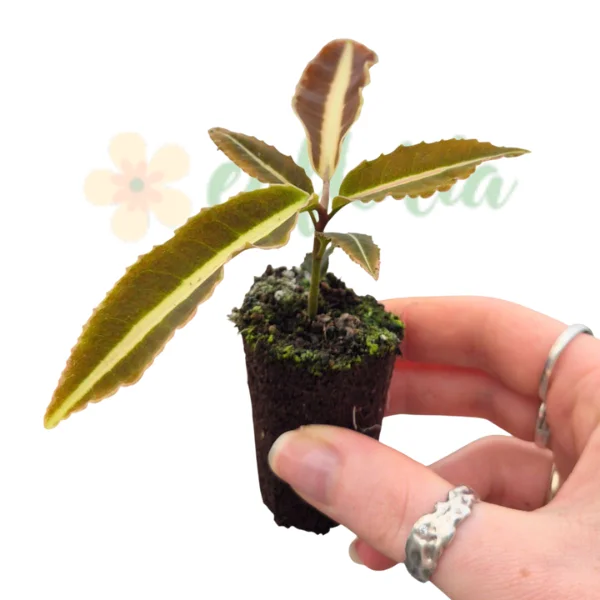
Labisia pumila Ø5cm
![Labisia pumila - rare tropical plant with compact deep green foliage, ideal for terrariums [1]](https://gomagcdn.ro/domains2/eufloria.ro/files/product/original/labisia-obtusifolia-kura-kura-d5-copie-100740.webp "Labisia pumila - rare tropical plant with compact deep green foliage, ideal for terrariums [1]")
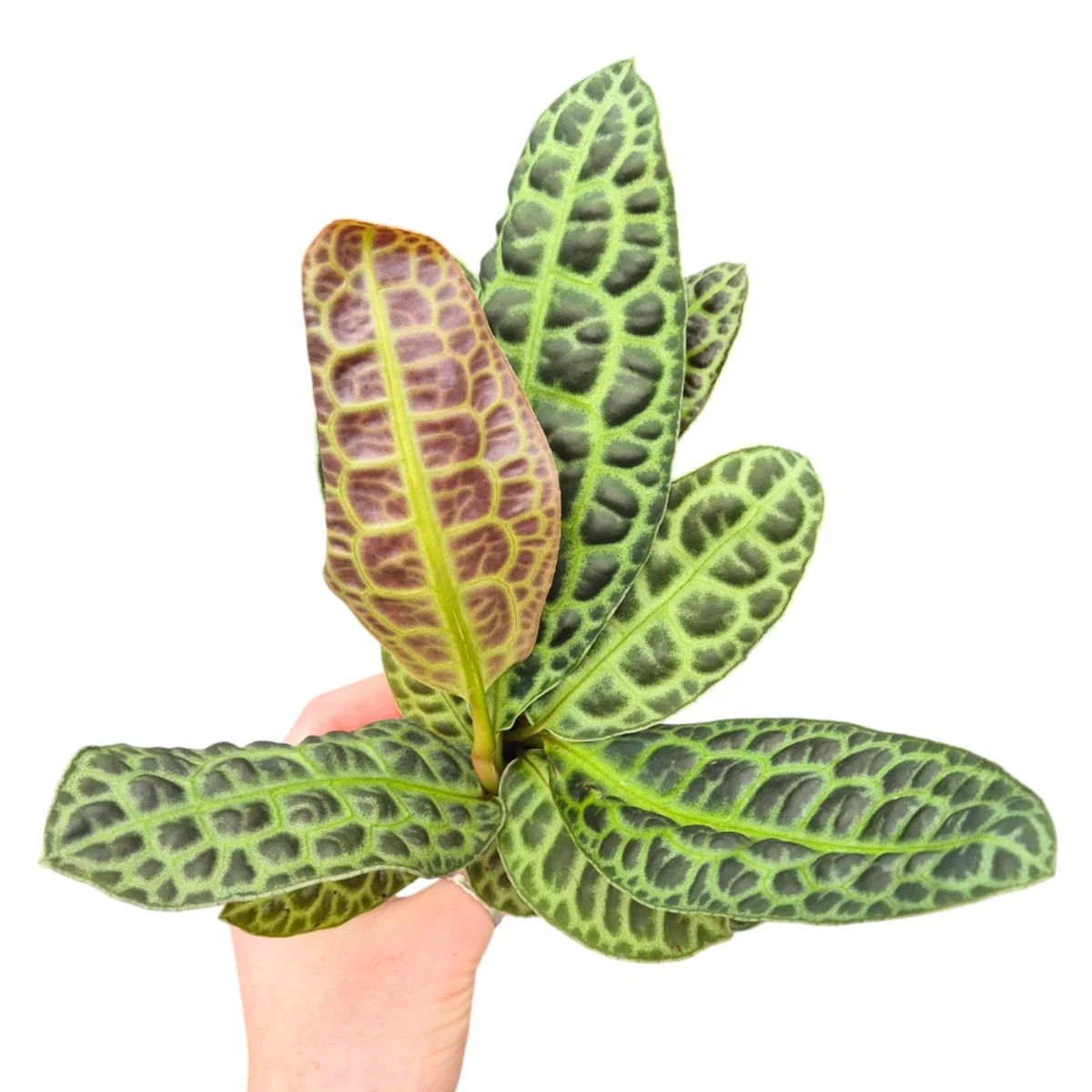
Labisia pumila — rare tropical plant from the Primulaceae family, native to the humid forests of Southeast Asia. Elongated, deep-green leaves with a velvety sheen and reddish undertones on the underside. Ideal for terrariums, vivariums, and miniature plant collections. Prefers indirect light and high humidity. Considered non-toxic.
Approx height (including pot): 15 cm
Flowering state: No flowers
Pot diameter: 5 cm
- Description
- Characteristics
- Reviews (0)
- FAQ
🌿 Labisia pumila — Quiet Elegance from a Hidden Corner of Asian Forests
Labisia pumila is one of those species that doesn't shout its beauty — it whispers it. With its compact habit, dense rosettes of elongated leaves, and discreet presence in the humid understory of the tropical forests of Southeast Asia, this plant conveys an ancestral stillness, a slow and steady rhythm that contrasts with the hurry of the modern world. It is a plant for connoisseurs, for those who appreciate not spectacle but depth; not the brilliance of a single day, but the consistency of days that add up to a memorable presence.
Originating from the shaded forests of Malaysia, Indonesia, Thailand, and the Philippine islands, Labisia pumila grows under the dense shade of tall tropical trees, on soils rich in forest humus and under high humidity. Its deep green leaves, with a matte velvet finish and slightly prominent veins, absorb the little light that filters through the canopy and transform it sparingly into vital energy. It is a master of economy, of patience — growing slowly but with tireless elegance, adding a new leaf with the rhythm of a plant that understands beauty is never in a hurry.
In indoor cultivation, this species takes on a special role: that of a centerpiece for terrariums, vivariums, and miniature plant collections. Its discreet habit makes it suitable for enthusiasts who don't seek the ephemeral spectacular, but the coherence of a calming presence. Behind the glass of a tropical terrarium, Labisia pumila becomes a small living painting — a fragment of Asian forest brought into the home, with all its delicate details preserved intact.
🌍 Origin and Botanical History
Labisia pumila belongs to the Primulaceae family (formerly classified in Myrsinaceae), a rich taxonomic group that includes well-known genera such as Ardisia, Primula, and Cyclamen. The species was described in botanical literature during the 19th century, a period when European explorers documented the tropical flora of Southeast Asia with unprecedented intensity. The Labisia genus is relatively small, with only a handful of species spread across the moist forests of Southeast Asia, and L. pumila is the best known and most appreciated among them.
The genus name "Labisia" comes from botanical Latin and was proposed to group these small plants with compact rosettes and discreet inflorescences. The specific epithet "pumila" derives from the Latin "pumilus", meaning "small" or "dwarf", and accurately describes the modest dimensions of the mature plant, which rarely exceeds 30-40 centimeters in height. Despite this modest stature, the plant has a rich botanical and cultural history, disproportionate to its physical size.
In its natural habitat, Labisia pumila grows in tropical forests from sea level up to approximately 1,500 meters altitude, preferring shaded locations beneath the canopy of tall trees, where light is permanently filtered and humidity remains consistently high. It can be found from the Malay Peninsula to the Indonesian archipelago, through southern Thailand and the Philippine islands, in areas with abundant rainfall and constant temperatures between 20 and 28 degrees Celsius year-round.
In local tradition, the plant holds a special place: it is known in Malaysia as "Kacip Fatimah" — a medicinal plant used for centuries in the preparation of traditional remedies for women. This dual status — as an ornamental plant appreciated by collectors and as a medicinal plant revered by local culture — gives it a special aura, a scent of antiquity and secrecy that makes it fascinating for any collector attentive to context and story. Other regional names exist, such as "Selusoh Fatimah" or "Rumput Siti Fatimah", each carrying a distinct cultural nuance.
🌱 The Foliage — Elegance in Miniature
The leaves of Labisia pumila are, without a doubt, the most expressive feature of this species and the main reason it captures collectors' hearts. Arranged in a dense rosette, emerging from a short underground rhizome, they form a consistent green carpet that seems more sculpted than grown. Individual size ranges from 5 to 25 centimeters in length, depending on the plant's age and growing conditions, and their shape is elongated, with a slightly pointed tip and a base gradually narrowing into a short petiole.
The dominant leaf color is a deep, profound green with a matte, velvet-like luster reminiscent of peach skin or fine velvet. The central vein, lighter in color — sometimes with a creamy or silvery tint — is clearly drawn on the upper surface, giving the leaf a subtle visual rhythm and a line of symmetry that the eye follows with pleasure. On the underside, leaves may display reddish, pinkish, or even purplish hues — a trait that appears more frequently in plants grown under medium-intensity light and becomes a pleasant visual surprise when the plant is viewed from different angles.
The leaf texture is fine but with a firm consistency, reminiscent of rice paper or thin parchment. To the touch, the surface is warm and slightly rough, and the margins are entire or barely serrated, without thorns or disturbing asperities. When the plant is properly hydrated, the leaves retain their turgidity and discreet, velvety sheen that makes it so attractive in terrarium compositions. Under adequate light, newly emerged leaves sometimes display fresh yellow-green tones, gradually evolving into the mature deep green — a beautiful chromatic transition unfolding over several weeks.
🌸 Flowers and Fruits
Although not known for spectacular flowers, Labisia pumila produces modest yet delightful inflorescences for connoisseurs who look closely. The flowers appear grouped in short panicles, with small petals, whitish or pale pink, decorated with fine purple dots — a detail only noticed upon careful examination, with a magnifying glass or in the right light. Each tiny flower measures a few millimeters, and the entire inflorescence rarely exceeds 5-7 centimeters, seemingly hidden beneath the rosette like a secret the plant shares only with those who know it well.
In indoor cultivation, flowering is rare but possible, especially in mature plants maintained under constant conditions of high humidity and stable temperatures. After pollination, the plant develops small, spherical berries that transition from green to red and then to black at maturity — a discreet spectacle lasting several weeks and adding an extra chromatic element to the elegant discretion of the foliage. In well-maintained terrariums, these tiny decorative "grapes" can persist for months, offering an additional touch of personality to the composition.
🌱 Growth and Care
Labisia pumila is a slow but steady grower that gradually builds its presence in the cultivator's space. Patience is key: don't expect sudden developments or exuberant shoots. Instead, you'll enjoy a subtle evolution, new leaves emerging from the rosette at the pace of a plant that understands elegance is never rushed. A mature specimen can reach 30-40 centimeters in height, with a similar rosette width, eventually forming a small compact bush that looks excellent both as a solo specimen and in compositions with other miniature tropical species.
This species is ideal for cultivation in terrariums, vivariums, or indoor mini-greenhouses, where high humidity can be maintained consistently without daily effort. In an open pot, the plant requires additional attention to compensate for the dry air of heated homes, but with a little care, it can also adapt to this type of cultivation. Place it in a bright but shaded location, away from radiators and sources of dry warm air, and you will see it find its own rhythm.
- Light: indirect, filtered, or partial shade. Avoid direct sun exposure, which can burn the delicate leaves. Ideal near an east- or north-facing window, or under a low to medium intensity grow light.
- Temperature: between 20 and 28 degrees Celsius, with a clear preference for constant values. Avoid cold drafts and sudden drops below 15 degrees — tolerated for short periods but not as a regular regime.
- Watering: moderate, keeping the substrate slightly moist but not waterlogged. Let the top layer dry slightly between waterings. Use decalcified, filtered, or rainwater at room temperature — hard water can stain leaves and disrupt substrate pH.
- Humidity: high, ideally above 70%. In terrariums, humidity is maintained naturally. In open air, use a humidifier, a pebble tray with water, or frequent misting with distilled water to avoid lime spots.
- Substrate: well-drained, acid-neutral (pH 5.5-6.5), based on fibrous peat, perlite, and fine pine bark. An epiphytic orchid mix modified with more peat is excellent and well reproduces natural habitat conditions.
- Fertilization: sparingly — a liquid houseplant fertilizer diluted to half the recommended dose, once every 4-6 weeks during the growing season (spring-summer). In winter, reduce to a single light feeding or none at all.
- Propagation: by division of the rhizome in spring, when the plant emerges from relative winter rest. Propagation by seed is also possible — a slower but fascinating method for patient collectors.
Lungime: 10 cm
Greutate (kg): 0.15 Kg
Denumire: Labisia
Diametru: 5 cm
Cerințe lumină: Partial umbra
Tip plantă: Decorative
Utilizare: Interior
Tip suport: Ghiveci
Material Suport: Plastic
What kind of light does Labisia pumila prefer?
How often should this plant be watered?
Is it suitable for a terrarium?
Does it need high ambient humidity?
How do I care for Labisia pumila?
How often should I water Labisia?
What substrate is suitable for Labisia?
Is Labisia toxic?
How do I propagate Labisia?
What is Labisia pumila and where does it come from?
How do I care for Labisia pumila indoors?
Is Labisia pumila suitable for a terrarium?
How large does Labisia pumila grow?
Is Labisia pumila a rare plant?
Recommendations
Ai nevoie și de un ghiveci decorativ?