EN/
EN/ Romana
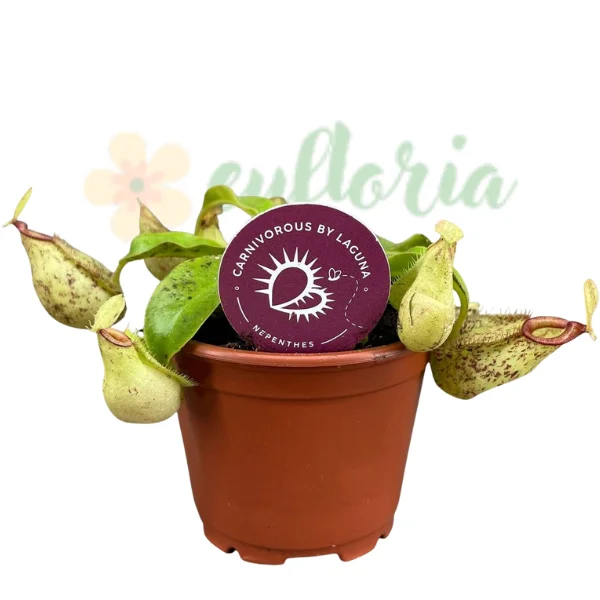
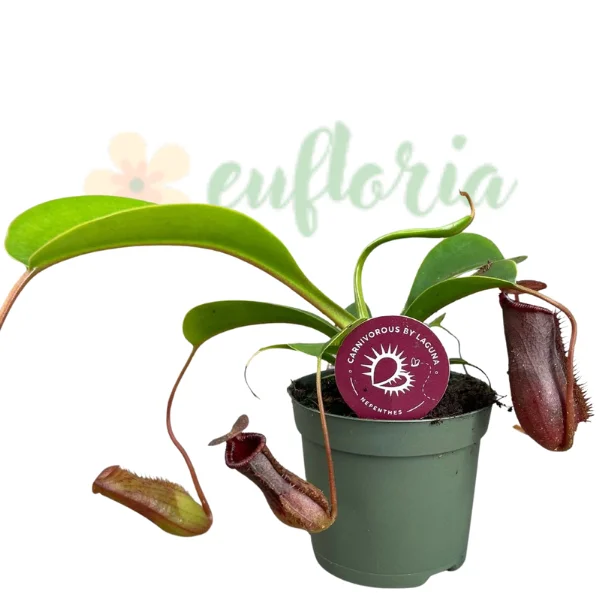
Nepenthes alata D8.5
![Nepenthes alata – Winged Pitcher Plant [0]](https://gomagcdn.ro/domains2/eufloria.ro/files/product/medium/nepenthes-alata-913407.webp "Nepenthes alata – Winged Pitcher Plant [0]")
![Nepenthes alata – Winged Pitcher Plant [1]](https://gomagcdn.ro/domains2/eufloria.ro/files/product/medium/nepenthes-alata-055951.webp "Nepenthes alata – Winged Pitcher Plant [1]")
![Nepenthes alata – Winged Pitcher Plant [1]](https://gomagcdn.ro/domains2/eufloria.ro/files/product/original/nepenthes-alata-913407.webp "Nepenthes alata – Winged Pitcher Plant [1]")
![Nepenthes alata – Winged Pitcher Plant [2]](https://gomagcdn.ro/domains2/eufloria.ro/files/product/original/nepenthes-alata-055951.webp "Nepenthes alata – Winged Pitcher Plant [2]")
Nepenthes alata is a carnivorous plant from the Philippines, with elegant pitcher-shaped traps featuring distinctive wings and a colorful peristome. One of the most robust and accessible Nepenthes species, ideal for beginners. Prefers high humidity and distilled water. Non-toxic plant.
Approx height (including pot): 20 cm
Pot diameter: 8.5 cm
- Description
- Characteristics
- Reviews (0)
- FAQ
🌿 Nepenthes alata – The Winged Pitcher Plant from the Philippines
Nepenthes alata is one of the most popular and accessible carnivorous plants in the Nepenthes genus, ideal for both beginners and experienced collectors. Its elegant pitcher-shaped traps capture insects using a digestive fluid, offering a fascinating spectacle of nature right in your home.
🌍 Origins & Botanical History
Nepenthes alata belongs to the Nepenthaceae family and is native to the Philippines, where it grows in both lowland and highland areas at elevations of up to 2,000 meters. The name "alata" comes from Latin meaning "winged," referring to the distinctive wings (fimbriae) present on the front face of the pitchers. It was one of the first Nepenthes species described, in 1837, by botanist Adolphe-Théodore Brongniart.
🌿 Pitchers – Elegant Urns with Distinctive Wings
The pitchers of Nepenthes alata are elongated with a classic urn shape. The color ranges from light green to red-purple, depending on lighting. The defining feature is the two wings (fimbriae) that run along the front of the pitcher from top to bottom, serving as a guide for insects toward the pitcher mouth. The peristome (lip) is well-developed and often differently colored. The interior contains the digestive fluid that attracts and breaks down insects.
🌱 Growth Habit & Development
Nepenthes alata is a robust plant, tolerant of a wide range of conditions. It prefers moderate temperatures (20-30°C daytime, 15-22°C nighttime), high humidity (60-80%), and bright but filtered light. The ideal substrate is a mix of sphagnum moss, perlite, and bark. Water with distilled or rainwater. No fertilization is needed – nutrients are obtained from captured insects. Excellent for beginners in carnivorous plant cultivation.
Lungime: 20 cm
Greutate (kg): 0.25 Kg
Denumire: Nepenthes
Diametru: 8.5 cm
Cerințe lumină: Partial umbra
Tip plantă: Decorative
Utilizare: Interior
Tip suport: Ghiveci
Material Suport: Plastic
Is Nepenthes alata toxic to cats or dogs?
No. Nepenthes alata is non-toxic to cats, dogs, and other household pets. No commonly cultivated carnivorous plant has demonstrated serious toxicity to animals. The digestive fluid in the pitchers is a mild enzymatic solution designed for tiny insects and poses no risk to mammals. In rare cases, ingesting plant material may cause minor stomach upset, but no lasting harm. The real concern is protecting the plant from your pets – cats in particular love to bat and chew at dangling pitchers, which can severely damage or destroy the plant. Hanging it out of reach is the best solution.
Why isn't my Nepenthes alata making pitchers?
The most common reason is insufficient light. Nepenthes alata needs bright, filtered light with some direct sun to produce pitchers – without it, the plant continues growing leaves but the tendrils at their tips fail to develop into traps. The second most common cause is low humidity: if ambient humidity drops below 50%, developing pitcher buds often dry out and abort. Move the plant to a brighter location (south or east-facing window), mist developing tendrils daily, and consider a humidity tray or room humidifier. New pitchers should begin forming within 2-4 weeks of improved conditions.
Why does my Nepenthes alata have different shaped pitchers?
This is completely normal and actually one of N. alata's most interesting features! Nearly all Nepenthes species produce two distinct types of pitchers during their lifetime. Lower pitchers (formed when the plant is young or at the base of the rosette) tend to be rounder, more bulbous, and often more colorful – these typically sit on the ground and target crawling insects like ants. Upper pitchers (formed as the vine elongates) become more elongated, tubular, and sometimes funnel-shaped – these hang from tendrils and target flying insects. The transition between the two forms is a sign that your plant is maturing. Both types are fully functional traps.
Can I use tap water for my Nepenthes alata?
It is strongly discouraged. While Nepenthes alata is more tolerant of mineral content than some carnivorous plants (like Venus flytraps or sundews, where tap water can be lethal), the dissolved minerals, chlorine, and fluoride in most tap water will gradually accumulate in the soil and damage the roots over time. This leads to yellowing leaves, browning pitcher edges, and declining health. Always use distilled water, collected rainwater, or reverse osmosis water. If you must use tap water in an emergency, let it sit uncovered for 24 hours to allow chlorine to evaporate – but this doesn't remove dissolved minerals, so it should only be a temporary solution.
How fast does Nepenthes alata grow and how big does it get?
Nepenthes alata is among the faster-growing Nepenthes species. Under good conditions – bright light, warm temperatures, adequate humidity, and regular feeding – it can produce a new leaf (with a potential pitcher) every 2-4 weeks during the growing season. Mature plants develop a vining stem that can reach 90 cm (3 feet) or more indoors, and considerably longer in greenhouse conditions. Individual pitchers can grow up to 20 cm (8 inches) tall on mature plants. The vine can be trained upward on a support, allowed to hang from a basket, or pruned back to encourage bushier growth and side shoots. Expect the first significant pitchers within a few months of receiving a young plant.
Carnivorous care?
Strong light, distilled water, peat+perlite.
Water?
Distilled/rain only. No tap.
Feeding?
Not needed. Catch own insects.
Winter?
Dormancy 5-10°C.
Substrate?
Peat+perlite 1:1.
Recommendations
Ai nevoie și de un ghiveci decorativ?