EN/
EN/ Romana
Aeschynanthus 'Bolero Bicolore' Ø14cm
![Aeschynanthus 'Bolero Bicolore' — variegated lipstick plant with green-cream leaves and red flowers [0]](https://gomagcdn.ro/domains2/eufloria.ro/files/product/medium/aeschynanthus-bolero-bicolore-d14cm-989986.png "Aeschynanthus 'Bolero Bicolore' — variegated lipstick plant with green-cream leaves and red flowers [0]")
![Aeschynanthus 'Bolero Bicolore' — variegated lipstick plant with green-cream leaves and red flowers [1]](https://gomagcdn.ro/domains2/eufloria.ro/files/product/medium/aeschynanthus-bolero-bicolore-d14cm-720403.png "Aeschynanthus 'Bolero Bicolore' — variegated lipstick plant with green-cream leaves and red flowers [1]")
![Aeschynanthus 'Bolero Bicolore' — variegated lipstick plant with green-cream leaves and red flowers [2]](https://gomagcdn.ro/domains2/eufloria.ro/files/product/medium/aeschynanthus-bolero-bicolore-d14cm-078597.png "Aeschynanthus 'Bolero Bicolore' — variegated lipstick plant with green-cream leaves and red flowers [2]")
![Aeschynanthus 'Bolero Bicolore' — variegated lipstick plant with green-cream leaves and red flowers [1]](https://gomagcdn.ro/domains2/eufloria.ro/files/product/original/aeschynanthus-bolero-bicolore-d14cm-989986.png "Aeschynanthus 'Bolero Bicolore' — variegated lipstick plant with green-cream leaves and red flowers [1]")
![Aeschynanthus 'Bolero Bicolore' — variegated lipstick plant with green-cream leaves and red flowers [2]](https://gomagcdn.ro/domains2/eufloria.ro/files/product/original/aeschynanthus-bolero-bicolore-d14cm-720403.png "Aeschynanthus 'Bolero Bicolore' — variegated lipstick plant with green-cream leaves and red flowers [2]")
![Aeschynanthus 'Bolero Bicolore' — variegated lipstick plant with green-cream leaves and red flowers [3]](https://gomagcdn.ro/domains2/eufloria.ro/files/product/original/aeschynanthus-bolero-bicolore-d14cm-078597.png "Aeschynanthus 'Bolero Bicolore' — variegated lipstick plant with green-cream leaves and red flowers [3]")
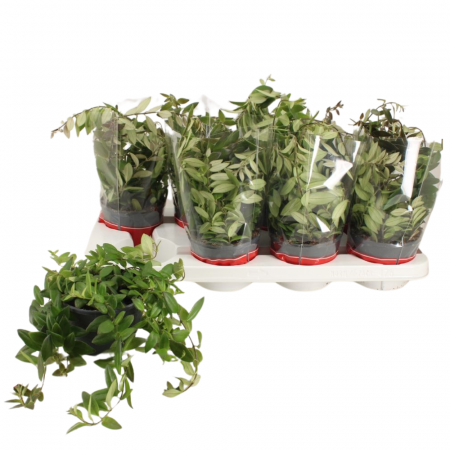
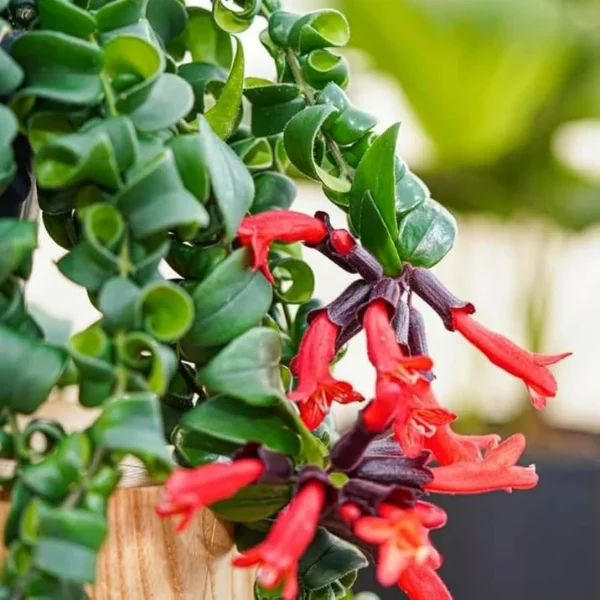
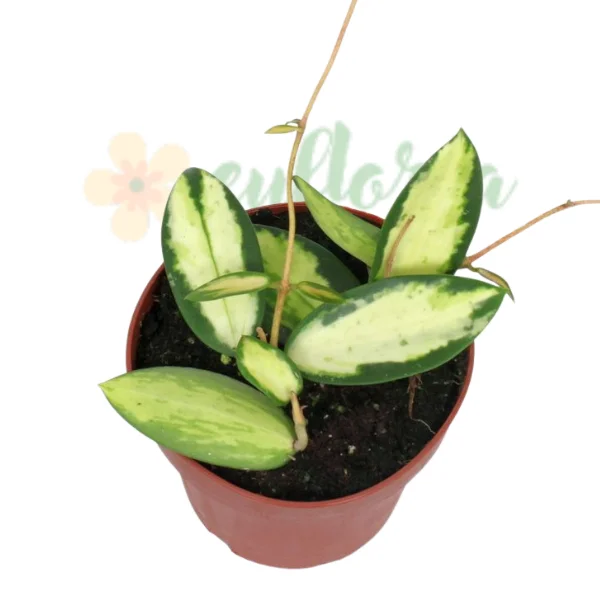
Aeschynanthus 'Bolero Bicolore' — "lipstick plant" with green-cream variegated leaves and bright red tubular flowers bursting from dark calyces like open lipsticks. Elegant trailing plant from the Gesneriaceae family, native to tropical Asia, perfect for hanging baskets and high shelves.
Note: Product images are for guidance only. Due to different batches of imported products, there may be differences between the images on the website and the actual appearance of the products.
Approx height (including pot): 40 cm
Flowering state: No flowers
Pot diameter: 14 cm
- Description
- Characteristics
- Reviews (0)
- FAQ
🌿 Aeschynanthus 'Bolero Bicolore' — Bicolor Lipstick Plant
Aeschynanthus 'Bolero Bicolore' is a rare botanical jewel, a select cultivar of the famous "lipstick plant" combining in a single species two visual spectacles: variegated foliage and bright red tubular flowers. The popular name "lipstick plant" comes from the unique appearance of the flowers — red tubular buds emerging from dark brown calyces, like open lipsticks slowly extending from their tubes.
The 'Bolero Bicolore' variant was horticulturally selected for its distinct bicolor leaf variegation — deep green zones alternate with irregular cream-yellow spots, making each leaf unique. The contrast between variegated foliage and bright red flowers creates a dramatic spectacle that catches the eye in any room.
It's a trailing plant perfect for hanging baskets, high shelves, or orchid mounts. Long flexible stems cascade decoratively, and in good conditions can reach 60-90 cm in length. A piece appreciated by both flowering plant lovers and those who value decorative foliage.
🌍 Origin and Botanical History
The Aeschynanthus genus belongs to the Gesneriaceae family (African violet and streptocarpus family) and includes approximately 150 species distributed throughout tropical Asia and Pacific islands — India, southern China, Thailand, Malaysia, Indonesia, Philippines, New Guinea and Solomon Islands.
The genus name comes from ancient Greek: "aischyne" = shame + "anthos" = flower, a poetic reference to how the bright red flowers seem to shyly burst from dark calyces, as if "blushing". The genus was first described in 1787 by British botanist William Jack. Modern cultivars like 'Bolero Bicolore' are recent horticultural selections for decorative variegation.
In natural habitat, Aeschynanthus grows epiphytically on tree trunks in humid tropical forests, at medium altitudes (300-1500 m), with humidity 80-95% and stable temperatures 20-28°C. Aerial roots absorb water from frequent rains and nutrients from natural detritus on host tree bark.
🌱 The Foliage
Leaves of 'Bolero Bicolore' are oval-elongated, 4-6 cm long and 2-3 cm wide, arranged oppositely on thin flexible stems. Leaf texture is semi-succulent, slightly waxy to the touch, with a subtly glossy surface — an adaptation to the epiphytic lifestyle that helps retain water.
Bicolor variegation is the distinctive characteristic: leaves have a deep green background scattered with irregular cream-yellow spots occupying from 10% to 50% of the leaf surface. Each leaf has a unique pattern — some almost entirely green, others predominantly cream, most balanced. Under bright light, cream zones intensify in color.
🌸 The Flowers
Flowers are the centerpiece of this species. They appear in clusters of 3-8 flowers at leaf axils, in spring and summer. Each flower is a 5-7 cm long tube of intense bright red evolving to orange at the base, emerging from a dark brown-purple calyx — the calyx-flower contrast creates the illusion of an open lipstick from its tube.
Flowers are not fragrant but attract hummingbirds and insects in habitat through color and abundant nectar. In indoor cultivation, the plant can flower 2-3 times per year in optimal conditions. A brief cooling period in winter (15-18°C) stimulates the following spring's blooming.
🌱 Growth and Development
Aeschynanthus 'Bolero Bicolore' grows as a trailing plant, with long flexible stems that can reach 60-90 cm. It's a moderate-growing plant — not invasive, but constant and predictable. Perfect for hanging baskets or high shelves where branches can trail naturally.
- Light: Bright indirect (near a bright window). Avoid direct midday sun which burns variegated leaves.
- Temperature: 18-26°C during growing season. Tolerates slightly cooler winter (15-18°C) to stimulate flowering.
- Watering: Moderate when top substrate layer is dry. Tolerates short drought periods due to semi-succulent tissues.
- Humidity: 50-70% ideal. Occasional misting or humidifier helps.
- Substrate: Airy and well-drained — orchid bark + perlite + peat + sphagnum. Avoid heavy substrates.
- Fertilization: Monthly in spring-summer with indoor plant fertilizer (diluted 50%).
- Propagation: By stem cuttings with 2-3 nodes in water or moist sphagnum. Roots appear in 3-5 weeks.
Toxicity: Aeschynanthus 'Bolero Bicolore' is not listed as toxic to humans or pets in ASPCA or RHS databases. Still, as a general precaution, keep it out of reach of small children or animals that chew on leaves.
Ideal pairings: Its trailing habit and spectacular flowers make Aeschynanthus a perfect choice for hanging baskets, tall shelves, or wall mounts. It pairs beautifully with other tropical epiphytes such as Hoya, Columnea, Peperomia, or miniature ferns, creating a dense and decorative vertical display.
Seasonal cycle: Spring and summer are the periods of active growth and flowering. Late autumn and winter bring a relative rest phase, when the plant requires less water and fertiliser. Respecting this natural rhythm is essential for stimulating flowering in the following season — a slight cool period (15–17°C) for 4–6 weeks in winter can even enhance bud formation.
Potting and repotting: Aeschynanthus prefers small pots where the roots are slightly crowded — this stimulates flowering. Repot only when the substrate has degraded or roots emerge from drainage holes, typically every 2–3 years. Choose a pot only 2 cm larger and make sure it has good drainage holes.
Why Eufloria: Our plants are grown under premium Dutch conditions, acclimatised for European transport and shipped directly from specialised greenhouses. Each specimen is manually checked for health, vigour and commercial appearance before shipping, so that it reaches you in the best possible shape.
Botanical curiosities: The Aeschynanthus genus includes over 180 species, most of them native to Southeast Asia. The genus name comes from the Greek "aischyne" (shame) and "anthos" (flower), a poetic reference to how the flowers seem to hide inside the reddish-brown calyces as if shy. The "Bolero Bicolore" cultivar is a modern horticultural selection, praised for its unique variegated foliage — a rare feature in the Aeschynanthus genus.
Longevity and history: A well-tended Aeschynanthus can live for more than 10 years in cultivation, becoming increasingly spectacular with age. The first European specimens were introduced in the 19th century through the botanical gardens of Kew and Leiden, and today the species is a classic of tropical indoor plant collections.
Placement tips: For maximum visual impact, place the plant in a spot where the trailing stems can cascade freely — such as a high shelf, a hanging macramé holder near a bright window, or a dedicated plant shelf by an east-facing window.
Lungime: 40 cm
Greutate (kg): 1.5 Kg
Denumire: Aeschyanthus
Diametru: 14 cm
Cerințe lumină: Partial umbra
Tip plantă: Decorative
Utilizare: Interior
Tip suport: Ghiveci
Material Suport: Plastic
Why is it called lipstick plant?
How to care for Aeschynanthus 'Bolero Bicolore'?
Is Aeschynanthus toxic to pets?
How to make it bloom?
How to propagate?
How do I care for Aeschynanthus 'Bolero Bicolore' to keep its variegation?
How often should Aeschynanthus 'Bolero Bicolore' be watered?
Which plants pair well with Aeschynanthus 'Bolero Bicolore'?
Is Aeschynanthus 'Bolero Bicolore' toxic to pets?
When and how often does Aeschynanthus 'Bolero Bicolore' flower?
Recommendations
Ai nevoie și de un ghiveci decorativ?