EN/
EN/ Romana
Hoya 'Silver Dollar'
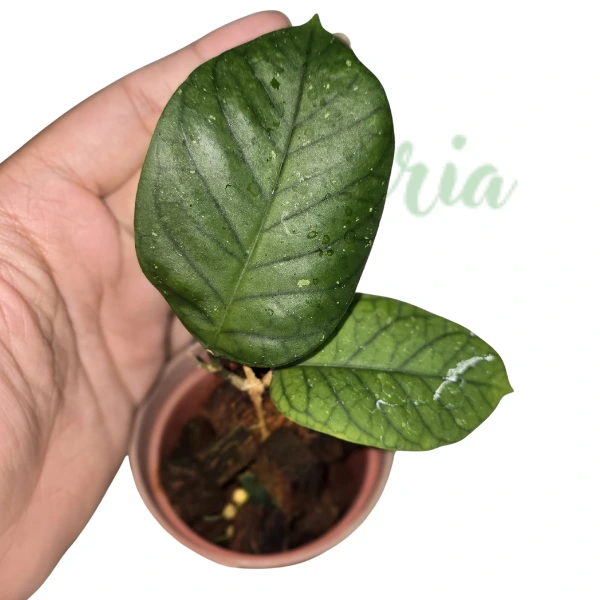
![Hoya Silver Dollar with round leaves like silver coins [1]](https://gomagcdn.ro/themes/fashion/gfx/no-image.png "Hoya Silver Dollar with round leaves like silver coins [1]")
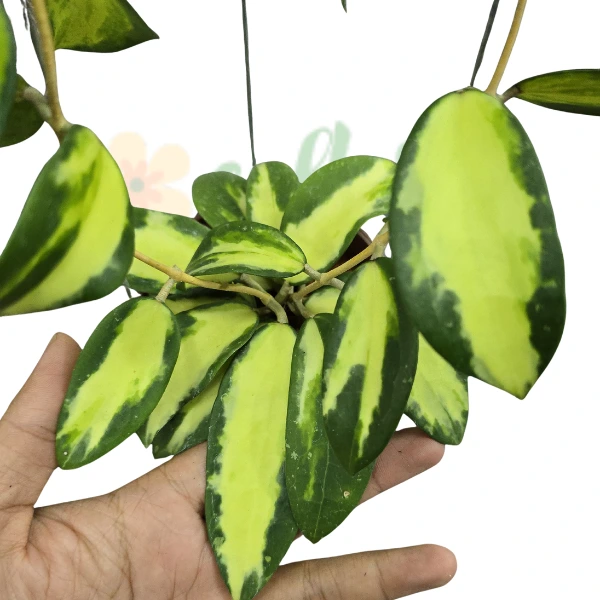
Hoya 'Silver Dollar' — famous cultivar with round leaves like silver coins and cream-white star flowers with pink-golden centers.
- Description
- Reviews (0)
- FAQ
🌿 Plant Characteristics
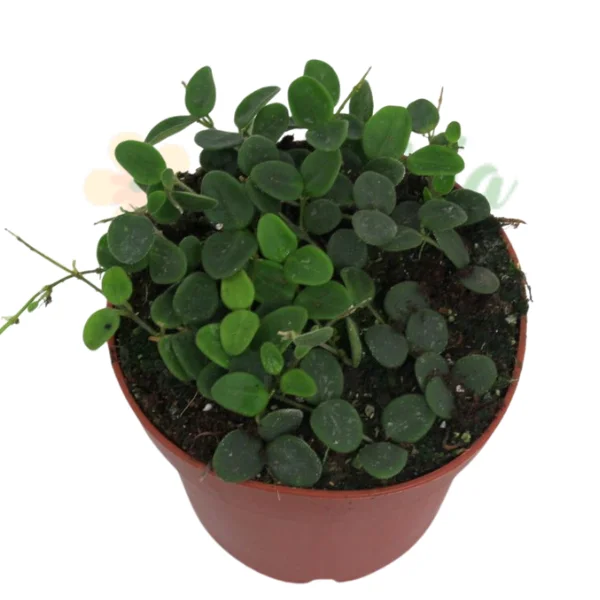
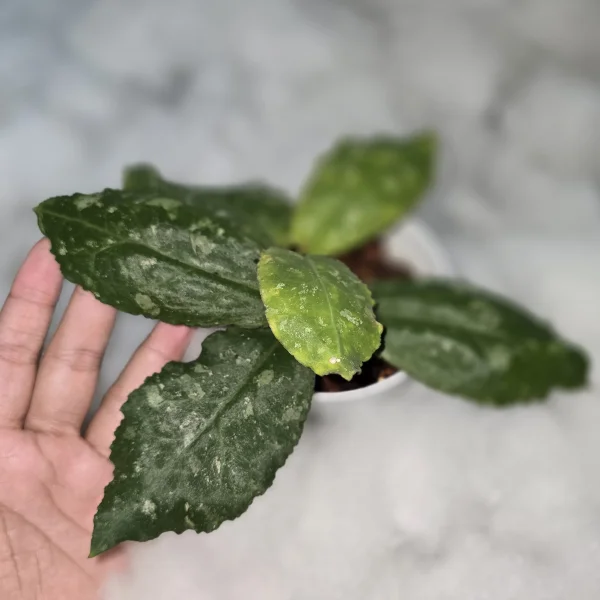
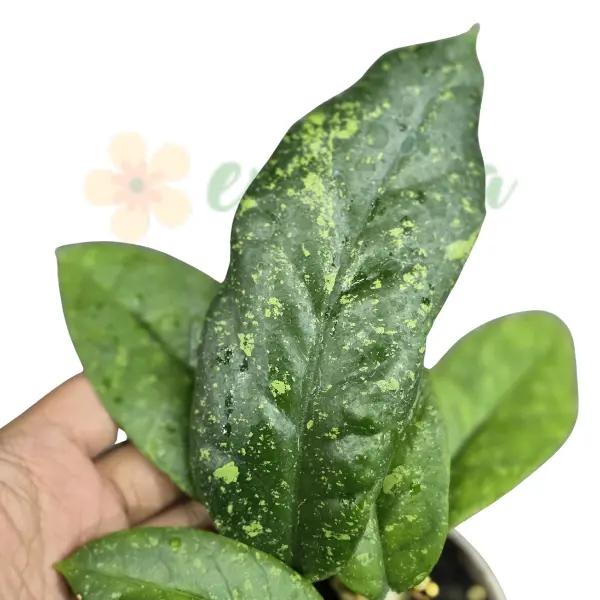
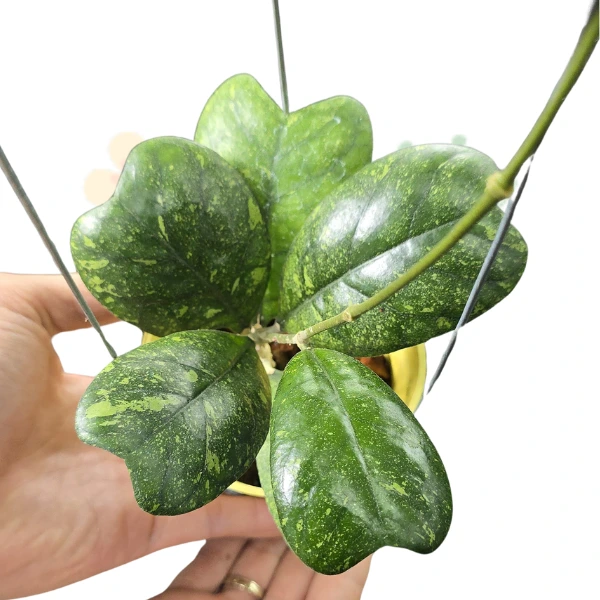
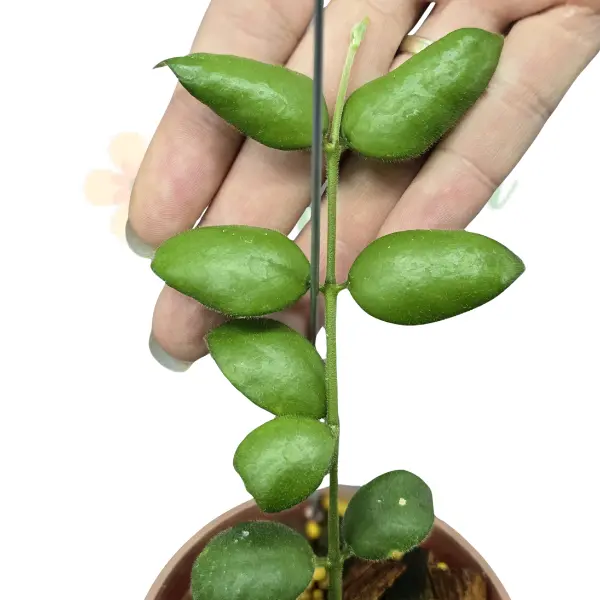
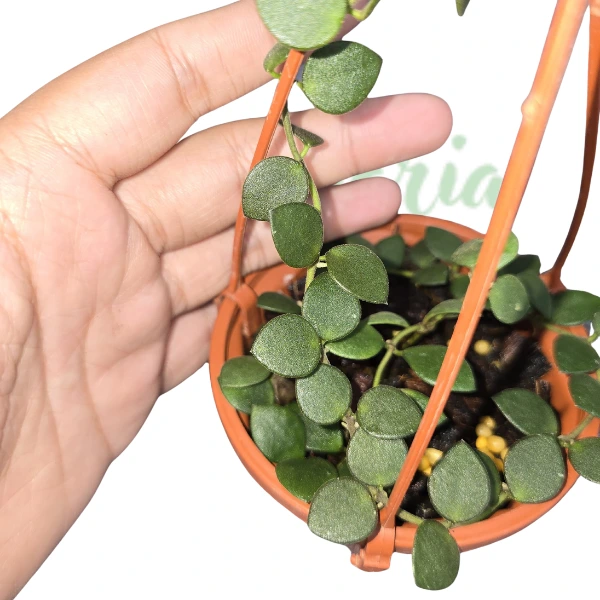
Hoya 'Silver Dollar' is a rare and spectacular cultivar from the Apocynaceae family, prized for its round, fleshy leaves generously covered with silver splashes that shimmer under diffused light. The commercial name perfectly evokes the appearance of silver coins, and these thick, succulent leaves make the plant a living jewel for any Hoya collection. It's a vine with compact growth, suitable for hanging baskets or small trellises where its tendrils develop beautifully over time.
The genus Hoya contains over 500 species and countless hybrid cultivars, naturally distributed across tropical forests of Southeast Asia, the Philippines, Indonesia, Australia, and Pacific islands. 'Silver Dollar' is a cultivar selected for its distinctive foliage, with dense, rounded silver flecks. These silver patches aren't merely ornamental — they're specialized cellular areas (intercellular air spaces) that reflect light, helping the plant withstand the light intensity variations of its natural epiphytic habitat on tree trunks.
The leaves are round-oval, fleshy, deep green covered with abundant silver flecks. Texture is slightly waxy and matte, with delicately curved leaf margins. Leaves reach 3–5 cm in diameter at maturity, while slender, flexible tendrils can exceed 1 m over time. It's a semi-succulent vine with compact, orderly appearance, ideal for collectors seeking a specimen with distinctive ornamental foliage.
At maturity, Hoya 'Silver Dollar' produces compact umbels with waxy florets, pale pink or cream-white, with a red or deeper pink center. Flowers emit a sweet fragrance, stronger in the evening, and an umbel can last 7–10 days. The flower peduncles (spurs) should not be removed after blooming — new umbels appear on the same peduncle in subsequent seasons, sometimes multiple flowering rounds on the same floral axis.
☀️ Light Requirements
Hoya 'Silver Dollar' thrives in bright indirect light, with 2–3 hours of gentle morning or evening sun. An east or west-facing window is ideal, providing sufficient brightness without exposure to harsh midday rays. The silver patches on leaves intensify in stronger light — the plant produces more reflective pigments when perceiving more light radiation, a mechanism similar to human skin tanning.
On south-facing windows, protect the plant with sheer curtains or move it 1–2 meters from the window to prevent sunburn. Signs of excess light include leaves turning reddish, yellow, or showing brown dry patches. At the opposite extreme, too little light causes silver flecks to fade, tendrils become elongated and weak (etiolated), and the plant will never bloom.
For apartments with low natural light, especially in winter, you can supplement with LED grow lights (full-spectrum, 6500K) positioned 30–50 cm above the plant, running 12–14 hours daily. This maintains active growth and helps preserve silver fleck intensity even during months with reduced natural light. A 20–30W lamp suffices for a single plant.
During winter, when days are shorter, move the plant closer to the window to maximize light exposure. This maintains foliage health and prepares the plant for flowering the following spring. Rotate the pot 90 degrees weekly to ensure uniform growth and prevent the plant from leaning toward the light source.
💧 Care and Watering
Hoya 'Silver Dollar', like all Hoya with succulent leaves, prefers moderate watering — the substrate should be allowed to dry almost completely between waterings. The thick, fleshy leaves store water, making the plant relatively tolerant of occasional drought. During the growing season (April–September), water every 7–10 days, checking the substrate with a finger: if the top 3–4 cm are completely dry, it's time to water.
In winter, reduce watering frequency to every 14–21 days. Cooler temperatures dramatically slow the plant's metabolism, and excessive watering during this period is the most common cause of root rot in Hoya. Use filtered, rain, or settled water (tap water left 24 hours for chlorine evaporation) at room temperature — water that's too cold shocks the roots.
The preferred watering method is bottom-watering: place the pot in a basin of water for 15–20 minutes, allowing the substrate to absorb water through the drainage holes. This ensures uniform hydration and prevents substrate compaction. Alternatively, water from above with a fine stream, avoiding wetting leaves and the plant's center to prevent fungal infections.
Optimal atmospheric humidity is 50–70%. Thanks to succulent leaves, Hoya 'Silver Dollar' tolerates moderate humidity better than many other species. In apartments with dry air (below 40%), use a humidifier, a pebble tray with water under the pot, or group the plant with others to create a humid microclimate. Avoid direct misting on leaves — it can leave calcium spots and favor fungal diseases.
Fertilization is monthly during the growing season (April–September) with a balanced fertilizer for epiphytes or orchids (NPK 3-1-2 or similar), diluted to half the recommended concentration on the label. In winter, suspend fertilization or fertilize every 6–8 weeks at even lower concentration. Foliar fertilizers (sprayed on leaves) are a good alternative in the warm season.
🌡️ Temperature and Climate
The optimal temperature range for Hoya 'Silver Dollar' is 18–28°C during the day and 15–20°C at night. The plant develops best when there's a day-night variation of 4–6°C, which simulates natural conditions in its tropical habitat. Temperatures below 15°C dramatically slow growth, while below 10°C can cause permanent leaf damage (brown spots, discoloration).
Avoid exposure to cold air drafts, especially in winter when you open the window for ventilation. Move the plant to a more sheltered room or at least 1 meter away from windows on very cold days. Air conditioning directly blowing and radiators running non-stop create dry zones and thermal shock that stress the plant — keep the pot at least 1–1.5 m from these sources.
In summer, temperatures above 30°C aren't dangerous if accompanied by sufficient humidity and proper watering, but the plant can become stressed if temperatures exceed 35°C for prolonged periods. Signs of thermal stress include leaf yellowing, soft wilting tendrils, and growth stagnation. On scorching days, move the plant to a cooler area of the house and water in the evening to avoid rapid evaporation.
In winter, a brief period (4–6 weeks) of cooler temperatures (14–16°C) combined with reduced watering stimulates flower bud initiation for the following spring. This "controlled stress" period is a trick used by advanced collectors to force flowering in plants that refuse to bloom. Never drop the temperature below 12°C for prolonged periods.
🪴 Pot and Substrate
Hoya 'Silver Dollar' has fine, fragile roots typical of tropical epiphytes. It requires an extremely airy and well-draining substrate that mimics conditions from the natural habitat, where the plant grows on tree trunks with roots partially exposed to air. An ideal mix is: 40% pine bark (5–15 mm fraction), 25% perlite, 20% sphagnum moss or coconut chips, 10% horticultural charcoal, and 5% peat. Optimal pH is 5.5–6.5, slightly acidic.
Alternatively, use a commercial orchid mix (Phalaenopsis) with an addition of 20–30% perlite for even better aeration. Universal indoor plant substrates are NOT suitable — they're too compact, retain too much water, and cause root rot within weeks. Hoya needs a substrate that dries quickly and allows oxygen to reach the roots.
The ideal pot is terracotta or plastic with numerous drainage holes. Terracotta allows water evaporation through walls, keeping the substrate drier — ideal for those who tend to overwater. Plastic retains moisture better, suitable for those who forget to water. Choose a pot only 2–3 cm larger in diameter than the root ball — Hoya prefers being "rootbound" and blooms better in these conditions.
Repot Hoya 'Silver Dollar' every 2–3 years, in early spring, or only when roots start protruding through drainage holes. The plant dislikes frequent root disturbance. When repotting, gently shake old substrate from roots, inspect for signs of rot (soft, brown, smelly roots), and cut affected parts with sterilized scissors. Plant at the same depth as before and water moderately in the first week to allow roots to adapt.
In the first 2–3 weeks after repotting, keep the plant in an area with weaker indirect light, avoid fertilization, and water only when the substrate is almost completely dry. This is the critical adaptation period — stress is normal and manifests as temporary wilting or a single leaf drop. The plant fully recovers in 4–6 weeks.
Many Hoya collectors recommend letting 'Silver Dollar' experience slight water stress between waterings to encourage more robust silver variegation. When the plant receives just enough water to prevent wilting but no excess, it directs more energy into producing the reflective cellular structures that create the silvery appearance. This is a widely documented phenomenon in tropical epiphytes and explains why slightly neglected Hoya often display more vivid variegation than pampered specimens.
Seasonal care adjustments are particularly important for Hoya 'Silver Dollar'. In Romania and other temperate climates, the transition between summer and winter requires gradual changes in watering frequency, light exposure, and humidity levels. Start reducing watering in late September, suspend fertilization by mid-October, and move the plant closer to the window as daylight decreases. In February or March, as days lengthen, gradually resume normal watering and begin light fertilization to support the spring growth flush.
Common problems include leaf wrinkling (caused by underwatering or root damage), yellowing leaves (typically from overwatering or poor drainage), fading silver patches (insufficient light), and tendrils with wide gaps between leaves (etiolation from low light). Early diagnosis and correction prevents more serious issues. Most Hoya problems stem from improper watering or inadequate light — correcting these two factors resolves the majority of care issues.
Pest monitoring is essential for long-term health. Check leaves regularly for mealybugs (white cottony clusters), scale insects (small brown bumps), and spider mites (fine webbing, stippled leaves). Treat early with insecticidal soap or neem oil spray, applied every 7–10 days for three applications to break the pest life cycle. Isolated plants from other collection members if pests appear, and inspect new acquisitions carefully before integrating them into the main collection.
How do I care for Hoya Silver Dollar?
Hoya Silver Dollar prefers bright indirect light and moderate watering. Allow the substrate to dry between waterings. Ideal temperature is 18-28°C with high humidity (60-80%).
What type of substrate is recommended?
Use a well-draining substrate made of pine bark, perlite, and peat in equal proportions. The substrate should allow root aeration and quick drainage of excess water.
Is Hoya Silver Dollar toxic?
No, Hoya Silver Dollar is a non-toxic plant, safe for pets and children. The latex sap may cause minor irritation upon direct contact with sensitive skin.
How fast does Hoya Silver Dollar grow?
Hoya Silver Dollar has a slow to moderate growth rate. Under optimal light and humidity conditions, the plant can develop a few new leaves per season. Patience is essential with this species.
How do I encourage blooming?
To encourage blooming, provide bright indirect light, do not cut old flower peduncles, and offer a rest period during the cool season with reduced watering. Fertilize with a phosphorus-rich fertilizer during the growing season.

Ai nevoie și de un ghiveci decorativ?