EN/
EN/ Romana
Hoya lorylin
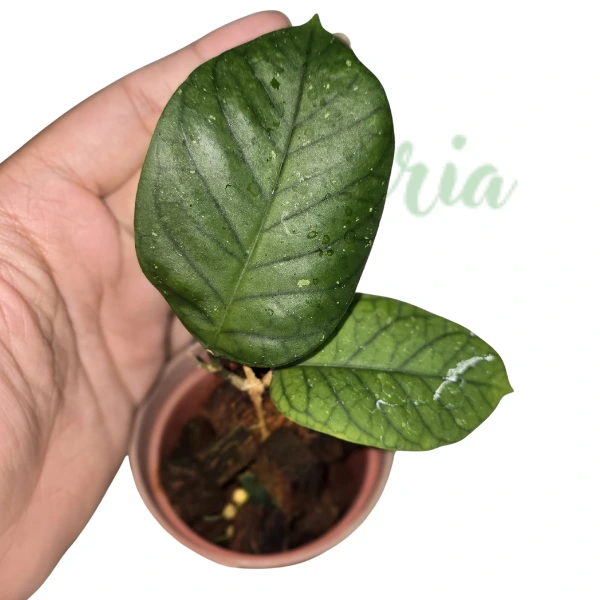
![Hoya lorylin with fragrant cream-white umbels [0]](https://gomagcdn.ro/domains2/eufloria.ro/files/product/medium/hoya-lorylin-266147.png "Hoya lorylin with fragrant cream-white umbels [0]")
![Hoya lorylin with fragrant cream-white umbels [1]](https://gomagcdn.ro/domains2/eufloria.ro/files/product/medium/hoya-lorylin-710390.png "Hoya lorylin with fragrant cream-white umbels [1]")
![Hoya lorylin with fragrant cream-white umbels [1]](https://gomagcdn.ro/domains2/eufloria.ro/files/product/original/hoya-lorylin-266147.png "Hoya lorylin with fragrant cream-white umbels [1]")
![Hoya lorylin with fragrant cream-white umbels [2]](https://gomagcdn.ro/domains2/eufloria.ro/files/product/original/hoya-lorylin-710390.png "Hoya lorylin with fragrant cream-white umbels [2]")
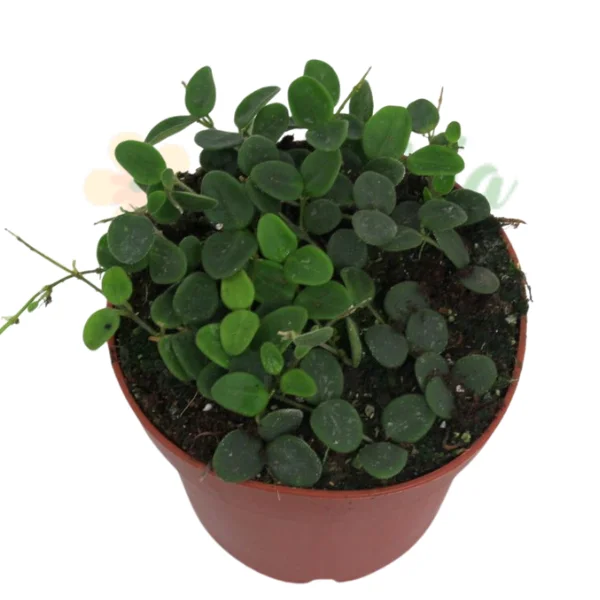
Hoya lorylin — Hoya lacunosa × obscura hybrid with powdery cream-white flowers with reddish centers and strong caramel and vanilla fragrance.
Pot diameter: (no pot)
- Description
- Reviews (0)
- FAQ
🌿 Plant Characteristics
Hoya lorylin is an ornamental hybrid in the genus Hoya, family Apocynaceae, prized for its unique combination of compact form, silvery-green leaves, and fragrant flowers in dense umbels. It is an epiphytic climbing plant suitable for intermediate collectors, offering both constant foliage beauty and regular flowering.
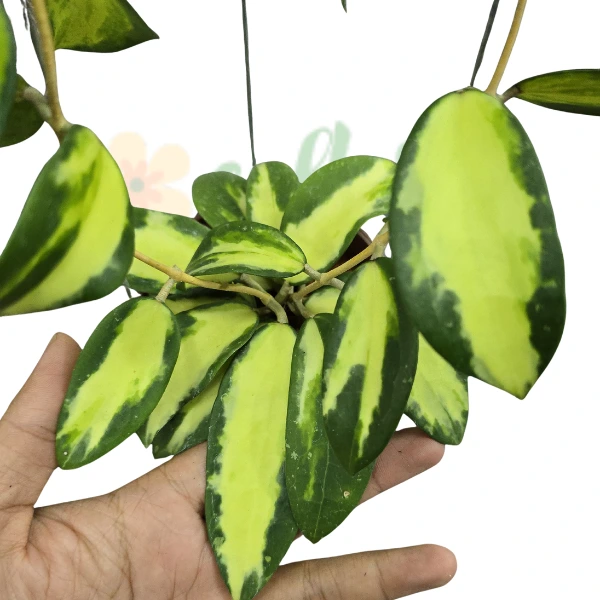
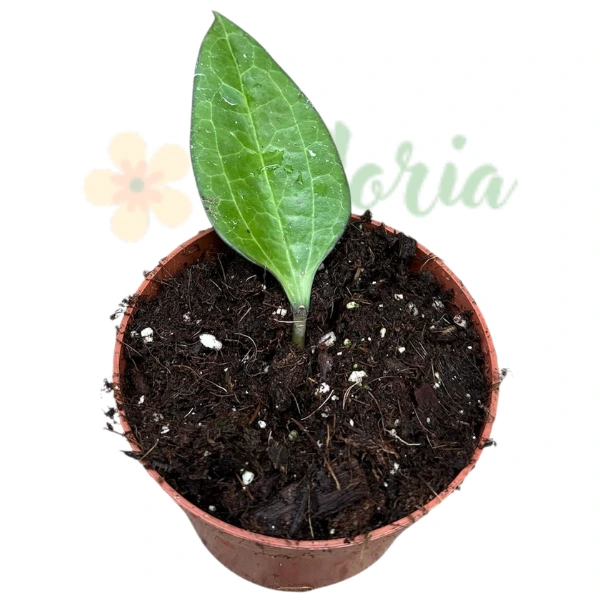
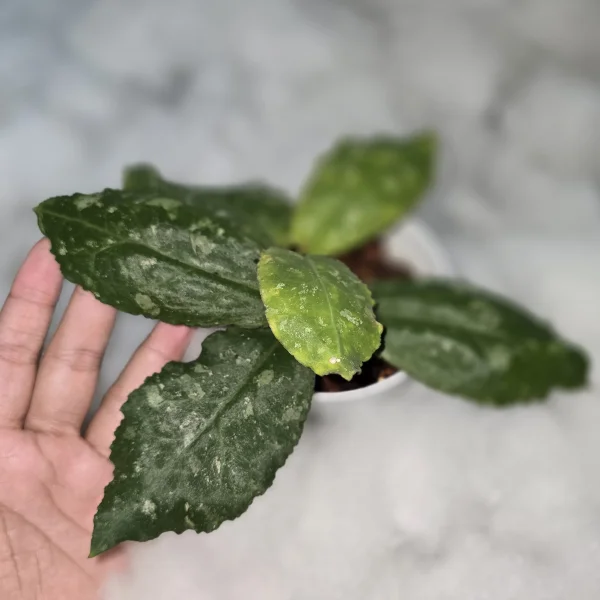
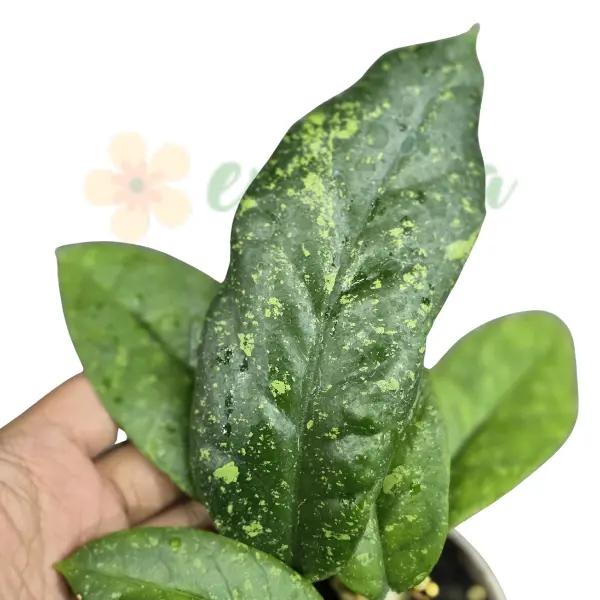
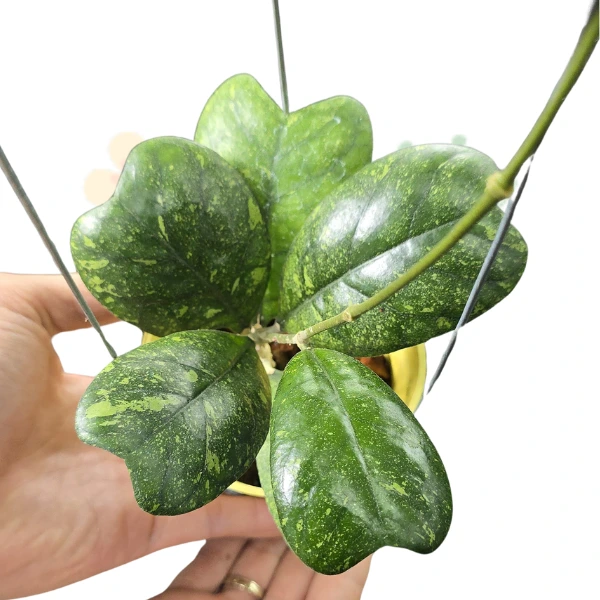
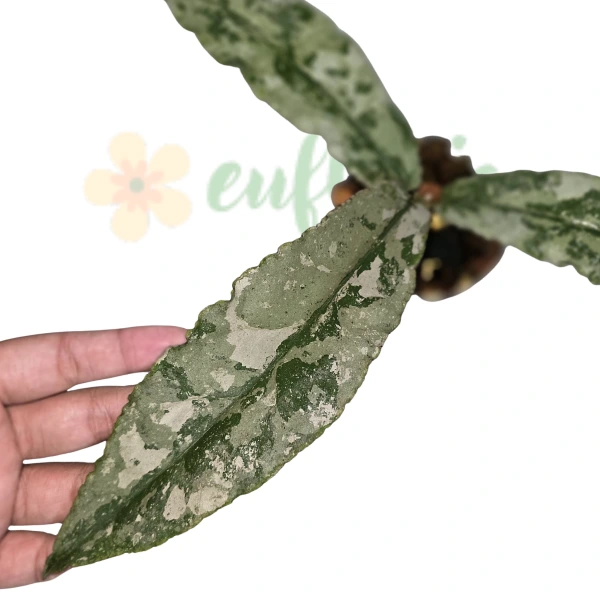
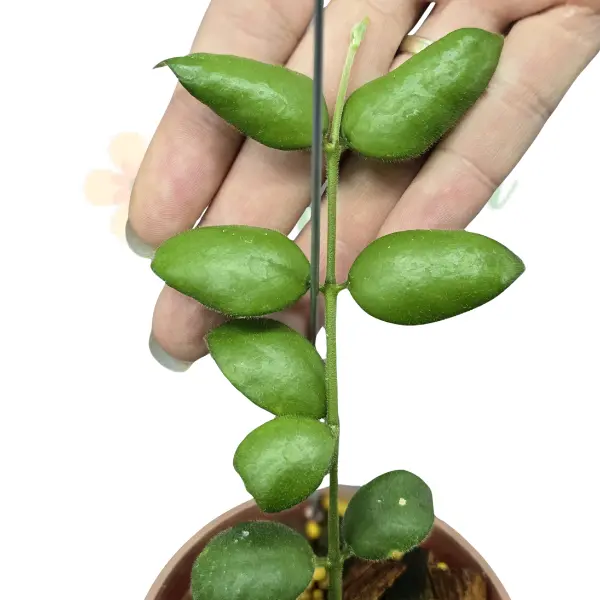
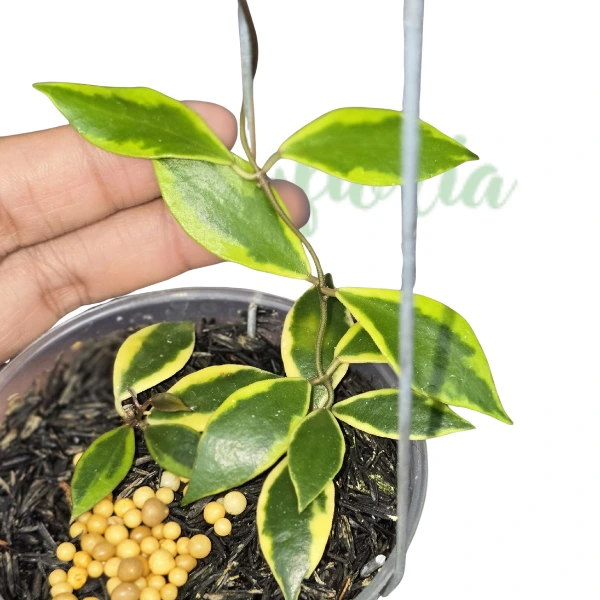
Leaves are oval-elongated, 7–12 cm long and 3–4 cm wide, medium green with fine silvery reflections. The surface is slightly waxy and glossy, the central vein is gently recessed. Young leaves have a lighter shade with a faint pinkish tint at the base, which deepens in strong light.
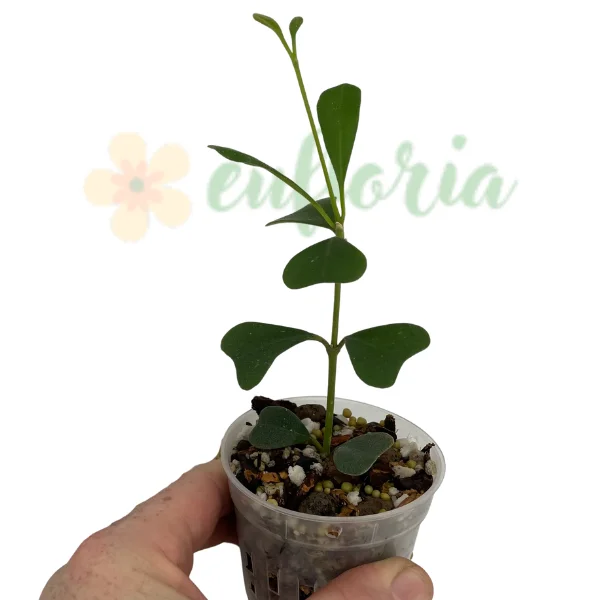
Stems are twining, flexible, with internodes of 3–6 cm. In good conditions, they rapidly produce aerial roots at nodes that help attachment to supports (moss, wooden trellises). Growth is moderate, approximately 20–40 cm per stem during the growing season.
Flowers are grouped in spherical umbels of 15–25 blooms, each 8–10 mm, creamy white with a pink-red central corona. The fragrance is sweet, with notes of caramel and vanilla, more intense in the evening. Umbels last 5–7 days, and a mature plant can bloom 2–4 times per season.
Hoya lorylin is an excellent choice for medium spaces — bright shelves, near bright windows, hanging baskets. The plant's compactness makes it easy to integrate into larger Hoya collections or various indoor setups.
☀️ Light Requirements
Hoya lorylin prefers bright indirect light. An east or northeast window is ideal, where it receives a few hours of gentle morning sun and diffused light throughout the day. A west-facing window with a sheer curtain can also work to filter strong afternoon sun.
Direct midday sun in summer months can scorch leaves and diminish silvery reflections. If a south-facing window is the only option, use a voile curtain between 11 a.m. and 4 p.m. Ideal lighting is where leaves show a uniform glossy green, without white or yellow patches.
Flowering frequency directly depends on light intensity and duration. For optimal flowering, provide 10–12 hours of bright diffused light daily. In winter months with short days, supplement with LED grow lamps (4000–6500K) 25–35 cm above the plant.
Rotate the pot every 2–3 weeks for uniform growth. Avoid abrupt relocations — radical changes in exposure can cause flower buds to drop.
💧 Care and Watering
Hoya lorylin has moderate water needs. Rule: water when 70–80% of substrate has dried. In summer, that means every 7–9 days; in winter, every 14–20 days. Frequency depends on temperature, humidity, and pot type.
Use lukewarm water (20–24°C), filtered or decanted. Water thoroughly, then drain excess. Never leave the plant in stagnant water — that is the most common cause of Hoya loss.
Ideal ambient humidity is 55–75%. Achievable with a humidifier, pebble tray, or grouping with other tropical plants. Direct misting is not recommended for this species — it can leave calcium spots.
Fertilize during the growing season (April–September) with a balanced fertilizer for tropical plants, diluted to half strength, every 3–4 weeks. Before flowering, a higher-phosphorus fertilizer can help. In winter, stop fertilizing.
Stress signs: wrinkled leaves (thirst), yellow soft leaves (overwatering), brown tips (dry air or hard water), stretched internodes (insufficient light). Adjust care according to symptoms.
🌡️ Temperature and Climate
Optimal temperature range is 18–26°C. The plant tolerates maxima of 28–30°C if humidity is adequate. Safe minimum is 14°C — below that, growth stops and the risk of rot increases.
Protect the plant from cold drafts (frequently opened windows in winter, external doors, direct air conditioning). Avoid placement near radiators too — hot dry air dehydrates leaves.
Mild day/night fluctuations (4–6°C) are beneficial and mimic habitat conditions. In spring and summer, when outdoor lows stay above 15°C, the plant can be moved to a semi-shaded balcony for more vigorous growth.
In autumn, bring it back indoors before temperatures drop below 15°C at night. A sudden temperature change can cause a few leaves to drop — this is normal, and the plant recovers within 2–4 weeks.
🪴 Pot and Substrate
Ideal substrate: airy, slightly acidic, excellent-draining. Recommended mix: 40% medium pine bark, 25% perlite, 15% coco fiber, 10% sphagnum, 10% activated charcoal. Optimal pH: 5.8–6.8.
Hoya lorylin flowers better when roots are slightly constrained. For a young plant, a 10–12 cm pot is sufficient for 1–2 years. Repot only when roots visibly emerge from drainage holes.
Terracotta pots evaporate excess moisture faster, recommended for those prone to overwatering. Plastic retains more water, suitable for those who forget to water. Drainage holes are mandatory.
A 2–3 cm layer of coarse bark at the pot bottom improves drainage. After repotting, wait 7–10 days before the first full watering and avoid fertilizing for 4–6 weeks.
Small moss poles or miniature trellises encourage vertical growth and the formation of larger leaves. Guide stems with soft clips. Alternatively, let them trail in hanging baskets.
Aerial roots at nodes absorb ambient moisture and help anchor the plant. Do not cut them — they are useful and part of the plant's natural appearance.
With consistent care, Hoya lorylin becomes an ornamental, floriferous plant that rewards the collector with regular floral displays. Average lifespan in indoor cultivation exceeds 15 years.
Inspect the plant weekly for pests (mealybugs, spider mites) and intervene quickly at first signs with potassium soap solution or neem oil. Avoid strong chemical insecticides that can stain waxy leaves.
Consider keeping a plant journal to document watering cycles, fertilization schedule, and flowering dates. This practice helps you fine-tune care to your specific apartment microclimate over time, resulting in healthier plants and more consistent flowering each year.
🌿 Curiosities and Special Details
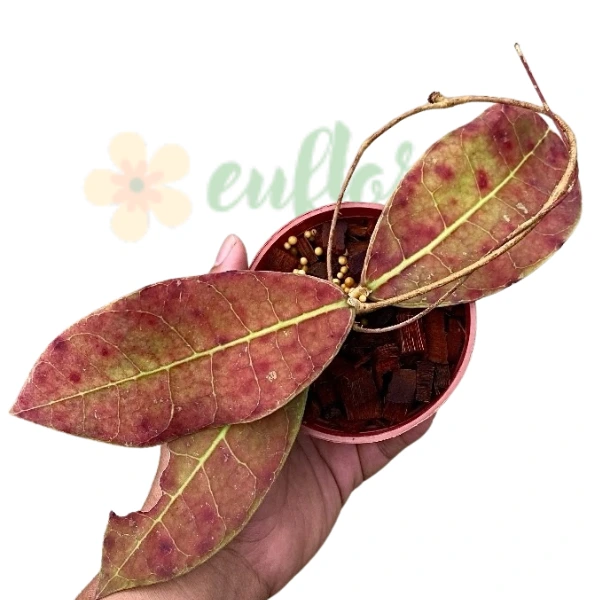
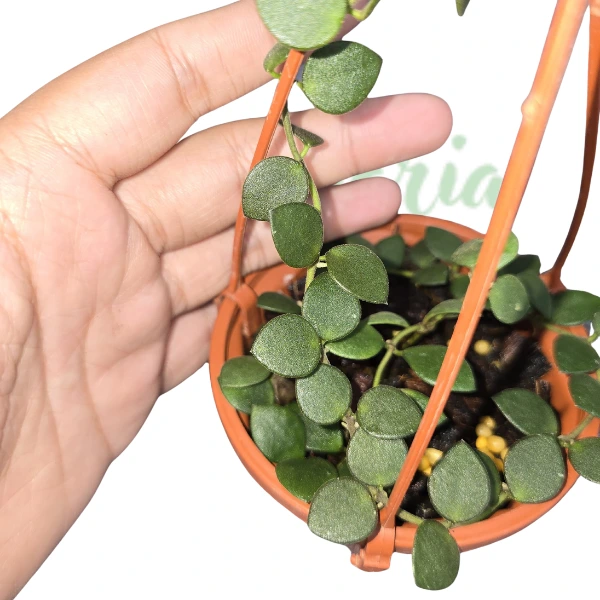
Hoya lorylin is a hybrid obtained by crossing varieties of Hoya carnosa, remarkable for its small, rounded, slightly flattened leaves with fine veins and a subtle sheen on the leaf surface. In cultivation, this variety develops at a slow-to-moderate pace, making it suitable for collectors who prefer plants that are easy to manage in confined spaces. New leaves may display slightly reddish hues when they emerge, gradually darkening to a deep green as they mature.
Under optimal conditions, the plant can develop umbels of small, star-shaped flowers with a sweet vanilla fragrance most noticeable in early morning and late evening. Inflorescences appear on peduncles (spurs) that persist on the plant for years — this is why it's important not to remove these structures after the flowers fade, because the same spur will bloom repeatedly in subsequent seasons.
To stimulate blooming, keep the plant slightly pot-bound, expose it to bright indirect light for at least 6 hours daily, and allow it a winter rest cycle with less frequent watering and slightly lower temperatures (16–18°C / 61–64°F). During the active growth period, monthly fertilization with balanced fertilizer diluted in water supports healthy development and flowering.
Hoya lorylin can be grown in hanging baskets to highlight its trailing stems or on vertical supports (stakes, trellises) for organized upward growth. Its small, dense leaves create a pleasant textural effect that complements other indoor plants with larger foliage, such as philodendrons or monsteras.
An important aspect to remember: Hoya lorylin is sensitive to abrupt environmental changes. Frequent pot relocation, cold air drafts, or large temperature variations can cause flower buds to drop before opening. Place it in a stable location, away from frequently opened doors or air conditioning units.
Propagation is easily done through stem cuttings with 2–3 pairs of leaves, planted in moist perlite or sphagnum moss until roots form (4–6 weeks). After rooting, transplant into well-aerated substrate for aroids or a specific Hoya mix composed of pine bark, perlite, activated charcoal, and sphagnum moss.
The cultivar name "lorylin" honors its hybridizer, reflecting the tradition of naming new Hoya varieties after significant people in the plant's development history. This practice, common in the International Hoya Association community, helps document genealogies and maintain accurate cultivar records over decades.
When grown in sufficient light, the leaves may develop bronze or reddish overtones — known among Hoya enthusiasts as "sun stress" — an aesthetic feature appreciated by collectors. However, excessive direct sunlight can scorch the leaves, so the transition to brighter light should always be gradual, over 7–10 days.
For long-term success, observe the plant's behavior across seasons: during summer it will respond to increased humidity and regular watering with vigorous growth, while in winter it enters a dormant phase where metabolic processes slow considerably. Adapting care routines to these natural rhythms is the key to growing a thriving Hoya lorylin that rewards you with abundant foliage and, eventually, the prized fragrant blooms.
Experienced Hoya growers often recommend keeping a journal with watering dates, fertilization schedules, and flowering observations — this helps identify patterns specific to your growing environment and allows you to refine care practices over time. Hoyas can live for decades with proper care, becoming cherished heirloom plants passed between generations of collectors.
How do I care for Hoya lorylin?
Bright indirect light, well-draining substrate, water when 70-80% dry. Temperature: 18-28°C, humidity 60-80%.
Is Hoya lorylin toxic?
No, it is non-toxic, safe for pets and children.
How often does it bloom?
Under optimal light and at maturity, it can bloom multiple times per year. Flowers are waxy and fragrant.
What substrate do you recommend?
Well-draining mix of bark, perlite, and sphagnum. Root aeration is important.
Can I grow Hoya lorylin as a trailing plant?
Yes, the flexible stems are suitable for both hanging arrangements and training on supports.

Ai nevoie și de un ghiveci decorativ?