EN/
EN/ Romana
Hoya imbricata 'Jungle'
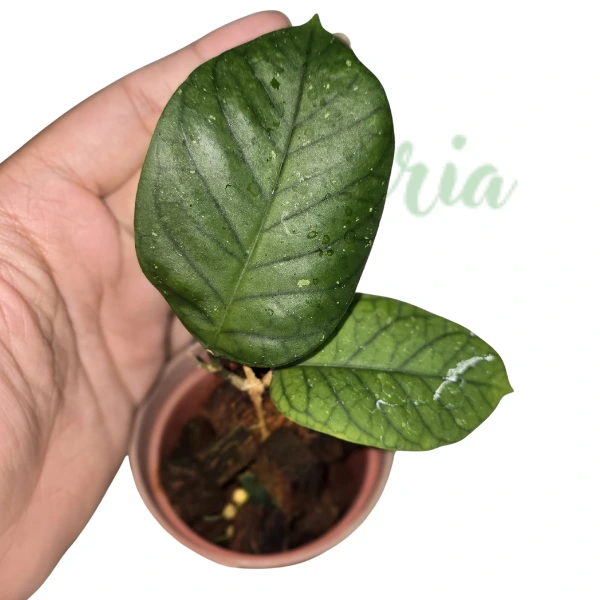
![Hoya imbricata 'Jungle' with large round leaves pressed against bark [1]](https://gomagcdn.ro/themes/fashion/gfx/no-image.png "Hoya imbricata 'Jungle' with large round leaves pressed against bark [1]")
Hoya imbricata 'Jungle' — jungle variant of the myrmecophilous hoya, with rounded bark-pressed leaves and cream flowers with burgundy centers.
- Description
- Reviews (0)
- FAQ
🌿 Hoya imbricata 'Jungle' — Living Sculpture of the Myrmecophilous Jungle
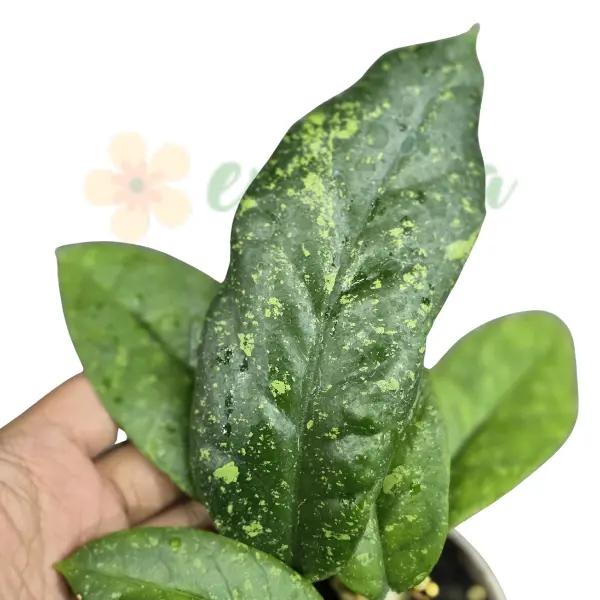
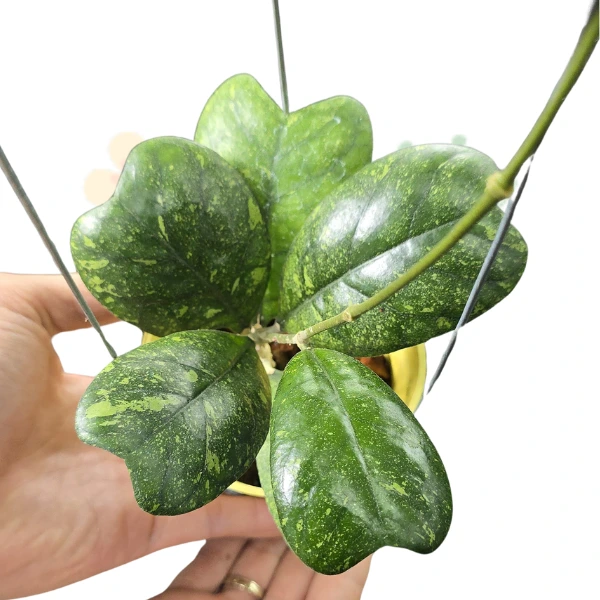
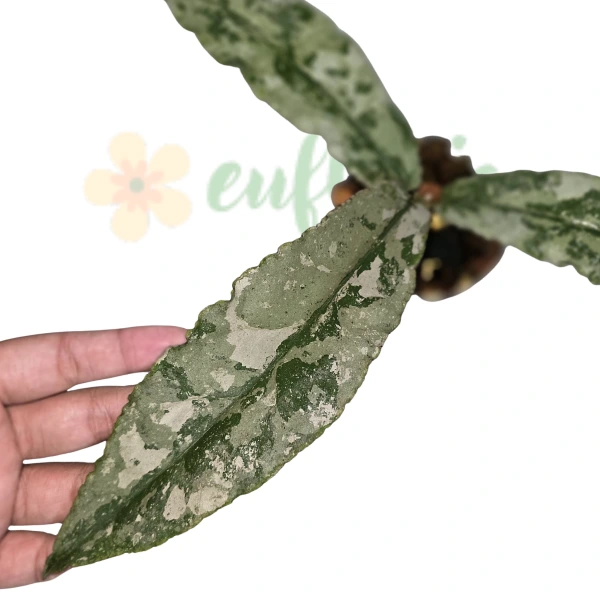
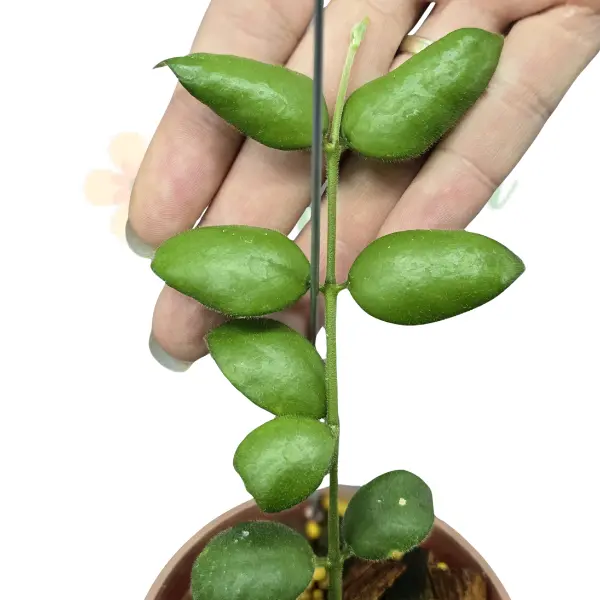
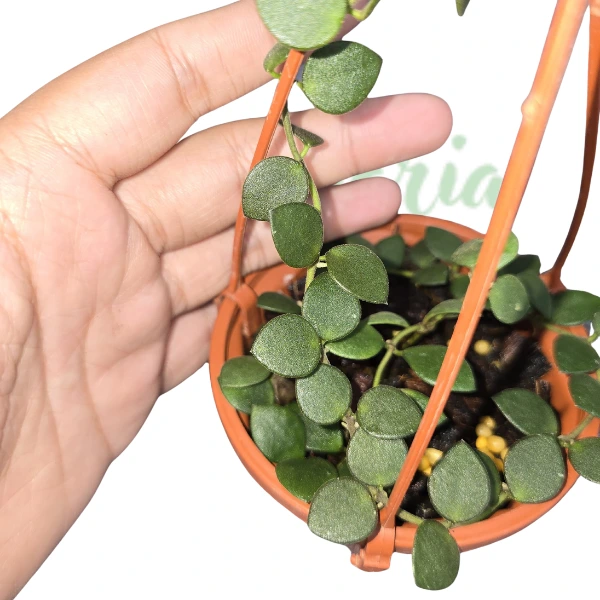
Hoya imbricata 'Jungle' is one of the most unusual collector plants that any indoor terrarium or greenhouse can host. It belongs to the true myrmecophyte group — plants that have evolved a tight evolutionary symbiosis with ants — and is distinguished by its rounded, slightly convex leaves that lie flat against the host tree's bark like overlapping armor scales. The 'Jungle' clone originates from wild specimens collected directly from the humid forests of the Indo-Malayan archipelago and differs from the standard commercial form through visibly larger leaves with a deeper bronze-green tone and a slightly velvety texture on the underside.
The subtle cinnamon scent of its star-shaped cream clusters with burgundy centers, the capricious flowering pattern, and the almost sculptural appearance of the entire plant transform it into a centerpiece for any serious collection. For advanced enthusiasts of Hoya, this form represents the natural progression after classic varieties such as Hoya carnosa or Hoya kerrii — a plant that demands constant attention but rewards the keeper with botanical behavior rarely encountered in European commercial cultivation.
🌍 Origin and Botanical History
Hoya imbricata was first described in the 19th century by Dutch botanist Carl Ludwig Blume, based on specimens collected from Java. The species has a wide distribution across the tropical forests of the Philippines, Borneo, Sulawesi, Sumatra, and the Malay Peninsula, where it grows epiphytically on the trunks of large trees at altitudes between 200 and 1200 meters above sea level. The scientific name comes from the Latin "imbricatus", meaning "covered with scales" — a direct reference to how the leaves overlap on bark, much like roof tiles or fish scales.
The 'Jungle' variant entered the collector market in the early 2010s, through clones derived from botanical collections in primary forests of northern Borneo. Unlike forms cultivated for decades in commercial nurseries, this variant retains its wild characteristics: leaves of 6–10 cm in diameter (versus 4–6 cm in the standard form), fine pubescence on the underside, and slow but vigorous growth when conditions approach those of its natural habitat. The Hoya genus encompasses over 500 described species, of which only 12–15 display pronounced myrmecophilous behavior — Hoya imbricata being the most thoroughly documented botanical example.
🌱 How to Care — Mounting, Humidity, Light
Hoya imbricata 'Jungle' is not grown in conventional soil pots — its natural behavior demands epiphytic mounting. The ideal substrate is a cork oak bark plaque or a rough mango branch, onto which the plant is fastened with natural fiber twine until its clinging roots anchor it independently. Sphagnum moss is placed only at the root base, forming a thin layer that retains humidity without causing rot. For beginners, an alternative pot with very airy specialized substrate (orchid bark, perlite and charcoal) can work, but it will not allow the plant to develop its characteristic habit.
Humidity is the critical factor: the plant requires 80% to 95% relative humidity, making it suitable for large terrariums, indoor greenhouses, or enclosed plant cabinets. Below 70% humidity the leaves gradually detach from the substrate and the plant enters decline. The ideal light is bright indirect — around 15,000–25,000 lux — provided either by east or northeast-facing windows or by full-spectrum LED grow lights. Direct summer sunlight burns the leaves within hours, leaving irreversible bronze-red patches that signal the epidermal cells have permanently lost their photosynthetic capacity.
Optimal temperature is 22–28 °C during the day, with a slight nighttime drop to 18–20 °C. Below 15 °C the plant enters forced dormancy and begins to drop leaves. Watering is done through daily misting with filtered or rainwater, or by weekly submersion of the entire mount in a basin for 5–10 minutes. Urban tap water has too high a chloride and limescale content for this sensitive species, and mineral buildup on the clinging roots blocks absorption within just a few months of regular use.
🐜 Myrmecophily — The Ancestral Relationship with Ants
One of the most fascinating peculiarities of this species is its relationship with ants, systematically observed by biologists since the 1980s. In its natural habitat, the leaves curve into dome-like chambers over the bark, creating spaces sheltered from sun and rain where ants of the Crematogaster, Iridomyrmex, and Philidris genera establish entire colonies. The ants deposit food remains, exoskeletons, and frass inside, and the plant absorbs the nutrients released through decomposition — a natural fertilizer perfectly dosed by biological processes refined over millions of years.
In return, the plant provides shelter and a constant source of extrafloral nectar, secreted through small glands at the petiole base. Field studies published in tropical biology journals have shown that ant-colonized specimens grow up to 40% faster than non-colonized ones, with denser chloroplast distribution and higher foliar nitrogen content. In domestic cultivation, this symbiosis cannot be safely reproduced — but it provides valuable clues: the plant responds excellently to slow-release fertilizers, particularly those based on feather meal or hydrolyzed casein, applied directly at the stem base every three months in very low doses.
👑 Collector Tips and Combinations with Other Jungle Plants
For collectors, Hoya imbricata 'Jungle' is a pivot plant — a centerpiece around which an entire tropical microcosm can be built. In larger terrariums it pairs spectacularly with epiphytic species sharing similar requirements: small jungle Anthurium, rare appressed-growing Philodendron, or Microgramma-type ferns. The visual combination with live forest mosses deepens the reconstructed-habitat effect, transforming an ordinary room into a fragment of authentic tropical forest.
Propagation is performed via cuttings with 2–3 nodes, rooted in moist sphagnum moss under a glass cloche, at 25 °C with consistent humidity above 90%. The process takes 6–10 weeks and has a success rate of about 60% — significantly lower than common Hoya species. Flowering occurs after 3–5 years of successful cultivation, in clusters of 8–15 cream stars with intense burgundy centers. Flowering signals that the plant has reached physiological maturity and that humidity, temperature, and light are in long-term equilibrium.
For initial care steps, we recommend the dedicated accessory package for epiphytic plants: aerated specialized substrate, drainage pots, and slow-release fertilizer. For mounting itself, cork oak bark plaques are the most durable solution, while coconut fibers can supplement the base if sphagnum moss decomposes prematurely. Hoya imbricata 'Jungle' is not a beginner plant — but in the hands of an informed cultivator, it becomes one of the most memorable plants in any personal collection, a visual reference that connects the keeper directly to the tropical forests of Southeast Asia.
Seasonality is another important aspect: from October to February, the plant enters a relative dormancy during which growth slows dramatically. Reducing watering by 50% and maintaining a constant 20 °C temperature helps it transition through winter. In spring, when days lengthen and night temperatures rise above 20 °C, the plant resumes growth and produces new leaves within two to three weeks — the signal to resume regular fertilization.
A final recommendation for advanced cultivators: this species reacts visibly to indoor air quality. In spaces with tobacco smoke, fine cooking particles, or industrial aerosols, the leaves lose their characteristic gloss and acquire a matte tint. A HEPA-filter air purifier in the same room significantly extends the specimen's beauty and the rate of new leaf growth. For a complete cultivation experience, placing the plant inside an IKEA Milsbo or Detolf cabinet converted into a vivarium simultaneously solves problems of humidity, light, and protection from cold drafts.
Why is it called a shingle plant?
What support do I need for Hoya imbricata?
Is Hoya imbricata toxic?
How large can a leaf grow?
How do I water Hoya imbricata?
How does it differ from standard Hoya imbricata?
Does it have to be mounted?
Is it toxic?
Does it attract ants in the home?
How to propagate?


Ai nevoie și de un ghiveci decorativ?