EN/
EN/ Romana
Hoya sp Cikidang
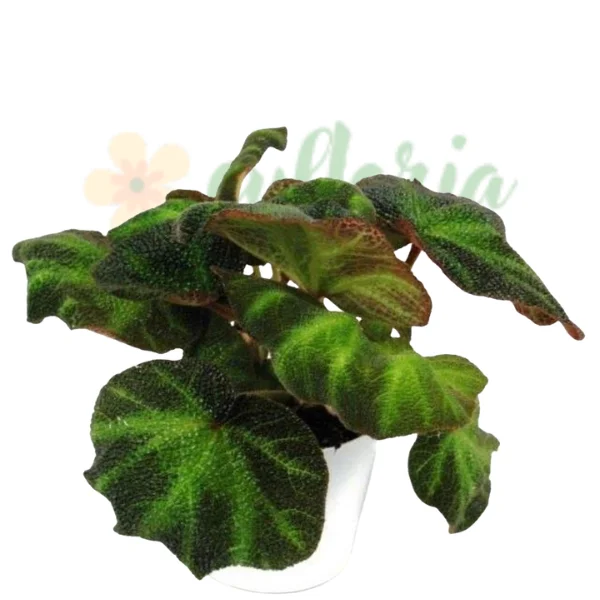
![Hoya sp. Cikidang — rare Javanese plant with marbled leaves [1]](https://gomagcdn.ro/domains2/eufloria.ro/files/product/original/hoya-sp-cianjur-splash-copie-736801.webp "Hoya sp. Cikidang — rare Javanese plant with marbled leaves [1]")
Hoya sp. Cikidang is a rare Hoya species, originating from the village of Cikidang in the West Java province of Indonesia. It stands out through its large, oval leaves with a glossy surface and a pattern of deeply sunken veins that create a spectacular marbled effect, unique on every leaf.
An epiphytic, trailing plant with moderate growth, ideal for collectors of exotic plants and enthusiasts of rare botanical species. In cultivation it produces star-shaped, fragrant flowers clustered in the spherical umbels characteristic of the Hoya genus.
📌 Note: This plant is imported from Indonesia only on the basis of a prepaid preorder. Shipped without pot, as young plant material.
Flowering state: No flowers
Country of origin: Indonesia
Pot diameter: (no pot)
Nodes: 1-2
- Description
- Characteristics
- Reviews (0)
- FAQ
🌿 The Botanical Origins of Hoya Cikidang
Hoya sp. Cikidang is a rare species of Hoya discovered near the village of Cikidang, in the West Java province of Indonesia. Its name does not come from a formal botanical classification, but from the locality where it was first collected — a common practice for recently discovered tropical plants still in the process of scientific description. For collectors around the world, this species represents a small living treasure, prized precisely for its uniqueness and for the rarity with which it appears on the market.
The genus Hoya, part of the Apocynaceae family, comprises more than three hundred described species and spans a vast range, from the islands of Sumatra and Java all the way to the Philippines, Borneo and northern Australia. Most species are epiphytes — they grow on the branches of old trees without parasitizing them — and their long, supple stems attach themselves to natural supports with the help of discreet aerial roots. Cikidang follows this pattern: a trailing plant with a quiet growth habit, which in its natural habitat adorns the trunks of trees in montane rainforest.
Java, with its volcanic terrain and high air humidity throughout the year, is one of the richest refuges for epiphytic plants. Here, on slopes covered in moss, ferns and tropical trees, countless varieties of Hoya are still waiting for a formal description. Cikidang is part of this family of "unofficial botanical" species, a group of plants recognised by the collector community before receiving a binomial name validated by botanists.
🍃 Marbled Leaves — A Living Tapestry from the Javanese Jungle
The most striking feature of the species is, without doubt, its foliage. The leaves are large, thick and glossy, oval to elliptical in shape, and their length can exceed ten to twelve centimetres on mature plants. The base colour is medium to dark green, yet upon this background a rich relief of sunken veins is drawn in a lighter green, giving the impression of a marbled pattern carefully painted by nature.
Every leaf is unique. The pattern of veins varies in depth and density, and some specimens develop a slightly wavy texture with discreetly curled edges. Seen in diffused light, the leaf looks like an object made of living porcelain — the glossy surface gently reflects its surroundings, while the sunken veins seem to sculpt overlapping layers of green. This aesthetic quality is the reason why Cikidang has become one of the most sought-after Hoya species in European collections.
In cultivation, the plant develops long, supple shoots that can either trail freely from a hanging basket or be trained onto a vertical support, a trellis or a moss pole. In both cases, the dense foliage creates a vegetal cascade that adds volume and texture to any corner of the home, while the rarity of the species turns the plant into a focal point in any collector’s display.
💧 Care and Optimal Growing Conditions
Although it is a rare and niche species, Hoya Cikidang is not difficult to maintain, provided a few fundamental principles regarding light, humidity and substrate are respected. Light plays the most important role: the plant prefers bright indirect light, filtered through a sheer curtain or reflected from an east- or west-facing window. Direct midday sun can scorch the glossy leaves, while prolonged lack of light slows growth and washes out the contrast of the marbled veins.
Ideal air humidity sits between fifty and eighty percent. In modern apartments, during winter, humidity can drop below thirty percent because of heating systems, and in such periods it is recommended to use a humidifier or to group the plant together with other humidity-loving specimens. Optimal temperature ranges between twenty and twenty-eight degrees Celsius during the day, with a slight drop at night that encourages the formation of flower buds.
Hoya Cikidang does not tolerate cold or chilly drafts. Windows opened in winter, air conditioning aimed directly at the plant, or exposure on a freezing windowsill can lead to leaf loss and, in severe cases, even the loss of the specimen. During the active growing period, from spring until late autumn, the plant appreciates good ventilation, which prevents fungal diseases and encourages vigorous growth.
🌱 Propagation, Substrate and Watering Routine
The ideal substrate for Hoya Cikidang is airy, well-draining and slightly acidic. A successful mix combines small-grade pine bark, perlite, sphagnum moss and, optionally, pieces of activated charcoal. The goal is to recreate the epiphytic conditions of the natural habitat — a substrate that allows the roots to breathe, to dry quickly between waterings and not to retain water at the base. Transparent pots or pots with many drainage holes work excellently, as they allow monitoring of root moisture.
Watering is done after the top layer of the substrate has lightly dried. In general, intervals are shorter in summer (once every five to seven days) and much wider in winter (once every two to three weeks). The ideal water is rainwater or tap water left to stand at room temperature, since Hoya is sensitive to chlorine and to an overly high pH. Overwatering is the main cause of plant loss in this genus — the fine roots degrade rapidly in waterlogged substrate.
Propagation is most easily achieved through stem cuttings. Take a fragment with two or three nodes, let it air-dry for a few hours, then place it into moist sphagnum moss or an airy substrate. Roots usually appear after three to six weeks, provided the plant receives sufficient moisture and warmth. To speed up the process, a transparent propagator or a plastic bag can be used to maintain constant humidity around the cutting.
🏡 Its Place in the Collection and Compatibility with Other Plants
Hoya Cikidang is an inspired choice for both experienced collectors and plant lovers looking for a rare yet not overly demanding piece. It integrates perfectly into a tropical collection, alongside other Hoya species (such as Hoya kerrii, Hoya carnosa, Hoya pubicalyx) or next to Philodendron, Monstera and Anthurium. All these plants share similar preferences for indirect light, airy substrate and moderate to high humidity.
In interior arrangements, the glossy, marbled foliage of Cikidang creates a memorable visual contrast when placed next to plants with matte or fuzzy leaves. Hanging baskets near a well-lit window are the classic choice, but the plant also does excellently on a high shelf, letting its shoots cascade downward. For a denser effect, multiple cuttings can be grouped in the same pot so that the plant quickly gains a mature appearance.
Ultimately, Hoya sp. Cikidang is a species that rewards patience and attention to detail. Growth is quiet, without sudden bursts, yet each new leaf, with its unique pattern of marbled veins, becomes a small visual celebration. It is the ideal plant for those who value botanical rarity and the understated beauty of detail — a living tropical story brought directly from Java into a corner of your home.
A final essential observation for European collectors: because of our climate with long winters and very low indoor humidity, it is advisable to acclimate the plant gradually during the first month after arrival. Keep the plant in a more humid environment at first (a slightly open transparent bag or a propagator) and bring it progressively to the usual conditions in the home. This slow transition reduces thermal and humidity shock and allows the roots to develop solidly before the cold season.
Denumire: Hoya
Diametru: (fără ghiveci)
Cerințe lumină: Partial umbra
Tip plantă: Decorative
Utilizare: Interior
Where does Hoya sp. Cikidang come from?
How do I care for Hoya Cikidang at home?
Is Hoya sp. Cikidang toxic to pets?
How do I propagate Hoya Cikidang?
Why is the plant shipped without a pot?
Ai nevoie și de un ghiveci decorativ?