EN/
EN/ Romana
Hoya scortechinii 'Pink' Ø12cm
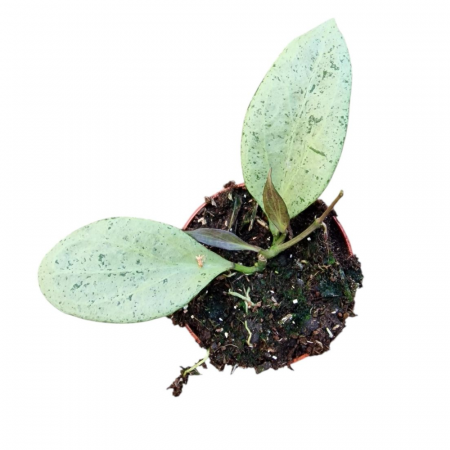
![Hoya scortechinii — rare Malaysian species with elongated lanceolate waxy green leaves and umbels of fragrant powdery-pink star-shaped flowers, collector Hoya [0]](https://gomagcdn.ro/domains2/eufloria.ro/files/product/medium/hoya-scortechinii-d12-ut001-sp-pink-fl-587769.webp "Hoya scortechinii — rare Malaysian species with elongated lanceolate waxy green leaves and umbels of fragrant powdery-pink star-shaped flowers, collector Hoya [0]")
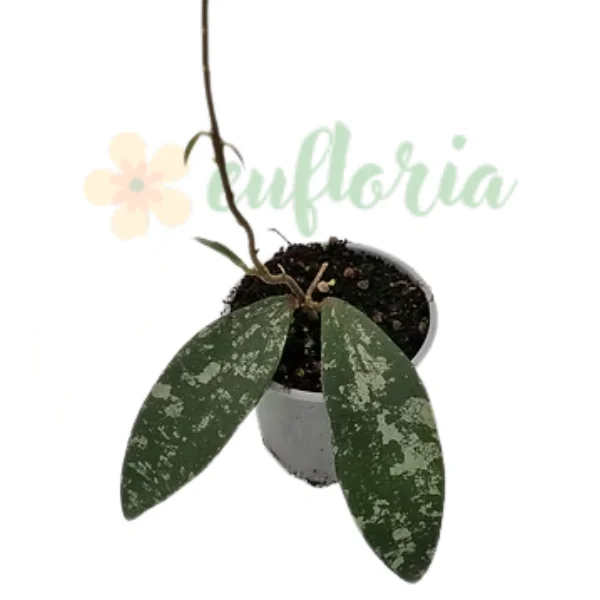
![Hoya scortechinii — rare Malaysian species with elongated lanceolate waxy green leaves and umbels of fragrant powdery-pink star-shaped flowers, collector Hoya [1]](https://gomagcdn.ro/domains2/eufloria.ro/files/product/medium/hoya-scortechinii-d12-ut001-sp-pink-fl-013452.webp "Hoya scortechinii — rare Malaysian species with elongated lanceolate waxy green leaves and umbels of fragrant powdery-pink star-shaped flowers, collector Hoya [1]")
![Hoya scortechinii — rare Malaysian species with elongated lanceolate waxy green leaves and umbels of fragrant powdery-pink star-shaped flowers, collector Hoya [2]](https://gomagcdn.ro/domains2/eufloria.ro/files/product/medium/hoya-scortechinii-d12-ut001-sp-pink-fl-407750.webp "Hoya scortechinii — rare Malaysian species with elongated lanceolate waxy green leaves and umbels of fragrant powdery-pink star-shaped flowers, collector Hoya [2]")
![Hoya scortechinii — rare Malaysian species with elongated lanceolate waxy green leaves and umbels of fragrant powdery-pink star-shaped flowers, collector Hoya [1]](https://gomagcdn.ro/domains2/eufloria.ro/files/product/original/hoya-scortechinii-d12-ut001-sp-pink-fl-587769.webp "Hoya scortechinii — rare Malaysian species with elongated lanceolate waxy green leaves and umbels of fragrant powdery-pink star-shaped flowers, collector Hoya [1]")
![Hoya scortechinii — rare Malaysian species with elongated lanceolate waxy green leaves and umbels of fragrant powdery-pink star-shaped flowers, collector Hoya [2]](https://gomagcdn.ro/domains2/eufloria.ro/files/product/original/hoya-scortechinii-d12-ut001-sp-pink-fl-013452.webp "Hoya scortechinii — rare Malaysian species with elongated lanceolate waxy green leaves and umbels of fragrant powdery-pink star-shaped flowers, collector Hoya [2]")
![Hoya scortechinii — rare Malaysian species with elongated lanceolate waxy green leaves and umbels of fragrant powdery-pink star-shaped flowers, collector Hoya [3]](https://gomagcdn.ro/domains2/eufloria.ro/files/product/original/hoya-scortechinii-d12-ut001-sp-pink-fl-407750.webp "Hoya scortechinii — rare Malaysian species with elongated lanceolate waxy green leaves and umbels of fragrant powdery-pink star-shaped flowers, collector Hoya [3]")
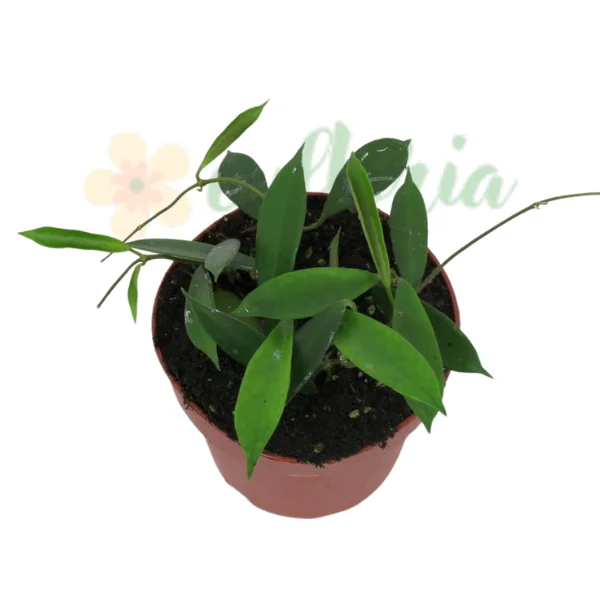
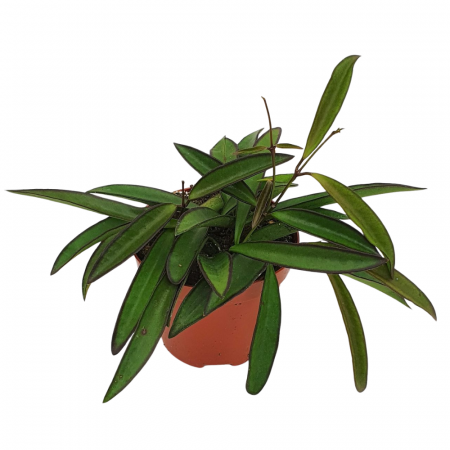
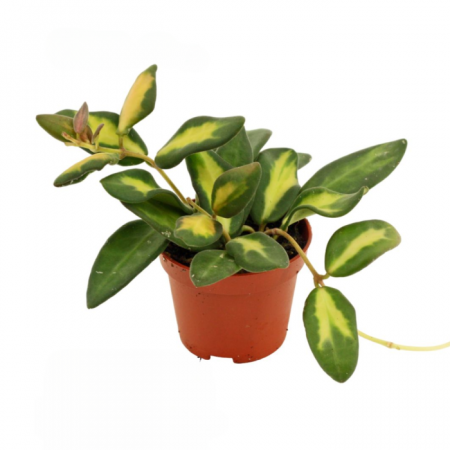
Hoya scortechinii with pink flowers is a rare species from the Apocynaceae family, native to Peninsular Malaysia, with elongated, lanceolate, intense-green waxy-glossy leaves. Spherical umbels of powdery pink star-shaped flowers, fragrant with notes of honey and citrus, appear in summer on mature plants. An elegant, resilient epiphytic Hoya, ideal for hanging pots.
Flowering state: No flowers
Pot diameter: 12 cm
- Description
- Characteristics
- Reviews (0)
- FAQ
🌿 Hoya scortechinii — The Waxy Jewel of Malaysian Forests, with Fragrant Pink Flowers
Hoya scortechinii is a rare epiphytic species from the Apocynaceae family, native to the tropical forests of Peninsular Malaysia, Thailand and southern Myanmar, where it grows clinging to tree trunks at medium altitudes, in the bright shade of the forest canopy. This specific variant — with delicate pink flowers — is one of the most sought-after forms of the species, appreciated both for its waxy foliage and for the fragrant umbels that appear in the summer period.
The vining stems, thin and flexible, support opposite pairs of elongated and lanceolate leaves, of intense green, with firm, waxy-succulent texture, characteristic of the entire Hoya genus. Each leaf measures between 8 and 12 centimeters in length and develops in delicate cascades over the edge of the pot or climbs gracefully on a moss support, creating elegant visual compositions.
At the offered size — Ø12cm pot — the plant is mature, with developed stems and numerous leaves, ready both to adapt quickly to a new growing environment and to produce its first fragrant umbels under optimal care conditions. It is a specimen suitable both for experienced collectors and for enthusiasts looking to expand their collection with a rare species of distinct personality.
🌍 Origin and Botanical History
Hoya scortechinii was scientifically described for the first time in 1882 by the Italian botanist Odoardo Beccari, who named it in honor of Benedetto Scortechini — Italian Catholic priest, missionary and naturalist who collected numerous rare plants during his expeditions in Peninsular Malaysia and Borneo in the second half of the 19th century. Scortechini's contribution to the knowledge of Malaysian flora was remarkable, and the honor through species name is a natural recognition of his work.
The Hoya genus belongs to the Apocynaceae family — the same that includes oleander, stephanotis or frangipani. It was established in 1810 by the Scottish botanist Robert Brown, who named it in honor of his friend Thomas Hoy, head gardener to the Duke of Northumberland. Today the genus comprises over 200 recognized species, ranging from India and the Himalayas to the Malay Archipelago, Australia and the Pacific Islands.
The natural habitat of Hoya scortechinii is semi-epiphytic — the plant begins life as an epiphyte on tree trunks, but roots can also reach the ground at the base of trees, extracting nutrients from the tropical litter. This duality is reflected in its culture preferences: a very airy substrate with bark and perlite, mimicking epiphytic conditions, but sufficiently nutritious to support vigorous growth.
🌱 The Foliage
Hoya scortechinii leaves have an elegant silhouette — elongated and lanceolate, with slightly pointed tip and narrow base, measuring between 8 and 12 centimeters in length and 2 to 3 centimeters in width. The texture is smooth, waxy-glossy, and the color varies between medium green and deep green, sometimes with a discrete olive hue at edges exposed to strong light. To the touch, the leaves have the firm consistency characteristic of Hoyas — neither succulent nor thin, but in their own category, like fine leather.
The central venation is slightly prominent on the underside, creating a discrete texture that accentuates the elongated silhouette. Under bright filtered light, the waxy surface captures a subtle shine that gives the plant a slightly polished, almost artistic look. The leaves grow in opposite pairs, spaced 3–5 cm along the stems, creating a balanced visual cascade.
Mature plants develop increasingly long stems with dozens of leaves balanced in symmetrical pairs. It is a plant that rewards attention with increasingly dense foliage, and at maturity, stems can climb on vertical moss supports, developing even larger, thicker and waxier leaves.
🌸 The Flowers
The flowers are the true magic of this variety. They appear in spherical umbels, consisting of 10–20 small, star-shaped flowers with five perfectly symmetrical points, of delicate powdery pink, with the center (corona) of a more intense pink, almost coral. Each flower measures approximately 1–1.5 cm in diameter and has the waxy surface characteristic of the genus, as if sculpted from fine porcelain.
The fragrance is sweet, light, with delicate floral notes and subtle hints of honey and citrus, more intense at sunset and during the night, when the plant releases nectar to attract nocturnal pollinators from its natural habitat. A fully blooming umbel can subtly perfume a medium-sized room for almost a week.
The flowering period typically extends between summer and early autumn, and mature plants can produce several consecutive umbels on the same peduncle. Important: DO NOT remove flower peduncles after flowers fall — they are perennial and will produce new umbels on the same structure in subsequent years. Cutting them eliminates flowering potential for years.
🌱 Growth Habit and Development
Hoya scortechinii is a plant with moderate growth, faster than some velvet-leaved collector Hoyas, but slower than Hoya carnosa. Stems can reach 80–150 cm in indoor cultivation, making it ideal for hanging pots, wall baskets or vertical moss supports. The roots are adapted to epiphytism — they prefer airy, well-drained substrate and slightly snug pots.
It is a plant with remarkable resistance to short periods of neglect, but rewards attentive care with abundance. Once established in its ideal environment, it produces new leaves throughout the growing season, and mature plants begin flowering 2–3 years after rooting.
For a healthy and flowering plant, follow these requirements:
- Light: bright indirect, essential for inducing flowering. East- or west-facing windowsill is ideal; south-facing window only through filtering curtain.
- Temperature: optimal range 18–28°C; does not tolerate below 12°C. Slightly cooler nighttime temperatures (3–5°C) in spring stimulate flowering.
- Watering: moderate; let the substrate dry almost completely between waterings. Every 7–10 days in summer, every 2–3 weeks in winter.
- Humidity: 50–70% ideal; adapts to lower humidity as well. Weekly leaf misting stimulates growth and flowering.
- Substrate: airy, well-drained, for epiphytic or orchid plants — pine bark + perlite + sphagnum + activated charcoal.
- Fertilization: every 3–4 weeks during the growing season, with balanced liquid fertilizer diluted by half. Higher phosphorus in spring stimulates flowering.
- Propagation: via stem cuttings with 2–3 nodes, rooted in water, moist sphagnum or perlite; spring and summer are optimal.
🌸 Why Choose Pink-Flowered Hoya scortechinii
This variant of the species stands out through the delicacy of its powdery pink flowers, an elegant contrast to the waxy and firm foliage. It is a plant for Hoya enthusiasts who seek rare, botanically verified species, with distinct and fragrant flowers. Its remarkable resilience combined with the subtle beauty of its flowers make it a valuable specimen for any serious collection, and the elegant vining silhouette makes it perfect for arrangements that call for vertical movement and authentic tropical texture.
Greutate (kg): 1 Kg
Denumire: Hoya
Cerințe lumină: Lumina indirectă
Tip plantă: Plantă agățătoare
Utilizare: Interior
Tip suport: Ghiveci
Material Suport: Plastic
What distinguishes the pink-flowered form from other Hoya scortechinii forms?
Hoya scortechinii has several floral forms — white-flowered, yellow-flowered and pink-flowered. The pink-flowered variant produces umbels with delicate powdery-pink star-shaped flowers, with a central corona of more intense pink, almost coral. The fragrance is sweet, with notes of honey and citrus. It is one of the most sought-after forms of the species for the elegant chromatic contrast between pink flowers and waxy deep-green foliage.
How much light does Hoya scortechinii need to bloom?
Bright indirect light is essential for flowering. An east- or west-facing windowsill is ideal; on a south-facing window, use a filtering curtain. Insufficient light leads to long, etiolated stems without flowers. Hoya scortechinii begins flowering at maturity (2–3 years from rooting). For additional stimulation: night/day difference of 3–5°C in spring and fertilization with higher phosphorus in early spring.
How often should Hoya scortechinii be watered?
Watering is moderate. Let the substrate dry almost completely between waterings — the thick, waxy-succulent leaves store water, allowing the plant to tolerate periods of dryness. Every 7–10 days in summer, every 2–3 weeks in winter. Overwatering is the main cause of mortality — roots quickly rot in compact and permanently wet substrate. Better under-watered than over-watered.
Is Hoya scortechinii toxic to cats and dogs?
No. The Hoya genus is classified as non-toxic for humans and pets according to ASPCA and other toxicology databases. The milky sap may cause minor skin irritation in sensitive individuals or mild gastric discomfort if ingested, but contains no dangerous toxins. It is one of the safest plants for homes with curious pets or small children.
Can I cut flower peduncles after blooming?
NO. The flower peduncles of Hoya scortechinii (like all Hoyas) are perennial — they produce new umbels on the same structure in subsequent years. Cutting them after flowers fall eliminates flowering potential for years. Leave them intact, even if they look 'empty' between flowering periods — next season you will be rewarded with new fragrant umbels on the same peduncle.
Ai nevoie și de un ghiveci decorativ?