EN/
EN/ Romana
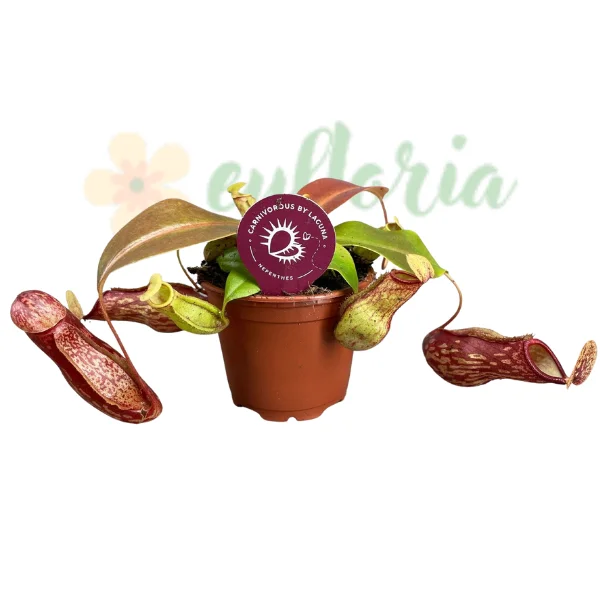
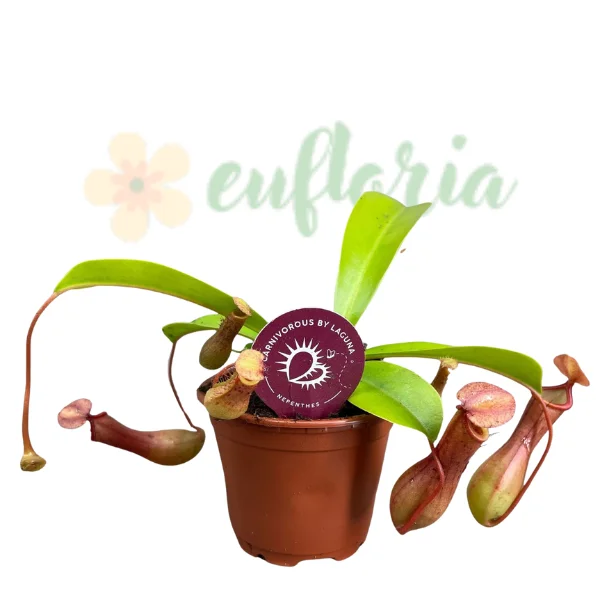
Nepenthes lowii Ø8,5cm
![Nepenthes lowii – Highland Pitcher Plant [0]](https://gomagcdn.ro/domains2/eufloria.ro/files/product/medium/nepenthes-lowii-d8-5-678724.webp "Nepenthes lowii – Highland Pitcher Plant [0]")
![Nepenthes lowii – Highland Pitcher Plant [1]](https://gomagcdn.ro/domains2/eufloria.ro/files/product/medium/nepenthes-lowii-d8-5-779333.webp "Nepenthes lowii – Highland Pitcher Plant [1]")
![Nepenthes lowii – Highland Pitcher Plant [1]](https://gomagcdn.ro/domains2/eufloria.ro/files/product/original/nepenthes-lowii-d8-5-678724.webp "Nepenthes lowii – Highland Pitcher Plant [1]")
![Nepenthes lowii – Highland Pitcher Plant [2]](https://gomagcdn.ro/domains2/eufloria.ro/files/product/original/nepenthes-lowii-d8-5-779333.webp "Nepenthes lowii – Highland Pitcher Plant [2]")
Nepenthes lowii is a rare montane carnivorous plant from Borneo, with unique pitchers adapted for insect capture and symbiotic relationships with animals. Prefers cool temperatures, high humidity, and sphagnum substrate. Non-toxic plant, ideal for advanced carnivorous plant collectors.
Approx height (including pot): 20 cm
Pot diameter: 8.5 cm
- Description
- Characteristics
- Reviews (0)
- FAQ
🌿 Nepenthes lowii – The Carnivorous Pitcher from Borneo's Mountains
Nepenthes lowii is one of the most fascinating carnivorous plants in the Nepenthes genus, remarkable for its unique pitchers adapted not only for insect capture but also for a symbiotic relationship with animals in its habitat. It is a rare montane species, highly prized by carnivorous plant collectors.
🌍 Origins & Botanical History
Nepenthes lowii belongs to the Nepenthaceae family and is native to Borneo (Malaysia), where it grows in montane cloud forests at elevations of 1,500-2,600 meters. First described by Joseph Dalton Hooker in 1859, it bears the name of naturalist Sir Hugh Low. It is one of the oldest scientifically described Nepenthes species.
🌿 Pitchers – Nature's Spectacular Traps
Nepenthes lowii produces two distinct types of pitchers (ascidia). The lower pitchers are ovoid and smaller, serving the classic function of insect capture. The upper pitchers are unique in the plant world – shaped like wide urns with a broad, reflexed lip (peristome). These upper pitchers have evolved to collect droppings from tree shrews and other small animals that feed on secretions from the pitcher lid, in a mutually beneficial relationship.
🌱 Growth Habit & Development
Nepenthes lowii is an epiphytic or semi-epiphytic plant with slow growth. It prefers cooler temperatures (15-25°C daytime, 10-18°C nighttime) and high humidity (70-90%). The ideal substrate is a mix of sphagnum moss, perlite, and bark. Light should be bright but filtered. No fertilization is needed – nutrients are obtained from captured insects. It is considered an intermediate-to-advanced species in cultivation.
Lungime: 20 cm
Greutate (kg): 0.25 Kg
Denumire: Nepenthes
Diametru: 8.5 cm
Cerințe lumină: Partial umbra
Tip plantă: Decorative
Utilizare: Interior
Tip suport: Ghiveci
Material Suport: Plastic
Is Nepenthes lowii toxic to cats and dogs?
No. Nepenthes lowii is non-toxic to cats, dogs, and other pets. Like all commonly cultivated Nepenthes species, it poses no chemical danger to animals or humans. The digestive fluid inside the pitchers contains mild enzymes designed for breaking down small insects and is completely harmless to mammals. The waxy exudate on the lid – which attracts tree shrews in the wild – is a natural plant secretion with no toxic properties. The main concern is protecting the plant from pets: since N. lowii grows extremely slowly, losing a pitcher to a curious cat represents months of irreplaceable growth.
Why does Nepenthes lowii have two completely different types of pitchers?
Nepenthes lowii displays one of the most dramatic examples of pitcher dimorphism in the genus. Juvenile plants produce lower (terrestrial) pitchers that are subcylindrical and function as conventional insect traps – catching ants and other small arthropods. However, as the plant matures and begins climbing, it develops radically different upper (aerial) pitchers: hourglass-shaped, with a constricted middle, a reduced peristome, and a reflexed lid covered in bristles that secrete a sweet, white exudate. These upper pitchers are poor insect traps by design. Instead, they've evolved to attract mountain tree shrews, which feed on the nectar and deposit their droppings into the pitcher – providing the plant with nitrogen-rich fertilizer. This shift from predator to "toilet provider" is a unique evolutionary adaptation to nutrient-poor highland environments where insect prey is scarce.
Is Nepenthes lowii suitable for beginners?
No – Nepenthes lowii is firmly an advanced collector's plant. It requires consistent highland conditions with warm days (19-27°C) and critically cool nights (9-17°C), high humidity (70-90%), excellent drainage to prevent root rot, and extreme patience due to its very slow growth rate. Young plants can take years to reach the size where growth accelerates. Without a highland terrarium, cool greenhouse, or naturally cool climate, maintaining the required nighttime temperature drop is very difficult. If you're drawn to Nepenthes but new to the genus, start with beginner-friendly species or hybrids like Nepenthes 'Gaya', N. alata, or N. × ventrata, and work up to highland species as your experience grows.
What kind of setup does Nepenthes lowii need to thrive indoors?
The most reliable indoor setup for N. lowii is a highland terrarium or grow chamber with active cooling. The key challenge is providing the essential nighttime temperature drop of 8-12°C below daytime temperatures. Many growers use terrariums with small cooling units, Peltier coolers, or place their setup in a naturally cool room (such as a basement) where temperatures drop at night. High humidity (70-90%) is maintained by the enclosed environment. Lighting should be bright but filtered – full-spectrum grow lights on a 12-14 hour cycle work well. The soil must be extremely well-draining: use net pots with a mix heavy in perlite (50%+), sphagnum, and orchid bark. Water only with distilled, reverse osmosis, or rainwater, and allow the medium to approach dampness between waterings rather than keeping it saturated. Good air circulation prevents fungal issues.
How long does it take for Nepenthes lowii to produce its famous upper pitchers?
This is a plant that tests your patience. Nepenthes lowii is one of the slowest-growing Nepenthes species. Young plants typically grow very slowly for several years, remaining small until the rosette reaches approximately 25 cm (10 inches) in diameter, at which point growth rate increases noticeably. The plant may produce one or two intermediate pitcher forms during the transition. True upper pitchers – the iconic hourglass-shaped "toilet pitchers" – only appear once the plant begins vining and the stem is well-established, which can take 5-10+ years from a small starter plant depending on growing conditions. This timeline is part of what makes N. lowii such a prized collector's plant: seeing your first upper pitcher develop is a genuine milestone achievement in carnivorous plant cultivation.
Carnivorous care?
Strong light, distilled water, peat+perlite.
Water?
Distilled/rain only. No tap.
Feeding?
Not needed. Catch own insects.
Winter?
Dormancy 5-10°C.
Substrate?
Peat+perlite 1:1.
What is Nepenthes lowii and why is it special?
Nepenthes lowii is an extremely rare tropical carnivorous plant native to the mountains of Borneo. It is unique in the carnivorous plant world because its upper pitchers have evolved to attract tree shrews, which feed on nectar and deposit droppings into the pitcher — an important nutrient source for the plant.
How do I care for Nepenthes lowii indoors?
Nepenthes lowii requires specific conditions: bright indirect light, high humidity (70-90%), daytime temperatures of 22-28°C with nighttime drops to 15-20°C, and acidic substrate of sphagnum moss and perlite. Water only with distilled or rainwater. A terrarium or greenhouse provides ideal conditions.
Does Nepenthes lowii form pitchers indoors?
Yes, Nepenthes lowii can form pitchers indoors if humidity is sufficiently high (above 70%). The lower pitchers differ from the upper ones — lower pitchers are typical of carnivorous plants, while upper pitchers have a unique shape adapted for the symbiotic relationship with tree shrews. A terrarium greatly helps maintain humidity.
Do I need to feed Nepenthes lowii with insects?
It is not mandatory, but occasional feeding with small insects (flies, mosquitoes) in the pitchers can stimulate growth. Do not use meat or other foods. In nature, the plant obtains nutrients from captured insects and tree shrew droppings. In cultivation, a very diluted foliar fertilizer can replace this source.
Is Nepenthes lowii suitable for beginners?
Nepenthes lowii is considered an intermediate to advanced difficulty species. It requires high humidity, nighttime temperature drops, and mineral-free water. It is recommended for those who already have experience with carnivorous or tropical plants. An enclosed terrarium significantly simplifies care.
Recommendations
Ai nevoie și de un ghiveci decorativ?