EN/
EN/ Romana
Hoya villosa (globulosa) Ø10.5cm
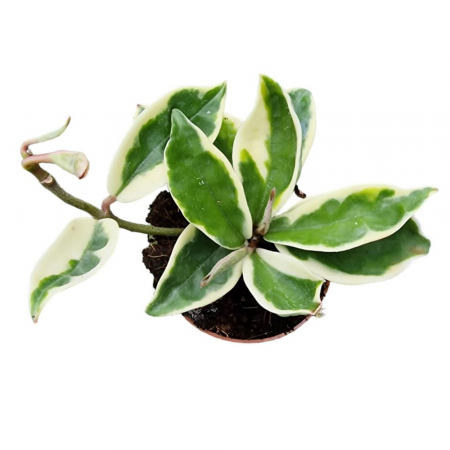
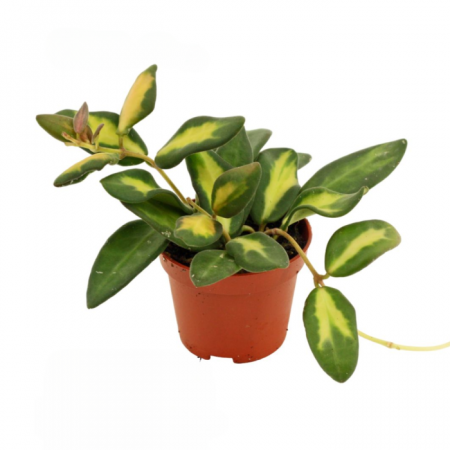
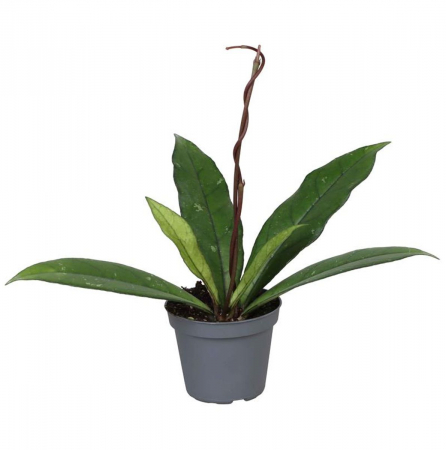
![Hoya villosa (globulosa) — rare indoor plant with velvety, pubescent oval leaves in medium green with deeply impressed veins [0]](https://gomagcdn.ro/domains2/eufloria.ro/files/product/medium/hoya-villosa-globulosa-d10-5-143591.jpg "Hoya villosa (globulosa) — rare indoor plant with velvety, pubescent oval leaves in medium green with deeply impressed veins [0]")
![Hoya villosa (globulosa) — rare indoor plant with velvety, pubescent oval leaves in medium green with deeply impressed veins [1]](https://gomagcdn.ro/domains2/eufloria.ro/files/product/medium/hoya-villosa-globulosa-d10-5-584186.png "Hoya villosa (globulosa) — rare indoor plant with velvety, pubescent oval leaves in medium green with deeply impressed veins [1]")
![Hoya villosa (globulosa) — rare indoor plant with velvety, pubescent oval leaves in medium green with deeply impressed veins [2]](https://gomagcdn.ro/domains2/eufloria.ro/files/product/medium/hoya-villosa-globulosa-d10-5-637670.png "Hoya villosa (globulosa) — rare indoor plant with velvety, pubescent oval leaves in medium green with deeply impressed veins [2]")
![Hoya villosa (globulosa) — rare indoor plant with velvety, pubescent oval leaves in medium green with deeply impressed veins [1]](https://gomagcdn.ro/domains2/eufloria.ro/files/product/original/hoya-villosa-globulosa-d10-5-143591.jpg "Hoya villosa (globulosa) — rare indoor plant with velvety, pubescent oval leaves in medium green with deeply impressed veins [1]")
![Hoya villosa (globulosa) — rare indoor plant with velvety, pubescent oval leaves in medium green with deeply impressed veins [2]](https://gomagcdn.ro/domains2/eufloria.ro/files/product/original/hoya-villosa-globulosa-d10-5-584186.png "Hoya villosa (globulosa) — rare indoor plant with velvety, pubescent oval leaves in medium green with deeply impressed veins [2]")
![Hoya villosa (globulosa) — rare indoor plant with velvety, pubescent oval leaves in medium green with deeply impressed veins [3]](https://gomagcdn.ro/domains2/eufloria.ro/files/product/original/hoya-villosa-globulosa-d10-5-637670.png "Hoya villosa (globulosa) — rare indoor plant with velvety, pubescent oval leaves in medium green with deeply impressed veins [3]")
Hoya villosa, also known by the synonym Hoya globulosa, is a rare epiphytic species from the Apocynaceae family, native to the montane forests of Southeast Asia (Bhutan, the Himalayas, Laos, Vietnam). Its velvety foliage, with deeply impressed veins and a pubescent texture, offers a tactile contrast quite different from the waxy-leaved classic Hoyas. The globular umbels of star-shaped cream flowers with a burgundy-red corona release a sweet, vanilla-like fragrance that intensifies in the evening — a collector's plant for those who love Hoyas with a haptic personality.
Approx height (including pot): 15 cm
Flowering state: No flowers
Country of origin: Netherlands
Pot diameter: 10.5 cm
- Description
- Characteristics
- Reviews (0)
- FAQ
🌿 Hoya villosa — Tropical Velvet from the Montane Jungles
Hoya villosa, recently reclassified taxonomically as Hoya globulosa, is one of the most sensory species in the genus — a climbing epiphyte whose leaves appear cut from green velvet, wrapped in a fine pubescence that catches the light like poppy petals. To the touch, the surface is warm, softly fuzzy, entirely unlike the waxy gloss typical of other Hoyas. This living texture has secured villosa a special place among collector plants, alongside celebrated siblings such as Hoya carnosa and Hoya kerrii.
Native to the humid forests of Southeast Asia, the plant grows in the mid-canopy layers, anchoring itself to tree bark with aerial roots and drawing moisture directly from the air. In indoor cultivation it retains its climbing habit: the flexible stems can be trained on trellises, allowed to cascade from hanging baskets, or guided along supports, transforming the plant into a dense living panel with silvery reflections when light strikes tangentially.
It is a moderately demanding species — it doesn't require a dedicated greenhouse, but responds spectacularly to generous humidity and good ventilation. For collectors who love Hoyas with a tactile personality, villosa is a keystone piece: the matte rustle of the leaves, the evening fragrance of the flowers, and the slow, meditative rhythm of its growth turn it into a lasting living companion rather than a fleeting decorative purchase.
🌍 Origin and Botanical History
Hoya villosa belongs to the family Apocynaceae, subfamily Asclepiadoideae, alongside roughly 500 described Hoya species. It was first described by the British botanist William Griffith in 1854, based on specimens collected from the mountainous regions of tropical Asia. Hoya globulosa — described by Joseph Dalton Hooker in 1883 — was later identified as the same species, and the World Checklist of Selected Plant Families administered by Kew Gardens formalised the synonymy, retaining Hoya villosa as the accepted name.
The natural distribution covers Bhutan, north-eastern India (Assam and Sikkim regions), Nepal, southern China (Yunnan), Myanmar, Laos, Thailand and northern Vietnam. The species prefers primary montane forests at altitudes of 600–1800 m, where the climate is permanently humid with moderate temperatures and frequent fog. This habitat explains its relative tolerance of cooler temperatures compared with lowland equatorial Hoyas and its acute sensitivity to dry air.
The name "villosa" derives from the Latin villosus, meaning "covered with long, soft hairs" — a direct reference to the velvety foliage. The synonym "globulosa" describes the almost spherical umbels formed by the clustered flowers. For enthusiasts, this species bridges classic collectable Hoyas and more recently rediscovered varieties such as Hoya burtoniae.
🌱 The Foliage
The defining feature of Hoya villosa is its foliage: elongated ovals 11–16 cm long and 3–6 cm wide, with a dense pubescent texture that mimics silk velvet. The green is deep and matte, lacking the waxy shine characteristic of most Hoyas, and the primary and secondary veins are visibly impressed into the leaf blade, creating a three-dimensional relief like a tufted cushion. The margins are slightly undulated and curl subtly inward, giving the plant a sculptural look even in juvenile stages.
The pubescence is not merely decorative — the fine hairs covering the surface are an adaptation to the foggy montane habitat, capturing microscopic atmospheric water droplets and protecting the lamina from excessive transpiration. Indoors, this feature makes the foliage particularly sensitive to stagnant water on the surface: top watering, especially in the evening, leaves marks and encourages mould. Occasional dusting with a dry brush or a photographic air blower removes dust without damaging the fine hairs.
Colour varies subtly with light: under bright indirect light, the leaves appear medium green with silvery highlights when oblique rays touch them; under low light, the hue deepens and the veins become more pronounced. New leaves emerge in a fresh, almost jade green and mature slowly — a single leaf can persist 2–4 years on the plant, contributing to the remarkable density of the mature canopy.
🌸 The Flowers
After 2–3 years from planting, under suitable conditions, Hoya villosa produces its characteristic umbels: globular clusters of 15–25 star-shaped flowers, each 10–13 mm in diameter. The outer corolla is cream or yellowish-white, while the inner crown (corona) displays a contrasting burgundy-red that draws the eye up close. The fragrance is subtle, floral, with sweet-vanilla notes that intensify in the evening — an evolutionary strategy for the nocturnal pollinators in its native habitat, mainly moths and night beetles.
The flower peduncles are short, persistent and must not be cut after blooming — they will produce new flowers in subsequent seasons, year after year. This behaviour makes Hoya villosa a rewarding plant for the patient grower: a single mature peduncle can flower repeatedly for 5–10 years. Bloom typically appears in late spring and early summer, but well-cared-for plants can produce two flowering cycles per year, in spring and autumn.
🌱 Growth and Development
Hoya villosa shows a medium-slow growth rate compared with vigorous species such as Hoya pubicalyx or Hoya carnosa. New shoots extend 15–30 cm per year under optimal conditions, and the plant reaches reproductive maturity at 2–3 years. The habit is climbing-pendulous: in nature it ascends tree trunks using aerial roots, but in cultivation it adapts beautifully both to vertical trellises and to hanging baskets, where the stems cascade gracefully.
Spontaneous branching is moderate — for a denser canopy, pinching the tips once shoots reach 40–50 cm is recommended. This technique stimulates new lateral shoots from lower nodes and maintains a balanced silhouette.
For optimal indoor care of Hoya villosa:
- Light: bright indirect, 10,000–20,000 lux. East- or west-facing windows, or a south window with a sheer curtain. Insufficient light reduces blooming and thins the leaves.
- Temperature: 18–28 °C during the growing season; tolerates 12–15 °C in winter, which actually favours floral induction the following year. Avoid cold drafts below 10 °C.
- Watering: moderate, when the top 3–4 cm of substrate has dried. In summer, roughly every 7–10 days; in winter, every 14–21 days. Use filtered or rainwater at room temperature. The pubescent leaves do not tolerate overhead watering.
- Humidity: 60–80% ideal. Below 50%, leaf margins curl excessively. A humidifier or grouping with other tropical plants helps visibly. See also the bathroom plants category.
- Substrate: highly aerated and well-drained. Recommended mix: 40% pine bark (5–15 mm fraction), 25% perlite, 20% sphagnum, 10% horticultural charcoal, 5% fibrous peat. Optimal pH 5.5–6.5.
- Fertilising: balanced liquid fertiliser (NPK 10-10-10 or 20-20-20) diluted to half strength, every 3–4 weeks from spring to autumn. Pause completely in winter. Formulations with micronutrients enhance leaf colour.
- Propagation: stem cuttings with 2–3 nodes (10–15 cm), planted in damp sphagnum or perlite. At 22–25 °C and 70–80% humidity, roots appear in 4–6 weeks. Water propagation is possible, but the transition to solid substrate is slow.
Lungime: 15 cm
Greutate (kg): 0.5 Kg
Denumire: Hoya
Diametru: 10.5 cm
Cerințe lumină: Partial umbra
Tip plantă: Decorative
Utilizare: Interior
Tip suport: Ghiveci
Material Suport: Plastic
How often should I water Hoya villosa?
Is Hoya villosa toxic to cats or dogs?
What is the ideal substrate for Hoya villosa?
Why is my Hoya villosa not blooming?
How do I propagate Hoya villosa?
Ai nevoie și de un ghiveci decorativ?